
Home Liver Function Test: What Results Mean
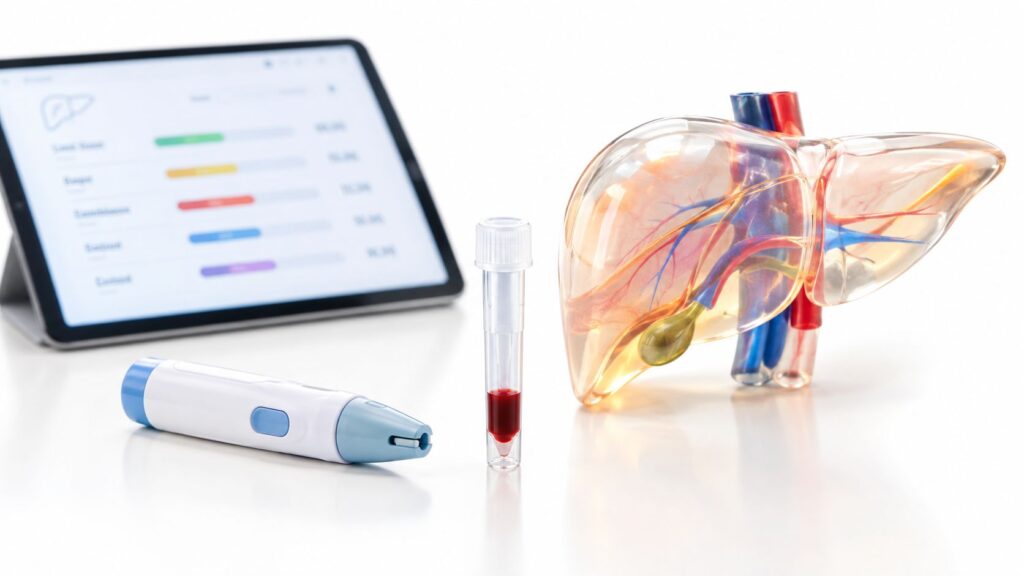
You've opened the results from a home liver function test and found a mildly raised ALT, an unfamiliar reference range, or a result marked “out of range”. It's natural to wonder whether you've uncovered liver disease, especially if you ordered the test after unexplained tiredness, medication concerns, or a period of heavier drinking.
The useful starting point is also the most important limitation. A liver blood test, often called an LFT, provides a biochemical snapshot. It can identify patterns that deserve attention, but it can't diagnose or rule out liver disease by itself. Normal results don't guarantee that the liver is completely healthy, and an isolated abnormal result doesn't automatically mean serious disease.
Why People Choose a Home Liver Function Test
A home test often begins with a practical concern rather than a diagnosis. You might be taking long-term medication and want to monitor possible effects, or you may have changed your drinking habits after a period that felt excessive. Perhaps you've noticed persistent fatigue and want useful information before speaking with your GP.
Ordering a test can be a sensible way to gather information. It may help you understand whether a result needs follow-up, provide a baseline for future monitoring, or give you something concrete to discuss with a clinician. The important distinction is that the test supports a clinical conversation rather than replacing one.
The British Liver Trust explains that liver blood tests are sometimes called LFTs, but home tests on their own cannot tell you whether you have a liver condition because they capture only a small part of the full picture. Its guidance on liver blood tests and home testing also makes clear that the charity doesn't recommend home liver tests apart from the free NHS hepatitis C test available to people in England who might be at risk.
What the panel actually measures
An LFT panel measures substances released into, processed by, or produced by the liver. These commonly include enzymes such as ALT, AST, ALP and GGT, the waste product bilirubin, and proteins including albumin, total protein and globulins.
Think of the results as several dashboard lights, not a single health score. An enzyme may rise when cells are stressed or when bile flow is affected, while albumin provides information about protein production over a longer period. None of these markers, viewed in isolation, can describe the liver's complete structure or function.
Practical rule: Use a home liver function test to identify questions, not to make a diagnosis on your own.
A person with medication-related concerns may need a different interpretation from someone with jaundice, metabolic risk, or a history of hepatitis exposure. Your symptoms, medical history, alcohol intake, medication and supplement list, and previous results all change the meaning of the same number.
That's why a private result is most useful when you keep the laboratory report, note the date and circumstances of testing, and share the findings with a GP if anything is abnormal or symptoms continue.
Understanding the Key Liver Blood Markers
A liver panel becomes less intimidating when you stop treating every marker as a verdict. Each result answers a slightly different question, and the pattern usually matters more than one isolated value.
Enzymes that act like warning lights
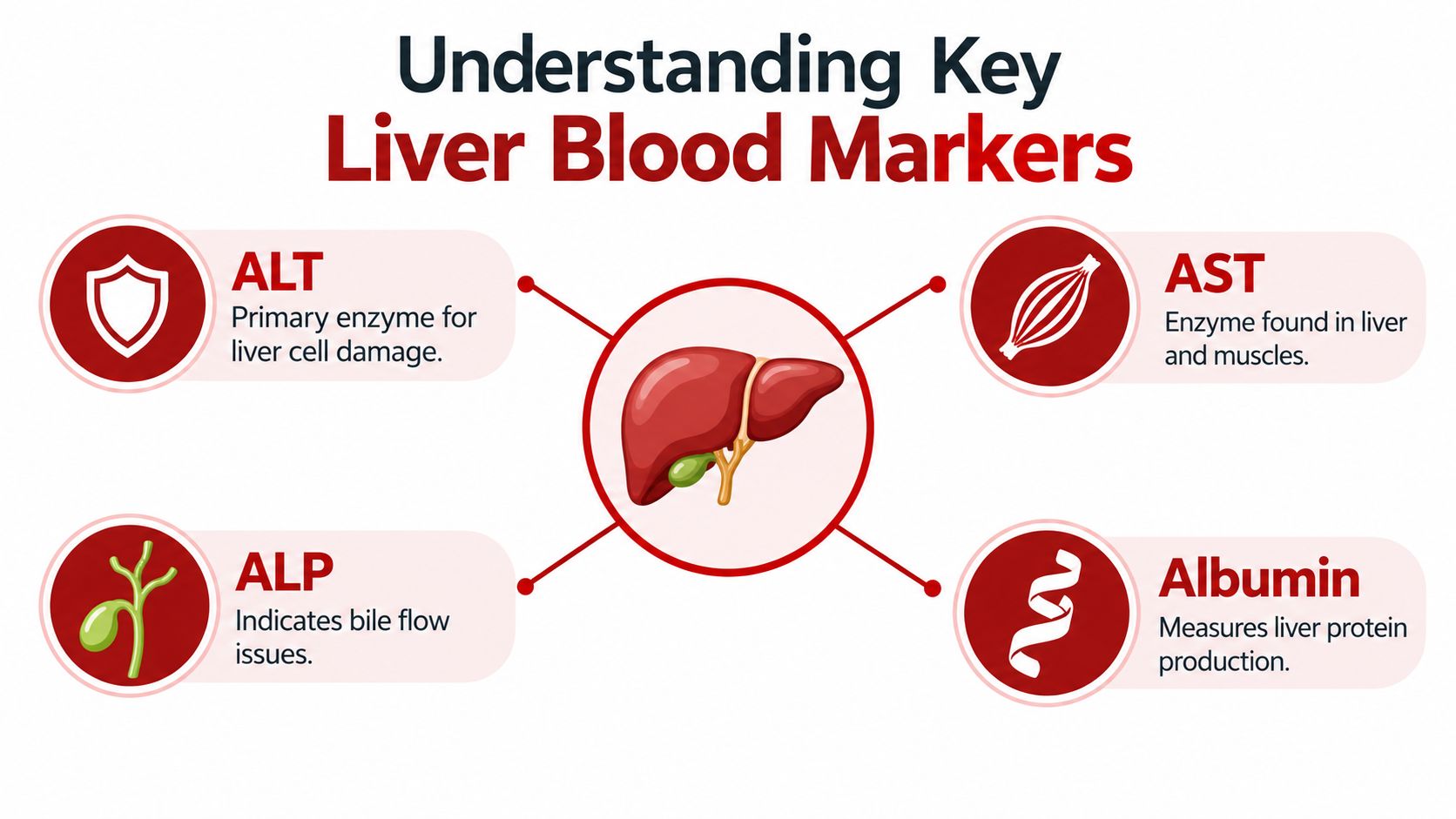
ALT, or alanine aminotransferase, is mainly associated with liver cells. A raised ALT can indicate liver cell stress or injury, but it doesn't identify the cause. Medication, alcohol-related injury, metabolic conditions and other illnesses can all affect the result.
AST, or aspartate aminotransferase, is found in the liver and in muscles. It can therefore rise after muscle injury or strenuous activity as well as in liver-related conditions. This is one reason a laboratory result needs context, including recent exercise and symptoms.
ALP, or alkaline phosphatase, can be associated with the bile ducts, but it's also found in bone. A raised ALP doesn't automatically point to a liver problem. Clinicians interpret it alongside other markers, symptoms and, where appropriate, additional investigations.
GGT, or gamma-glutamyl transferase, is sensitive to several influences, including alcohol and medicines. A raised GGT can be relevant, but it isn't a standalone measure of alcohol intake or liver damage.
Waste processing and protein production
Bilirubin is a waste product processed by the liver. When it builds up, it can contribute to jaundice, which may make the skin or whites of the eyes look yellow. The result must be interpreted with symptoms and the rest of the panel, rather than treated as a diagnosis by itself.
Albumin is a protein made by the liver. It provides information about protein production, but it can also be influenced by factors outside the liver. A single albumin result therefore needs the same careful clinical reading as the enzymes.
Some panels also include total protein and globulins. These add information about proteins in the blood, but a larger panel isn't automatically a more accurate diagnosis. A comprehensive metabolic panel explained in plain language can help you understand how liver-related markers sit alongside other blood measurements.
Read the reference range, not just the headline number
Laboratories establish their own reference ranges. Liver UK notes that the same liver test can have different reference ranges, so you should compare your result only with the range printed on the report from the laboratory that processed your sample.
That detail prevents a common mistake: comparing your number with a result found online from a different laboratory and assuming the two ranges are interchangeable. The flagged status is a prompt to investigate, not a diagnosis.
How the At-Home Testing Process Works
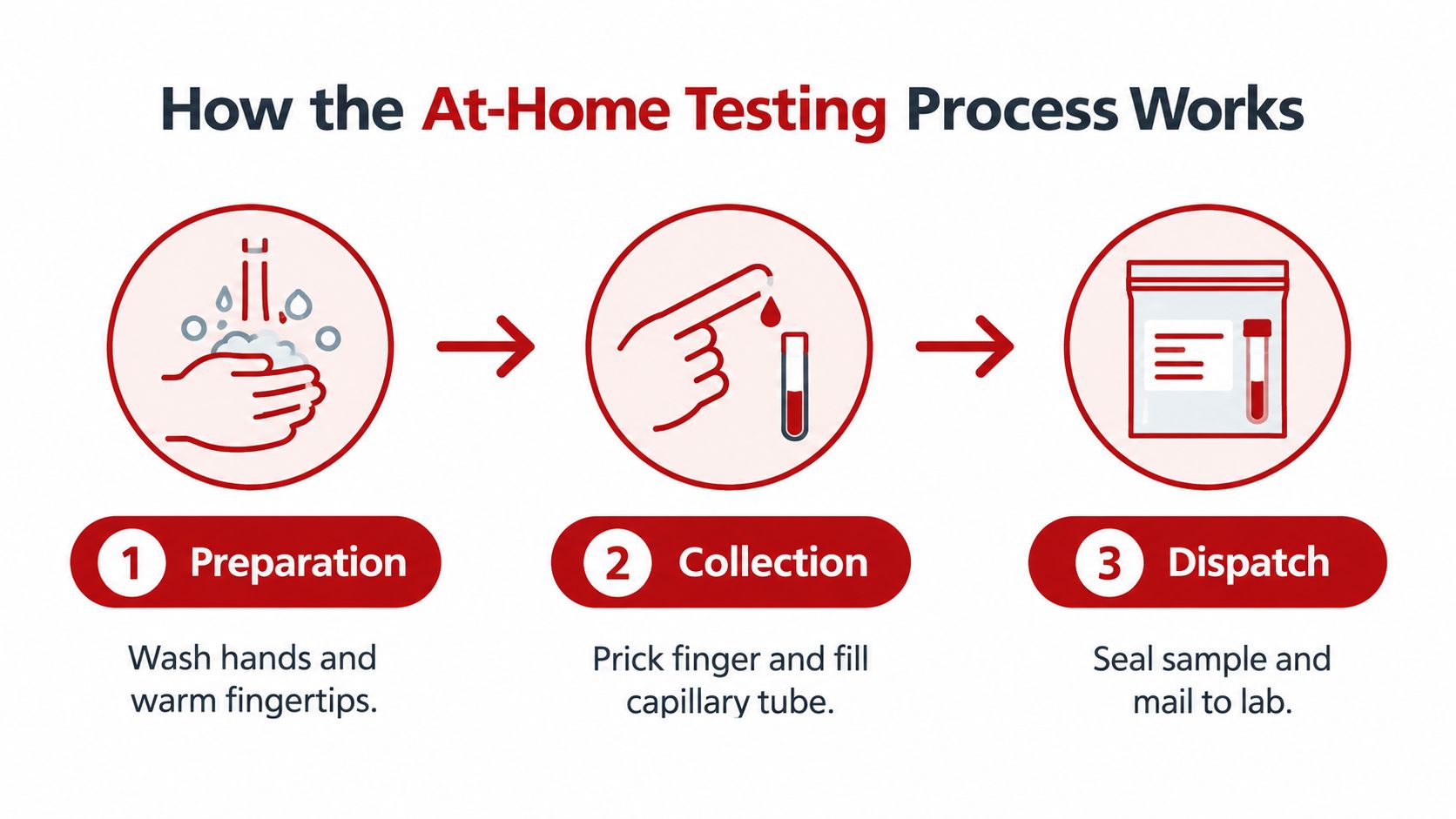
A home liver function test usually starts with a capillary sample from your fingertip, rather than blood drawn from a vein. The collection is simple, but technique affects whether the laboratory receives enough usable blood to analyse the markers safely and reliably.
Prepare before opening the lancet
Read the instructions for your particular kit before starting. Some tests require fasting, whereas others do not. Do not transfer preparation advice from a different blood test.
Use this checklist:
- Check fasting instructions: If fasting is required, follow the stated period and drink only what the instructions permit.
- Warm your hands: Warm fingers generally release blood more easily than cold ones.
- Wash and dry thoroughly: Moisture, cream or other residue can contaminate the specimen.
- Avoid unusual exertion: Strenuous exercise can affect markers such as AST. Ask the provider whether you should avoid it before collection.
- Keep medicines unchanged unless advised: Do not stop prescribed treatment to alter a result. Record your medicines and supplements instead.
Collect the sample patiently
Use the lancet on the recommended side of the fingertip and let the blood flow naturally. Gentle pressure can help. Forceful squeezing may add tissue fluid, making the sample less representative of the blood being tested.
Fill the capillary tube or microtainer to its required mark. Underfilling, vigorous squeezing and poor mixing can create a rejected or less reliable specimen. Haemolysis means red blood cells have broken apart, which can interfere with laboratory analysis.
The finger-prick blood tests at home guidance offers further practical advice on collecting a capillary sample.
A larger panel does not automatically provide a better diagnosis. An overview of the metabolic panel in plain language can help explain how liver-related markers sit alongside other blood measurements, but the clinical meaning still depends on the pattern, symptoms and follow-up.
Seal and return it promptly
Place the labelled sample in the supplied packaging, complete the required paperwork and use the prepaid return packaging. Repose Healthcare says samples are processed in UK-accredited laboratories, with results typically delivered within 1 to 3 working days through a secure, GDPR-compliant online dashboard, according to its publisher information.
Check the seal before posting. If the laboratory cannot use the specimen, another collection may be needed. Careful preparation reduces delays and helps ensure that any result can be interpreted appropriately.
Accuracy of Home Tests Versus Clinic Blood Draws
A finger-prick test and a clinic blood draw collect blood in different ways, but the key question is not merely whether one is “accurate” and the other isn't. The result depends on collection quality, transport, laboratory analysis and the clinical question being asked.
A venous draw usually provides a larger sample and gives a trained professional direct control over collection. That can be useful when a clinician needs several tubes, repeat testing, or additional investigations. A home capillary sample offers convenience and may be appropriate for a defined panel, but it leaves more responsibility with the person collecting it.
Where capillary collection can go wrong
Poor circulation, cold hands, insufficient blood flow and excessive squeezing can make the sample difficult to obtain. Tissue fluid contamination or haemolysis may also affect the specimen. A laboratory may report that the sample is unsuitable rather than issue a misleading result.
The analytical laboratory still matters. A professionally processed sample can produce a meaningful measurement, but the laboratory number can't compensate for a sample collected under poor conditions. Read the instructions before starting, and contact the provider if the collection doesn't go as expected.
Accuracy isn't the same as diagnosis
UK clinical guidance stresses that liver blood tests aren't diagnostic on their own. The NHS Specialist Pharmacy Service guidance on interpreting liver blood tests explains that interpretation must take account of clinical context. Severe liver disease can exist with little or no abnormality, and normal results don't rule out disease.
That limitation applies to venous samples as well as home samples. A clinic draw may be the right next step when symptoms are concerning, when a sample is inadequate, or when a GP needs a broader investigation, but it doesn't turn an LFT into a standalone diagnosis.
A normal panel can be reassuring, but it can't overrule persistent symptoms or a clinician's concern.
If you're exploring wider educational material about liver health, Siggi Clavien liver rejuvenation offers a discussion of testing and supplementation. Treat educational content as background, not as a substitute for assessment by a GP or hepatology team.
Interpreting Your Results and When to See a GP
An “out of range” flag can feel alarming, but reference ranges are statistical tools rather than a boundary between health and disease. UK primary-care guidance states that around 2.5% of healthy people may fall outside a reference range by chance, and roughly 1 in 20 healthy livers may produce a slightly abnormal single liver test result. These benchmarks explain why clinicians often repeat a result before drawing conclusions.
A mildly raised ALT, ALP or bilirubin may be temporary, unrelated to serious disease, or influenced by the way the sample was collected. The result still deserves sensible follow-up, especially if it persists or appears alongside symptoms.
A practical decision ladder
| Result scenario | Potential meaning | Recommended action |
|---|---|---|
| Slightly abnormal single marker and you feel well | Statistical variation, a transient change, medication effect or collection issue may be possible | Check the laboratory range and discuss repeat testing with your GP |
| Abnormal result that remains raised | A persistent pattern is more meaningful than one isolated result | Arrange clinical review and take previous reports, medicines and supplement details |
| Isolated bilirubin under 30 µmol/L in a well patient | Primary-care guidance says this can sometimes be monitored and repeated | Discuss repeat testing, which guidance places at 3 months |
| Bilirubin over 60 µmol/L | Probable obstruction is suggested, and isolated elevation at this level would be unusual | Seek prompt clinical assessment |
| ALT above 150 U/L | A level requiring hepatology referral in the cited primary-care pathway | Contact your GP promptly for clinical escalation |
| Jaundice | A visible sign that needs medical assessment | Seek urgent medical advice, particularly if it appears with abnormal results |
The thresholds and actions in this table come from the North Yorkshire and York suspected liver disease pathway. They're not a tool for self-diagnosis, and the laboratory's units and reference range still need checking.
Why repeat testing can change the picture
A single result is a moment in time. GP guidance reports that after an initial abnormal LFT, 84% can remain raised at 1 month and 75% at 2 years, supporting repeat testing and trend analysis rather than dismissing an abnormal result or panicking over it. These figures are reported in the Royal United Hospitals Bath guide for GPs.
Don't wait for a repeat test if you have jaundice, feel acutely unwell, or your report shows a result in a concerning range. For less urgent abnormalities, a GP can decide whether to repeat the panel, investigate medication or alcohol-related factors, request additional tests, or arrange imaging and specialist review.
The guide to reading blood test results in the UK can help you understand report terminology, but it can't replace a clinician's interpretation of your personal circumstances.
The Limits of Biomarkers in Liver Health
More markers don't automatically mean better diagnosis. A broader panel may provide more context, but it still measures selected substances in blood rather than the complete condition of the liver.
A home liver function test can't, on its own, establish whether someone has structural changes such as fatty liver disease, fibrosis or cirrhosis. It also can't fully capture the factors that shape risk, including alcohol intake, metabolic health, medication history, supplements, symptoms and previous illness.
The same result can mean different things
A raised GGT may occur in several situations, while an isolated ALP result may relate to bone as well as bile ducts. A normal result may coexist with disease, particularly when the condition has not produced a clear biochemical abnormality. The clinician's job is to combine the pattern with the person, not to read each number as an independent verdict.
This is why you should keep a record of:
- Symptoms and timing: Note fatigue, nausea, itching, abdominal discomfort or jaundice, including when symptoms began.
- Medicines and supplements: Include prescribed treatments, over-the-counter medicines and herbal products.
- Alcohol intake: Give an honest account, since it affects how some patterns are interpreted.
- Relevant health factors: Tell the clinician about metabolic risks, previous hepatitis exposure and earlier blood results.
- Changes over time: Compare reports only when the laboratory method and reference ranges are understood.
Liver UK's patient guidance states that home tests alone can't tell whether someone has a liver condition because they capture only a small part of the full picture. The charity's position is a useful counterweight to marketing that presents a home panel as a complete liver screening solution.
A normal home result should therefore support sensible monitoring, not create false reassurance. An abnormal result should prompt proportionate follow-up, not an immediate assumption about the cause.
Taking Control of Your Liver Health Journey
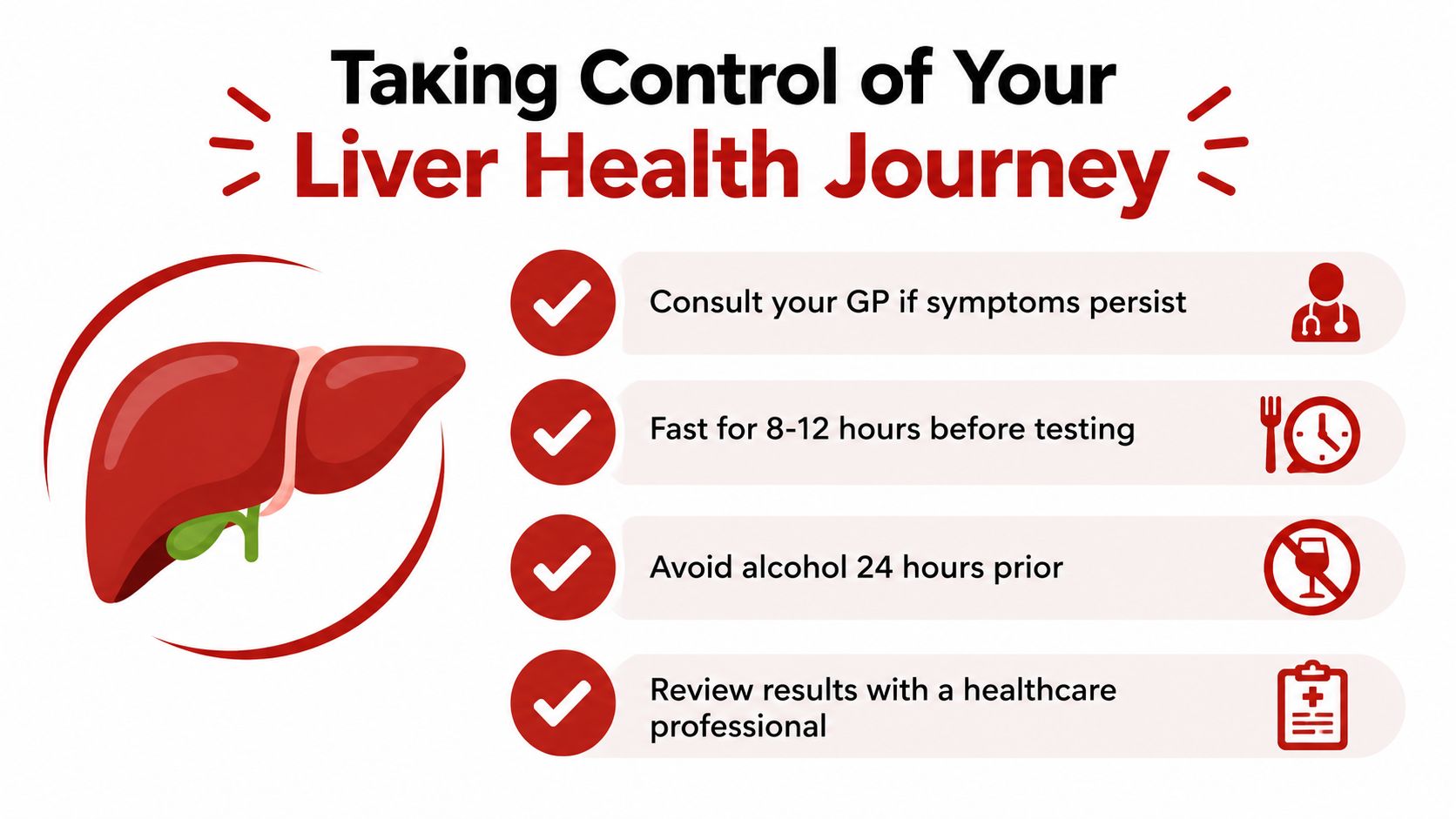
A responsible home liver function test starts before the sample is collected and continues after the report arrives. Use this checklist to keep the result in perspective:
- Prepare carefully: Follow the kit's fasting instructions, warm and wash your hands, and collect the sample without excessive squeezing.
- Record context: Write down symptoms, recent illness, medicines, supplements, alcohol intake and unusual exercise.
- Read the laboratory range: Don't compare your number with an unrelated online report.
- Look for patterns: A trend can be more useful than a single flagged result.
- Escalate appropriately: Contact your GP about persistent abnormalities, and seek urgent advice for jaundice or concerning thresholds.
- Review support products cautiously: A 60-count liver support formula may be something you encounter while researching liver health, but supplements don't replace assessment, prescribed treatment or investigation of abnormal blood results.
Use your secure results dashboard to keep reports together and compare changes over time, while remembering that the dashboard can't provide the clinical context a GP brings. A private result is most valuable when it helps you ask a better question and take the right next step.
Repose Healthcare offers private at-home blood testing, including a liver function panel collected by finger prick and returned in prepaid packaging for laboratory analysis. Visit Repose Healthcare to order a suitable test, receive secure online results, and use the findings as a practical starting point for a conversation with your GP.
You Might Also Like
Home Liver Function Test: What Results Mean
You've opened the results from a home liver function test and found a mildly raised [...]
Glucose Tolerance Test at Home: What You Need to Know
A true diagnostic oral glucose tolerance test in the UK is usually a supervised clinic [...]
At Home PSA Test: Accuracy, Process, and UK Guidelines
You notice that you're urinating more often, your stream seems weaker, or you want a [...]
A1C Blood Test UK: What It Measures and How to Get One
You've just opened a private or at-home A1C blood test UK result and found two [...]
STI Screening for Men: What to Test and When
You've recently ended a relationship, ordered an STI test kit online, and now you're staring [...]
Fertility Testing Before Trying to Get Pregnant: Key Info
You and your partner may have chosen a rough timeline, checked your finances and started [...]
Nutrition Testing Kit: What It Measures and Why It Matters
You're doing the sensible thing, eating reasonably, trying to sleep, and still feeling flat. That's [...]
Private Coeliac Testing UK: A Practical Patient Guide
You've been bloated after pasta for months. You've searched “coeliac symptoms”, noticed the fatigue and [...]
STI Test Kit Price Guide for UK Home Testing
Private STI test kits in the UK usually start at about £29 to £30 for [...]
Sexual Health Screening: Your Guide to 2026
You're often here for a very ordinary reason that suddenly feels loaded. A new partner. [...]
Pregnancy Screening Tests Private: Your UK Guide
You've had a positive pregnancy test, the NHS booking appointment is still ahead, and your [...]
What Is Glucose Tolerance Test and How It Works
A glucose tolerance test is a two-hour challenge test: after an overnight fast, your fasting [...]
Blood Test for Night Sweats What to Check and When
You wake in the early hours with damp nightwear, wet sheets and a racing mind. [...]
The 2026 Cost of Hepatitis Vaccination in the UK
You're usually looking up the cost of hepatitis vaccination for a practical reason. A trip [...]
Hormone Blood Test London: Find Your Perfect Test
Some London health questions start subtly. Your cycle changes a little. You feel wired at [...]
Peanut Allergy Test Kit: A Practical UK User’s Guide
A peanut reaction often starts with uncertainty, not clarity. You eat a biscuit, satay sauce, [...]
NIPT Test Edinburgh: Your 2026 Guide
If you're searching nipt test edinburgh, you're probably already in that familiar stage of pregnancy [...]
Peripheral Artery Disease UK: Peripheral Artery Disease UK:
You might be reading this because walking has started to feel different. Perhaps your calf [...]
NIPT Test Cardiff: Clinic, Home & NHS Pathways 2026
If you're in Cardiff, newly pregnant, and staring at screening options that all seem to [...]
Gender Scan Difference UK: Accuracy, Timing & Cost Compared
You've probably already done the same search most parents do. One tab shows the NHS [...]
NIPT Test Cambridge: Guide to Options & Booking 2026
You're in Cambridge, you've had the first rush of finding out you're pregnant, and then [...]
Home COVID Test Results: A Practical UK & Ireland Guide
You've done the swab, mixed the sample, added the drops, and now you're staring at [...]
DVT Test Squeeze Calf: Homan’s Sign & Beyond
You notice one calf is sore, a little swollen, and not behaving like an ordinary [...]
Your Guide to Every Travel Clinic Leicester Offers in 2026
Flights are booked. The hotel is sorted. Your passport is still in date. Then one [...]
13 Week Gender Scan: Accuracy, NIPT & What to Expect
By the time you reach 13 weeks, pregnancy often starts to feel more real in [...]
Your Pregnancy Scan London: Guide to Options & Costs
A positive test can make London feel suddenly very small and very complicated. You might [...]
Your Nuchal Dating Scan Explained: A 2026 UK Guide
That appointment message has landed in your phone or come through the post, and suddenly [...]
Normal Cortisol Levels UK: Get Clarity
Some people search for normal cortisol levels uk after weeks of feeling unlike themselves. They’re [...]
How to Test Iron Levels in Blood: A Complete UK Guide
You’re probably not searching how to test iron levels in blood out of curiosity. More [...]
Growth Scan Pregnancy: UK Guide & What to Expect
You’re at an antenatal appointment, everything seems routine, and then your midwife says, “We’d like [...]