Skip to content


Endomysial IgA Antibody Test – At-Home Coeliac Disease Screening
Check for Coeliac Disease Antibodies with a Simple Blood Test
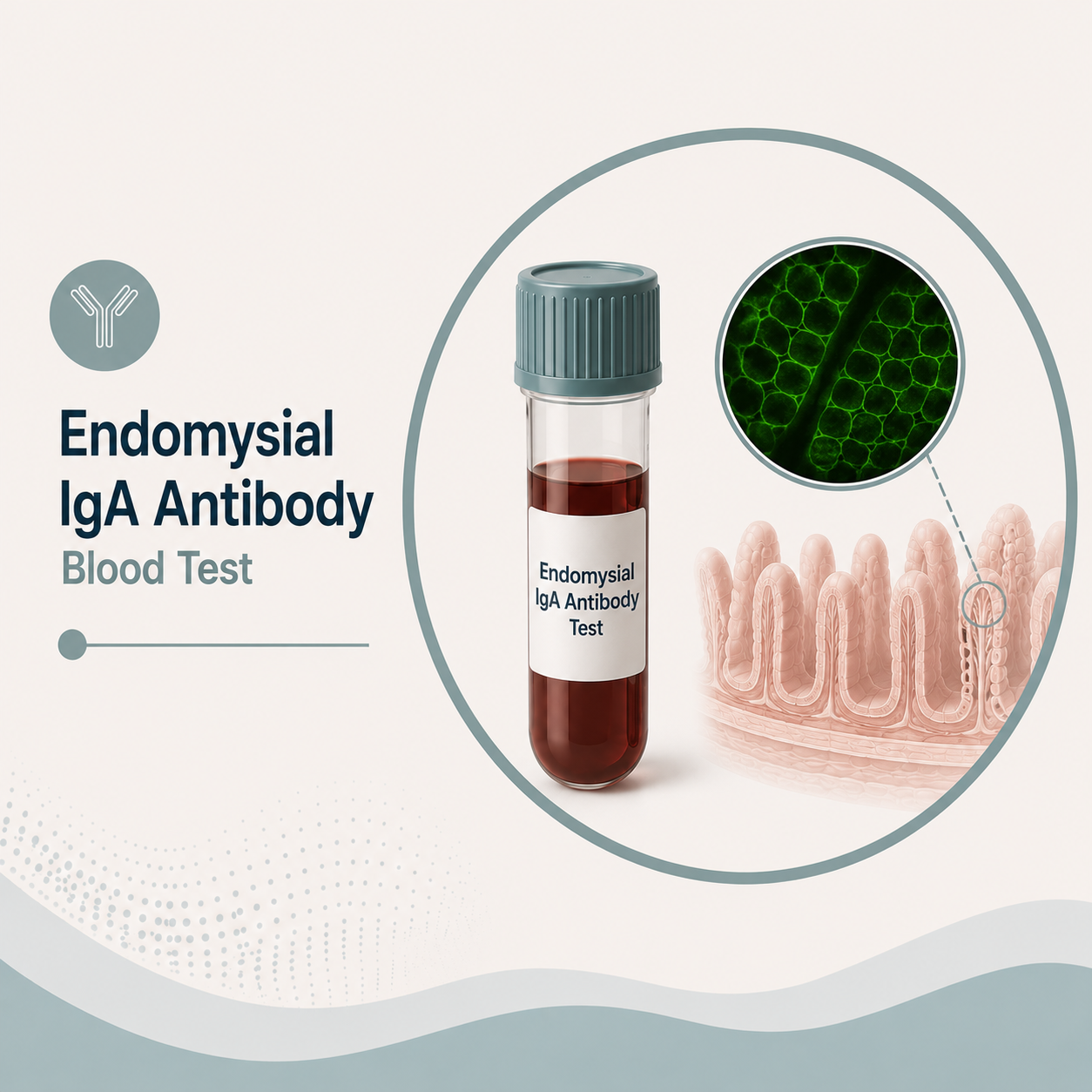
The Endomysial IgA Antibody (EMA) Test is a highly specific blood test used to screen for coeliac disease, an autoimmune condition triggered by gluten consumption. Endomysial antibodies are produced by the immune system when gluten damages the lining of the small intestine.
With our at-home endomysial IgA blood test, you can easily check whether your body is producing these antibodies, helping identify a possible gluten intolerance or coeliac disease.
What is the Endomysial IgA Test?
The Endomysial IgA test detects antibodies that target the endomysium, a connective tissue found around muscle fibres. In people with coeliac disease, gluten ingestion stimulates an immune response that leads to the production of these antibodies.
This test is:
-
Highly specific – very accurate for diagnosing coeliac disease
-
Non-invasive – requires only a small blood sample
-
A key part of screening – often used alongside tissue transglutaminase (tTG-IgA) testing
If positive, your healthcare provider may recommend further investigations, including an intestinal biopsy, to confirm a diagnosis.
Why is This Test Important?
Coeliac disease affects around 1 in 100 people in the UK, but many remain undiagnosed. If untreated, it can lead to:
-
Malnutrition
-
Osteoporosis
-
Anaemia
-
Fertility issues
-
Digestive discomfort
-
Increased risk of other autoimmune conditions
Testing for endomysial antibodies can provide valuable insight into whether your symptoms may be linked to coeliac disease.
Symptoms of Coeliac Disease
Coeliac disease symptoms can vary widely. Common signs include:
-
Bloating, abdominal pain, and digestive discomfort
-
Chronic diarrhoea or constipation
-
Fatigue and low energy
-
Unexplained weight loss
-
Iron deficiency anaemia
-
Mouth ulcers
-
Skin rashes (dermatitis herpetiformis)
-
Delayed growth in children
Because these symptoms overlap with other conditions, blood testing is an important first step.
Who Should Take the Endomysial IgA Test?
You may benefit from this test if you:
-
Experience ongoing digestive problems after eating gluten
-
Have a family history of coeliac disease
-
Suffer from unexplained fatigue, anaemia, or weight loss
-
Have osteoporosis or low bone density at an early age
-
Are being monitored for known gluten sensitivity
-
Are at higher risk due to autoimmune conditions such as type 1 diabetes or thyroid disease
How the At-Home Test Works
-
Order online – discreet, fast delivery across the UK
-
Collect your sample – finger-prick blood collection kit included
-
Return your sample – prepaid envelope to our UKAS-accredited laboratory
-
Get your results online – private, secure, and explained clearly within a few days
Understanding Your Results
-
Negative – suggests coeliac disease is less likely (though not ruled out if IgA deficiency is present)
-
Positive – indicates possible coeliac disease; further testing (such as a biopsy) may be required
-
Borderline – additional follow-up may be recommended
Our results include guidance to help you interpret your antibody levels.
Benefits of the Endomysial IgA Test
-
Accurate screening – highly specific for coeliac disease
-
Simple process – test from home with no clinic visit needed
-
Quick results – usually within 2–5 working days
-
Private and confidential – secure online reporting
-
Trusted UK laboratories – all tests analysed to clinical standards
Why Choose Repose Healthcare?
-
Leading provider of at-home diagnostic testing in the UK
-
Trusted UKAS-accredited laboratories
-
Easy-to-use kits with prepaid return
-
Clear, patient-friendly results and support
-
Commitment to confidentiality and data security
Order Your Endomysial IgA Test Today
If you suspect gluten intolerance or coeliac disease, don’t delay. The Endomysial IgA Test offers peace of mind with accurate results from the comfort of your home.
👉 Order today – fast, reliable, and private testing with UK laboratory analysis.
Important Information:
This test requires a venous blood sample, which must be collected by a trained healthcare professional. Please note that there is a separate charge for this service, which may range from £54 to £150 or more depending on your chosen provider.
You can book an appointment conveniently through Phlebotomy Services or with any other suitable provider near you.
Related products