Lipid Profile Blood Test
Comprehensive Cholesterol & Blood Fat Test
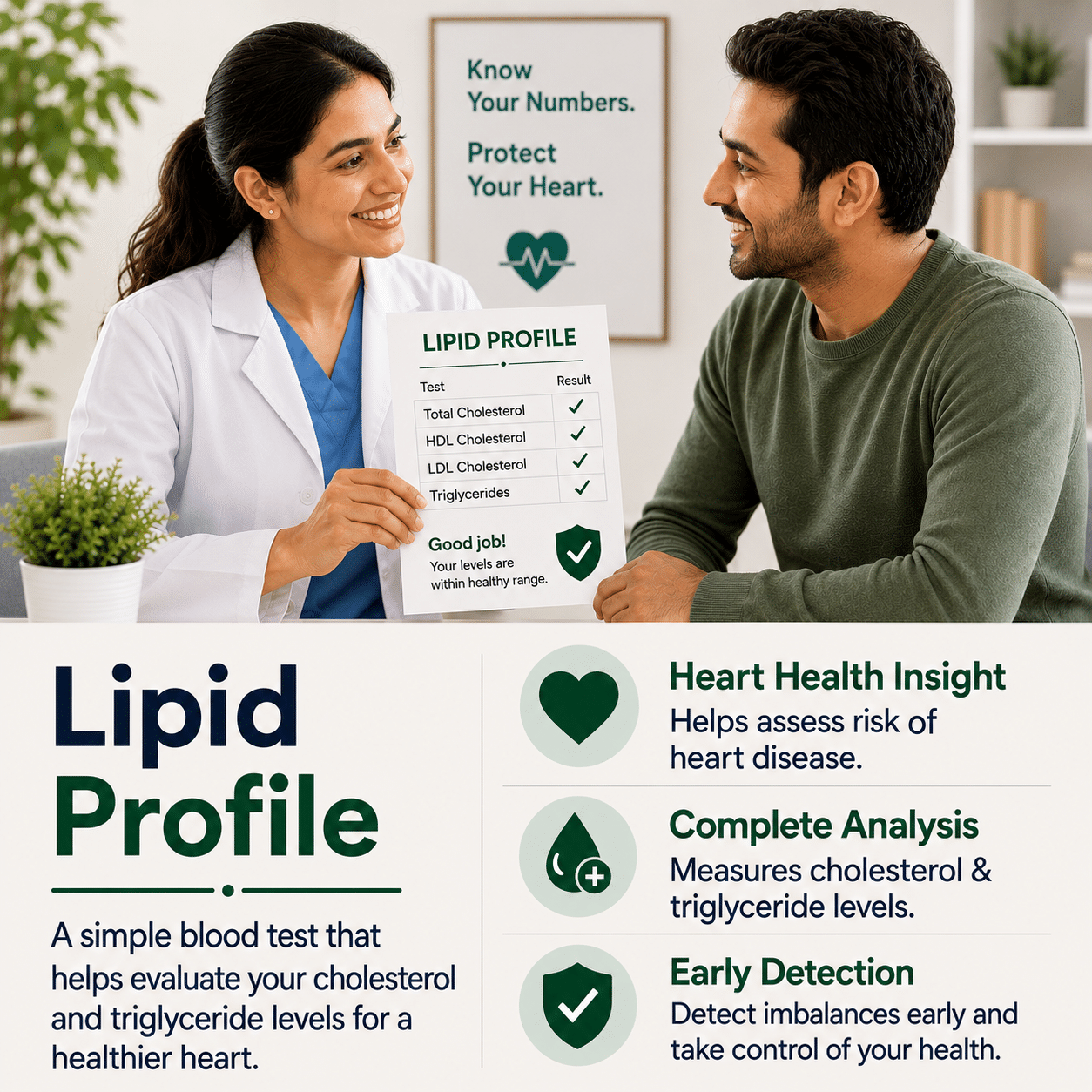
Understand your cholesterol and blood fat levels with a convenient laboratory lipid profile.
Our Lipid Profile Blood Test provides a detailed assessment of several important fats in your blood, including total cholesterol, HDL cholesterol, LDL cholesterol, non-HDL cholesterol and triglycerides.
Cholesterol and triglycerides are essential for normal body function, but abnormal blood lipid levels can be associated with an increased risk of cardiovascular disease. A lipid profile provides useful information that can help you and your healthcare professional understand your cholesterol levels and overall cardiovascular risk when considered alongside other health factors.
The test is suitable for people who want to monitor their cholesterol, assess their lipid levels as part of routine health screening, or monitor cholesterol levels following advice from a healthcare professional.
What Does a Lipid Profile Test Measure?
Our lipid profile measures five key components of your blood lipid levels.
Total Cholesterol
Total cholesterol represents the overall amount of cholesterol in your blood.
Cholesterol is a waxy, fat-like substance that your body needs for important functions including cell membranes and hormone production.
However, having too much cholesterol in the blood can contribute to the formation of fatty deposits within arteries.
HDL Cholesterol
HDL cholesterol, often referred to as “good cholesterol”, helps transport cholesterol away from the bloodstream and tissues towards the liver, where it can be processed.
HDL is one of several factors considered when assessing cardiovascular health.
LDL Cholesterol
LDL cholesterol is often referred to as “bad cholesterol”.
Higher levels of LDL cholesterol can contribute to the build-up of cholesterol within artery walls and are an important consideration when assessing cardiovascular risk.
The lipid profile uses a calculated LDL cholesterol measurement.
Non-HDL Cholesterol
Non-HDL cholesterol represents cholesterol carried by several potentially atherogenic lipoproteins and is calculated from the total cholesterol and HDL cholesterol measurements.
It can provide additional information when assessing a person’s lipid profile.
Triglycerides
Triglycerides are another type of fat found in the blood.
The body uses triglycerides for energy, but elevated levels can be associated with an increased risk of cardiovascular disease and, at very high concentrations, other health complications.
Why Have a Lipid Profile Blood Test?
A lipid profile can provide useful information about your cholesterol and triglyceride levels.
It may be useful if you want to:
- Check your cholesterol levels
- Monitor cholesterol over time
- Assess your blood lipid levels as part of a routine health check
- Understand your HDL, LDL and non-HDL cholesterol levels
- Measure triglycerides
- Monitor lipid levels following lifestyle changes
- Support discussions about cardiovascular health with your GP or healthcare professional
- Monitor cholesterol levels if you have previously been advised to do so
What Are the Benefits of a Lipid Profile?
Comprehensive Cholesterol Testing
Rather than measuring total cholesterol alone, the profile provides several important lipid measurements in one test.
Includes LDL, HDL & Non-HDL Cholesterol
Understand the different cholesterol measurements that can be considered when assessing your lipid profile.
Triglyceride Measurement
The profile also measures triglycerides, another important type of blood fat.
Convenient Blood Testing
The test can be performed using the appropriate blood sample collection method supplied with your testing service.
Laboratory Analysis
Your sample is analysed by a professional laboratory, with results provided in a laboratory report.
Useful for Ongoing Monitoring
Repeat testing may be useful for monitoring lipid levels over time when recommended by your healthcare professional.
Who Should Consider a Lipid Profile Test?
A lipid profile may be suitable for adults who want to understand their cholesterol and triglyceride levels.
It may be particularly relevant if you:
- Want to check your cholesterol
- Have a family history of high cholesterol or cardiovascular disease
- Have previously been told that your cholesterol is elevated
- Are making lifestyle changes and want to monitor your lipid levels
- Have been advised by a healthcare professional to monitor cholesterol
- Want additional information as part of a general health assessment
If you have been diagnosed with a cardiovascular condition or are taking medication to lower cholesterol, discuss your testing requirements and results with your healthcare professional.
Understanding Your Cholesterol Results
Your laboratory report will provide your measured lipid results, together with the relevant reference information.
Total Cholesterol
Your total cholesterol result reflects the overall amount of cholesterol measured in your blood.
HDL Cholesterol
HDL is one of the lipoproteins involved in transporting cholesterol through the bloodstream.
LDL Cholesterol
LDL is an important marker when assessing cholesterol-related cardiovascular risk. Your report uses a calculated LDL cholesterol measurement.
Non-HDL Cholesterol
Non-HDL cholesterol provides an additional measurement of cholesterol carried by potentially atherogenic lipoproteins.
Triglycerides
Triglycerides are fats transported in the bloodstream and stored by the body for energy.
What Does a High Cholesterol Result Mean?
A raised cholesterol result does not necessarily mean that you have cardiovascular disease.
Cholesterol levels can be influenced by a range of factors, including:
- Diet
- Physical activity
- Weight
- Age
- Genetics
- Certain medical conditions
- Some medications
- Lifestyle factors
Your overall cardiovascular risk is determined using multiple factors rather than cholesterol alone.
If your results are outside the laboratory’s reference range, discuss them with your GP or another qualified healthcare professional.
Can a Lipid Profile Diagnose Heart Disease?
No.
A lipid profile measures cholesterol and triglycerides. It does not diagnose heart disease, blocked arteries, heart attack or stroke.
However, cholesterol and triglyceride measurements are important factors that healthcare professionals may consider when assessing cardiovascular risk.
Your results should be interpreted alongside other information such as your age, blood pressure, smoking status, diabetes status, family history and existing medical conditions.
How Often Should I Have a Cholesterol Test?
The appropriate frequency of cholesterol testing varies from person to person.
Some people may require more frequent monitoring because of existing health conditions, medication or an increased cardiovascular risk.
If you are monitoring cholesterol because of a diagnosed condition or prescribed treatment, follow the testing schedule recommended by your healthcare professional.
Is Fasting Required for a Lipid Profile?
Fasting requirements can depend on the testing service and your individual circumstances.
Follow the sample collection instructions provided with your test.
If your healthcare professional has specifically requested a fasting lipid profile, follow their instructions regarding food, drink and medication before sample collection.
How Is the Sample Collected?
The lipid profile is a blood test.
For the self-collection version, TDL Pathology lists a small blood sample collection using its TDL Tiny collection system. Self-collected samples should be posted on the same day they are taken and should not be posted over weekends or bank holidays, according to TDL’s current instructions.
Always follow the collection and return instructions supplied with your testing kit.
What Is Included in the Lipid Profile?
Your lipid profile includes:
| Test | What It Measures |
|---|---|
| Total Cholesterol | Overall cholesterol level |
| HDL Cholesterol | HDL-associated cholesterol |
| LDL Cholesterol | Calculated LDL-associated cholesterol |
| Non-HDL Cholesterol | Cholesterol excluding HDL cholesterol |
| Triglycerides | Blood triglyceride level |
These are the five components currently listed by TDL Pathology for its Lipid Profile.
When Will I Receive My Results?
TDL Pathology currently lists a 1-day turnaround for the Lipid Profile, measured from laboratory receipt/processing according to its published test information. Actual time to receive your results can depend on sample transportation and processing.
What Should I Do If My Cholesterol Is High?
If your results show elevated cholesterol or triglycerides, don’t panic.
An abnormal result does not automatically mean that you have a medical condition requiring treatment. Your healthcare professional can assess your results in combination with your overall cardiovascular risk and advise whether lifestyle changes, repeat testing or further assessment is appropriate.
Lifestyle measures that may be relevant to cholesterol management include maintaining a balanced diet, regular physical activity, maintaining a healthy weight, avoiding smoking and moderating alcohol consumption.
If you are already taking cholesterol-lowering medication, do not stop or change your medication based solely on a home test result. Speak to your healthcare professional.
Why Choose Repose Healthcare?
At Repose Healthcare, we make it easier to access convenient laboratory testing from the comfort of your home.
Our Lipid Profile Blood Test provides a comprehensive measurement of key blood lipids, including cholesterol and triglycerides.
Our service offers:
- Convenient home sample collection
- Laboratory-based analysis
- Comprehensive lipid testing
- Secure results
- Confidential handling of your information
- Professional customer support
Take a proactive approach to understanding your cholesterol and blood lipid levels with the Repose Healthcare Lipid Profile Blood Test.
Important Medical Disclaimer
This test is intended to provide information about your blood lipid levels and is not intended to diagnose cardiovascular disease or any other medical condition.
A lipid profile measures cholesterol and triglycerides but cannot, by itself, determine your overall cardiovascular risk or confirm whether you have blocked arteries, heart disease, a heart attack or stroke.
Cholesterol results should be interpreted alongside other relevant factors, including age, blood pressure, smoking status, diabetes, family history, existing medical conditions, medications and other clinical information.
An abnormal result does not necessarily mean that you have a medical condition, while a result within the laboratory reference range does not guarantee that you have no cardiovascular risk.
If you receive an abnormal result, or if you have concerns about your cardiovascular health, discuss your results with your GP or another appropriately qualified healthcare professional.
Do not start, stop or change prescribed medication based solely on the results of this test.
If you experience symptoms that could indicate a medical emergency, such as severe chest pain, difficulty breathing, sudden weakness or other acute symptoms, seek urgent medical attention rather than relying on this test.
This test is intended to provide additional health information and should not be used as a substitute for professional medical advice, diagnosis or treatment.
Related products