

Pancreatic Health & Digestive Enzyme Test
Measure your blood lipase level with a convenient laboratory blood test.
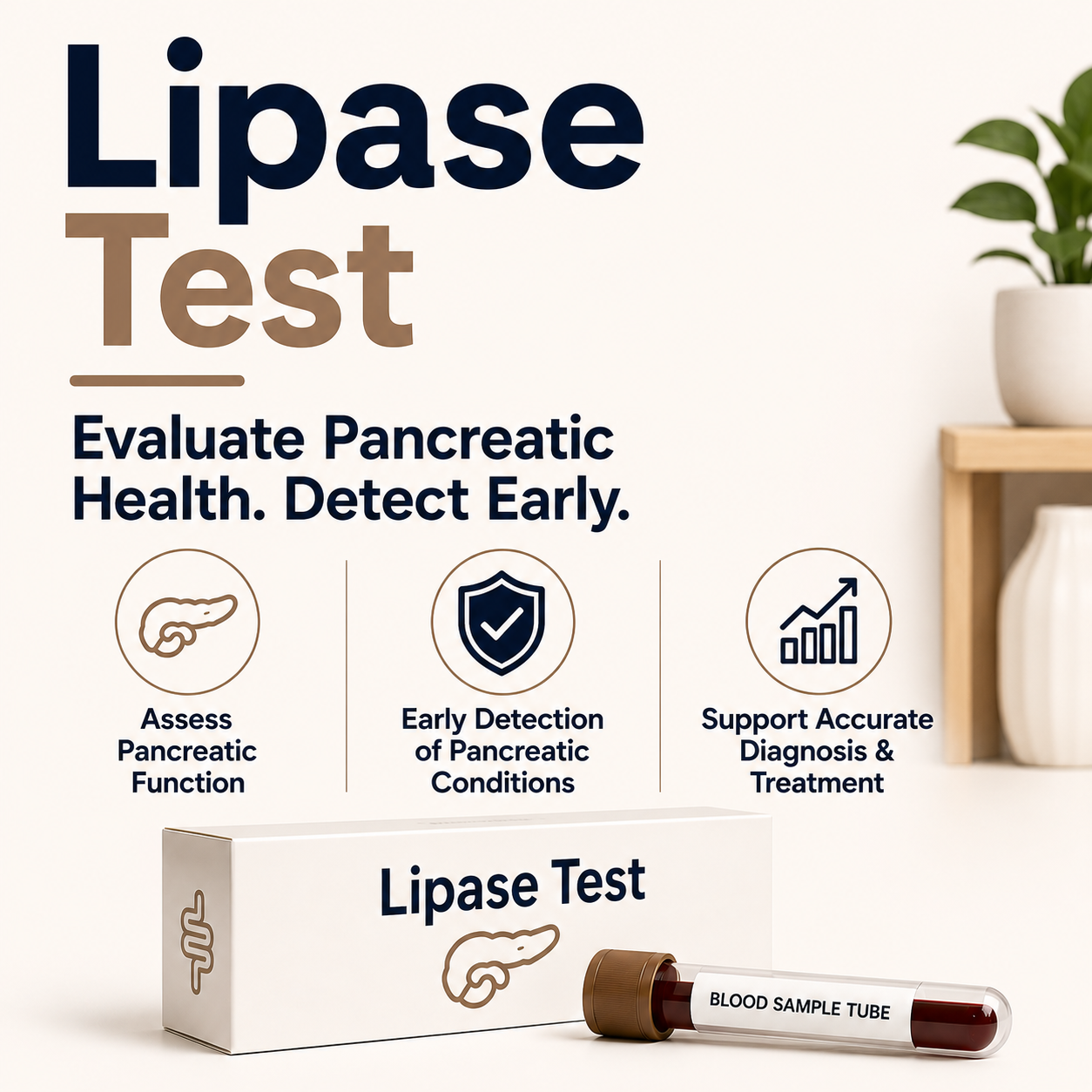
Our Lipase Blood Test measures the level of lipase, an important digestive enzyme produced primarily by the pancreas.
Lipase helps the body digest fats. When the pancreas becomes inflamed or damaged, lipase can be released into the bloodstream in increased amounts. For this reason, a blood lipase test is commonly used by healthcare professionals when investigating possible pancreatic conditions, particularly acute pancreatitis.
A lipase result can provide useful information about pancreatic function, but it should always be interpreted alongside your symptoms, medical history, other laboratory results and, where appropriate, imaging or other investigations.
What Is a Lipase Blood Test?
A lipase blood test measures the concentration of lipase in a blood sample.
Lipase is an enzyme that helps break down dietary fats during digestion. Most circulating lipase originates from the pancreas, although lipase is also produced in smaller amounts by other tissues, including the stomach and salivary glands.
When pancreatic cells are damaged or inflamed, blood lipase levels can rise. A significantly elevated lipase level can be associated with acute pancreatitis, although there are other possible causes of an abnormal result.
Why Have a Lipase Blood Test?
A lipase test may be useful when investigating symptoms or conditions that could involve the pancreas.
It may be used to:
- Investigate possible pancreatitis
- Assess pancreatic health
- Investigate certain causes of abdominal pain
- Support the assessment of pancreatic disorders
- Monitor certain pancreatic conditions
- Provide additional information alongside other blood tests
Lipase testing is particularly relevant when symptoms may be associated with pancreatic inflammation.
Symptoms That May Lead to Lipase Testing
Healthcare professionals may request a lipase blood test when someone experiences symptoms such as:
- Upper abdominal pain
- Abdominal pain that may radiate towards the back
- Nausea or vomiting
- Abdominal tenderness or swelling
- Fever
- Loss of appetite
- Digestive symptoms associated with suspected pancreatic disease
- Jaundice or yellowing of the skin and eyes
These symptoms can have many different causes, so a lipase test should not be used on its own to determine the cause.
What Can a Lipase Test Help Investigate?
An abnormal lipase result can occur in a number of conditions.
Pancreatitis
Lipase is commonly measured when acute pancreatitis is suspected. Significantly elevated blood lipase levels can be an important finding in the assessment of acute pancreatitis.
Other Pancreatic Conditions
Abnormal lipase levels may also occur with other pancreatic conditions, including pancreatic duct obstruction and certain pancreatic diseases.
Other Medical Conditions
Raised lipase levels can occur for reasons that are not directly related to pancreatitis, including some kidney, gallbladder, intestinal and gastrointestinal conditions. Certain medicines can also affect lipase levels.
For this reason, an abnormal result should always be interpreted by a healthcare professional.
Understanding Your Lipase Result
Your laboratory report will provide your measured lipase level together with the laboratory’s applicable reference range.
Normal Lipase Result
A result within the laboratory’s reference range generally indicates that your measured blood lipase level is not elevated according to that laboratory’s reference interval.
However, a normal result does not completely rule out every pancreatic or gastrointestinal condition.
Elevated Lipase Result
An elevated lipase level may indicate pancreatic inflammation or another condition affecting the pancreas or digestive system.
A particularly high lipase level can occur in acute pancreatitis, but elevated lipase can have several possible causes.
Low Lipase Result
Lower-than-normal lipase levels can sometimes occur in people with chronic pancreatic conditions where pancreatic enzyme-producing cells have been damaged.
A low result must be interpreted in the context of your overall health and other test results.
Can a Lipase Test Diagnose Pancreatitis?
Not by itself.
Lipase is an important laboratory marker used when pancreatitis is suspected, but diagnosis generally requires consideration of symptoms, clinical examination and other investigations.
Additional blood tests, such as amylase, and sometimes imaging may be used as part of a clinical assessment.
Does a High Lipase Level Mean I Have Pancreatitis?
Not necessarily.
Although a significantly elevated lipase level can be associated with acute pancreatitis, increased lipase can also occur with other medical conditions.
Your result needs to be interpreted alongside your symptoms, medical history and other clinical findings.
Is Lipase the Same as Amylase?
No.
Both lipase and amylase are digestive enzymes, but they perform different functions.
Lipase helps break down fats, while amylase helps break down carbohydrates. Both may be measured when investigating pancreatic conditions, although lipase is generally considered a more specific marker for pancreatitis than amylase.
Sample Type
Blood sample
A lipase test is performed using a blood sample. In a standard clinical setting, blood is collected from a vein using a small needle.
If your testing service uses a home blood collection method, follow the collection instructions supplied with your kit carefully.
Do I Need to Fast Before a Lipase Test?
Preparation requirements can vary depending on the laboratory and the wider set of tests being performed.
Some lipase testing guidance recommends fasting before the test, while other laboratory services may not require fasting.
Always follow the specific preparation instructions provided with your test.
Do not stop taking prescribed medicines unless your healthcare professional specifically instructs you to do so. Some medicines and supplements can affect lipase results.
How Does the Home Lipase Test Work?
1. Order Your Test
Order your Lipase Blood Test online and receive your home collection kit.
2. Collect Your Sample
Follow the instructions supplied with your kit to collect the required blood sample.
3. Return Your Sample
Package and return your sample according to the laboratory’s instructions. It is important to follow the specified collection, storage and postage requirements to help ensure that your sample remains suitable for analysis.
4. Laboratory Analysis
Your sample is analysed for lipase, and your result is compared with the laboratory’s applicable reference range.
5. Receive Your Results
Your laboratory report will provide your lipase measurement and relevant reference information.
Turnaround times depend on the laboratory and sample delivery process. Please refer to the specific product information supplied with your test for the expected turnaround time.
Who May Consider a Lipase Blood Test?
A lipase blood test may be appropriate for adults who:
- Have been advised to check their lipase level
- Are investigating symptoms potentially associated with pancreatic conditions
- Have a history of pancreatic problems
- Are monitoring a known pancreatic condition under medical supervision
- Want additional laboratory information about pancreatic health
If you have significant or persistent symptoms, you should seek medical advice rather than relying on a home test alone.
When Should I Seek Urgent Medical Attention?
A lipase test should not be used to delay medical assessment when serious symptoms are present.
Seek urgent medical attention if you develop severe or persistent abdominal pain, particularly if the pain is accompanied by repeated vomiting, fever, fainting, difficulty breathing, jaundice or significant deterioration.
Acute pancreatitis can require urgent hospital assessment and treatment.
Why Choose Repose Healthcare?
At Repose Healthcare, we make laboratory testing more convenient and accessible.
Our Lipase Blood Test provides a laboratory measurement of an important pancreatic digestive enzyme, allowing you to obtain additional information about your lipase level from the convenience of home collection where available.
Our service provides:
- Convenient home sample collection
- Laboratory-based analysis
- Secure results
- Confidential handling of your information
- Clear testing instructions
- Professional customer support
Test Summary
| Feature | Details |
|---|---|
| Test | Lipase Blood Test |
| Biomarker | Lipase |
| Sample Type | Blood |
| Main Purpose | Assessment of blood lipase levels |
| Common Clinical Use | Investigation of pancreatic conditions, particularly pancreatitis |
| Collection | Home collection where available |
| Results | Laboratory report |
| Interpretation | Results should be considered alongside symptoms and clinical information |
Important Medical Disclaimer
This Lipase Blood Test is intended to provide information about your blood lipase level and is not intended to diagnose or exclude pancreatitis, pancreatic disease or any other medical condition.
An abnormal lipase result can have several possible causes and does not necessarily mean that pancreatitis or another serious condition is present. Similarly, a result within the laboratory reference range does not guarantee that there is no pancreatic or gastrointestinal disease.
Lipase results should be interpreted alongside your symptoms, medical history, medications, other laboratory results and, where appropriate, imaging or clinical examination.
Do not start, stop or change any medication based solely on the result of this test.
If you have persistent or unexplained abdominal pain, nausea, vomiting, fever, jaundice or other concerning symptoms, seek medical advice promptly.
If you experience severe or worsening abdominal pain, particularly with vomiting, fever, jaundice, fainting, difficulty breathing or significant illness, seek urgent medical attention rather than relying on this test.
This test is intended to provide additional health information and should not be used as a substitute for professional medical advice, diagnosis or treatment.
Related products