An H. pylori test is a simple diagnostic tool that looks for a specific type of bacteria in your stomach. These bacteria, known as Helicobacter pylori, can often be the hidden culprit behind persistent digestive problems like chronic indigestion, gastritis (inflammation of the stomach lining), and painful ulcers. For example, if you've been relying on antacids for months with no real relief, this test could be the key to finding the real cause.
Think of H. pylori as an uninvited guest setting up camp in your stomach lining. For many people, it lives there quietly without causing any drama. But for others, it can stir up significant trouble, leading to uncomfortable and relentless symptoms. An H. pylori test is the only definitive way to find out if this particular bacterium is the reason for your discomfort.
Knowing you need an H. pylori test starts with recognising the signals your body is sending. If you're struggling with ongoing digestive issues that just don't seem to get better, it might be more than just a "sensitive stomach."
Many symptoms of an H. pylori infection can look a lot like other common gut problems, which is why testing is so crucial for getting a clear picture. You should consider getting tested if you regularly deal with:
These symptoms are your body’s way of telling you that something isn’t right. Ignoring them can lead to more serious issues down the line, like peptic ulcers. While H. pylori is a very common bacterium, its potential to cause real harm makes testing a vital first step toward getting relief.
The surprising truth is that around 40% of people in the UK carry Helicobacter pylori in their stomach. For most, it remains dormant and harmless. However, for about 1 in 10 carriers, it can trigger serious issues like ulcers or gastritis.
In the past, getting answers meant booking a GP appointment, waiting, and then possibly waiting again for a referral. Now, you can take a more direct approach right from your own home. An at-home H. pylori test offers a convenient and private way to investigate your symptoms without the usual delays.
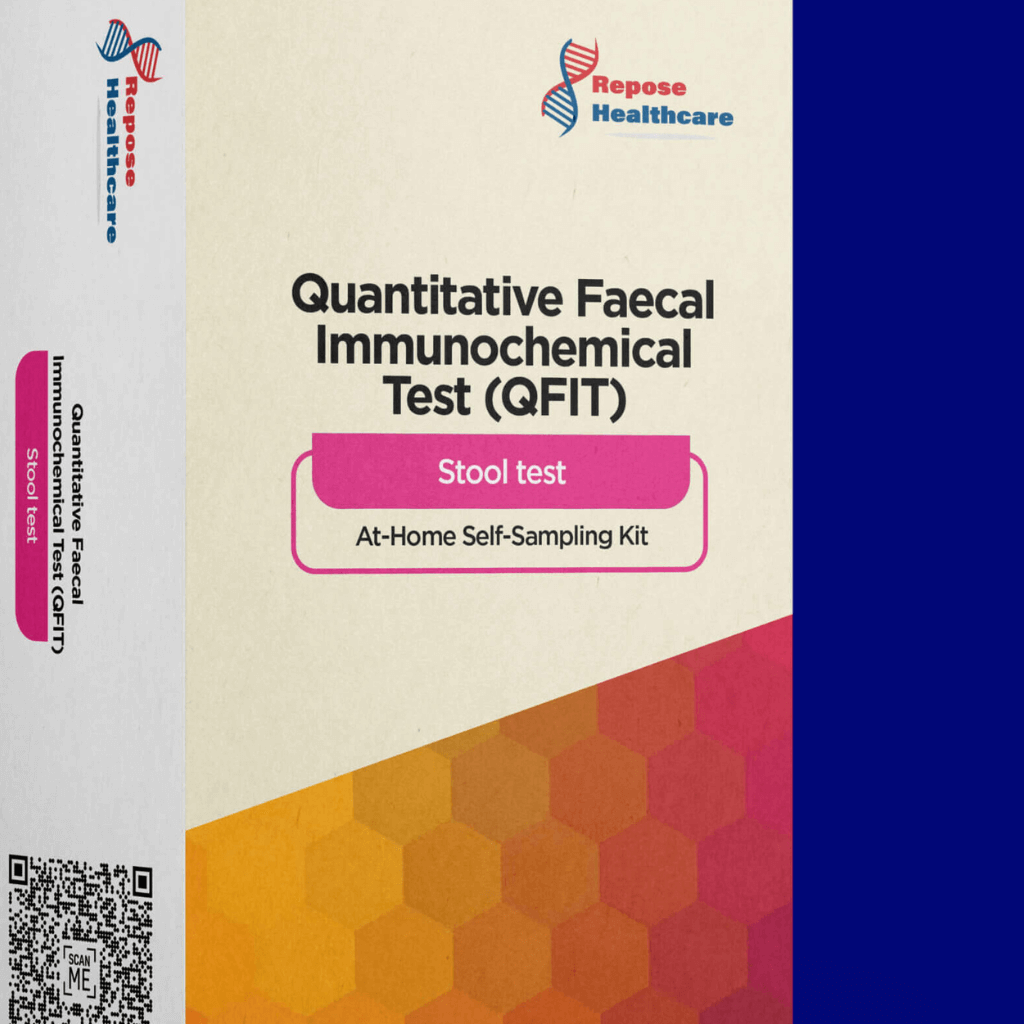
For instance, the Repose Healthcare H. Pylori Stool Antigen Test is specifically designed to detect an active infection with high accuracy. This is a critical distinction because it confirms the bacteria are currently present and likely causing your symptoms, rather than just showing you've been exposed in the past.
By identifying the root cause, you and your doctor can put together a targeted treatment plan to get rid of the bacteria and start healing your gut. To get a broader view of your digestive wellness, you might also find it helpful to learn about what is a gut microbiome test.
When you’re trying to get to the bottom of stomach issues, choosing the right H. pylori test can feel a bit overwhelming. Let's break it down and look at the three main non-invasive methods: the stool antigen test, the urea breath test, and the blood antibody test. Each one works differently, a bit like detectives using different clues to solve the same case.
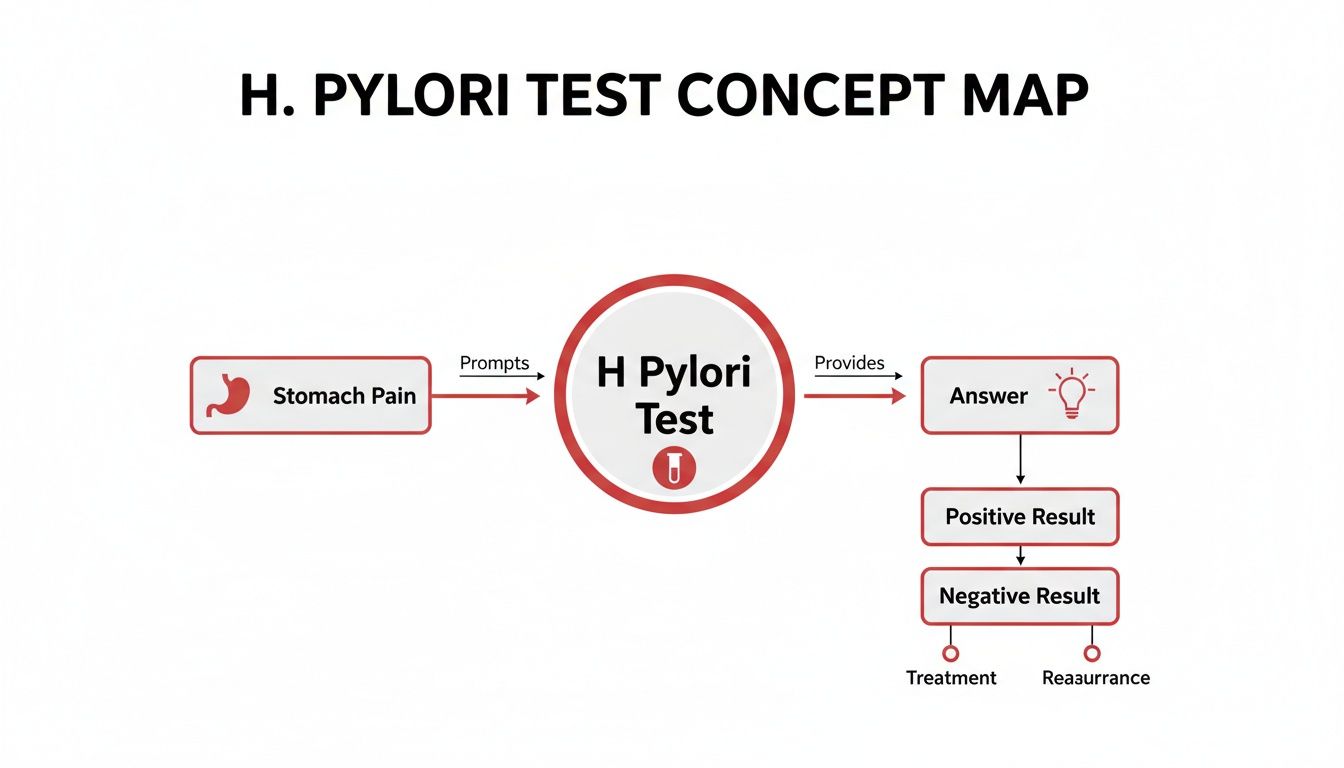
The journey from nagging stomach pain to a clear answer is simpler than you might think. It’s all about getting the right test to bridge the gap between symptoms and a diagnosis that brings relief.
The stool antigen test is widely seen as a gold standard for spotting an active infection. Think of it as a forensic investigator searching for the bacteria's direct footprint at the scene.
This test looks for antigens—specific proteins that are part of the H. pylori bacterium itself—in your stool sample. If these proteins are found, it’s concrete proof that the bacteria are currently living and active in your stomach. It's precisely why Repose Healthcare uses this method for our H. Pylori Stool Antigen Test. It’s highly accurate, non-invasive, and gives you a clear yes-or-no answer.
The urea breath test is another highly reliable method, also recommended by UK guidelines. This clever test works by detecting a chemical reaction caused by the bacteria. First, you'll drink a special solution containing a substance called urea.
If H. pylori is present in your stomach, it will break down this urea, releasing extra carbon dioxide in the process. You then simply breathe into a collection bag. If the analysis shows a significant jump in carbon dioxide compared to your baseline sample, it points to an active infection. It’s a smart way to spot the bacteria's activity without ever needing to see it directly.
Finally, we have the blood antibody test. Unlike the other two, this test doesn't look for the bacteria itself but for your body's reaction to it. It checks your blood for antibodies, which are proteins your immune system creates to fight off an infection.
Here’s the catch: this test can't tell the difference between a current, active infection and one you successfully fought off years ago. Once you've had H. pylori, these antibodies can hang around in your blood for a long time, leading to a positive result even if the bacteria are long gone. This makes it unreliable for diagnosing a current problem. If you're curious about how different sample types compare, you can learn more about whether at-home blood tests are accurate for various conditions.
The key takeaway is simple: for an accurate diagnosis of a current infection, both the stool antigen test and the urea breath test are far superior. They confirm the bacteria are present and active right now, which is the crucial piece of information needed to decide on treatment.
UK clinical guidelines, including those from NICE (National Institute for Health and Care Excellence), strongly recommend using either a stool antigen or urea breath test for initial diagnosis. Why? Because they provide the most reliable evidence of an active infection.
Despite these clear recommendations, old habits die hard. Research into UK general practices has shown a huge variation in testing methods, with some areas requesting blood tests up to 600 times more than others. This suggests many practitioners historically weren't aware of the more accurate alternatives.
Thankfully, things are changing. A 2015 audit revealed that 94% of responding English labs now provide the stool antigen test as a first-line option, highlighting a welcome shift toward better diagnostic standards.
Choosing a reliable method like the Repose Healthcare H. Pylori Stool Antigen Test ensures you get a clear, actionable result based on the best science available, empowering you to take the next step with confidence.
Taking control of your gut health shouldn't be complicated. Our at-home H. pylori test is designed to be a simple, private, and efficient way to get to the bottom of your nagging symptoms and find clear, actionable answers. The entire process, from the moment you order to receiving your results, is built around your convenience.
Your journey starts the second you decide to investigate what’s going on. By ordering our H. Pylori Stool Antigen Test, you’re taking that crucial first step. We dispatch the test kit quickly, and it arrives in discreet packaging to respect your privacy at all times.
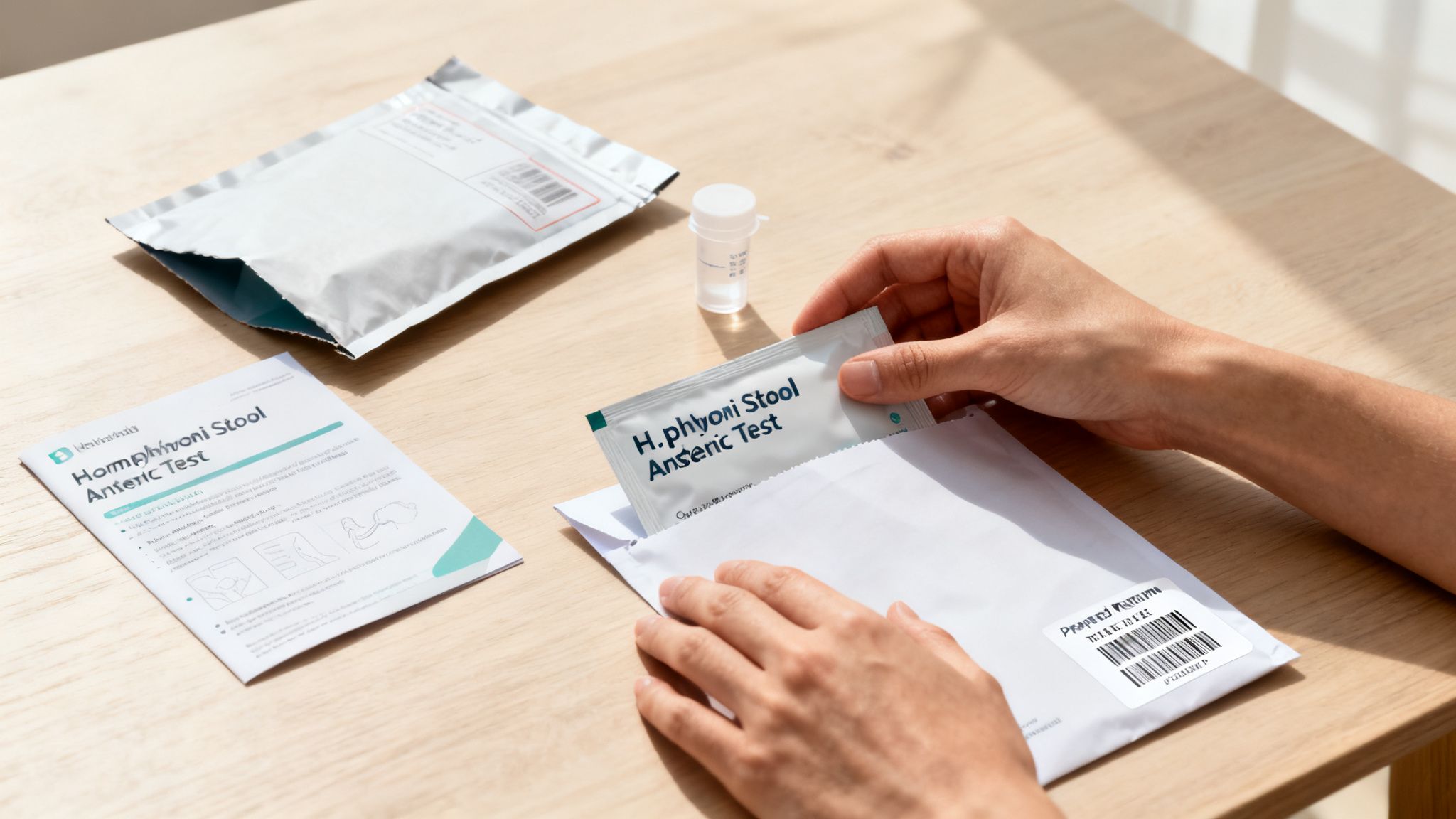
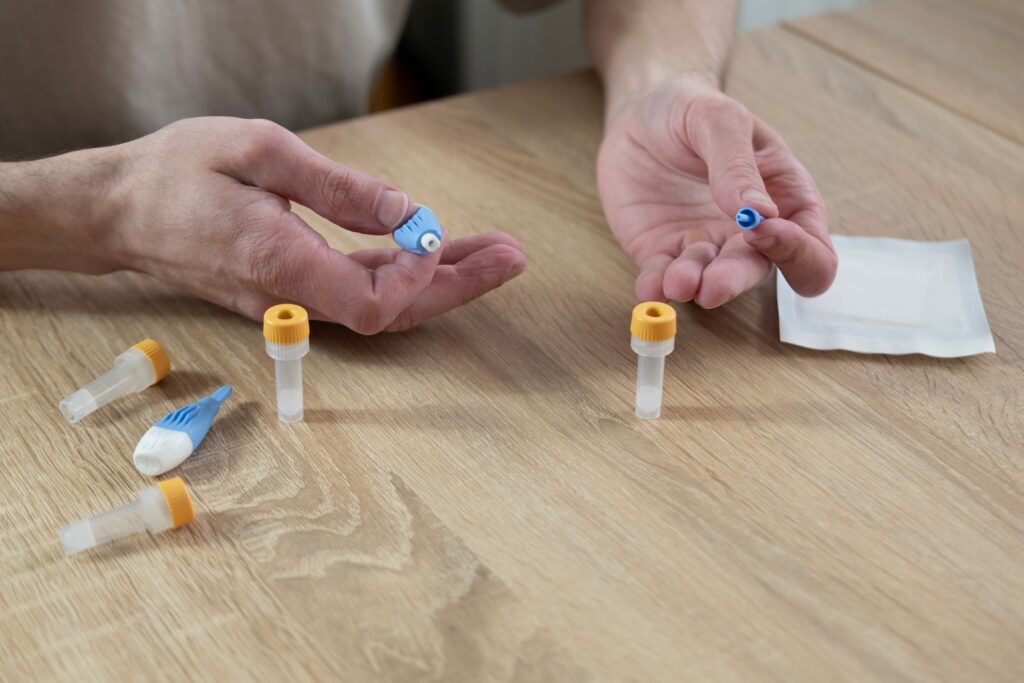
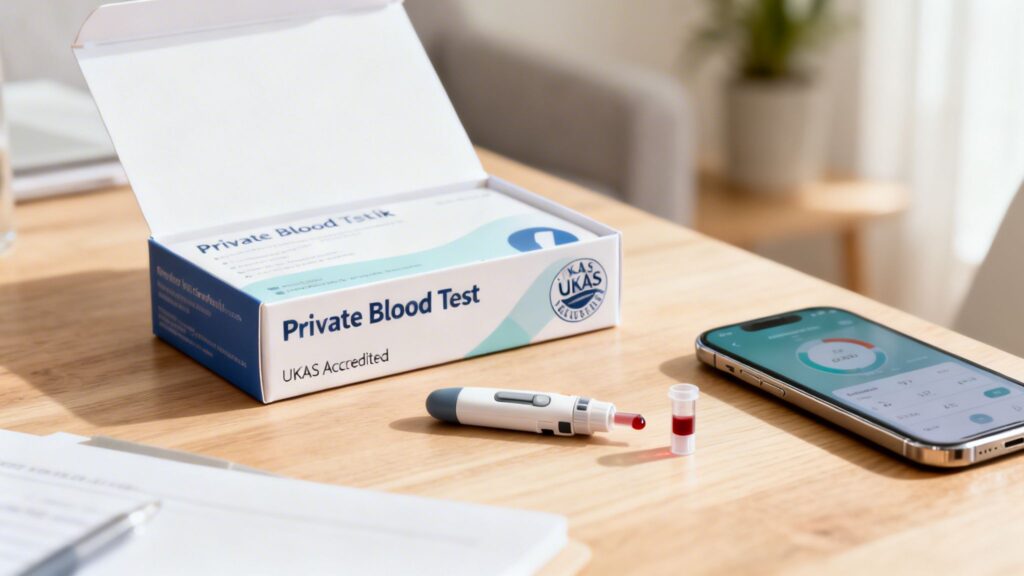
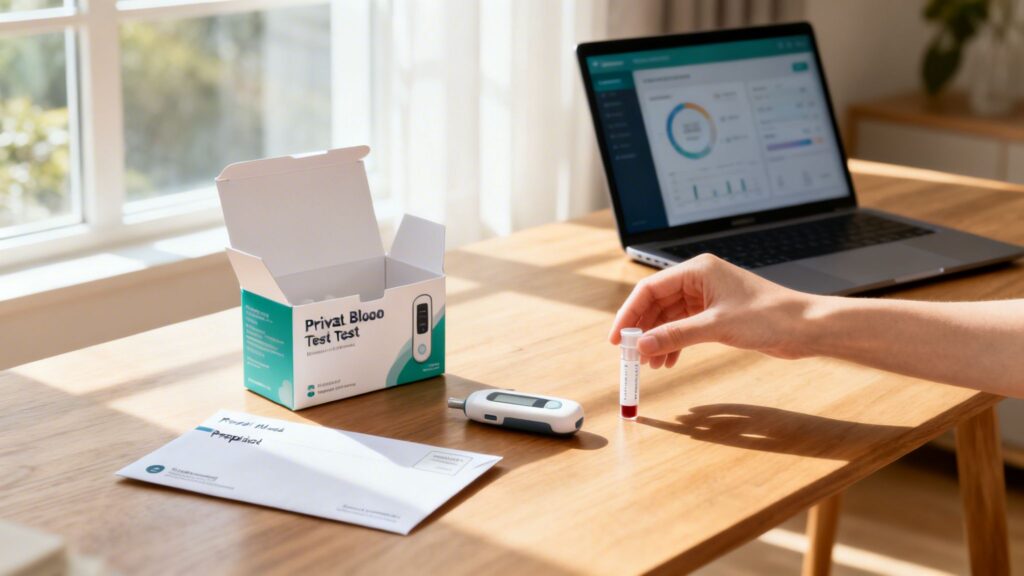
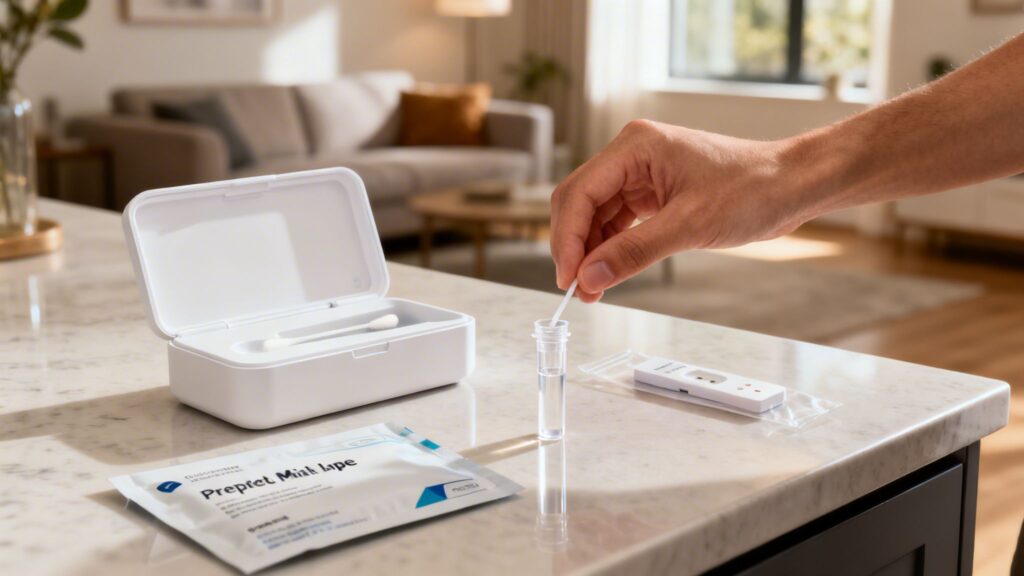
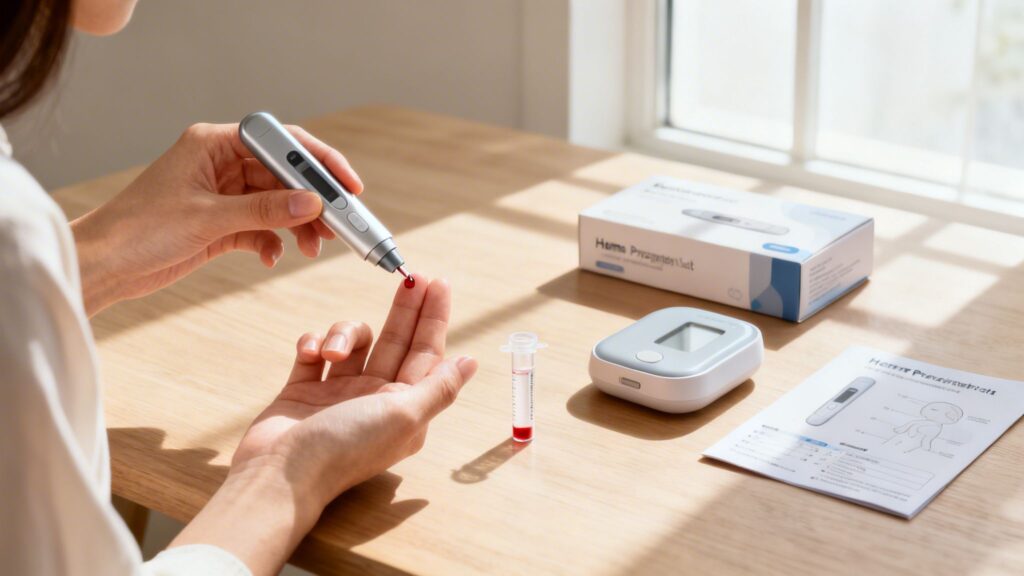
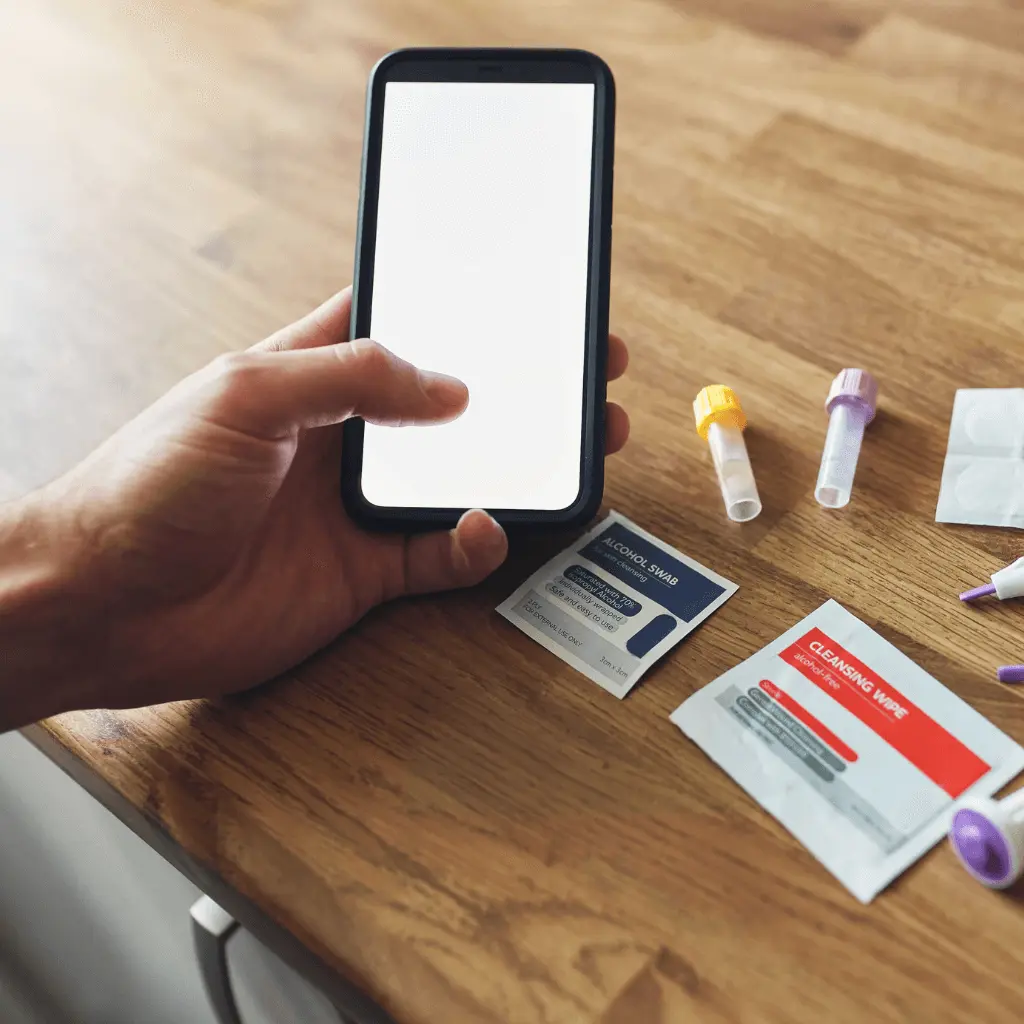
Inside the kit, you’ll find everything you need to complete your H. pylori test without any guesswork. We've included clear, easy-to-follow instructions that walk you through each part of the process.
The main components of your kit include:
You can collect your sample in the comfort and privacy of your own bathroom, at a time that suits you. For example, a customer named Sarah from Manchester, who’d been struggling with bloating for months, told us she appreciated being able to do the test on a quiet Sunday morning without the stress of scheduling a clinic visit.
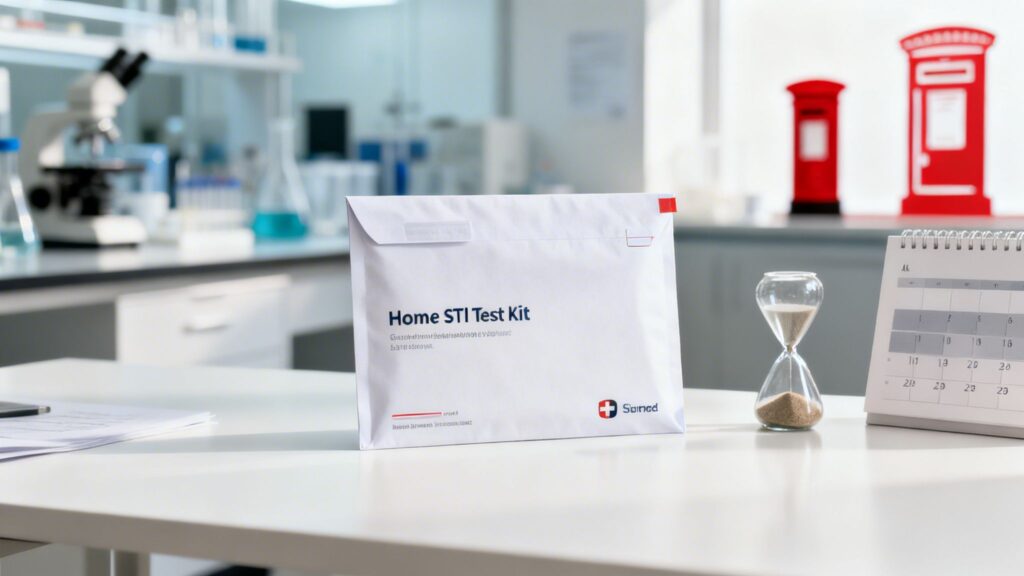
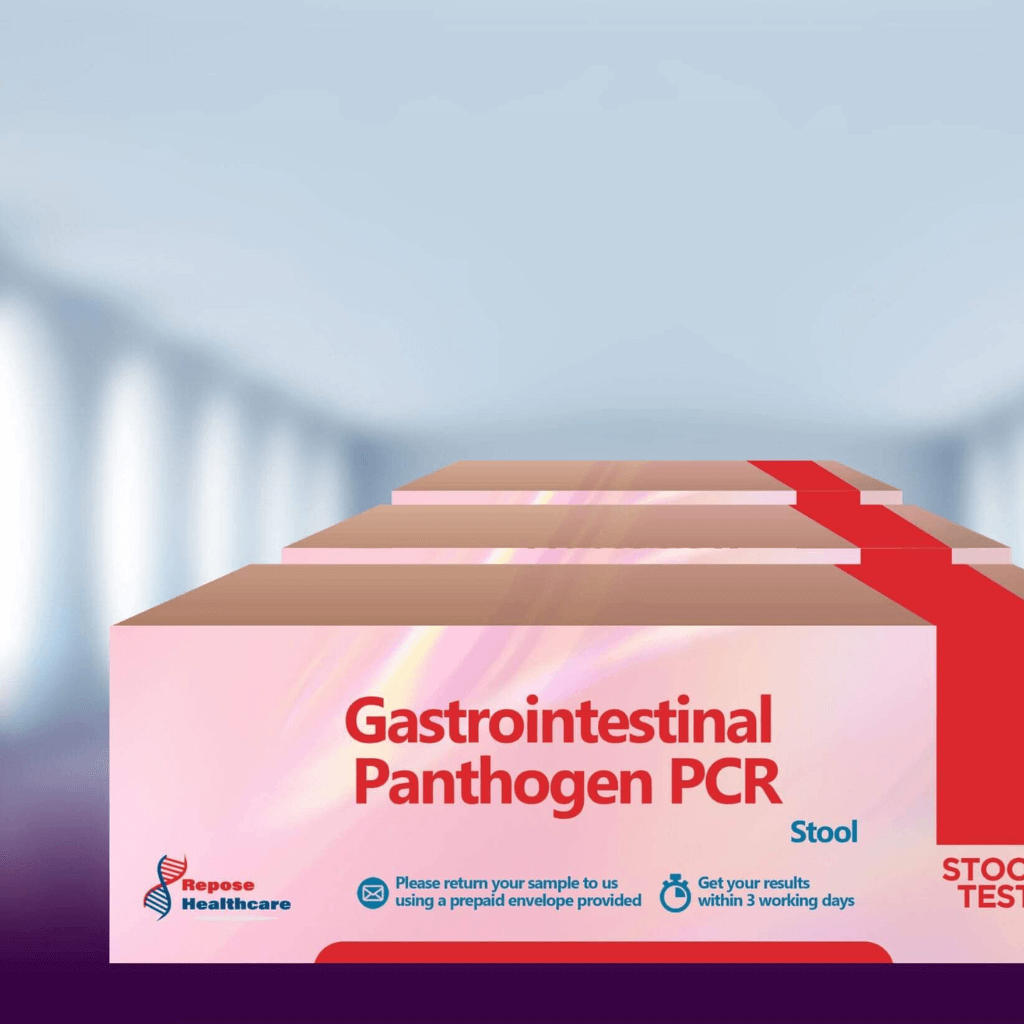
Once collected, you simply place the sample in the protective packaging and pop it into the prepaid return mailer. The tracked label means you can see exactly when it’s on its way to our laboratory, giving you complete peace of mind.
As soon as your sample arrives at our UK-accredited laboratory, our clinical scientists get to work. They use advanced analytical methods to check for the specific antigens that signal an active H. pylori infection. This isn't a simple screening; it's a precise diagnostic test that meets the highest clinical standards.
The entire process is designed for speed and security. Our goal is to minimise the waiting and worrying, delivering reliable results that empower you to take the next steps in your health journey with confidence.
Typically, you'll receive a secure notification that your results are ready within just 1-3 working days of the lab receiving your sample. This is often significantly faster than waiting for results through traditional healthcare routes, where delays can add to your anxiety.
Your results are delivered to our secure, GDPR-compliant online dashboard, meaning your personal health information is protected and accessible only to you. We present everything in a clear, easy-to-read format, explaining exactly what a "Positive" or "Negative" result means.
If your result comes back positive, for instance, our report provides the crucial information you need to share with your GP. This allows them to quickly prescribe the right course of treatment, such as the standard "triple therapy," and get you on the path to recovery without delay. It’s all designed to put you back in control, turning uncertainty into a clear plan of action.
Getting a reliable result from your H. pylori test starts long before you collect your sample. Think of it as setting the stage for an accurate performance. If you don't prepare properly, you risk a false-negative result—where the test says you're clear, even when the bacteria are still there.
This happens because some very common medications can temporarily suppress or ‘hide’ H. pylori, making it impossible for the test to detect. It's a bit like trying to spot a shy animal in the woods; if you make a lot of noise by taking certain drugs, it simply goes into hiding, and you’ll leave thinking it was never there. For your test to work, we need the bacteria out in the open.
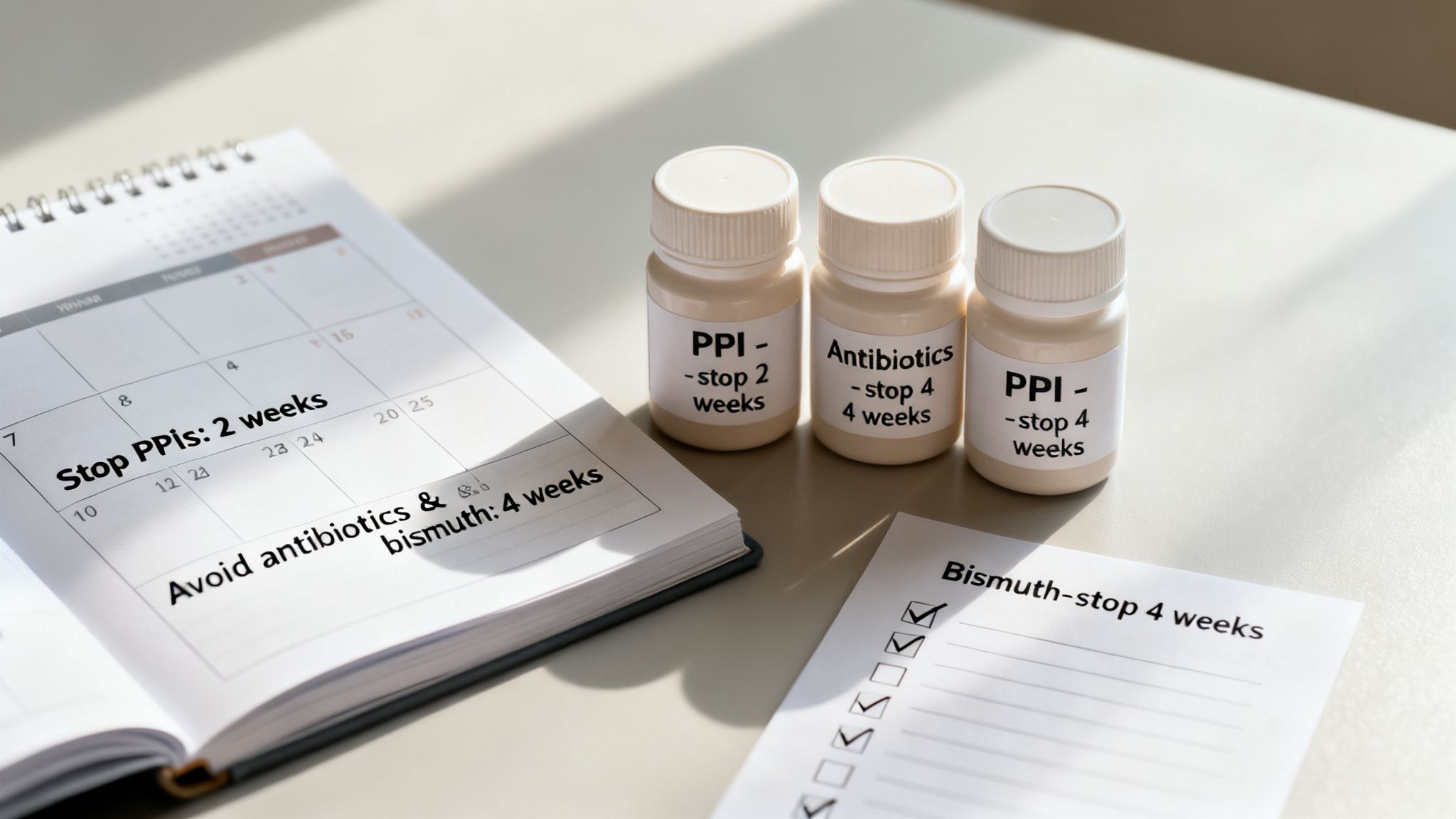
To ensure the sample you send to Repose Healthcare gives us a true picture of your gut health, following UK clinical guidance is crucial. This means creating a temporary gap between taking specific medications and collecting your sample. Of course, always have a quick chat with your GP before stopping any prescribed medication.
The main culprits that can throw off your results include:
It’s important to realise that these medications don't actually cure the infection; they just reduce the amount of bacteria to a level that might not get picked up by the test. Taking these simple preparatory steps is the best way to get a result you can truly trust.
To make things straightforward, here’s a simple checklist to run through before using your H. Pylori Stool Antigen Test. Following this ensures you provide the best possible sample for analysis.
This careful preparation is a vital part of the process. If you want to dive deeper into how at-home testing works and its benefits, have a read of our guide on essential home stool tests for your gut health. It’s also sometimes helpful for patients to be aware of insurance requirements; understanding what is prior authorization can be useful as it is occasionally needed before certain tests or procedures are approved. By taking these steps, you’re empowering yourself to get a clear and accurate diagnosis.
Getting your test results is the moment of truth. It’s where uncertainty gives way to clarity, and we’ve made sure our reports are simple to understand so you know exactly what they mean and what your next steps should be.
Your Repose Healthcare report will give you one of two clear outcomes: ‘Negative’ or ‘Positive’. Each result points you down a different path, but both are designed to help you move forward with confidence.
If your result comes back as ‘Negative’, it means our lab didn’t find any signs of an active H. pylori infection in your sample. This is great news, as it effectively rules out this particular bacterium as the culprit behind your symptoms.
A negative result doesn't mean your symptoms aren't real, though. It simply means it’s time to look at other possibilities. Your next practical step is to share the report with your GP. They can then continue the investigation, considering other conditions like IBS, food intolerances, or different gut health issues.
A ‘Positive’ result confirms that an active H. pylori infection is present in your stomach. While this might sound worrying, it’s actually a huge step forward. You now have a clear, actionable diagnosis—the crucial piece of information needed to get started on effective treatment.
With this confirmation, the next step is straightforward. Book an appointment with your GP and share your detailed Repose Healthcare report. This gives them everything they need to prescribe the right treatment, often without needing to run any more diagnostic tests.
The standard treatment for H. pylori is highly effective and often called 'triple therapy'. This usually involves a short course of two different antibiotics to kill the bacteria, plus a Proton Pump Inhibitor (PPI) to lower stomach acid and let your stomach lining heal.
It's vital to complete the entire course of medication for it to work. Beyond the technical side of things, the whole process of testing is part of a patient's journey, which underscores why it's so important for clinics to continually improve patient experience in your healthcare practice and offer proper support.
Once you've finished your treatment, your journey isn't quite over. It's essential to confirm that the medication has successfully cleared the infection. This follow-up test is just as important as the initial one.
We recommend waiting at least four weeks after finishing your antibiotics before you re-test. This pause gives any stubborn, lingering bacteria enough time to multiply to a detectable level, which is key for an accurate result. Using a reliable H. Pylori Stool Antigen Test again is the best way to confirm the infection is gone for good.
This final check gives you peace of mind and confirms you’re truly on the road to recovery. The reliability of this method is well-established. For instance, compliance with H. pylori testing guidelines in English labs is strong, with 94% using the recommended stool antigen test over less reliable methods. You can learn more about these findings on testing protocols and reliability. This data validates the accuracy you can expect from our at-home kits, which are processed by the same UK-accredited labs.
When you're dealing with unpleasant gut symptoms, the world of diagnostic testing can feel a bit overwhelming. To help clear things up and make you feel more confident about the process, we've put together answers to the most common questions we get about H. pylori testing in the UK and Ireland.
Yes, absolutely. The standard route is to book an appointment with your GP, talk through your symptoms, and if they suspect an H. pylori infection, they'll refer you for a test.
While this is a solid, reliable option, it can often mean waiting a while—first for the GP appointment itself, and then again for the test results. An at-home test gives you a more direct and often much faster alternative.
For instance, using a Repose Healthcare kit lets you skip the initial GP visit and take action right away. You can order the test, collect your sample in the privacy of your own home, and get your results online in just a few days. This empowers you to then have a much more informed conversation with your doctor.
This is a really important question, and the answer is reassuringly simple: at-home stool antigen tests are extremely accurate, provided they are processed by an accredited laboratory. The technology and methods used are identical to those used for tests ordered by your GP.
The key isn't where you collect the sample, but what happens to it afterwards. Our kits are sent directly to UK-accredited labs that operate under strict clinical standards. The stool antigen method is considered a 'gold standard' because it directly detects proteins from the bacteria, confirming an active infection.
In short, the accuracy isn’t determined by whether you collect the sample at home or in a clinic. It’s all down to the quality of the laboratory analysis. Our H. Pylori Stool Antigen Test meets the same high standards you’d expect from any clinical setting, giving you a result you can rely on.
Unfortunately, yes, it is possible for H. pylori to come back after treatment, though it's not very common if the initial treatment is completed successfully. This can happen for a couple of main reasons.
First, if the full course of antibiotics isn't finished, some bacteria might survive and start to multiply again. This is precisely why it’s so vital to take all your prescribed medication exactly as your doctor instructs, even if you start feeling better halfway through.
Second, reinfection from another source is also possible, although this is less frequent in adults in the UK. This really highlights the importance of a follow-up test after treatment. Making sure the infection has been completely wiped out is the best way to ensure your symptoms don't make an unwelcome return.
The turnaround time for results is one of the biggest differences between the traditional route and using an at-home service like Repose Healthcare. Once you pop your sample in the post using the prepaid, tracked envelope, our lab gets straight to work as soon as it arrives.
You can typically expect your secure, online results within just 1-3 business days after our lab receives your sample. This rapid turnaround cuts down the period of uncertainty and worry significantly.
Think about it. If you've been dealing with persistent stomach pain for weeks, getting a clear answer in a matter of days—rather than waiting weeks for various appointments and lab processing—means you can move forward with a treatment plan much, much faster.
Ready to get clear answers about your digestive health without the long wait? At Repose Healthcare, our at-home H. Pylori Stool Antigen Test provides a fast, accurate, and convenient way to find out if this common bacterium is behind your symptoms. Order your test today and take the first step towards feeling better.