A liver function test, or LFT, is a straightforward blood test that gives us a window into how well your liver is coping with its massive workload. By measuring key enzymes, proteins, and other substances made or processed by the liver, it provides a snapshot of its current health.
The results can flag up early signs of inflammation, cellular damage, or problems with its vital manufacturing and filtering duties, giving you actionable insights to take control of your health.
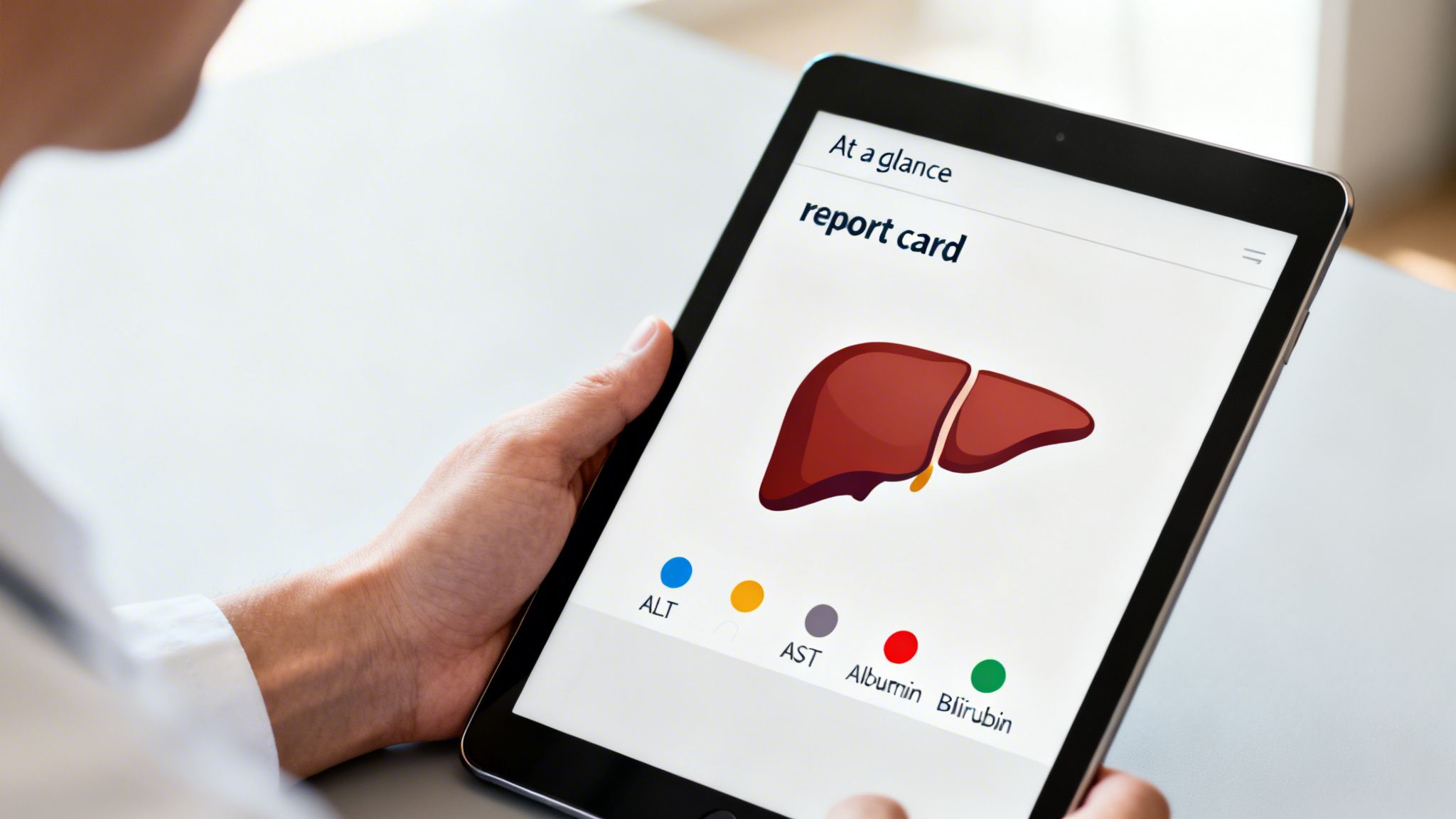
Think of your liver as your body’s hardest-working employee, juggling hundreds of jobs from filtering toxins to producing essential proteins. An LFT is like its performance review. It doesn’t just give a simple pass or fail; it delivers specific feedback on different parts of its job, showing where it’s thriving and where it might be under strain.
This simple blood test measures the levels of different markers circulating in your bloodstream. Some of these markers act as warning signals, indicating that liver cells are stressed or damaged. Others tell us how well the liver is handling its manufacturing role.
For a really deep dive into liver health, testing strategies, and what you can do to support this vital organ, this Liver Masterclass is an excellent resource.
To really get to grips with what your LFT results mean, it helps to know the key players being measured. Each one offers a different clue.
Here’s a quick overview of the main components we look at in a standard LFT panel.
| Marker | What It Is | What It Shows | Practical Example |
|---|---|---|---|
| ALT & AST | Enzymes found inside liver cells. | High levels suggest liver cells are damaged or inflamed, causing enzymes to leak into the blood. | Think of these as alarms. If your liver is stressed by too much alcohol or fat, these alarms go off. |
| ALP & GGT | Enzymes concentrated in the bile ducts. | Raised levels often point to issues with bile flow or potential blockages. | This is like a plumbing alert. A gallstone blocking a duct can cause these levels to spike. |
| Albumin | The main protein made by your liver. | Low levels can indicate a chronic liver problem or poor nutrition, as it reflects the liver's production capacity. | If your liver is a factory, low albumin means production is slowing down, perhaps due to long-term damage. |
| Bilirubin | A waste product from breaking down old red blood cells. | High levels mean the liver isn't clearing waste properly, which can cause jaundice (yellowing of the skin and eyes). | Imagine your liver's waste disposal is blocked. The yellow waste (bilirubin) backs up, causing visible jaundice. |
When looked at together, these markers help a clinician build a detailed picture of what’s happening inside your liver.
An LFT isn't just one number; it's a panel of results. The real insight comes from looking at the pattern across all the markers, which helps pinpoint the type of liver issue you might be facing.
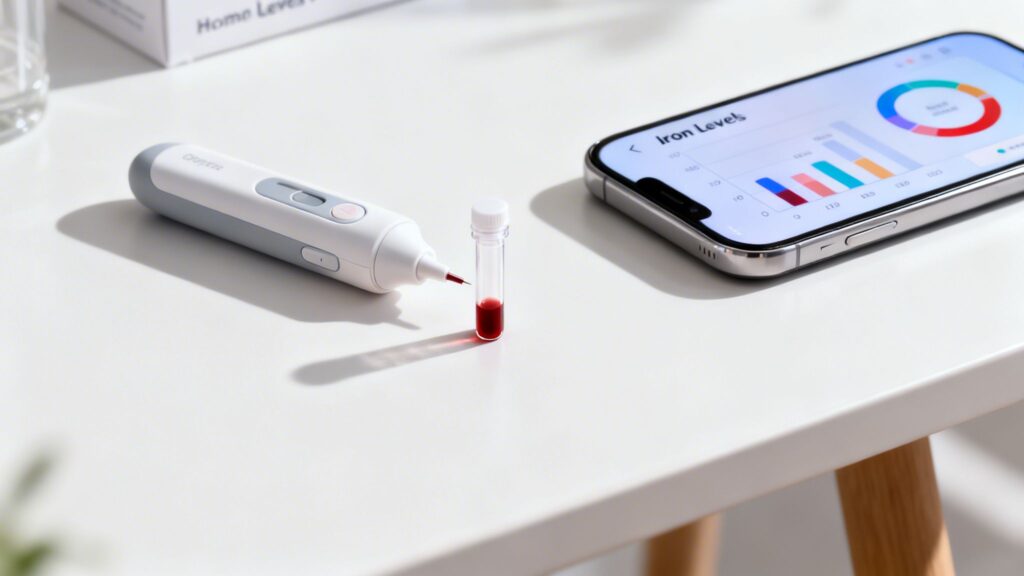
Getting this vital information is more convenient than you might think. With an at-home kit, you can get a clear picture of your liver health without the hassle of a clinic visit. Our at-home Liver Function Test puts this crucial health data right at your fingertips.
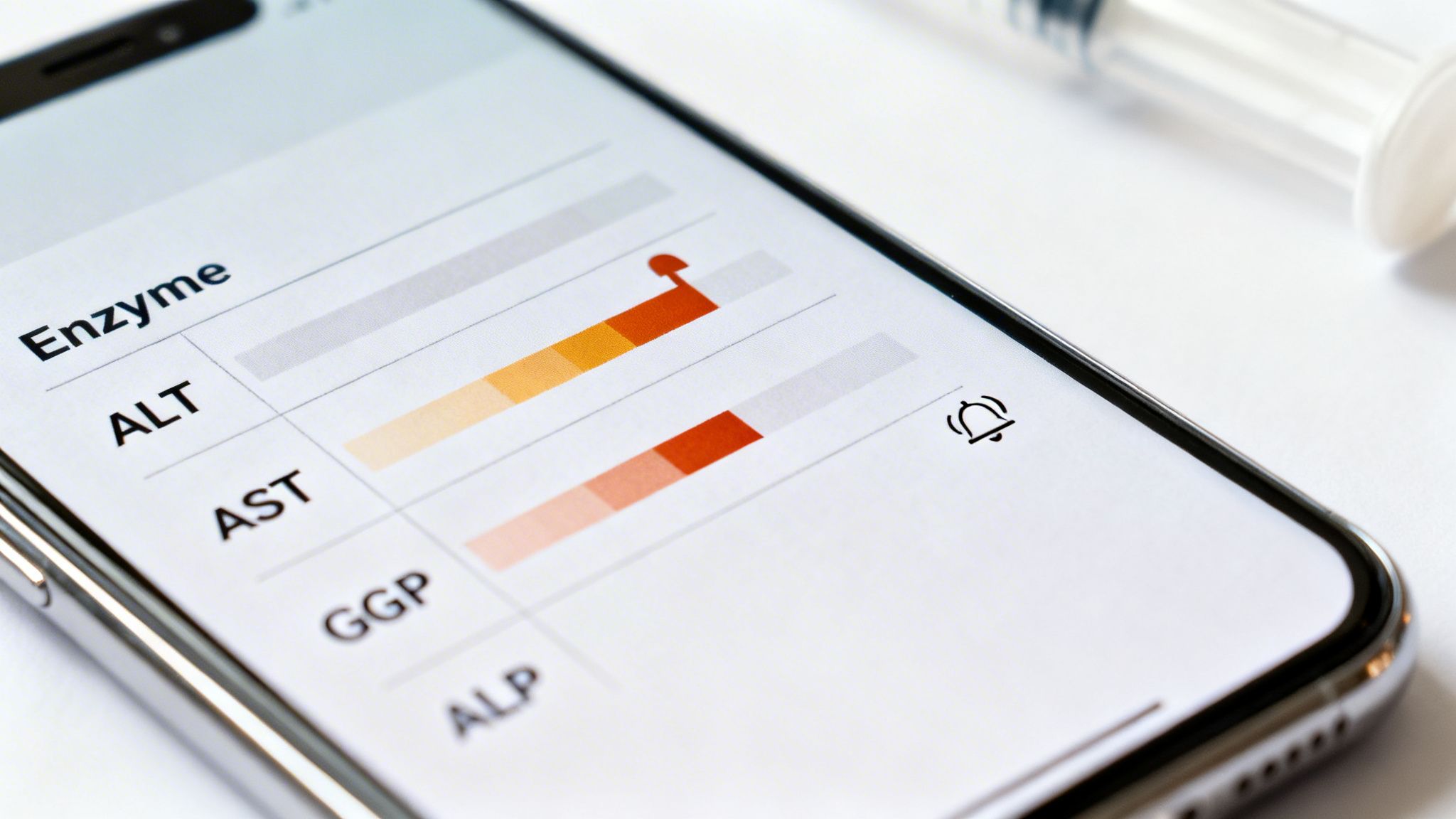
When you first glance at your liver function test (LFT) results, the list of enzymes—ALT, AST, ALP, and GGT—can look like a confusing alphabet soup. The best way to make sense of them is to see them as your liver's internal alarm system. Each one has a different job, and each sounds a different kind of alert.
Think of your liver cells as tiny, delicate balloons. Inside each one are crucial enzymes like Alanine Aminotransferase (ALT) and Aspartate Aminotransferase (AST). As long as your liver is healthy, these enzymes stay neatly inside the cells, quietly getting on with their work.
But if your liver cells get damaged or inflamed, they start to "leak." This is the key to understanding what a liver function test shows: it measures how many of these enzymes have spilled out into your bloodstream. High levels are a direct signal that something is stressing or injuring your liver cells.
ALT is seen as a more specific sign of liver trouble because it's found almost entirely in the liver. AST, on the other hand, is also found in your heart, muscles, and other organs. Think of ALT as a highly sensitive smoke detector just for your liver, while AST is more of a general building alarm that could be set off by other things.
Practical Example: A really tough workout can cause a temporary spike in your AST levels due to normal muscle breakdown. This is perfectly fine, and it’s why doctors look at the overall pattern of your results, not just one number in isolation. If your AST is high but your ALT is normal, it's a clue that the issue might not be your liver at all.
Now let’s look at two other important enzymes: Gamma-Glutamyl Transferase (GGT) and Alkaline Phosphatase (ALP). These are mainly found in the cells that line your bile ducts—the tiny tubes that act as your liver's plumbing system, carrying bile to your gut.
If this system gets blocked or inflamed, pressure builds up, causing these cells to release GGT and ALP into your blood. Think of this as a plumbing blockage alert, which is different from the cell damage alarm triggered by ALT and AST.
Actionable Insight: In the UK, LFTs are crucial for monitoring conditions like alcohol-related liver disease (ARLD). An AST/ALT ratio over 2:1 is a classic sign of alcoholic hepatitis, and a raised GGT can flag heavy drinking even before symptoms appear. Catching this early with a test allows you to make lifestyle changes before long-term damage occurs. You can explore more about how LFTs work in various health contexts by reading these insights on liver diagnostics.
Understanding these patterns is what matters. For instance, a rise in ALP on its own might be due to normal bone growth in a teenager. But when ALP is high alongside GGT, it’s a much stronger sign of a problem with your liver’s bile ducts.
With Repose Healthcare’s at-home Liver Function Test, you can get a clear, reliable picture of all four of these vital enzyme levels from the comfort of your home. This helps you and your healthcare provider decode exactly what your liver is trying to tell you.
Beyond just spotting signs of damage, a liver function test reveals how well your liver is actually doing its job. If you think of your liver as a high-tech factory, the enzymes we've discussed are like alarms for spills and accidents. Proteins and bilirubin, on the other hand, tell you if the production lines and waste disposal systems are running smoothly.
This part of the test looks at your liver’s manufacturing (or 'synthetic') function. It’s a vital check-up on whether your liver has the capacity to build the essential substances your body needs to thrive.
The most important protein your liver churns out is albumin. It's the most abundant protein in your blood, acting like a courier to transport hormones and vitamins, while also keeping fluid safely inside your blood vessels.
A healthy liver maintains a steady production of albumin. But if it’s been weakened by long-term issues like cirrhosis or isn't getting the right fuel due to poor nutrition, it simply can’t keep up.
Actionable Insight: Think of a low albumin level as a red flag for your liver's overall strength. It often points to a chronic problem that's diminished its ability to perform one of its most fundamental roles. If your albumin is low, it’s a powerful signal to work with a doctor to investigate the underlying cause and focus on dietary and lifestyle support.
Your LFT will also measure Total Protein, which is the sum of albumin and another group called globulins. Globulins are crucial for a healthy immune system. By looking at the ratio of albumin to globulins, doctors can get valuable clues about what kind of health issue might be brewing.
Your liver is also your body’s main waste management centre. One of its key jobs is to process bilirubin, a yellow pigment that’s created when old red blood cells are broken down. The liver converts this waste into a water-soluble form and clears it out of the body in your bile.
If your liver struggles to process bilirubin, it backs up in your bloodstream. This is what leads to jaundice—that unmistakable yellowing of the skin and eyes. High bilirubin is a clear sign that your liver’s waste disposal system is either blocked or completely overwhelmed.
Bilirubin levels over 20 µmol/L are a common indicator of jaundice, while low albumin (below 35 g/L) can point to synthetic failure, often seen in advanced liver disease. With one in five UK adults drinking above the recommended guidelines, understanding these markers is a key part of looking after your health. You can find out more about what LFTs can show from this detailed guide on liver diagnostics.
To get a full picture of your liver's production and waste management performance, you can check your levels from home. Our convenient wellness tests include all these crucial markers.
The individual numbers on your liver function test (LFT) report only tell part of the story. The real insights come when you start looking at the patterns. Think of it like being a detective; a single clue is interesting, but connecting multiple clues is what reveals what’s actually going on. Interpreting what a liver function test shows means looking at how the different results relate to each other.
This is where the true value of an LFT becomes clear. Specific combinations of high or low markers can point towards different types of liver stress, helping your doctor to narrow down the potential causes.
This decision tree shows how looking at a combination of results, like albumin and bilirubin, helps guide the next steps.
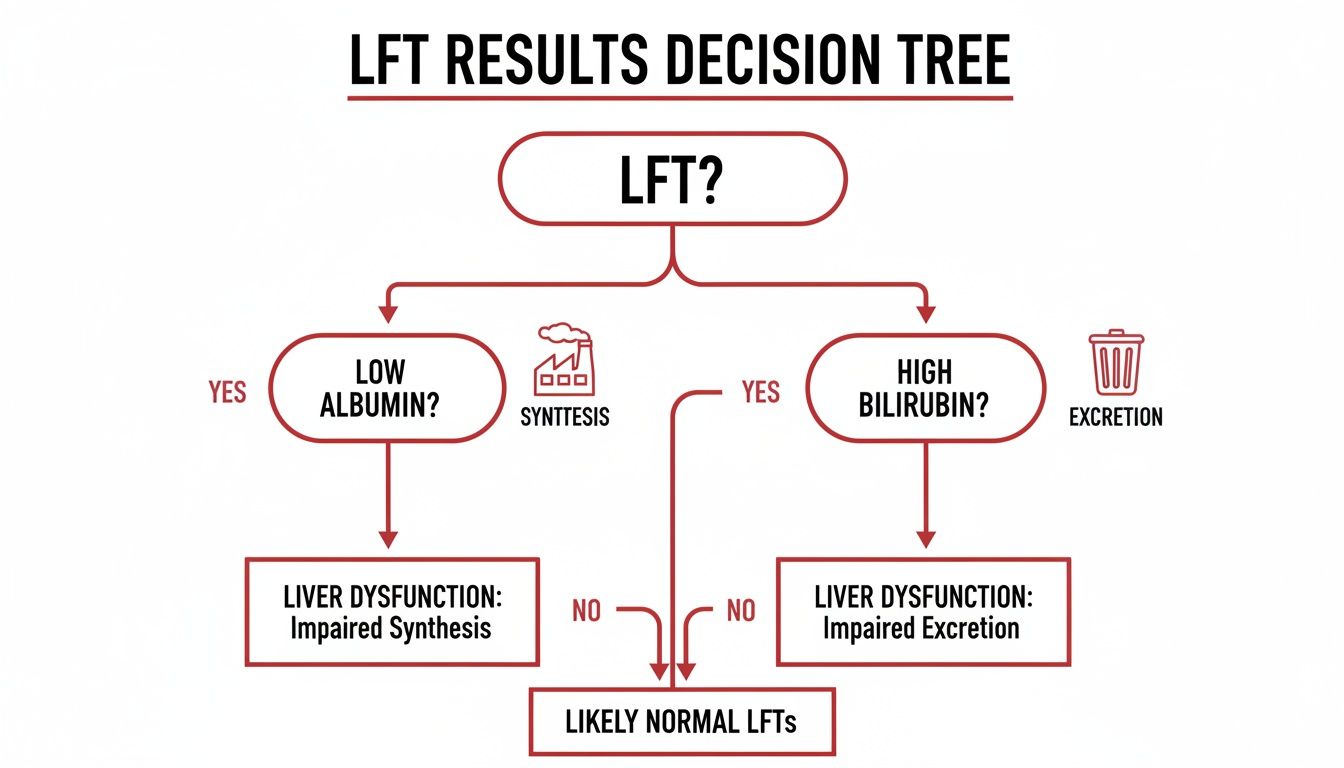
As you can see, abnormal albumin levels might point towards issues with the liver's 'factory' functions, while high bilirubin suggests a problem with its 'waste disposal' system.
One of the most common patterns points towards damage to the liver cells themselves. This is known as a hepatocellular pattern, and it happens when liver cell enzymes are high, but the markers for the bile ducts are normal.
Practical Example: Non-alcoholic fatty liver disease (NAFLD), a condition where excess fat builds up in the liver cells, often shows this pattern. Seeing high ALT and AST with a normal ALP is a textbook indicator that lifestyle changes focusing on diet and exercise could be highly beneficial.
Actionable Insight: Liver function tests are vital for spotting NAFLD, a condition that now affects a significant portion of UK adults. With many people having it without symptoms, an LFT is essential for early detection. Identifying this cellular damage pattern allows you to take proactive steps, like improving your diet or increasing exercise, to prevent progression. You can learn more about the role of LFTs in health screening from trusted medical sources.
On the other hand, you might see a pattern where the bile duct enzymes are the ones that are raised. We call this a cholestatic pattern, and it flags a potential problem with bile flow.
Practical Example: This pattern can show up with conditions like gallstones blocking a bile duct or even as a side effect of certain medications. It tells a doctor to investigate the liver’s "plumbing system"—perhaps with an ultrasound—rather than the liver tissue itself.
Alcohol affects the liver in a very specific way, and sometimes you can see its signature on an LFT report. The AST/ALT ratio becomes a particularly useful clue here. While both enzymes might be raised, with alcohol-related liver damage, AST often rises much more than ALT.
Actionable Insight: A good rule of thumb is that an AST level that is more than twice the ALT level is a strong indicator that alcohol may be a contributing factor. Seeing this pattern is a clear signal to honestly assess your alcohol intake and discuss it with a healthcare professional to prevent further damage.
Understanding these patterns is a crucial first step, but remember, they are clues, not a final diagnosis. The expert-reviewed results from a Repose Healthcare at-home Liver Function Test give you the context to understand your data and have a more informed discussion with your GP about the right next steps.
Figuring out when to check on your liver health can sometimes feel like a bit of a guessing game. But a liver function test (LFT) isn't just for when you're feeling unwell—it's a brilliant tool for being proactive about your health and staying one step ahead of potential problems.
One of the most common reasons is to keep an eye on the effects of long-term medication. Many medicines, from statins for cholesterol to even some over-the-counter painkillers taken frequently, are processed by the liver. Regular LFTs are a sensible way to make sure these drugs aren't putting your liver under any undue strain.
A general wellness check-up is another perfect opportunity for an LFT. Early-stage liver issues often fly under the radar with no obvious symptoms, so a test can give you invaluable baseline data or flag up a silent problem before it becomes more serious. This is especially true if you want to get a clearer picture of your risk from alcohol consumption.
You should also think about a test if you start experiencing persistent symptoms that could point to a liver problem, such as:
Actionable Insight: An LFT is also an essential screening tool for infections. For example, chronic hepatitis C often stays silent until an LFT picks up a significant spike in ALT levels. Catching viral hepatitis early with a test is a critical step towards getting treatment and preventing long-term liver damage like cirrhosis. You can read the full research on LFTs for hepatitis screening to understand its impact.
For anyone who wants to take control of their health from the comfort of their own home, at-home testing offers a discreet and straightforward solution. If you'd rather monitor your health without the hassle of scheduling a clinic visit, or simply value your privacy, a home kit is an ideal choice.
Repose Healthcare’s Wellness and Liver Tests give you a clear and accurate picture of your liver's health. You can also explore our guide if you have concerns about hepatitis and want to learn more about vaccination costs. By understanding when to test, you can turn valuable health data into positive, actionable steps towards a healthier future.
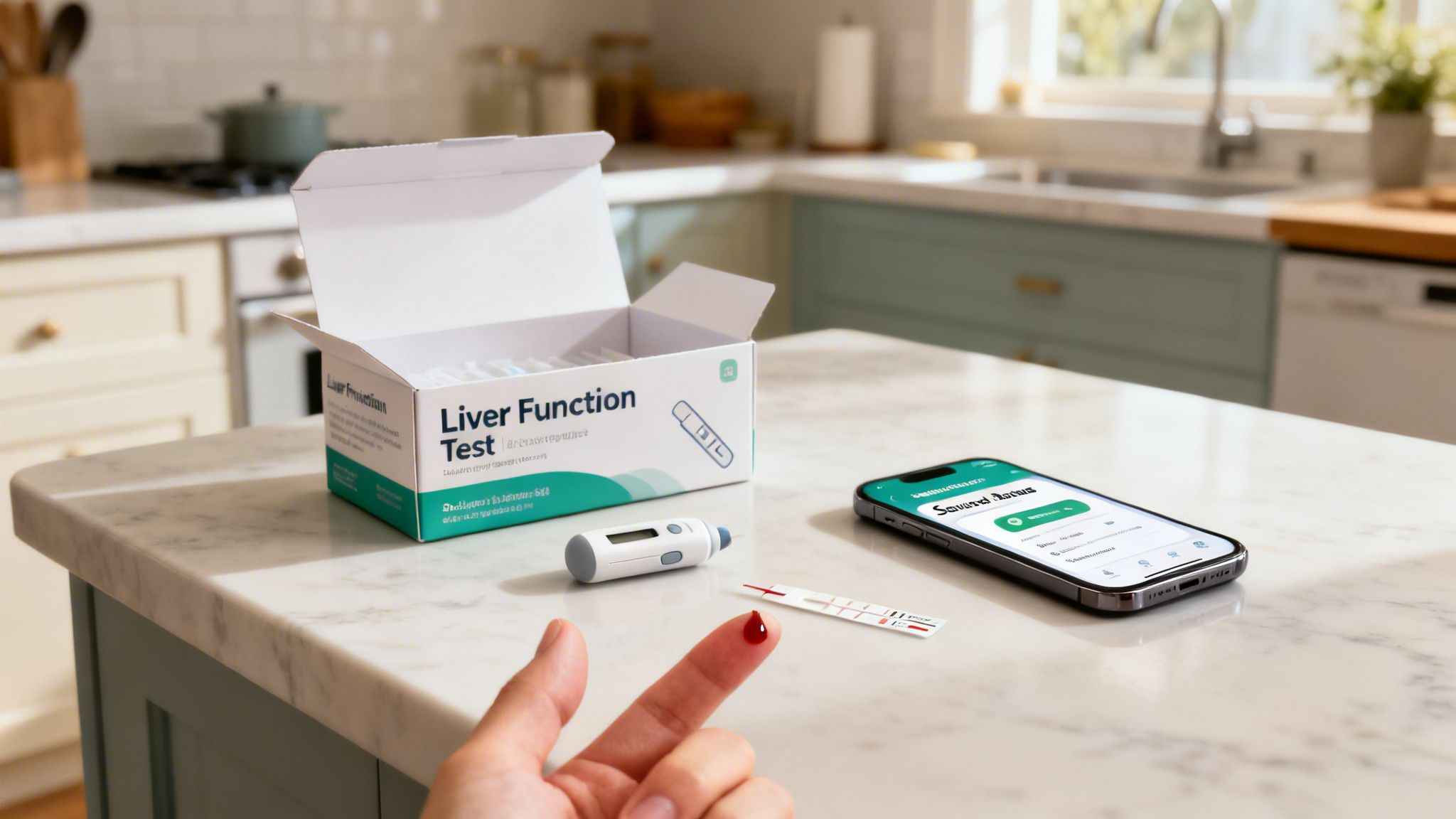
Knowing what your liver function test results mean is one thing, but actually getting the test done is what puts you back in control. The hassle of booking and waiting for a clinic appointment can often be a barrier, but modern at-home testing lets you check on your liver health privately, conveniently, and on your own schedule.
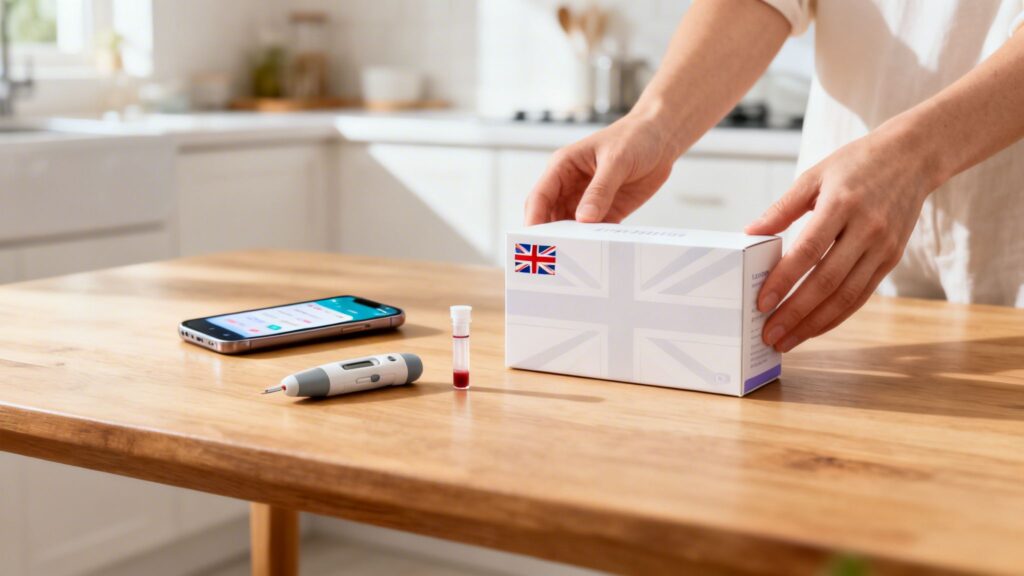
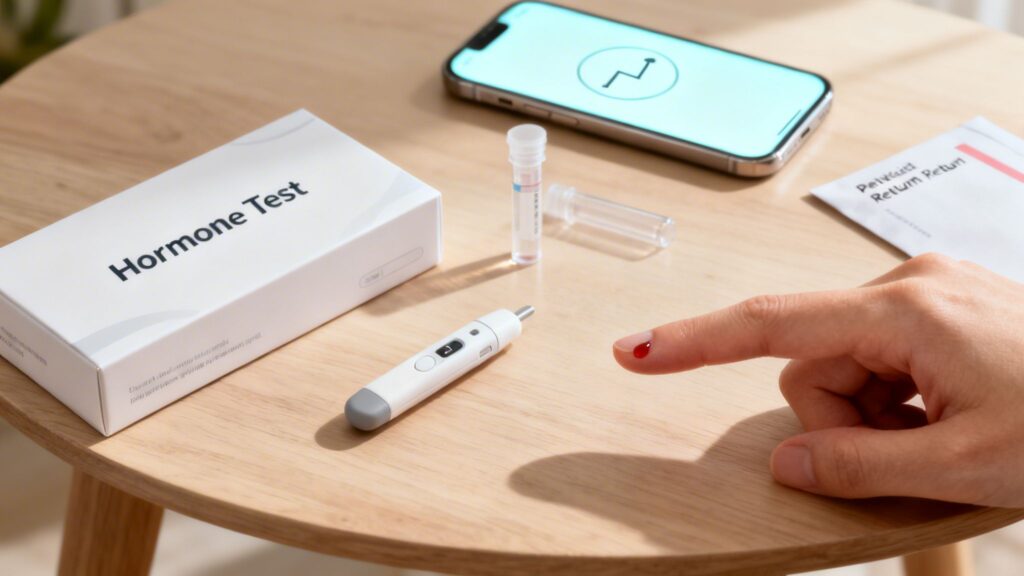
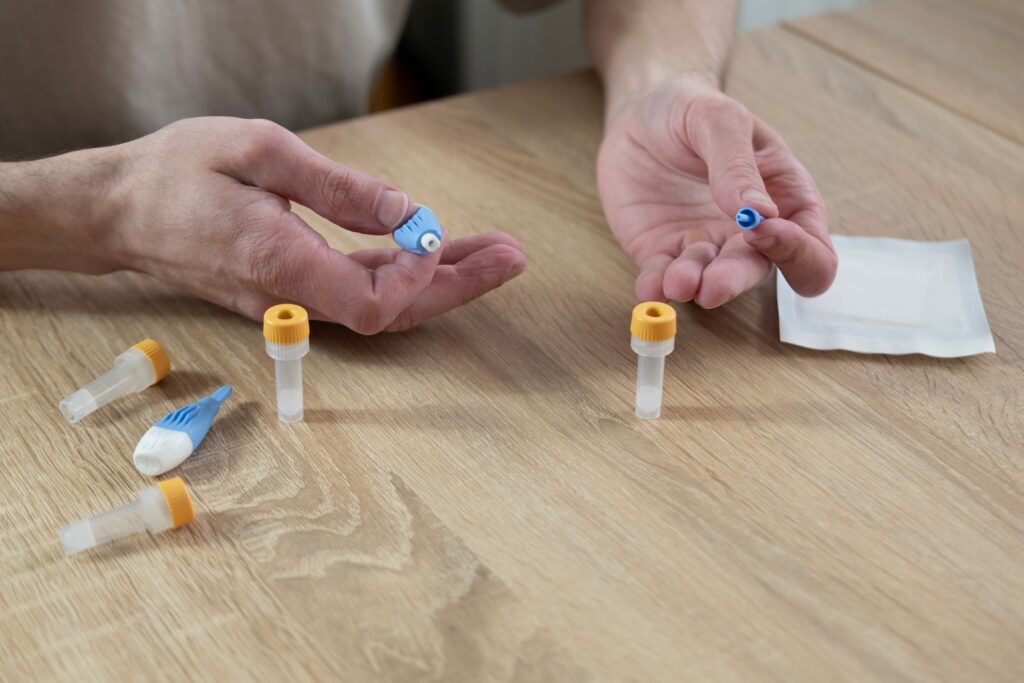
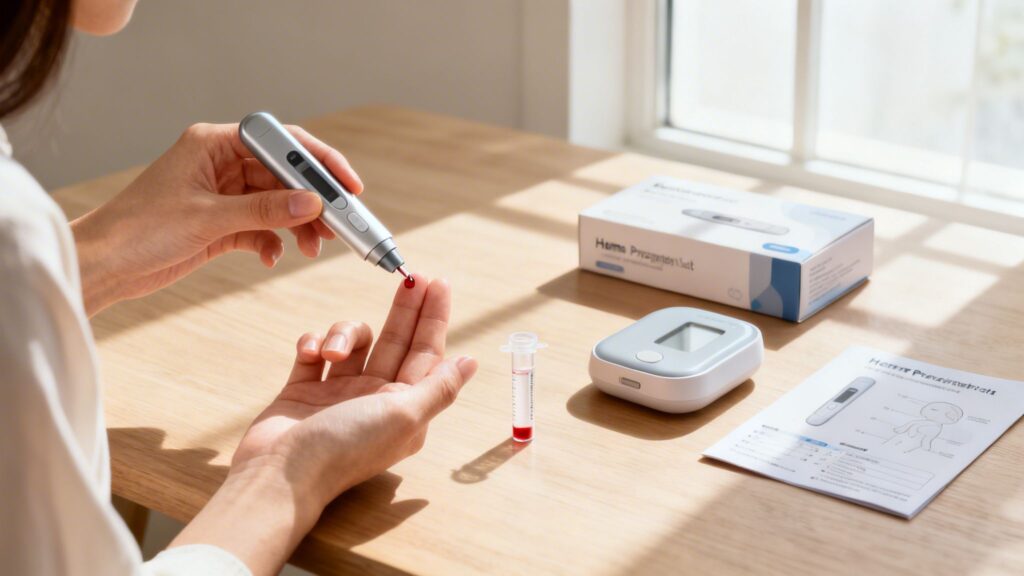
The entire process is incredibly straightforward. You simply order a kit online, and it arrives at your door with everything you need. Collection is just a quick finger-prick blood sample from the comfort of your own home—no travel, no waiting rooms.
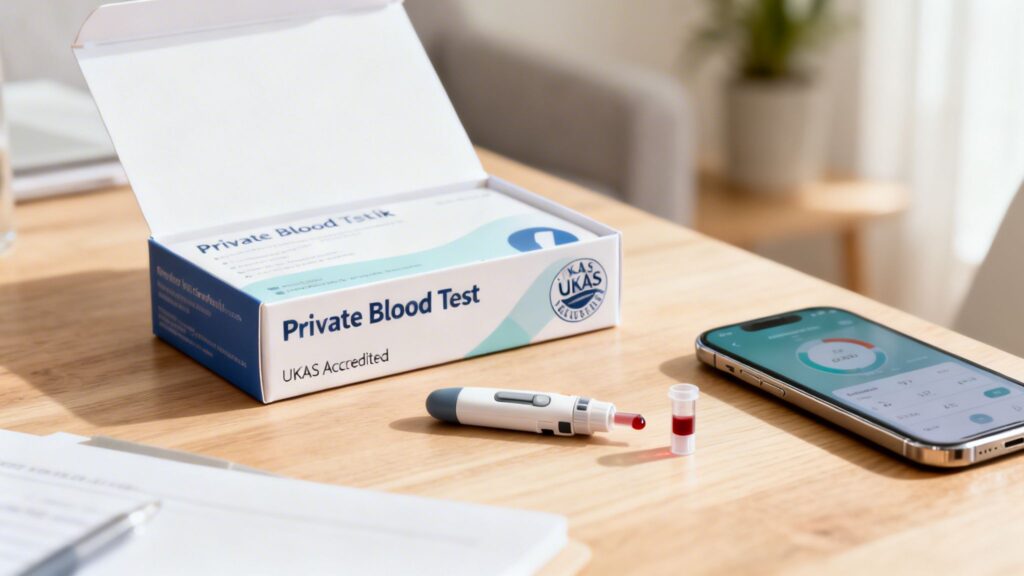
Once your sample is collected, you pop it back in the post using the prepaid packaging we provide. From there, it’s analysed at one of our UK-accredited laboratories—the very same ones used by the NHS. You get the convenience without having to compromise on quality.
Actionable Insight: The real advantage here is the speed and clarity. Within just 1-3 working days, your confidential results are available on a secure online dashboard. Every report is reviewed by our experts and comes with clear explanations, so you’re not left trying to figure out what the numbers mean. This gives you the power to have a more productive conversation with your doctor or to see the real-time impact of your lifestyle improvements.
This puts the power back in your hands. It removes the hurdles to getting tested, whether you’re keeping an eye on a known condition, checking how lifestyle changes are affecting you, or just trying to find answers for unexplained symptoms. While liver tests are easy to do at home, there are many other at-home health testing options that can give you a fuller picture of your overall health.
Ready to find out what your results show? You can order your Repose Healthcare Liver Function Test today and get the clear, actionable information you need to look after your wellbeing.
Getting to grips with any new health test can bring up a few questions. Here are the answers to some of the most common queries we get about liver function tests, helping you feel confident as you take the next step in understanding your health.
For a standard liver function test on its own, you generally don't need to fast.
However, keep in mind that a very high-fat meal right before you collect your sample could throw off some of the results. If your test panel also includes other checks, like cholesterol or glucose, then fasting will likely be recommended. To get the most accurate picture of your health, it’s always best to follow the specific instructions that come with your Repose Healthcare Liver Function Test.
Absolutely. For many people, making positive lifestyle changes can lead to real, measurable improvements in liver health and bring down elevated results.
Actionable Insight: Simple changes like cutting back on alcohol, aiming for a healthy weight with a balanced diet rich in vegetables and lean protein, and getting regular exercise can all help lower raised liver enzymes. If you see an abnormal result, a great first step is to track your lifestyle for a month and re-test to see the impact. Always discuss your results and any planned changes with a healthcare professional for guidance that’s tailored to you.
You can be confident that Repose Healthcare's at-home tests are highly accurate and give you results you can trust.
Your sample is processed in the very same UKAS-accredited laboratories that the NHS and private clinics use across the UK. The finger-prick collection method has been clinically validated to ensure its accuracy, and our kits come with clear, detailed instructions to help you collect a good quality sample for the lab. Our Repose Healthcare kits make professional-grade testing accessible to everyone.
Take the first step towards understanding your liver health today. With Repose Healthcare, you can get clear, expert-reviewed results from the comfort of your home. Order your Liver Function Test now.