Getting your thyroid tested makes a lot of sense if you are showing symptoms of either hypothyroidism or hyperthyroidism and want to understand the underlying cause. Your thyroid is important, after all, as it’s responsible for multiple parts of the body’s functions, including your metabolism, heart, mood, energy, body temperature, and growth.
The problem is that the test results in themselves are not always straightforward – instead of saying whether your thyroid is healthy or not, it will usually give you various TSH, FT4, and FT3 numbers, which, for someone who isn’t a medical professional, may be hard to read.
With this guide, you will find out how to spot patterns in your thyroid test results, so you can use at-home tests to see what each marker – TSH, FT4, and FT3 – means for you and your thyroid health.
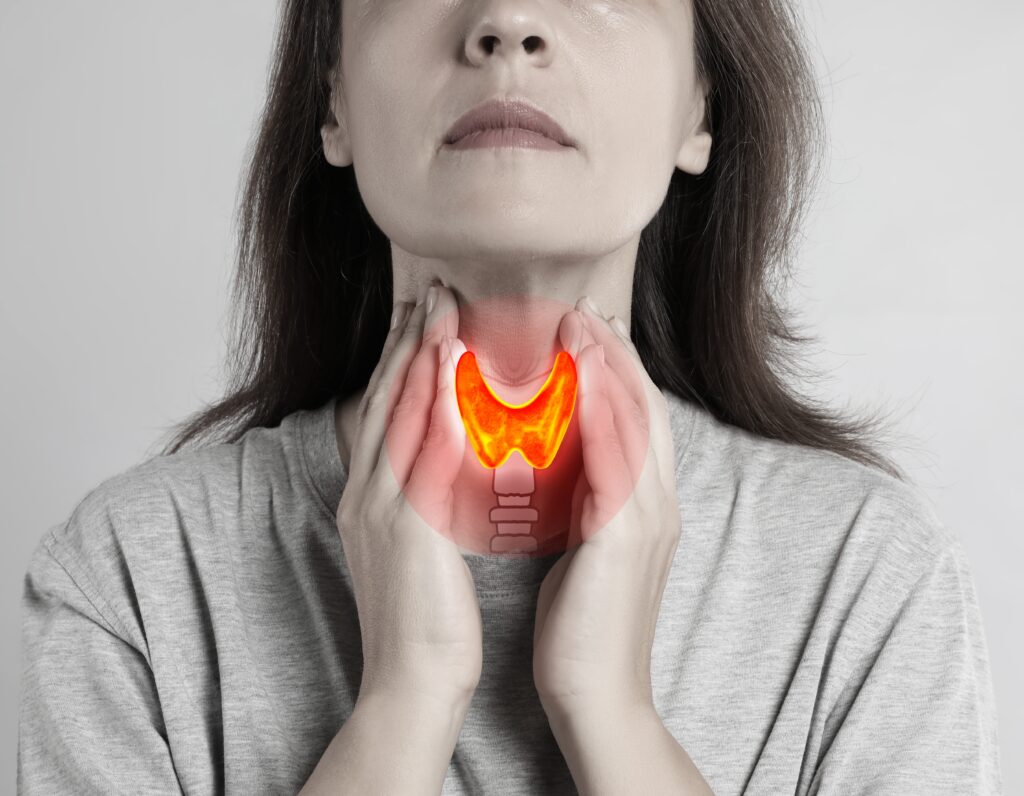
The thyroid is a small butterfly-shaped gland in the neck that is responsible for regulating metabolism, energy levels, healthy weight, heart rate, body temperature, and mood. Simply put, it does a lot for your bodily functions! If your thyroid is either overactive (known as hyperthyroidism) or underactive (known as hypothyroidism), it can lead to several symptoms that get in the way of living well and healthily. Here are some examples:
Hypothyroid-type symptoms: tiredness, weight gain, feeling cold, constipation, low mood, dry skin.
Hyperthyroid-type symptoms: weight loss, anxiety, palpitations, heat intolerance, tremors.
If you experience these thyroid symptoms, thyroid function tests (TFTs) are the best next step. These measure TSH, T4, and sometimes T3, with the thyroid blood test results helping you come to a potential diagnosis. Be aware, though, that blood tests alongside showing symptoms only guide a diagnosis – numbers from the thyroid function test results aren’t enough; you need clinical guidance.
Here, we will go into each marker in the main thyroid blood tests, so you can understand exactly what the numbers around TSH, FT3, and FT4 mean. Keep in mind that different labs may include total T4/T3 or antibodies, but most routine charts simply focus on TSH, Free T3 and Free T4.
TSH (or thyroid-stimulating hormone) is made by the pituitary gland and acts as a thermostat signal, telling the thyroid exactly how much of the hormone to use. Here’s what your TSH levels chart from your TSH blood test results may mean.
High TSH meaning: This often suggests an underactive thyroid, which is when the thyroid does not make enough hormone.
Low TSH meaning: Low TSH typically suggests an overactive thyroid, when the thyroid makes too much of the hormone. Alternatively, it could mean pituitary issues – this can be determined by a clinician depending on the FT4/FT3 results.
Typically, TSH is often the first thyroid test that doctors check, with a generally normal TSH reference range being around 0.4 – 40 mlU/L (although this can be different for children and pregnant women).
FT4, also referred to as Free T4, is the main hormone produced by the thyroid. It circulates in the blood and is later converted to T3. Your FT4 blood test results should typically be read alongside TSH, as this will give more insight into what’s going on with your thyroid. Here are some patterns to be aware of.
Low FT4 + high TSH: more typical of overt hypothyroidism.
High FT4 + low TSH: consistent with hyperthyroidism.
So, generally, low FT4 and hypothyroidism are more associated with one another, whereas high FT4 is more closely linked with hyperthyroidism.
Here at Repose, we offer several options for getting your FT4 levels checked, including:
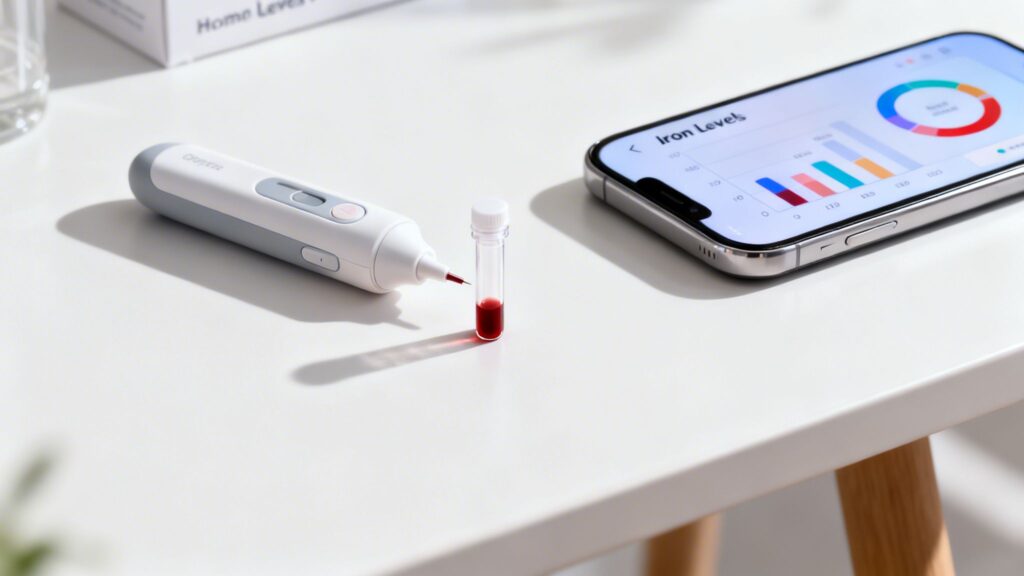
If you need a simple thyroid check, an FT4 home blood testing kit can measure free T4 and TSH from home.
Free T3, or Triiodothyronine, is the active part of the thyroid hormone, with most of the FT3 having been converted from FT4 and is responsible for regulating metabolism, body temperature, and heart rate. Measuring FT3 levels with a Thyroid Profile 3 home testing kit is useful for assessing whether a person has hyperthyroidism, in particular.
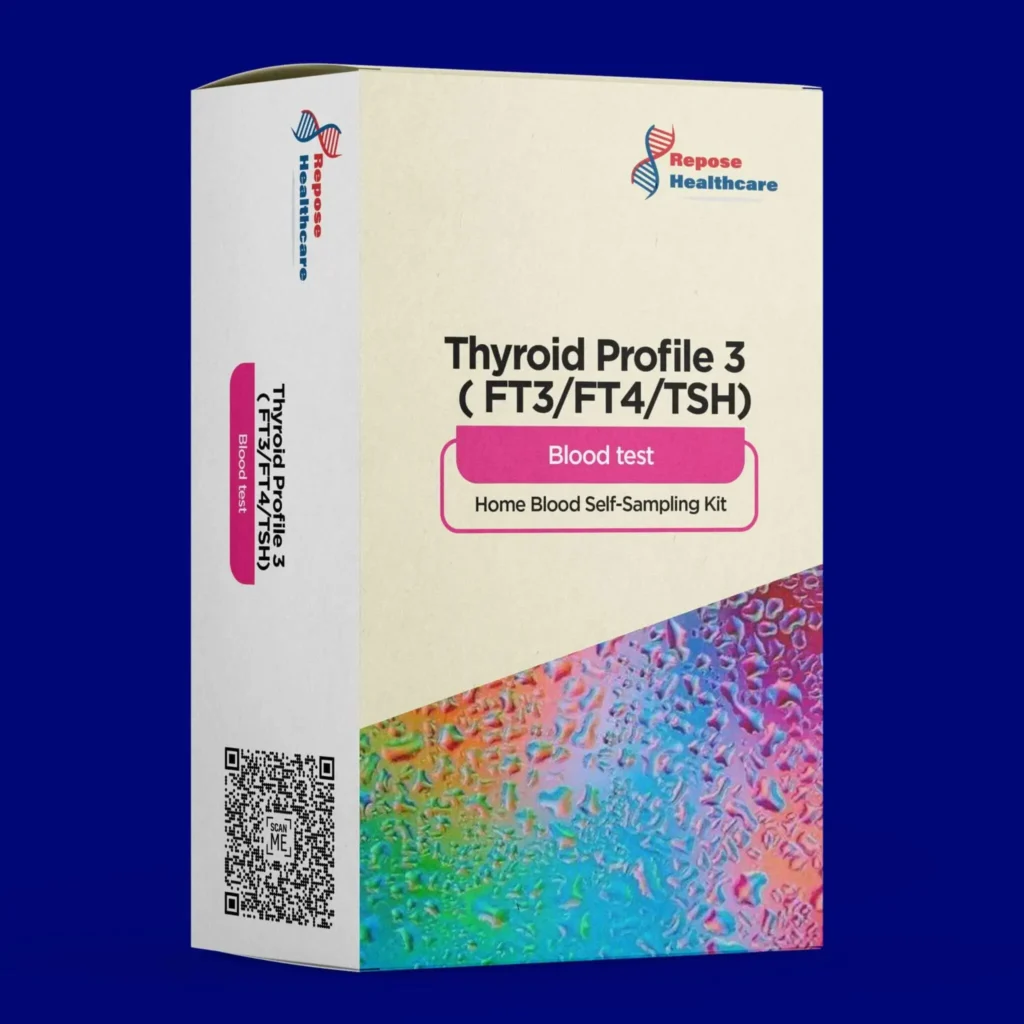
Typically, there is a link between low levels of TSH alongside high levels of FT3 and an overactive thyroid. Usually, when symptoms do not match TSH/FT4 results, doctors will look into FT3 levels. A combined FT3 test within a full thyroid profile and a free T3 levels chart can give a more complete picture of how your thyroid is working.
This thyroid level chart for thyroid blood test results will show you generally the normal thyroid ranges, as well as what low or high levels could mean.
| Typical Adult Reference Range | What Low Might Suggest | What High Might Suggest | |
| TSH | 0.4 to 4.0 mIU/L | Hyperthyroidism | Hypothyroidism |
| FT4 | 9.0–25 pmol/L | Hypothyroidism | Hyperthyroidism |
| FT3 | 3.1 to 6.8 pmol/L | Hypothyroidism | Hyperthyroidism |
Remember that this TSH FT3 FT4 chart is only for general guidance and should be used as examples only. If you get your thyroid test levels chart back, it’s important to check the reference ranges printed on your own lab report. Remember that ranges differ by age, pregnancy, and lab method. While charts are a helpful tool, they are not a substitute for professional interpretation. If you have any concerns, speak with your GP.
Often, a single number cannot determine anything. When doctors are making accurate diagnoses, they look at patterns rather than just the numbers. Here, you will find some of the key patterns that may suggest a problem – but keep in mind this should not be used as a self-diagnosis.
A common hypothyroidism blood test pattern is high TSH low FT4. That essentially means that the pattern is commonly seen in individuals with an underactive thyroid, which includes symptoms such as:
A common hyperthyroidism blood test pattern is when you can see low TSH alongside high FT4, especially when accompanied by hyperthyroid symptoms. These symptoms include:
Be aware that doctors may order additional antibody tests to check for autoimmune causes of low TSH and high FT3/4, such as Graves’. This is to determine the root cause.
In some cases, both FT4 and FT3 may be normal, but TSH levels come back as abnormal. This is known as subclinical thyroid test results. The treatment for abnormal TSH and normal FT4 depends on things like age, symptoms, pregnancy, antibodies, and other factors – not just the numbers alone.
It’s important to note that there are several thyroid blood test factors that will influence the results. So, why do thyroid test results change? Are there medications affecting thyroid tests?
Differing lab methods and reference ranges: sometimes, the lab reference ranges are different depending on the methods used.
If results do not match your symptoms, a doctor will likely repeat the tests or add further investigations to your care plan.
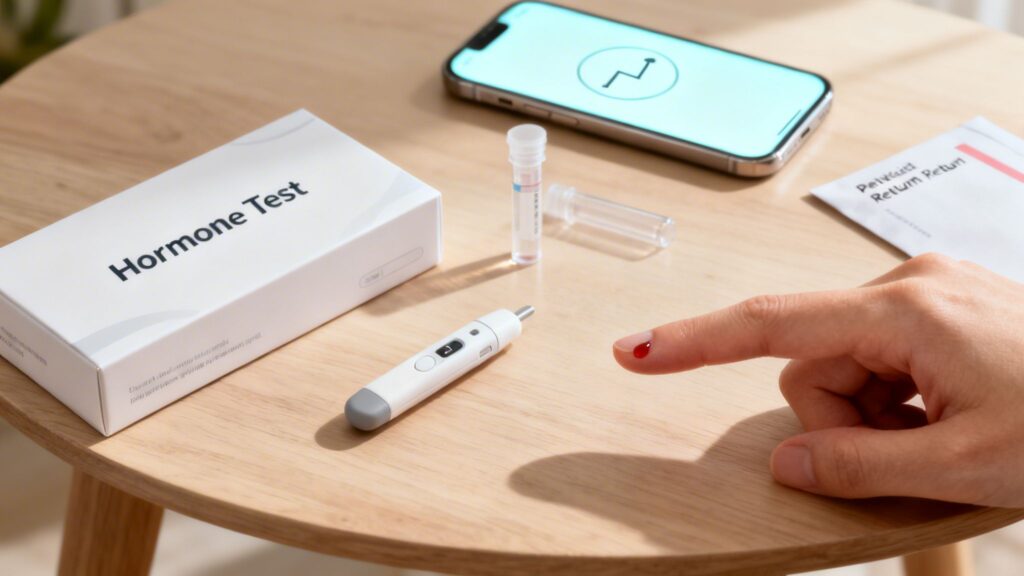
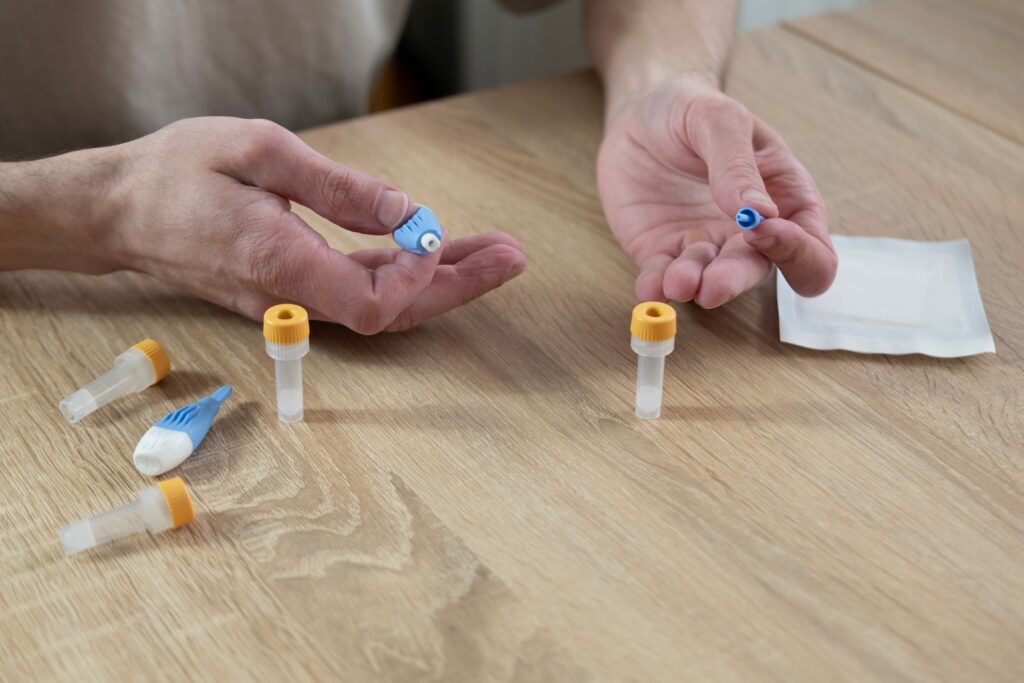
Repose offers a simple-to-use at-home thyroid test kit that can help you monitor your levels for a healthier lifestyle. There is a range of thyroid profile home testing kits available, including:
All tests are sent to a UKAS-accredited lab. You can also rest assured that they are all completely confidential and private thyroid function tests. These are to be used as tools – once you have your results, it’s best to use them to complement GP care.
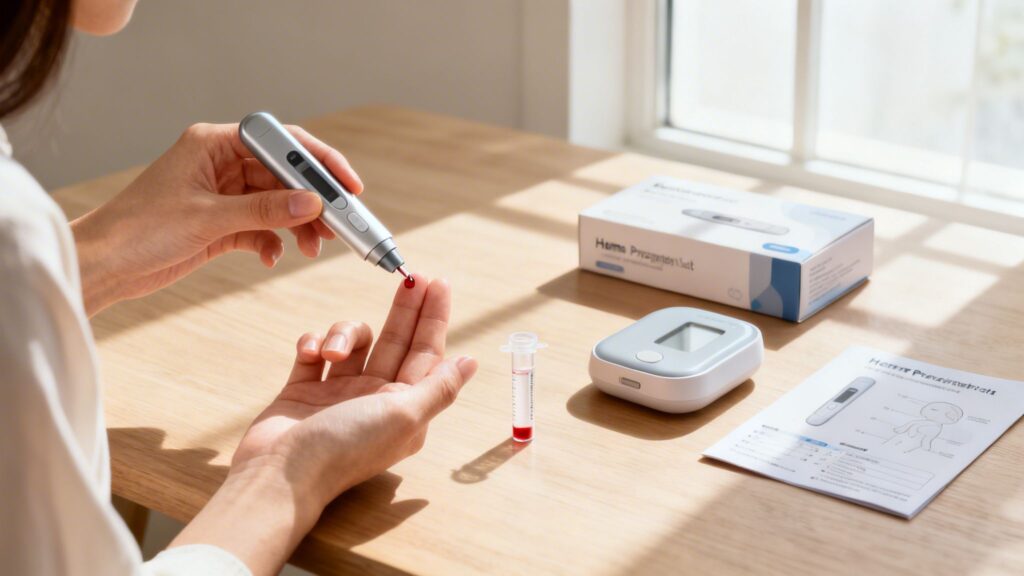
Do you want to get started monitoring your thyroid hormone levels? Here’s how it’s done with Repose.
It’s a fast, easy way of taking control of your health and understanding your thyroid function better. If results are abnormal in any way, remember to speak to a GP for further investigations.