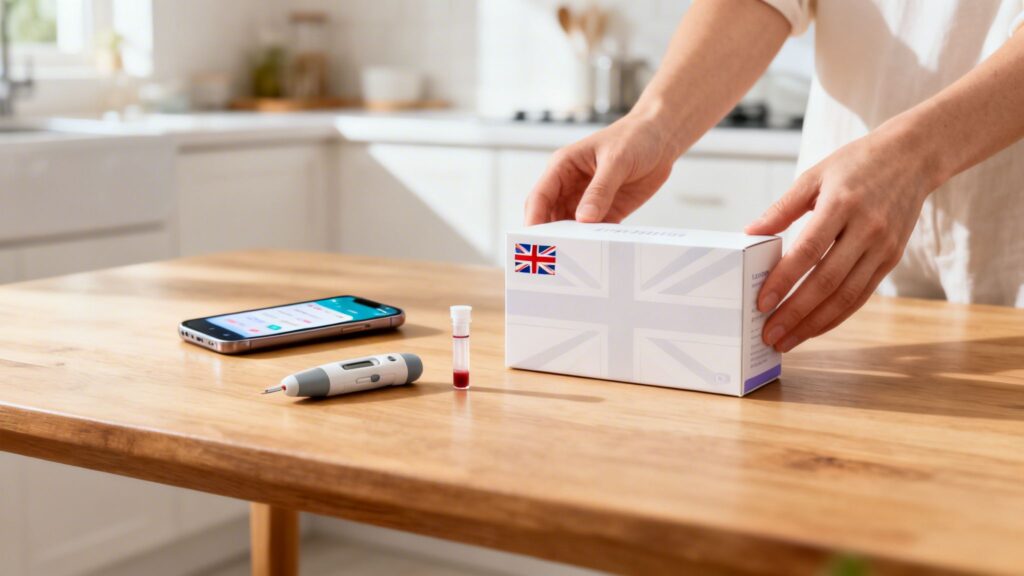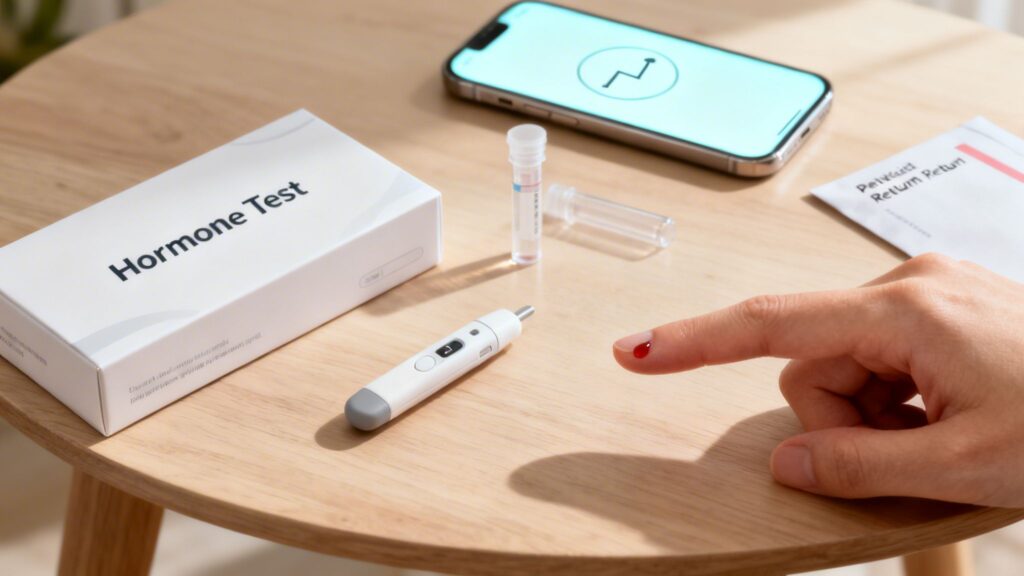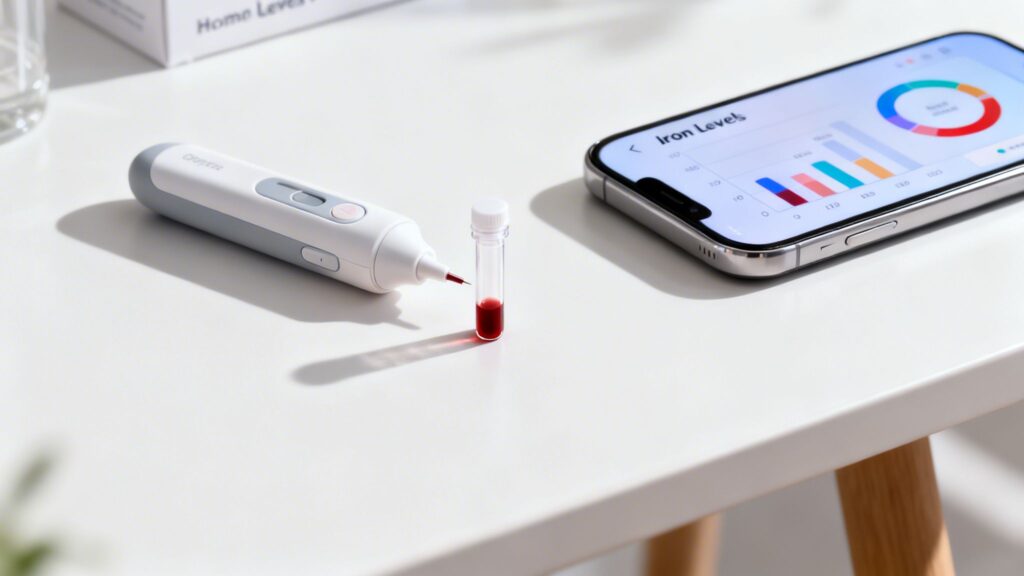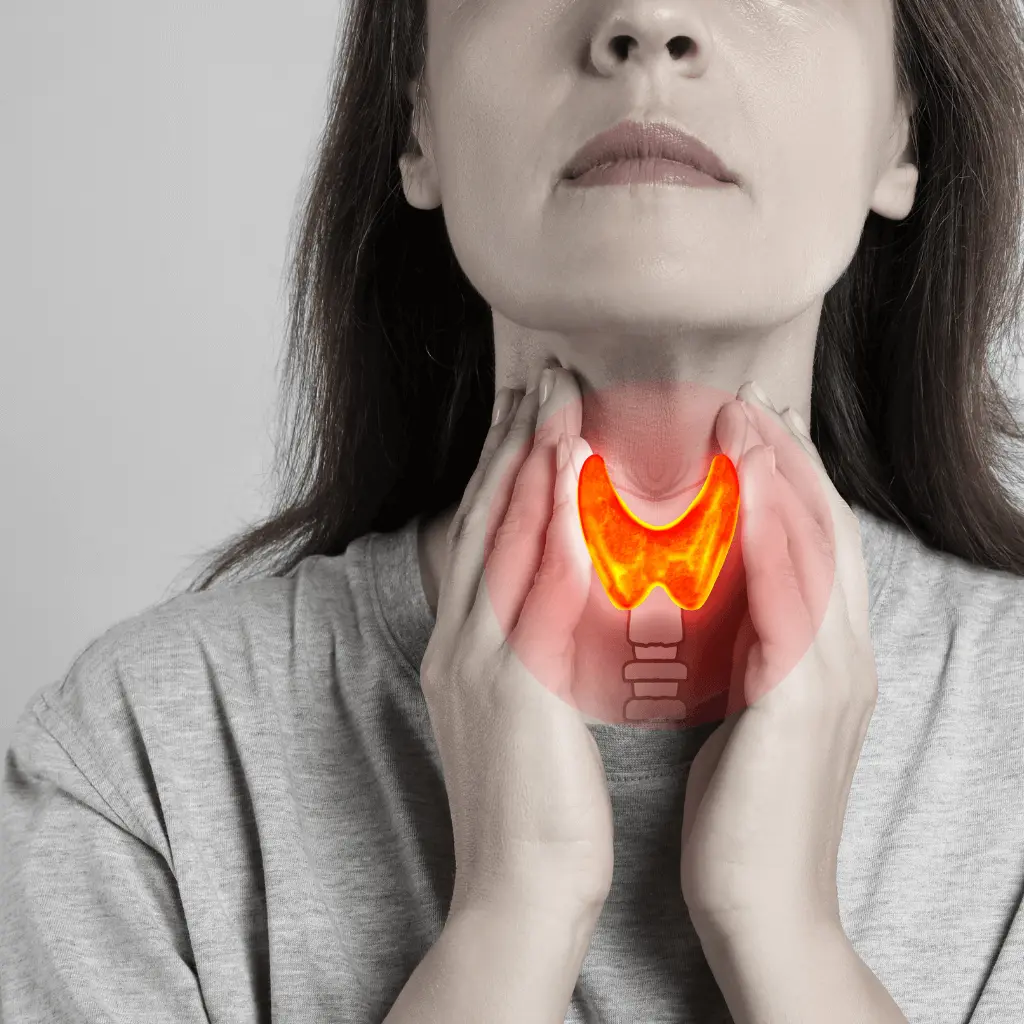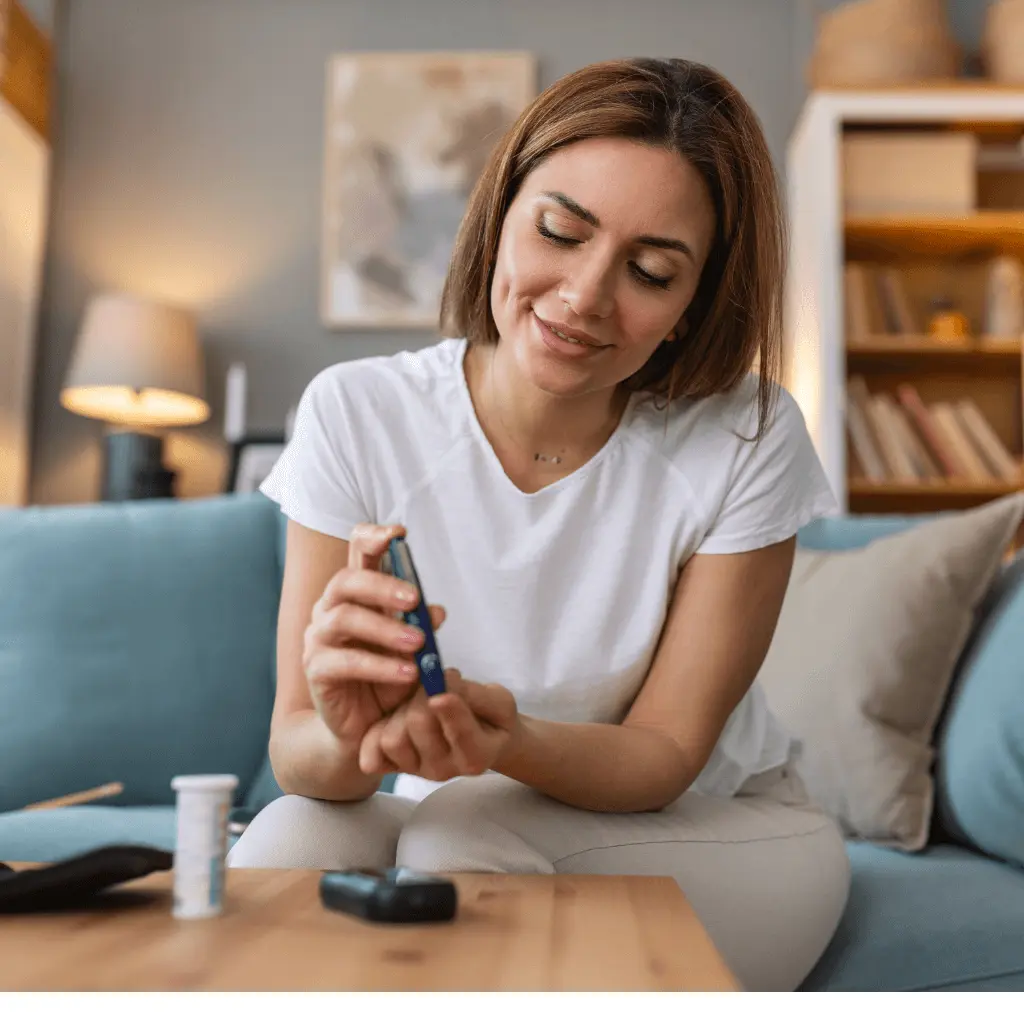
Yes, you absolutely can get a thyroid test at home in the UK. It's a straightforward and private way to investigate nagging symptoms like fatigue or unexplained weight changes. Companies like Repose Healthcare send a kit right to your door, allowing you to collect a small blood sample yourself and pop it in the post to an accredited lab for analysis. For example, if you've been feeling constantly drained and can't get a GP appointment for weeks, you can order our Thyroid Profile test, collect your sample on a Saturday morning, and have actionable results to discuss with your doctor just a few days later.
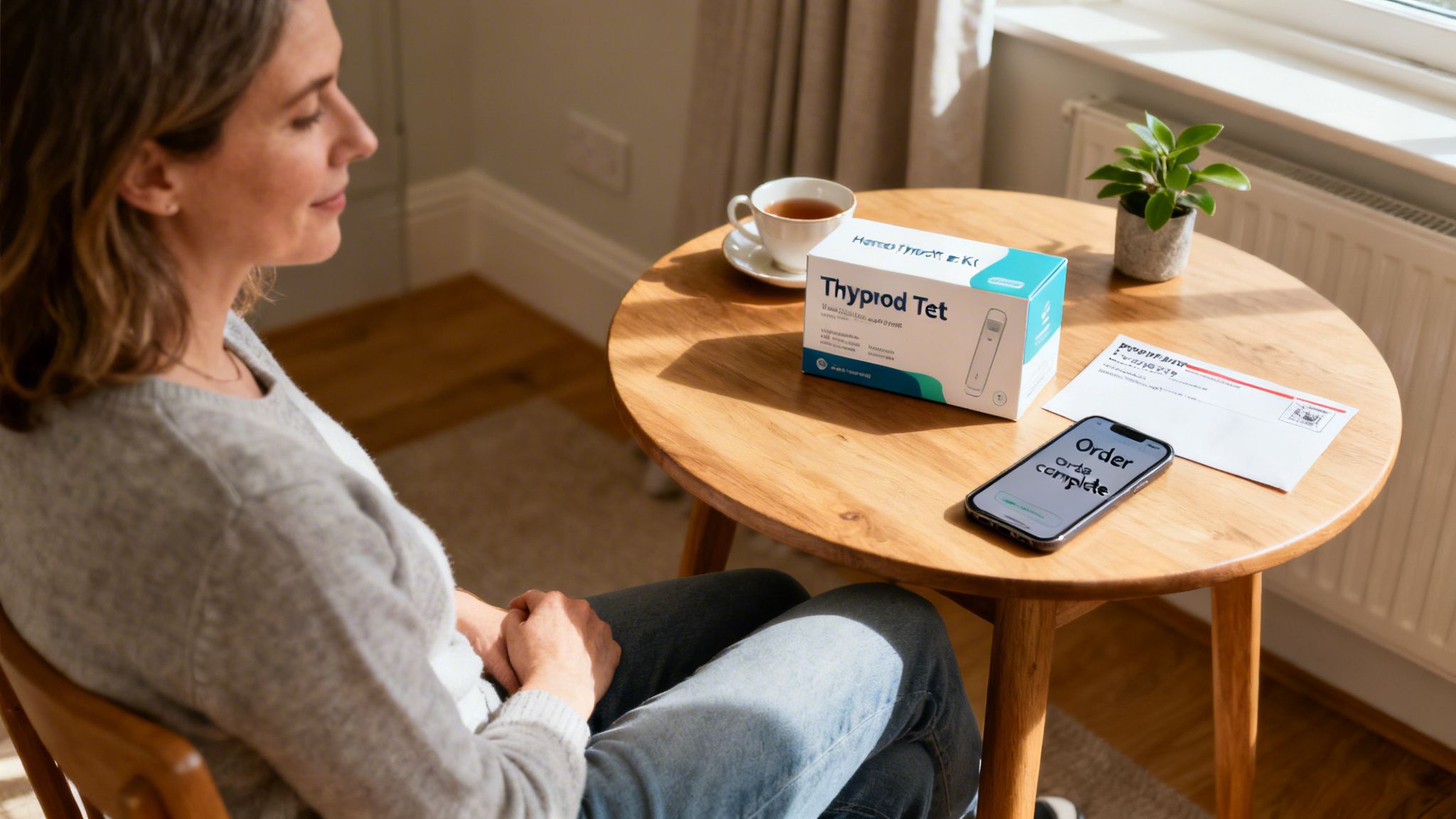
If you've been wrestling with persistent fatigue, sudden changes on the scales, or mood shifts you can't quite put your finger on, you're not alone. These vague but disruptive symptoms often point towards the thyroid – a small but powerful gland that acts as the master controller for your metabolism, energy, and even your mental clarity.
Waiting weeks for a GP appointment isn't always an option, which is why a growing number of people are taking matters into their own hands with a thyroid test at home UK residents can trust. It’s all about regaining a sense of control. Instead of trying to fit into clinic schedules, you can get clear answers on your own terms, from the comfort of your own home.
Let's be honest, the biggest reason for this shift is pure convenience. Life is hectic, and squeezing medical appointments into an already packed schedule can be a real barrier to getting help. At-home testing kits completely remove that obstacle.
Here's a practical example: you're a working parent juggling school runs and deadlines. You’ve felt sluggish for months but just can't find a spare hour for a clinic visit. With a service like Repose Healthcare, you order a kit online, do a simple finger-prick sample on a Sunday morning while the kettle boils, and post it back the next day. The whole process is designed to fit into your life, not disrupt it.
This approach empowers you to investigate your health concerns without the usual logistical hurdles, making it easier to take that crucial first step towards feeling better.
This demand for accessible health checks is surging. The UK market for thyroid function testing was valued at USD 403.1 million in 2023 and is projected to hit USD 671.6 million by 2030. It’s a clear sign that people want more convenient ways to manage their health.
Beyond just being easy, privacy is a huge factor. Talking about personal health can feel sensitive, and many people prefer the discretion of testing at home. The kit arrives in plain packaging, and you get your results through a secure online portal, keeping your health information confidential.
This accessibility is also changing how we look after ourselves. Instead of waiting for symptoms to become unbearable, you can be proactive. This is especially useful if you have a family history of thyroid issues or just want to get a baseline reading of your hormone levels.
By removing the old barriers, a thyroid test at home in the UK becomes a powerful tool for anyone serious about understanding their body. To learn more about their reliability, have a read of our guide on at-home blood test accuracy.
Choosing an at-home thyroid test in the UK can feel a bit like ordering from a new menu—lots of options, but which one is right for you? The key is to match the test to your specific symptoms and concerns. Not all thyroid tests are created equal, and understanding what they're looking for will help you get the most valuable insights into your health.
If you’re just starting to investigate why you're not feeling yourself, you might wonder what these tests actually measure. They look at specific biomarkers in your blood, which are like tiny messengers telling a bigger story about how your thyroid gland is functioning. Let's break down the main players.
Every good thyroid investigation starts with three fundamental biomarkers: Thyroid Stimulating Hormone (TSH), Free T4 (FT4), and Free T3 (FT3). Think of them as a communication chain within your body.
For many people dealing with general fatigue or weight changes, a test measuring these three markers is a great place to start. Our Thyroid Profile test provides a clear snapshot of this core hormonal activity, giving you solid data on your thyroid's basic function.
Sometimes, TSH, T4, and T3 don't tell the whole story. If your symptoms are more complex—perhaps you’re dealing with brain fog, hair loss, and extreme fatigue—it’s worth investigating why your thyroid might be struggling. Often, the root cause is an autoimmune condition.
An autoimmune thyroid condition is when your own immune system mistakenly attacks your thyroid gland. The most common is Hashimoto's thyroiditis, which is the leading cause of an underactive thyroid in the UK.
To get to the bottom of this, a test needs to look for specific thyroid antibodies. The two most important ones are:
The presence of these antibodies can show that an autoimmune process is underway, sometimes even before your TSH, T4, and T3 levels have shifted out of the normal range. This is incredibly useful information because it gives you a much earlier and more complete picture of what's going on.
So, how do you decide? Let’s walk through a practical example. Imagine you’ve been feeling unusually cold, your skin is dry, and you're gaining weight despite no changes to your diet or exercise. A basic panel like our Thyroid Profile test, which covers TSH, FT4, and FT3, could quickly confirm if your thyroid is underactive.
But what if you're also experiencing "brain fog" that makes it hard to concentrate, significant hair shedding, and you have a family history of autoimmune diseases? In this scenario, you need a more complete picture. Checking for antibodies is essential. Our Advanced Thyroid Function Test is designed for exactly this situation, as it includes all five key markers: TSH, Free T4, Free T3, TPOAb, and TgAb. This gives you the comprehensive data needed to see not just if your thyroid is struggling, but also a potential why.
So, your Repose Healthcare kit has arrived. That’s the first big step toward getting some real answers about your health. To make sure the sample you send back gives you accurate results, it's really important to follow the collection steps carefully. We've put this guide together to walk you through everything, making it as smooth and straightforward as possible.
The whole point is to get it right the first time. There’s nothing more frustrating than getting a notification that your sample couldn’t be analysed. A few simple preparations can make all the difference, and it’s not just about ticking boxes—it’s about understanding why each step matters for getting a high-quality result from our UK-accredited lab.
Before you even think about opening the lancet, a little prep work goes a very long way. The secret to a good sample is getting decent blood flow to your fingertips. A classic mistake is trying to do the test with cold hands, which can make it surprisingly difficult to get enough blood.
Here’s an actionable insight: warm your hands for five to ten minutes before you start. You can run them under warm water, hold a mug of tea, or even swing your arms by your side to get the circulation going. This simple action makes a huge difference and makes the whole process much easier.
Staying well-hydrated is also key. Try to drink a glass of water about 30 minutes before you plan to collect your sample. It really helps improve blood flow, making the finger-prick method much more effective.
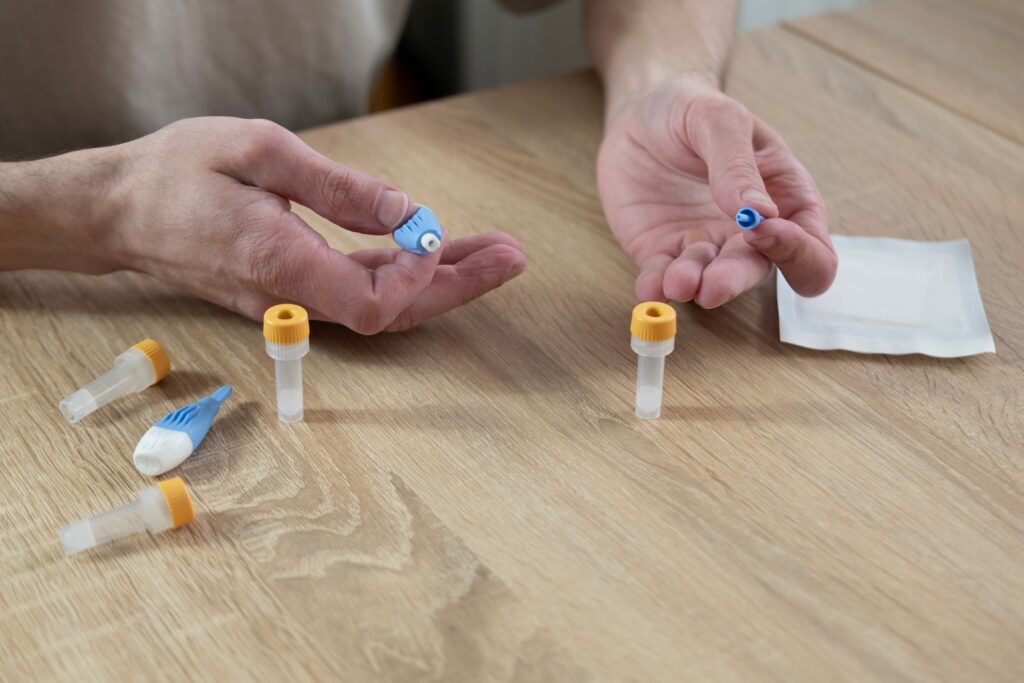
Once you’re ready, lay out everything from your kit on a clean, flat surface. Your Repose Healthcare kit is designed to be user-friendly and has everything you need:
Choosing the right finger is another one of those small details that can make a big difference. We always recommend using the middle or ring finger on your non-dominant hand. These fingers are usually less calloused than your index finger or thumb, which makes the prick less noticeable and helps the blood flow more easily.
This visual guide shows how our testing process works, from choosing the right test for your symptoms all the way to receiving your results.
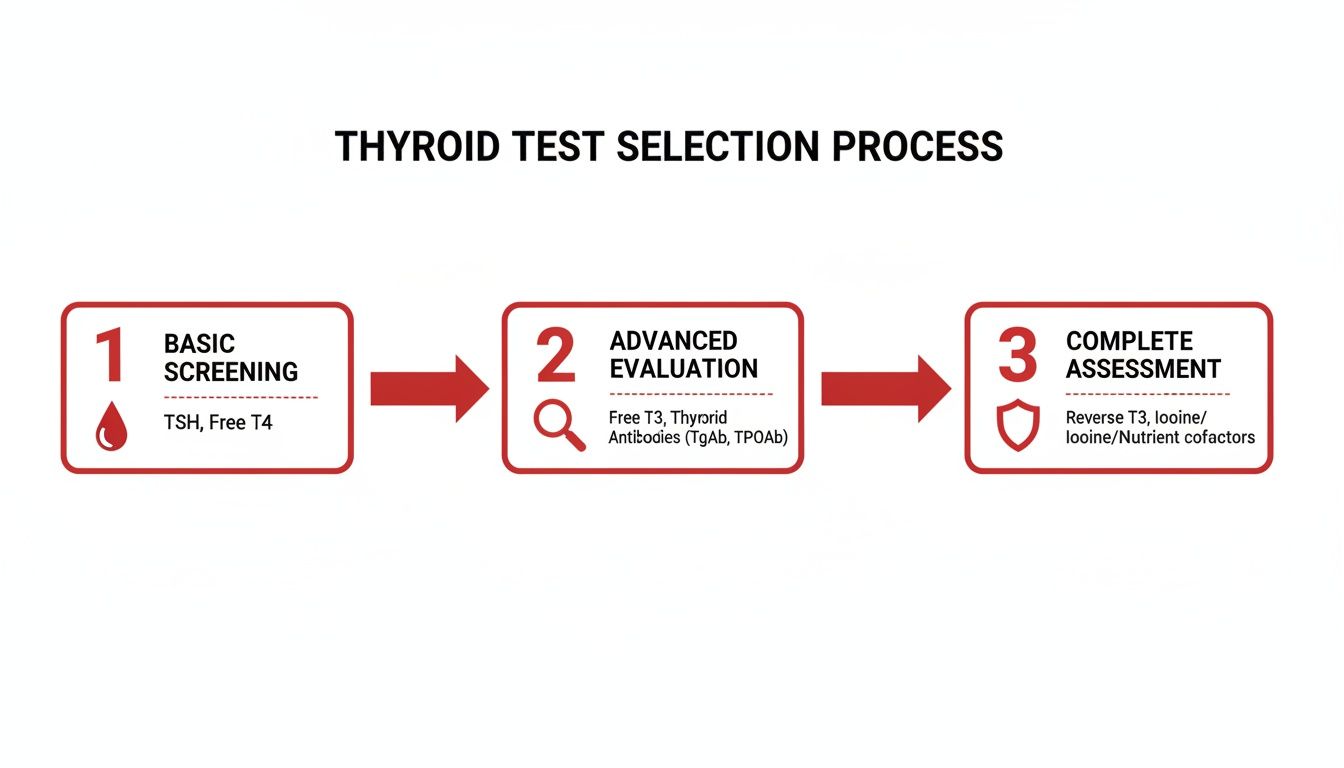
As you can see, a successful home test isn’t just about picking the right panel; it’s also about collecting the sample correctly so the lab has something viable to work with.
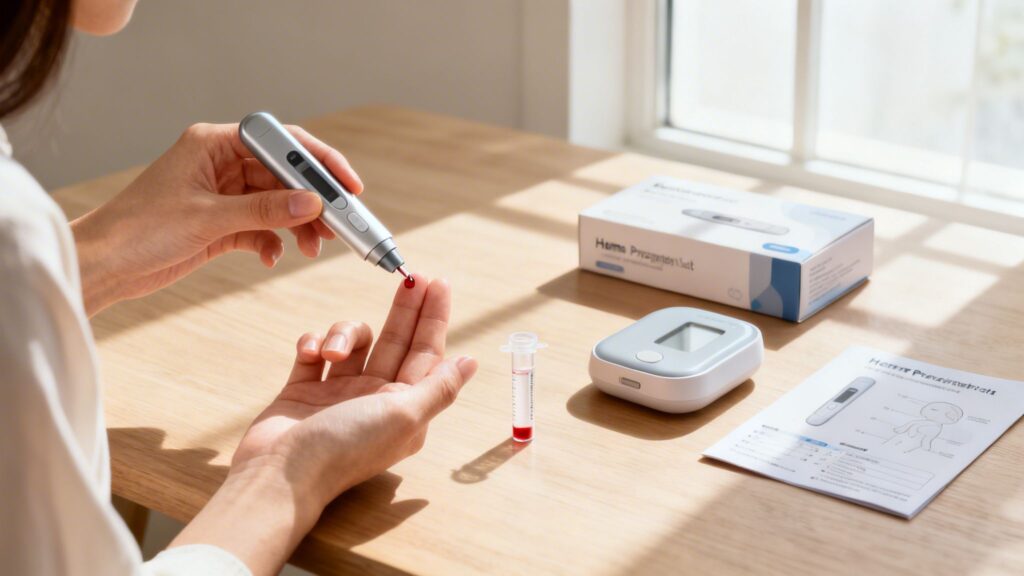
When you're ready, clean your chosen fingertip with the alcohol wipe and let it air dry completely. Press the lancet firmly against the side of your fingertip—this area has fewer nerve endings than the fleshy pad, making it a bit more comfortable. After the prick, wipe away the very first drop of blood. Then, gently massage your finger from the base towards the tip to help a full drop form. Let the drops fall into the collection tube until you hit the fill line.
For more detailed tips, check out our complete guide to finger-prick blood tests at home.
Once you've collected your sample and popped on a plaster, the last step is to package it all up securely. Make sure the lid on the collection tube is screwed on tightly. Place it inside the protective packaging provided, and then put that into the prepaid return envelope.
This part is crucial: you need to post your sample back on the same day you collect it. An actionable tip is to take your sample in the morning and drop it at a Post Office before the last collection. We strongly recommend posting it between Monday and Thursday to avoid any potential delays over the weekend, either in the post or at the lab.
By following these practical tips, you can feel confident that your thyroid test at home UK sample will arrive at our lab ready for analysis, getting you one step closer to the answers you need.

So, your results have landed. Seeing a dashboard full of medical acronyms and numbers can feel a little overwhelming at first, but this is the moment you start getting answers. We'll break down what those results actually mean in plain English, helping you make sense of the data from your Repose Healthcare test so you can have a really productive conversation with your GP.
When you look at your results, you'll see each biomarker is measured against a "reference range." This is simply the range of values that's considered typical for the general healthy population. But it’s important to remember that 'normal' isn't a one-size-fits-all concept. These ranges can vary slightly between labs, and what’s optimal for you might be different for someone else.
Think of these ranges as a guide, not a final verdict. Your own health history and symptoms provide crucial context that your doctor will consider right alongside these numbers.
The relationship between your TSH, Free T4, and Free T3 is a delicate balancing act. Getting your head around how they interact is the key to understanding your report from a thyroid test at home in the UK. Let's walk through a real-world scenario to see how the patterns work.
Imagine Sarah has been feeling unusually cold, tired, and has gained some weight she can't shift. Her results from our Advanced Thyroid Function Test show a high TSH level and a low Free T4 level.
This specific combination—high TSH and low FT4—is a classic pattern for an underactive thyroid, also known as primary hypothyroidism. It tells us the communication system is working (the pituitary is sending the signal loud and clear), but the thyroid gland itself is struggling to do its job.
But what happens if your main hormone levels look okay, but you still feel unwell? This is where checking for thyroid antibodies becomes so important, as it offers a deeper insight into why your thyroid might be under stress.
Let's take another example. Mark's TSH and FT4 are both within the normal reference range, but he’s been battling persistent fatigue and brain fog for months. His results from our Advanced Thyroid Function Test come back showing positive Thyroid Peroxidase Antibodies (TPOAb).
The presence of thyroid antibodies points towards an autoimmune response, where your body’s immune system is mistakenly attacking your own thyroid gland. This is the root cause of Hashimoto's thyroiditis, which is the most common cause of hypothyroidism here in the UK.
Positive antibodies can be an early warning sign. In fact, they can be present for years before your TSH and T4 levels actually shift out of the normal range, offering a vital clue that helps explain ongoing symptoms. This is exactly why getting a comprehensive panel is so valuable.
Your Repose Healthcare dashboard is designed to present your results clearly, but it's always helpful to have a simple reference guide. The table below breaks down what each key biomarker indicates when levels fall outside the typical reference range.
| Biomarker | What It Measures | What High Levels Might Suggest | What Low Levels Might Suggest |
|---|---|---|---|
| TSH | Pituitary gland's signal to the thyroid | An underactive thyroid (hypothyroidism) | An overactive thyroid (hyperthyroidism) |
| Free T4 | The main hormone produced by the thyroid | An overactive thyroid (hyperthyroidism) | An underactive thyroid (hypothyroidism) |
| Free T3 | The active hormone that fuels your cells | An overactive thyroid (hyperthyroidism) | An underactive thyroid or poor T4-to-T3 conversion |
| TPOAb/TgAb | Antibodies attacking thyroid tissue | An autoimmune condition (like Hashimoto's) | No detectable autoimmune thyroid process |
Seeing these patterns helps you understand what's going on inside your body and empowers you to take the next step. Your results are a powerful tool for building a complete picture of your health with your GP or specialist.
Right, so you've done the test and your results have landed in your inbox. Getting that report is a big step, but what you do next is what really counts. The Repose Healthcare report gives you a clear, data-driven look at what's happening with your thyroid. Now, the goal is to turn those numbers into meaningful action.
Your next move depends entirely on what your results show. For some, it's the confirmation they've been looking for. For others, it might be confusing to find everything is 'normal' even when symptoms are still there. Let's walk through what to do in each scenario.
If your report flags one or more biomarkers outside the normal reference range, that's your cue to book an appointment with your GP or an endocrinologist. An out-of-range result from a thyroid test at home in the UK isn't a diagnosis on its own, but it's powerful evidence that something needs a closer look.
How you approach this conversation with your doctor is key. Think of your Repose Healthcare report as a really helpful starting point for a productive discussion.
Here’s an actionable plan for your appointment:
This turns a vague chat about symptoms into a focused, data-driven conversation, giving you and your doctor a solid foundation to work from.
It can be genuinely frustrating to get results back that fall within the 'normal' range when you still feel rubbish. This doesn't mean your symptoms aren't real. It simply suggests your thyroid might not be the primary culprit, or that your personal 'optimal' levels are different from the standard lab ranges.
In this situation, an actionable insight is to monitor the trend. Thyroid function isn't set in stone; it can change over time. You might want to consider re-testing in three to six months to see if there's a pattern. Our Advanced Thyroid Function Test is perfect for this, as it gives you the full picture, including antibodies that can sometimes signal a problem before your hormone levels even shift.
This scenario also really underlines the importance of looking at your health as a whole. Your symptoms could be linked to other things like vitamin deficiencies, stress, or other hormonal imbalances. Your test results help you and your doctor start ruling things out, which is a crucial part of the diagnostic process.
Once you have your report, using resources like clinical decision support tools can also help you make sense of the information and figure out what to discuss with your doctor.
Taking health into your own hands with at-home testing is becoming much more common across the UK. In fact, the UK thyroid function testing market is set to grow massively, from an estimated USD 2.8 billion in 2025 to USD 4.9 billion by 2031.
This boom is really driven by a growing awareness of thyroid conditions, particularly among women—around 1 in 8 females will deal with a thyroid problem in her lifetime. This shift shows a clear demand for easier, more accessible ways to get comprehensive health insights. You can find out more about the growing UK thyroid test market on mobilityforesights.com.
Ultimately, your Repose Healthcare test is a tool for empowerment. It gives you the data you need to either get some peace of mind or to start a much more informed conversation with your doctor, putting you firmly in the driver's seat of your health journey.
Deciding to order a thyroid test at home in the UK is a great first step towards getting answers about your health. But it's completely normal to have a few questions before you get started. We've pulled together the most common queries we get, so you can feel confident in the whole process.
Our aim is to make sure you feel totally informed and supported, from the moment you think about ordering a test to the day you get your results back.
This is usually the first thing people ask, and rightly so. The short answer is: they are very accurate. The sample you collect at home is sent to the very same UK-accredited laboratories that process tests for the NHS and private clinics. We only partner with labs that meet the highest clinical standards, so you can trust your results are reliable.
The most critical part is making sure you provide a good quality sample. If you follow the collection instructions carefully—things like warming your hands beforehand and making sure the little tube is filled properly—you give the lab the best possible chance to get a precise reading.
When you use a Repose Healthcare kit, you're not getting a less accurate "home version" of a test. You're simply using a more convenient way to get your sample to the same professional labs used by doctors all over the country.
We know that waiting for health results can be stressful, and every day can feel like an eternity. That’s why we’ve made our process as quick as we can. Once your sample reaches our lab, you can usually expect to see your results on your secure online dashboard within 1 to 3 working days.
Here’s an actionable tip: post your sample between Monday and Thursday. This helps it avoid getting stuck in the weekend post, getting your report back to you that little bit faster.
For our thyroid tests, there is no need to fast. You can eat and drink normally before collecting your finger-prick blood sample.
In fact, staying hydrated is a good idea. Drinking a glass of water about 30 minutes before you collect your sample can help improve blood flow, making the whole process much smoother. The only thing to avoid is putting any thick hand creams or lotions on just before the test, as this can sometimes make collecting a clean drop of blood a bit tricky.
Absolutely. We take your privacy and data security incredibly seriously. All your personal and medical information is handled with the strictest confidentiality, fully in line with GDPR regulations.
Here’s a quick breakdown of how we protect your information:
Choosing a thyroid test at home in the UK with Repose Healthcare means you can be sure that your private health information is kept safe and secure at every single stage.
Ready to take control of your health with clear, convenient insights? Repose Healthcare offers a range of thyroid tests to suit your needs.
Explore our Advanced Thyroid Function Test and get the answers you deserve