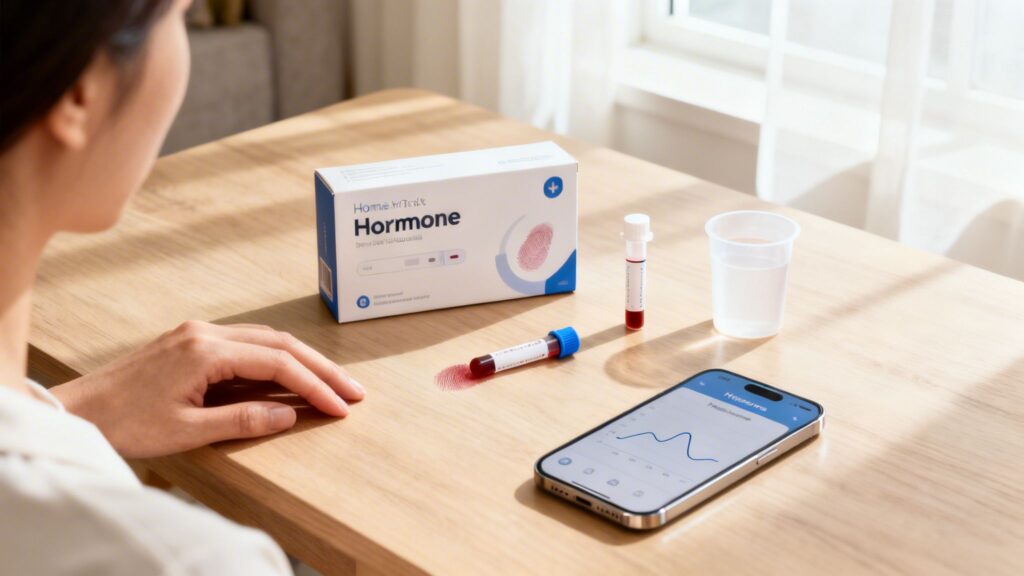
A private health screening is a proactive way to check in on your health, giving you access to a huge range of tests without going through the standard NHS route. It’s all about getting timely, useful insights into your wellbeing, on your own terms.
Think of your health like maintaining a car. The NHS is absolutely brilliant at fixing things when a warning light flashes on the dashboard—it's an essential, life-saving service for when things go wrong.
A private health screening, on the other hand, is like a proactive, detailed service. It’s designed to spot subtle issues before the warning light even flickers on, arming you with the information you need to keep everything running smoothly.
This preventative approach is becoming more and more popular across the UK for a few clear reasons. People are looking for greater control over their health, wanting answers without facing long waiting times or needing to meet specific criteria for a GP referral. It marks a shift from a reactive mindset to one of proactive, personalised health management.
So, what’s really fuelling this shift? It boils down to a few key motivations that just make sense in modern life:
"Taking control of your health isn't about replacing the NHS; it's about complementing it. Private screening empowers you with data to make informed lifestyle choices or to have more productive conversations with your GP."
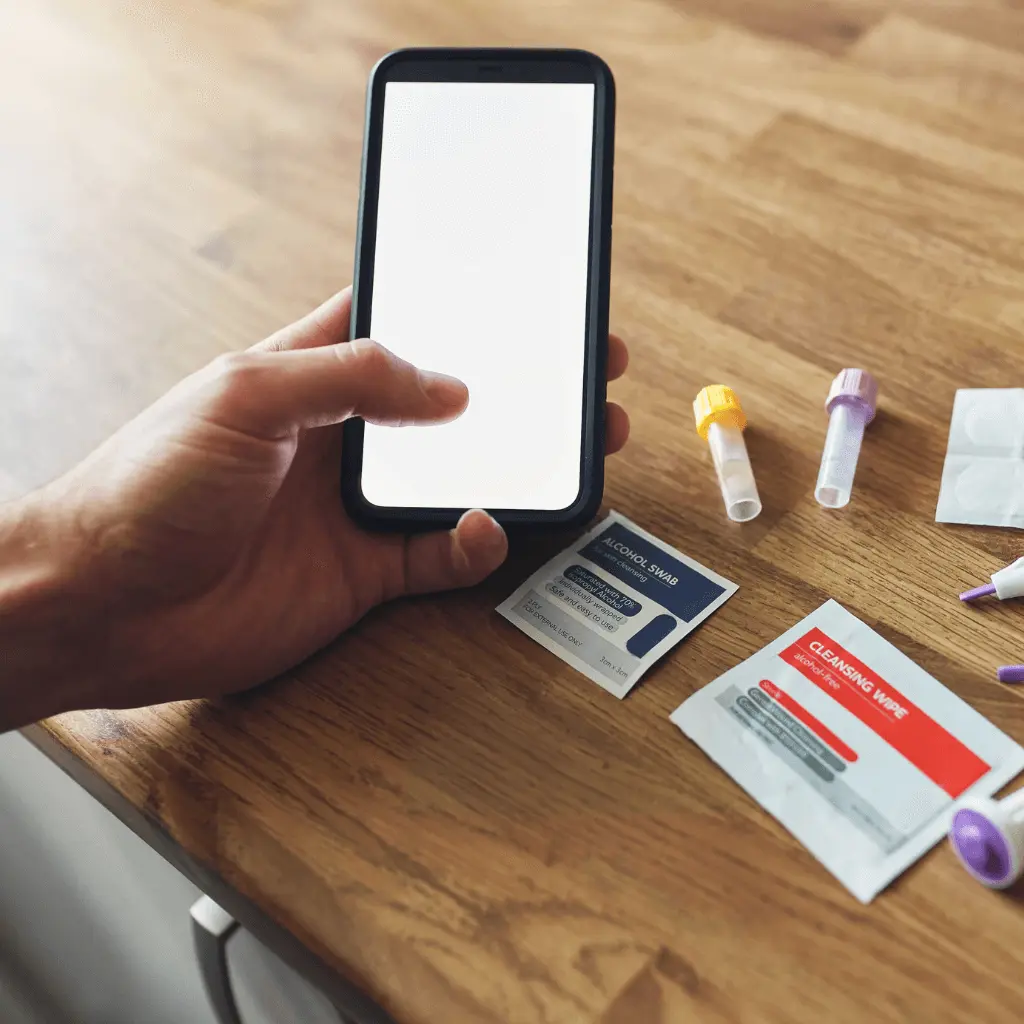
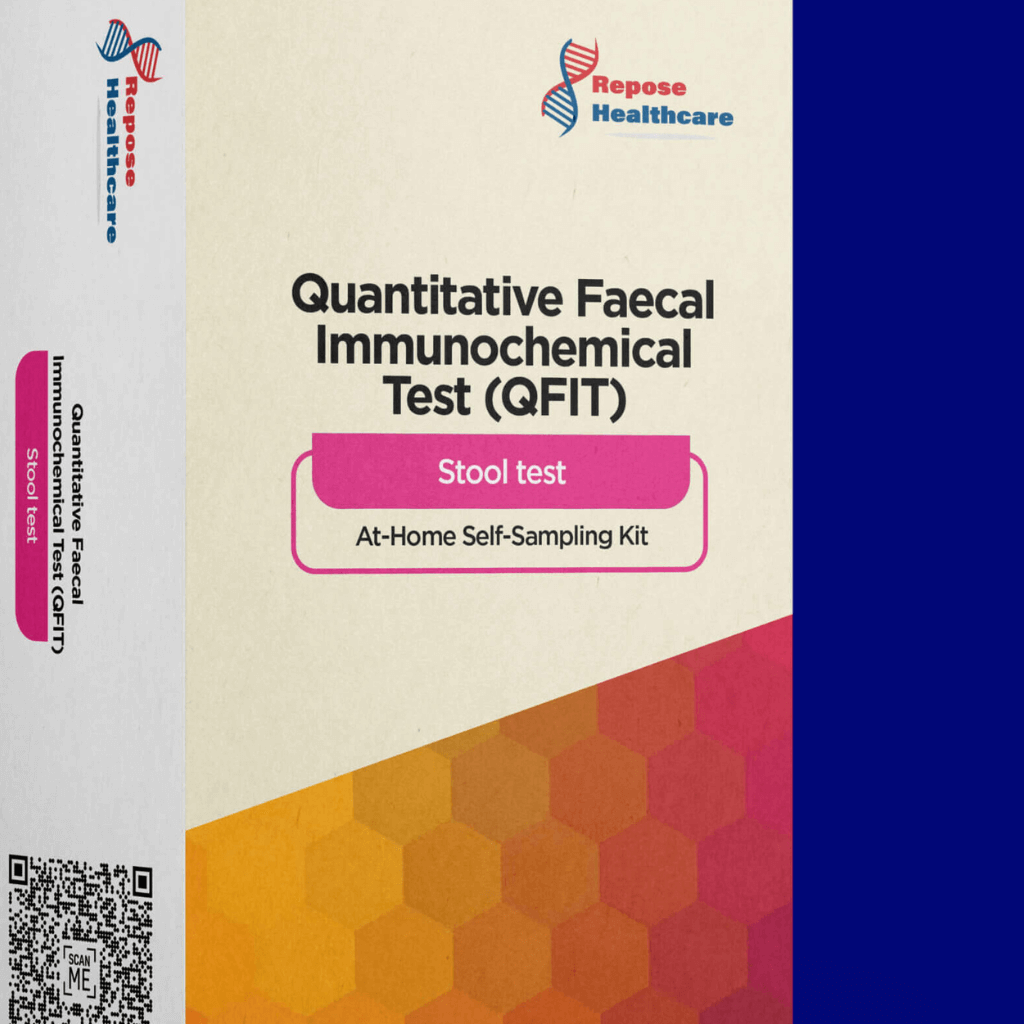
This is exactly where services like Repose Healthcare make a real difference. We give you the tools to monitor your wellness, investigate symptoms, or track key health markers, all from the comfort of your home. It’s not about trying to diagnose yourself, but about gathering valuable information.
You can explore the benefits of proactive testing and understand the power of early diagnosis with at-home testing kits in our detailed guide. Ultimately, the rise in private health screening reflects a powerful desire for empowerment, giving you timely, actionable insights to manage your health on your own schedule.
It can be helpful to see the main differences laid out side-by-side. While both play a crucial role in the nation's health, they serve different purposes. The NHS Health Check is a fantastic, structured programme for preventing major public health issues, whereas private screening offers a more personalised, on-demand approach.
| Feature | Private Health Screening (e.g., Repose Healthcare) | Standard NHS Health Check |
|---|---|---|
| Eligibility | Open to anyone, any time. You choose what and when to test based on your concerns. | For adults in England aged 40-74, invited once every five years. |
| Scope of Tests | Wide and customisable. From general wellness panels to specific tests (hormones, vitamins, allergies). | Focused on cardiovascular risk: checks cholesterol, blood pressure, BMI, and asks lifestyle questions. |
| Speed & Access | Very fast. Kits arrive in days, results often within 24-48 hours of lab receipt. No GP referral needed. | Involves booking an appointment and waiting for results, which can take days or weeks. |
| Convenience | High. Many tests can be done at home with simple finger-prick or saliva samples. | Requires an in-person appointment at a GP surgery or designated clinic. |
| Cost | Paid for by the individual. Prices vary depending on the complexity of the test. | Free at the point of use. |
This table isn't about which is "better" – they are different tools for different jobs. An NHS Health Check is a vital public health initiative, while a private screen is a personal tool for anyone wanting deeper, faster, or more specific insights into their own health picture.
Deciding to get a private health screen is a great move, but the sheer number of options can feel like staring at a massive restaurant menu when you're already hungry. Where do you even start?
The key is to match the test to your specific health goals or nagging concerns. Instead of getting bogged down in medical jargon, let's break down the main categories to help you find exactly what you're looking for. It’s a bit like car trouble—you wouldn't take your car to a tyre specialist if the engine was making a weird noise. In the same way, you need to align the health screen with the specific information you want to learn about your body.

As you can see, the drive for convenience, speed, and real insight is what pushes many of us towards taking a more proactive stance on our own health.
This is the most common starting point for anyone after a broad overview of their health. It's the perfect choice if you're just feeling a bit "off"—maybe tired, run down, or simply curious about your baseline health.
A good wellness screen looks at the key biomarkers that dictate your energy, mood, and overall function.
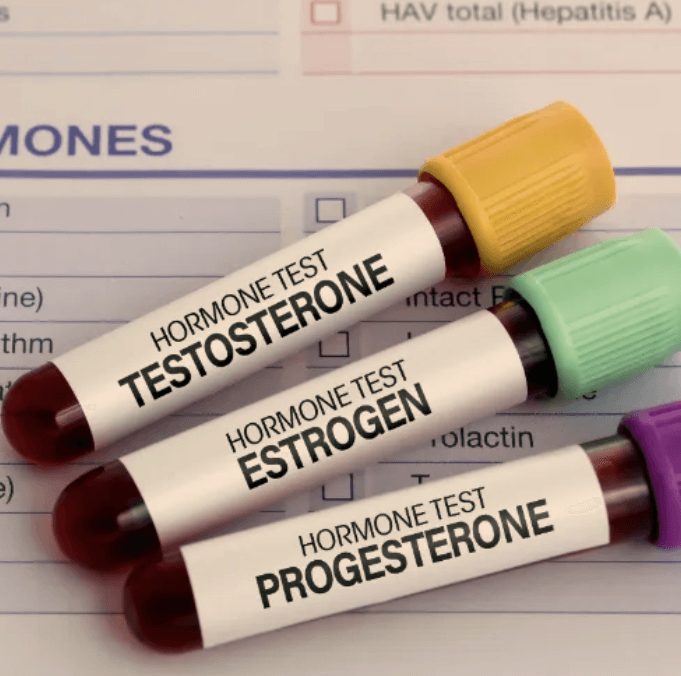
Hormones are the powerful chemical messengers running the show behind the scenes, regulating everything from your mood and metabolism to your reproductive health. When they're out of balance, the effects can be widespread and often quite confusing.
These specialised tests are designed for anyone who suspects a hormonal issue is at play or is planning to start a family.
Hormonal imbalances can show up in subtle ways—unexplained weight changes, skin problems, or shifts in your menstrual cycle. A targeted test gives you the hard data needed to understand what’s really going on beneath the surface.
Actionable Insight: A woman experiencing irregular periods or severe PMS could benefit from an advanced hormone panel to get insights into conditions like Polycystic Ovary Syndrome (PCOS). Similarly, a couple hoping to conceive can use fertility hormone tests to understand ovulation patterns and key reproductive markers, arming them with crucial information for their journey.
Beyond the general health MOTs, you can also get screens tailored to very specific symptoms. This is where private screening really shines, becoming a powerful tool for investigating those persistent, nagging issues that just haven't gone away.
By figuring out your main goal first—whether it's a general check-in, a hormonal question, or a specific symptom—you can confidently pick a private health screen that will give you genuinely useful and actionable results. This focused approach makes sure you get the answers you’re actually looking for.
So, you’ve decided to get a private health screen. The next big decision is how to do it. Broadly, you have two options: use an at-home testing kit or book an appointment at a physical clinic. Each has its place, and the best choice really boils down to your needs, your schedule, and the specific test you’re after.
Think of it a bit like getting a meal. Sometimes you want the convenience of a takeaway delivered straight to your door – it’s fast, private, and fits around your evening. Other times, you want the full restaurant experience, with a chef using specialist equipment to prepare your food. Both get you fed, but they serve different purposes.
An at-home test is the modern, convenient approach to health monitoring. It’s designed to fit seamlessly into your life, putting you firmly in the driver's seat.
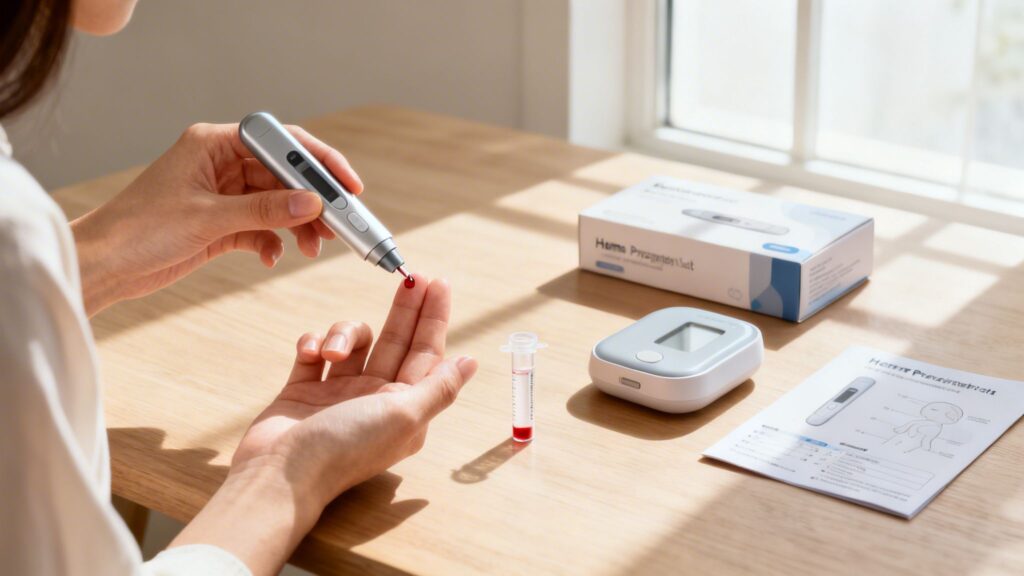
The whole process with an at-home kit from a provider like Repose Healthcare is built for simplicity and privacy. From the moment you order to the second you get your results, you’re in control.
This model is particularly helpful for sensitive health issues. When it comes to things like STI screenings, being able to manage the entire process from the privacy of your own home provides a level of discretion and comfort that’s hard to beat. Of course, a common question is whether this method is truly reliable. We tackle this head-on in our guide exploring just how accurate at-home blood tests are, which breaks down the science behind the technology.
While at-home testing is a game-changer for a massive range of biomarker tests, it isn’t the right tool for every single job. For certain types of health investigations, a traditional visit to a clinic is still essential.
You’ll need to go to a clinic when the screening requires:
A simple way to think about it is this: at-home tests are fantastic for gathering biological data from samples like blood, saliva, or urine. Clinic visits are for procedures that need physical imaging or a direct, hands-on interaction with a clinician.
Ultimately, choosing between the two isn’t about which one is "better" in general, but which one is the right fit for your specific situation. If you’re a busy person looking for insights into your internal health markers—from vitamin levels and hormone balance to cholesterol—the convenience, speed, and privacy of an at-home private health screening can feel revolutionary. But for structural imaging or hands-on procedures, a clinic is still the way to go.
When you’re thinking about private health screening, two questions probably jump to the front of the queue: how much will it set me back, and how long until I get answers? Let's break down what goes into the price and turnaround times, so you can see it less as a cost and more as a smart investment in your health.
The price of any private health test really comes down to its complexity. A straightforward test checking a single thing is naturally going to be more affordable than a comprehensive screen that analyses dozens of different markers. The lab technology and chemical reagents needed also play a big part – more advanced tests just need more resources.
This means you can pick a test that fits not only what you need to check but also your budget.
A few key things contribute to the final price tag on a private health screening:
The real value isn't just in the test itself, but in what it helps you avoid—the hidden costs of waiting. The anxiety, the uncertainty, and even the time you might need to take off work while waiting for answers can all take a heavy toll.
It's clear that more people are choosing this direct approach. The UK's private health check-up market is growing fast, partly because of the pressures on the NHS. Valued at USD 3.25 billion in 2025, it's expected to hit USD 5.93 billion by 2035. This trend is all about people wanting to skip long waits and get clarity sooner. You can discover more insights about the UK private health market and the reasons behind its growth.
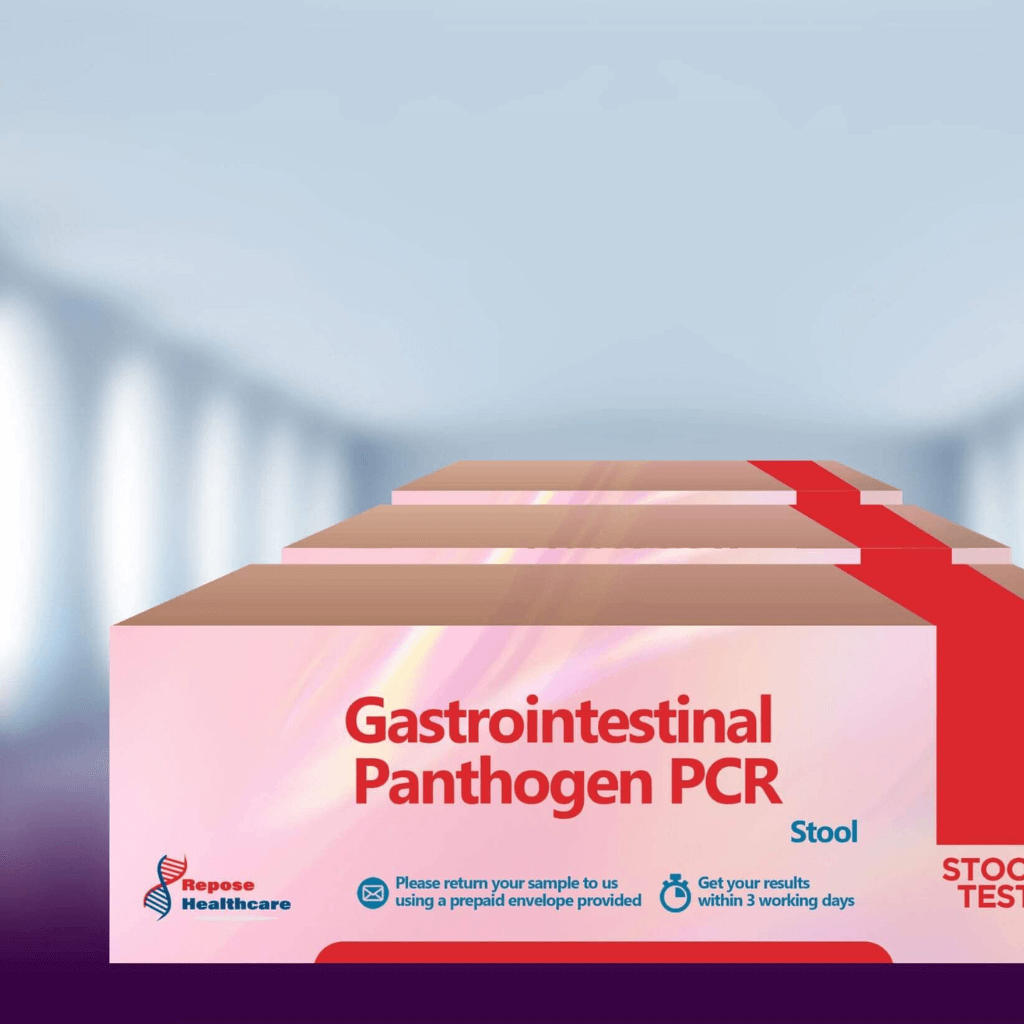
Waiting for health results can be incredibly stressful. This is where private screening really shines. We've designed our entire process to be as fast and efficient as possible, getting you actionable information exactly when you need it.
Once your sample lands at our UKAS-accredited laboratory, our team is committed to getting your results back to you swiftly.
This rapid turnaround completely changes the experience. Instead of weeks spent in limbo, you get clear, data-driven insights in a matter of days. It puts you back in control, ready to take the next steps for your health without any unnecessary delay.
Choosing a private health screening provider is a big decision. Let’s be honest, you’re not just buying another product off a shelf; you’re trusting a company with your personal health data and expecting accurate, reliable results in return. With the market expanding, it can be tough to sort the good from the bad.
Think of it like choosing a garage to service your car. You wouldn’t just go for the cheapest quote or the one with the flashiest advert. You’d look for certified mechanics, clear pricing, and a solid reputation for quality work. The exact same logic applies here. Looking for a few key markers of quality is essential for your peace of mind and for making sure the results you get are actually useful.
The private sector is becoming a bigger player in UK healthcare. In the last year alone, NHS patients were referred for 6.15 million private appointments, tests, and operations through partnerships designed to take the pressure off the system. This just goes to show the growing integration and reliance on independent providers, which makes it more important than ever to know how to spot the best ones. You can read more about this NHS and private provider partnership to get a feel for the changing healthcare landscape.
When you’re vetting a provider, there are a few absolute must-haves. These aren’t just nice features; they are the bedrock of a service you can trust.
For instance, at Repose Healthcare, we only partner with UKAS-accredited laboratories, and we are a CQC-registered provider. This commitment to regulatory standards is a core part of our promise to you, ensuring every test we offer meets the highest benchmarks for clinical accuracy and safety.
Beyond the official stamps of approval, the practical side of things can make a huge difference to your experience. These details show a provider has really thought about the entire process, from start to finish.
A reliable provider will make sure everything is smooth and secure. Look for signs of robust logistics, like including tracked return packaging for your sample. It’s a simple feature, but it gives you real peace of mind, letting you confirm your sample has arrived safely at the lab.
A provider’s attention to detail says a lot about their overall commitment to quality. Things like clear instructions, responsive customer support, and a secure, easy-to-use online results dashboard aren’t small things—they are signs of a professional and trustworthy service.
Armed with this checklist, you can go from being an uncertain customer to an informed one. Before you commit to any private health screening in the UK, take a moment to scan the provider's website for these key trust signals.
Your Practical Checklist:
By taking these simple steps, you can confidently choose a provider who will deliver accurate results securely and professionally, putting you in a great position to take proactive control of your health.
Getting your private health screening results can be a big moment. But staring at a report full of biomarkers and data points? That can feel a little intimidating at first. The real goal isn't just to see the numbers; it's to turn them into practical, actionable steps for your health. This isn’t about self-diagnosing—it's about empowerment.
At Repose Healthcare, we make this simple. Your results appear on a secure online dashboard designed for total clarity. Every biomarker is shown right next to its accepted reference range, so you can see where you stand immediately. We've swapped out the confusing medical jargon for plain-English explanations to help you understand what each marker really means for your overall health.
This turns your report into a genuinely useful tool. You can track changes over time, see if that new diet is actually working, or just go into your next GP appointment feeling much more informed.
Understanding what your results are telling you is the first step towards taking positive action. Your dashboard will likely use a straightforward traffic light system—think green, amber, red—to highlight which biomarkers are within a normal range and which fall outside it. This gives you an instant visual cue about what needs your attention.
It’s really important to look at the results as a whole picture, rather than getting hung up on a single out-of-range marker. For example, if your screening included a body composition analysis, understanding your body fat percentage provides crucial context for other results like cholesterol or blood glucose, helping you build a much more rounded view of your metabolic health.
Think of your results as a personalised health map. It shows you where you are right now and highlights potential routes for improvement, but it doesn't choose the destination for you. That's where informed next steps come in.
Once you've got a handle on your results, it’s time to decide what to do next. The right action depends entirely on what your report shows.
This proactive approach is becoming more and more common as people look for timely insights into their health. The move towards preventive screening is clear from the rise in insurance-funded diagnostics, with overall private admissions in England hitting 206,465 in a recent quarter. It shows a definite trend towards using private options to get faster clarity on health matters. To understand more, you can explore the data on the UK medical insurance market.
Stepping into the world of private health screening for the first time can feel a bit daunting. To help you feel confident and clear on your choices, we’ve put together straightforward answers to the questions we hear most often.
Our goal is to give you practical, no-nonsense insights so you can take the next step in managing your health proactively. Let's get into it.
This is one of the most important questions people ask, and rightly so. The short answer is: they are very accurate, as long as they are processed correctly. The technology behind finger-prick (capillary) blood collection has come a long way, and for a huge range of health markers, it delivers results that are just as reliable as traditional blood draws from your arm.
The real key to accuracy is the lab. At Repose Healthcare, every single sample goes to a UKAS-accredited laboratory—the same gold standard the NHS relies on. This guarantees your sample is analysed with the highest level of clinical precision.
While you're under no obligation to share your private screening results with your GP, it's often a really good idea—especially if any of your markers fall outside the normal range. Think of your results as a valuable piece of information that can lead to a more productive conversation about your health.
For instance, if a test flags up a significant vitamin deficiency or a thyroid imbalance, giving your GP a copy of the report provides them with solid data to work with. They can then map out the best next steps, whether that means more tests or starting a specific treatment plan.
Absolutely. In fact, for many people managing a long-term condition, regular private screening can be an excellent tool for monitoring key health markers between routine NHS appointments. It offers a convenient way to keep a closer eye on how your body is responding to treatment or lifestyle adjustments.
For example, someone managing a thyroid condition might use at-home tests to track their hormone levels more frequently. This gives them more data points and helps them feel more in control of their health journey.
It's crucial to remember, however, that private tests are designed to complement, not replace, the care you get from your GP or specialist for any pre-existing conditions. Always keep your healthcare provider in the loop.
Ready to take the next step towards understanding your health? At Repose Healthcare, we make it simple to get the answers you need from the comfort of your home. Explore our wide range of tests and order your kit today.
Find the right private health test for you at reposehealthcare.co.uk