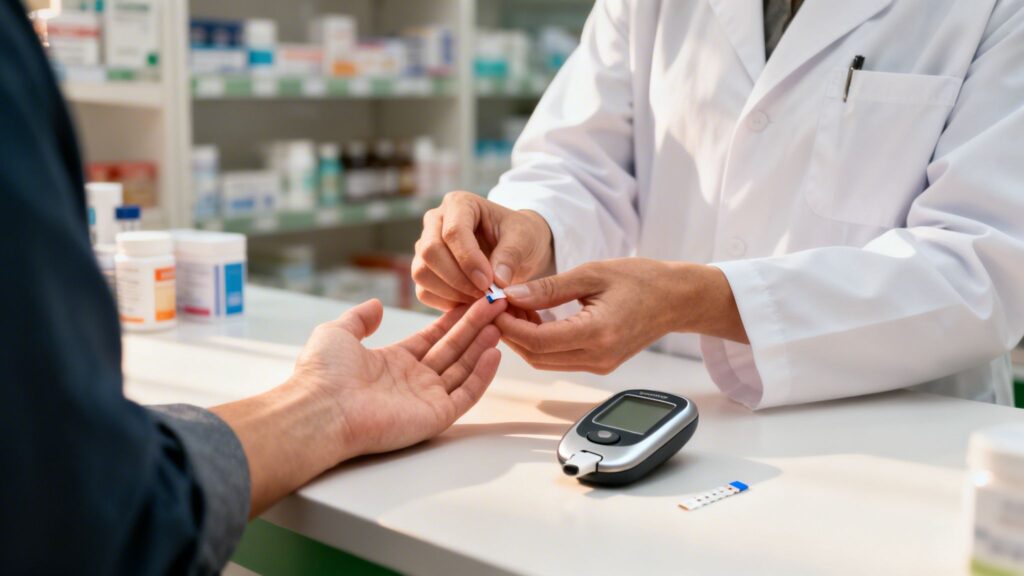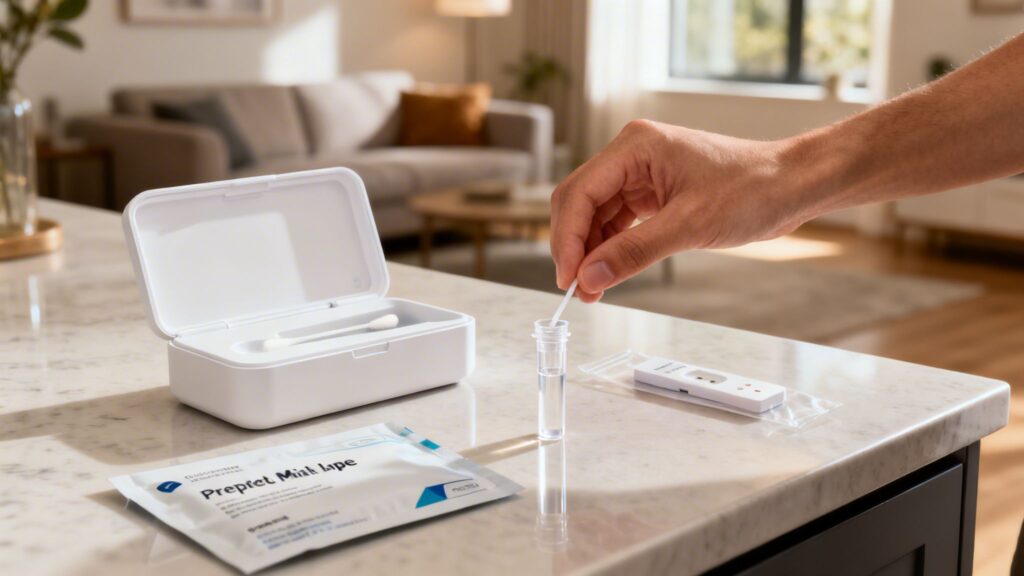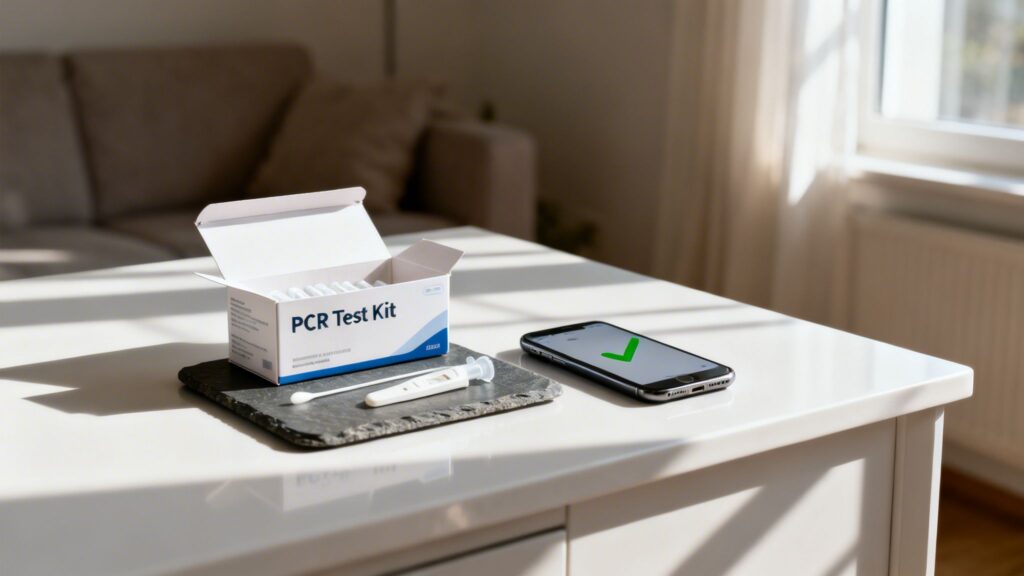
Standing in the pharmacy aisle, faced with a wall of pregnancy tests, is a deeply personal and often anxious moment. This guide is here to cut through the noise and give you clear, reassuring answers. We'll walk you through the science behind these tests, how to choose the right one for you, and what your result really means.
A pregnancy test at pharmacy is a reliable first step for finding out if you're pregnant, but understanding what you're buying is key to feeling confident in the result. The sheer variety on the shelf—from digital readouts to simple lines, and standard to early-detection kits—can feel pretty overwhelming.
This guide will break it all down, making that moment of truth clearer and a lot less stressful. We'll cover the basic science, help you decide which test is right for your situation, and explain how to interpret the results accurately.
A pharmacy test gives you a simple ‘yes’ or ‘no’ answer. It's a fantastic starting point, but it's not the only step on your journey. For complete certainty and more detail, a lab-grade test offers a much clearer picture.
After taking a pharmacy test, you might be left wanting more definitive answers. For instance, what if you get a faint line, or a negative result but you still feel pregnant? This is where modern at-home testing solutions can really help.
We'll introduce how services like Repose Healthcare provide confidential, lab-grade follow-up testing right from the comfort of your own home. Instead of just a positive or negative, these tests measure the exact amount of pregnancy hormone, giving you a clear path forward. Our goal is to empower you with the right knowledge for every stage, from the pharmacy shelf to confident next steps in your health journey.
So, let's break down the science behind that little test kit. When you buy a pregnancy test from a pharmacy, you’re getting a clever piece of medical technology designed to look for one very specific thing: a hormone called human Chorionic Gonadotropin (hCG).
Your body only starts making hCG after a fertilised egg has successfully implanted into the wall of your uterus. Because of this, hCG is often called the ‘pregnancy hormone’—it’s the definitive biological marker these tests are built to find.
A good way to understand how a pharmacy pregnancy test works is to think of it like a very specific lock and key. The test stick itself contains special molecules called antibodies.
When you use the test, your urine flows across a strip containing these antibodies. If hCG is present, it clicks into place, binding to the antibodies and triggering a chemical reaction. This reaction is what releases the coloured dye, creating the line or digital symbol you see in the result window.
The core principle is simple detection. Both standard line tests and digital tests work by ‘catching’ hCG. The only difference is how they display the result—one with a line, the other with a clear word like ‘Pregnant’.
This elegant lock-and-key system is what makes at-home pregnancy tests from a pharmacy such a reliable and accessible first step. The whole process is designed to take you from a place of uncertainty to one of initial clarity.
This infographic shows the emotional journey a pharmacy test helps you navigate, from initial confusion to eventual confidence.

The image really captures how a simple test can give you that initial clarity you need to move forward with certainty.
It’s really important to realise that a pharmacy test gives you a qualitative result. Think of it like a light switch—it can only tell you if hCG is present (on) or not (off). It can't tell you how much hCG is there.
For example, a faint positive line and a dark positive line both mean the same thing: hCG was detected. The test has done its job by answering 'yes'.
For a more detailed picture, though, you need a quantitative test. This is where services like Repose Healthcare come in. Our at-home blood tests measure the exact concentration of hCG, giving you a precise number. This level of detail is the clinical gold standard for confirming and monitoring a pregnancy in its earliest stages, giving you the complete confidence you deserve.

When you find yourself standing in front of the pregnancy test at pharmacy shelves, the choice usually comes down to two types: standard tests and early-detection tests. The main difference between them is sensitivity. Think of an early-detection test as having a more finely-tuned radar, designed to pick up much lower levels of hCG. This means you can, in theory, use it a few days before you even miss your period.
A standard test, on the other hand, needs a higher concentration of the hormone to work. This makes it most reliable on or after the day your period was expected. While getting an answer sooner sounds great, it does come with a catch. Testing too early, even with a sensitive kit, raises the risk of getting an inaccurate result, which can cause a lot of unnecessary worry and confusion.
For a result you can truly trust, when you test is just as critical as which test you choose. Your body needs a bit of time to produce enough hCG for a test to pick it up. In fact, testing too soon is the number one reason for getting a "false negative"—that frustrating situation where you are pregnant, but the test says you aren't.
To get the most accurate result possible, it's best to follow a few simple tips for when to take the test and how to collect your sample. The table below breaks down the optimal timing for different scenarios.
| When to Take a Pregnancy Test for Best Results |
| :— | :— | :— | :— |
| Scenario | Recommended Test Type | Optimal Timing | Reasoning |
| You want the most reliable result possible | Standard or Early-Detection | On or after the first day of your missed period | hCG levels are almost always high enough by this point for any test to give a clear, accurate positive result. |
| You want to test before your missed period | Early-Detection Only | 5-6 days before your missed period, at the earliest | These tests are sensitive enough to detect low hCG levels, but the risk of a false negative is still higher. |
| You have an irregular cycle | Standard or Early-Detection | 14-21 days after you last had unprotected sex | Without a predictable period date, timing from potential conception is the most reliable method. |
| You get a faint positive line | Either Test Type | Retest in 2-3 days using first-morning urine | This gives hCG levels time to double, which should result in a much darker, more definite line if you are pregnant. |
As you can see, patience really is a virtue here. The most dependable results come from waiting until after your missed period. A couple of other practical tips can also make a big difference. First, try to use your first-morning urine. It's the most concentrated, giving the test the best possible chance of detecting hCG. Second, avoid drinking a lot of water right before you test, as this can dilute your urine and potentially lead to a misleading negative result.
Choosing the right moment to test is about balancing eagerness with accuracy. Waiting until after a missed period provides the most certain results and helps you avoid the emotional toll of an ambiguous or incorrect reading.
This considered approach is crucial, especially when you think about how many people rely on these kits. Home pregnancy tests are a cornerstone of early family planning in the UK, with the market valued at USD 281.26 million in 2023 and nearly 65 million kits sold across Europe each year. Modern tests have also become much easier to use, with digital readouts that spell out 'Pregnant' or 'Not Pregnant', which helps cut down on the guesswork of interpreting faint lines.
It’s important to remember what a pharmacy test is telling you. It's giving a qualitative 'yes' or 'no' answer—it simply confirms if hCG is present above a certain threshold. It doesn't tell you how much is there.
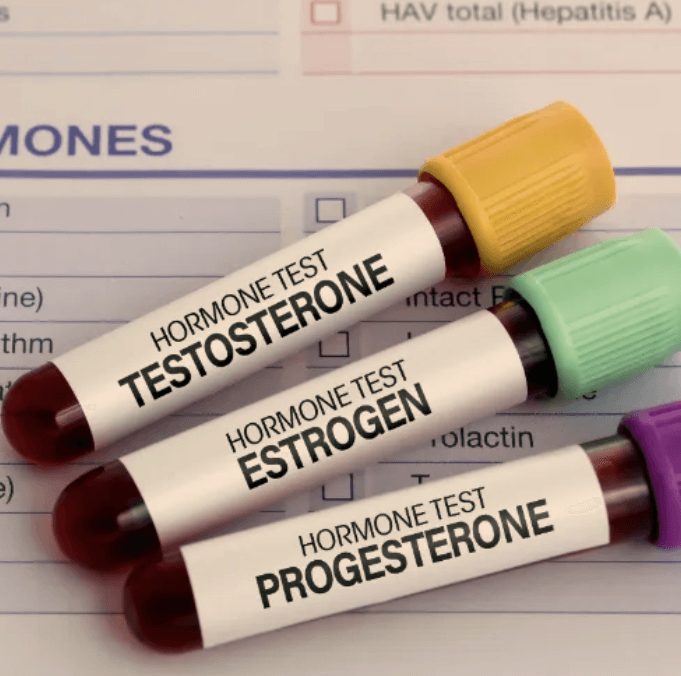
If you test early and get a faint line, or if you get a negative result but your period still hasn't arrived and you feel pregnant, you might want more detail. This is where understanding your specific hormone levels becomes really useful. We have a detailed guide that explains how to interpret female hormone blood test results. A quantitative blood test, like the ones Repose Healthcare offers, measures the exact amount of hCG in your blood, providing the kind of clinical certainty that a urine test simply can't.
Seeing that result pop up on a pregnancy test is a huge moment, packed with emotion. Whether you're hoping for a positive or a negative, what you really want is a clear, simple answer. But what happens when you get something ambiguous, like a faint, barely-there line? It can be confusing, but understanding what's going on is actually quite straightforward.
Let's start with the most common puzzle: the faint line. A pregnancy test at pharmacy is designed to do one job – detect the pregnancy hormone, hCG.
Any positive line, no matter how faint, should be considered a positive result. A faint line simply means the test has picked up hCG in your urine, even if the concentration is still very low.
This usually happens when you test very early, before your hCG levels have had a chance to really ramp up. If you see a faint line, the best thing to do is wait two or three days and test again. Your first wee of the day is best. By then, your hCG levels should have roughly doubled, which should give you a much clearer, stronger line.
While the pregnancy tests you buy at the pharmacy are incredibly accurate – over 99% when you follow the instructions – they aren't completely foolproof. Inaccurate results do happen, and they typically fall into one of two camps. Knowing why can save you a lot of unnecessary stress and help you make sense of your result.
Common Causes of a False Negative:
A false positive – where the test says you're pregnant but you're not – is much rarer than a false negative, but it can happen. This is usually down to specific medical situations rather than a mistake in how you used the test.
For instance, some fertility medications contain hCG. If you test too soon after a treatment cycle, the test might pick up the medication's hormones and give you a positive result. Other, less common causes include certain medical conditions or a very recent pregnancy loss where hCG is still in your system.
If you get a positive result from a pregnancy test at pharmacy but something feels off, the next step is crucial. It’s always a good idea to confirm the result with a healthcare professional. For total clarity, a quantitative blood test like those from Repose Healthcare can measure the exact amount of hCG in your blood. This gives you a definitive answer and the clinical certainty you need to figure out what comes next.

Whether the result is positive, negative, or just plain confusing, the test you bought from the pharmacy is only the first step. Think of it as the starting pistol, not the finish line. This section is your roadmap for what comes next, helping you move forward with confidence.
A positive result from a pregnancy test at pharmacy can bring a real mix of emotions. The first practical step should always be to get in touch with your GP or a midwife. They'll be the ones to officially confirm the pregnancy and get you set up with your prenatal care, which is absolutely vital for a healthy pregnancy.
If your test is positive, you might soon notice the early signs of pregnancy, like morning sickness. For those looking for different ways to cope, you can find helpful strategies for relief from pregnancy nausea.
What if the test says negative, but your period is still late and you just feel pregnant? Or maybe you got one of those faint, blurry lines that leaves you with more questions than answers. When this happens, it’s time to look for deeper insights than a standard urine test can offer.
A negative result when you still have symptoms doesn't have to be a dead end. This is where a more advanced type of testing can give you the certainty you need.
A pharmacy urine test gives a simple 'yes' or 'no' answer. For a definitive, clinical confirmation, a quantitative blood test measures the exact level of the hCG hormone, leaving no room for doubt.
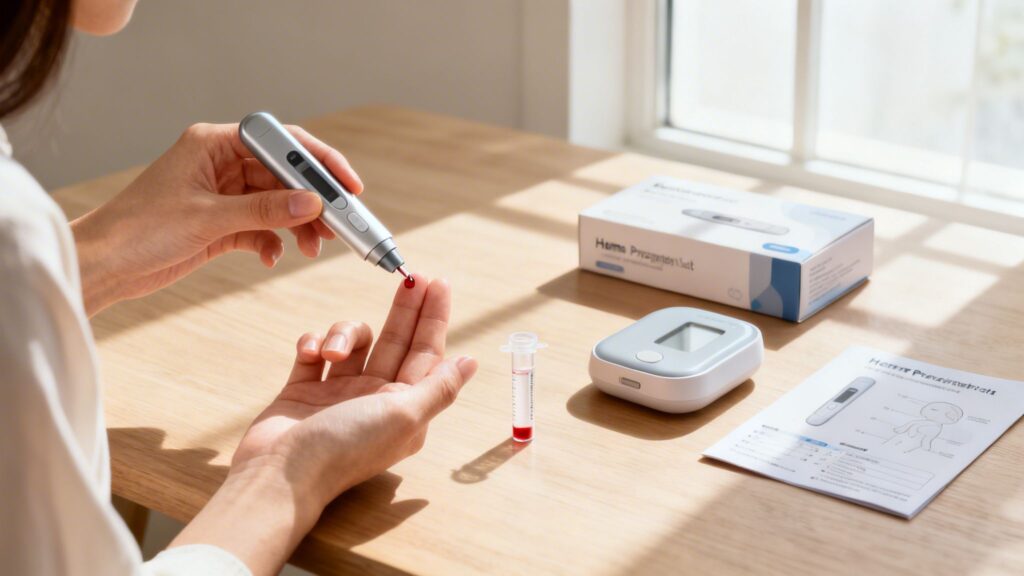
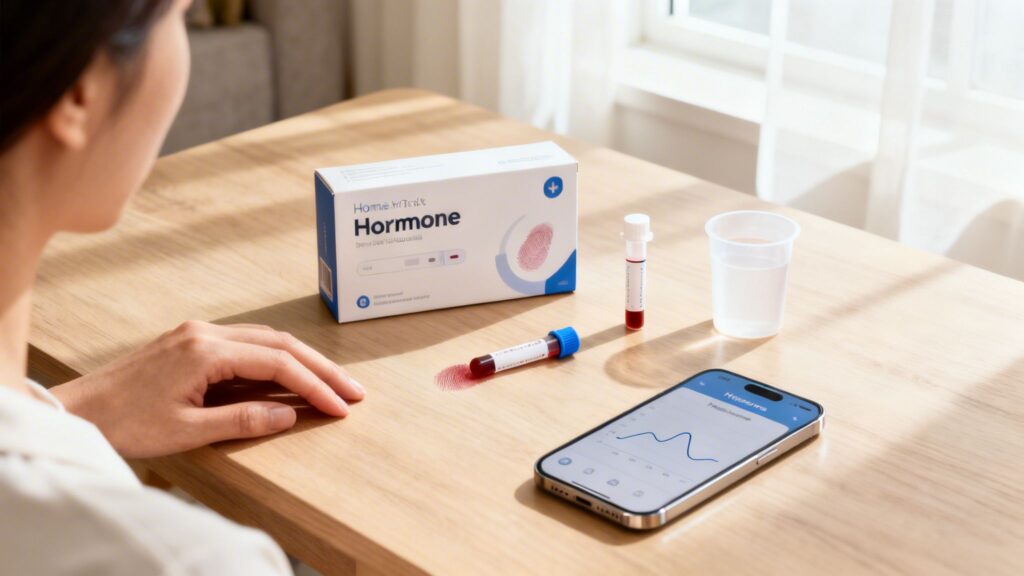
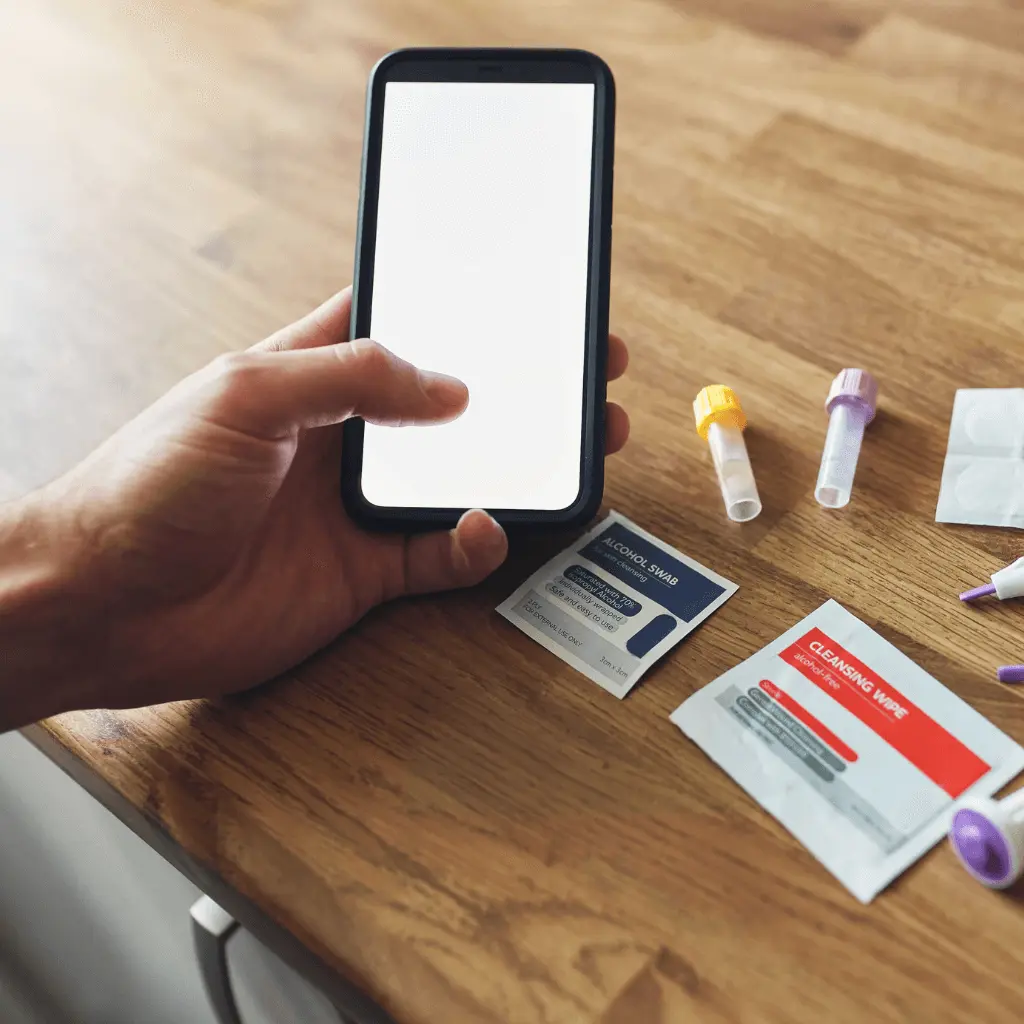
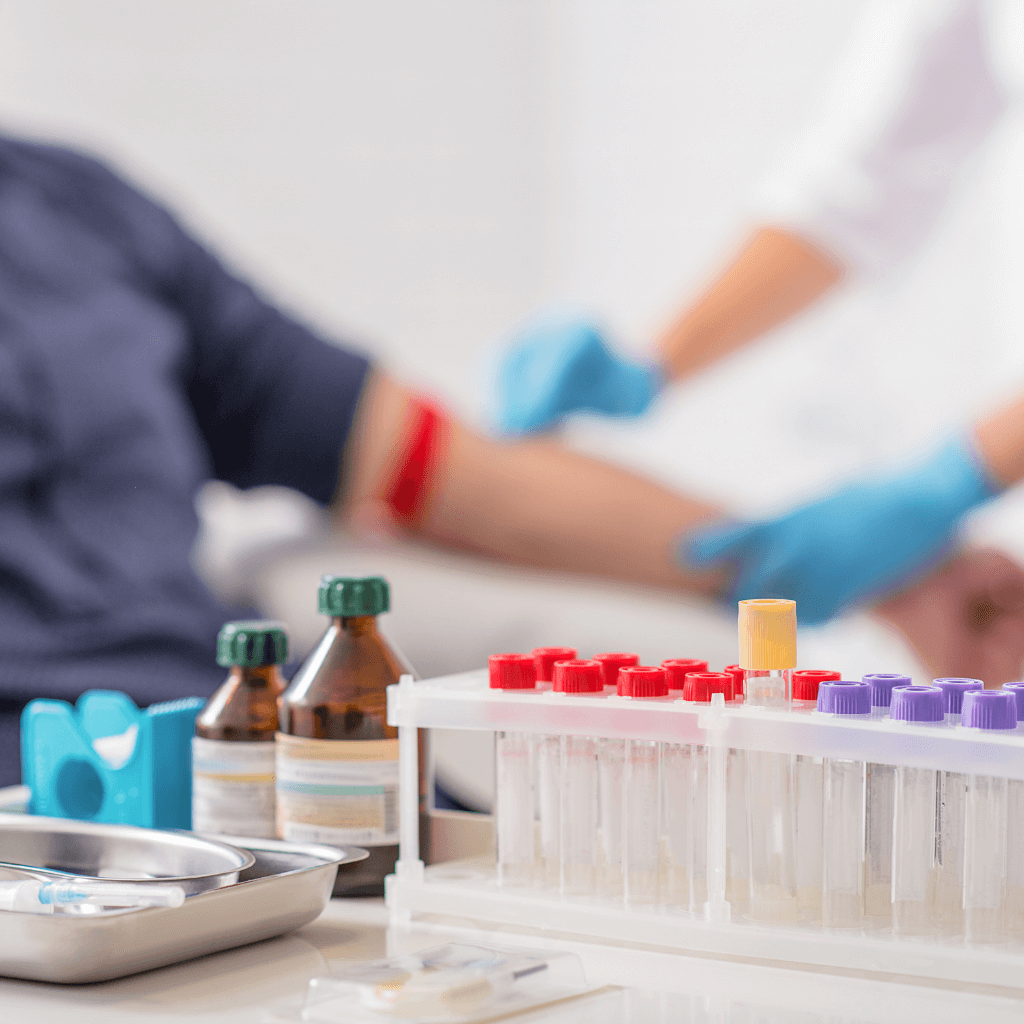
This is exactly where Repose Healthcare comes in. Our at-home quantitative hCG blood tests deliver clinical-grade confirmation by measuring the precise amount of the pregnancy hormone in your blood. You just collect a simple finger-prick sample in the privacy of your own home, and our accredited lab gives you a definitive answer.
This shift towards more detailed at-home testing is becoming more and more common. In the UK, the market for pregnancy test kits, mostly from pharmacies, was valued at USD 81.5 million in 2024. This is all part of a bigger trend in self-testing, with the UK market hitting USD 568.7 million that same year. Repose Healthcare supports this by offering tests that go beyond a simple pharmacy buy, giving you deeper insights into your health.
For anyone actively trying to conceive or just wanting to understand their cycle better, our services offer a proactive way forward. We go beyond just hCG; our fertility and hormone panels can give you a full picture of your reproductive health. If your journey with pharmacy tests has been a frustrating one, exploring the specifics of your hormones is a logical next step.
Likewise, understanding your overall health is key. For example, our urine chemistry and microscopy test can flag important health markers that have nothing to do with pregnancy. Whatever your situation, Repose Healthcare is your convenient, private partner for getting the answers you deserve.
When you need an answer, grabbing a pregnancy test from pharmacy shelves offers immediate results and convenience. But what are you trading for that speed? Let's break down the real-world differences between an over-the-counter urine test and a lab-grade, at-home blood test.
The choice often boils down to privacy versus certainty. While buying a test in a store is quick, it’s a public experience. For many, the complete confidentiality of ordering an at-home lab test from a service like Repose Healthcare is a far more comfortable alternative. The kit arrives in discreet packaging, and you perform the test in your own space, on your own terms.
The most significant difference lies in the type of result you get. Think of a standard pharmacy urine test as being qualitative—it’s like a light switch. It can only tell you ‘yes’ or ‘no’; it’s either on or off, with no detail in between.
In contrast, a blood test from a service like Repose Healthcare is quantitative. It's more like a dimmer switch, showing you the exact level of hCG in your system. This is the clinical gold standard for confirming and monitoring the progression of an early pregnancy.
A pharmacy test answers the question: "Is hCG present?" An at-home quantitative blood test answers: "How much hCG is present?" That second answer provides a much higher degree of certainty.
This level of detail is invaluable, especially if you get a faint line or a negative result that doesn't feel right. Knowing your precise hCG number can confirm a very early pregnancy that a urine test might miss, or help your doctor track how a pregnancy is developing. You can learn more about the accuracy of at-home blood tests in our detailed guide.
The demand for reliable self-testing is clear. The UK's self-testing market was valued at USD 568.7 million in 2024, and it's set to grow. With mounting pressures on the NHS, which handles over 7.5 million GP appointments every month, at-home diagnostics play a crucial role in empowering individuals to take control of their health.
Repose Healthcare fits perfectly into this picture, offering a bridge between the immediacy of a pharmacy test and the precision of a lab. With tracked delivery and GDPR-secure results, we bring clinical-level confidence directly to you. You can find more insights about the self-testing market outlook on grandviewresearch.com.
Walking into a pharmacy to buy a pregnancy test can feel a little daunting, and it’s natural to have questions. To help you feel more confident, here are some straightforward answers to the things people most often wonder about.
While the tests you buy in a pharmacy are impressively reliable—over 99% accurate when you follow the instructions—mistakes can happen. The most common reason for a wrong result is simple user error.
A "false negative" is the most likely culprit, and it usually happens when you test too early. Your body needs time to build up enough hCG (the pregnancy hormone) for the test to pick it up. Testing before your missed period can sometimes lead to a negative result, even if you are pregnant.
"False positives" are much rarer but can be caused by certain fertility drugs that contain hCG or, in very specific cases, by some medical conditions.
If you get a result that just doesn't feel right, trust your gut. The best thing to do is either re-test with another kit in a couple of days or get a lab-grade blood test for complete certainty.
For the most part, no. Whether you grab a basic, budget-friendly test or a pricier digital one, they all work on the same principle and are very reliable when used on or after the day your period was due.
The price difference usually comes down to bonus features. You might be paying for a digital display that spells out "Pregnant" versus "Not Pregnant" or for an "early detection" kit with higher sensitivity. For most women, a standard test from a reputable brand will do the job perfectly well.
Seeing a negative test when your period is late can be confusing. It’s important to remember that many things besides pregnancy can throw your cycle off track.
Common culprits include stress, major changes to your diet or exercise routine, recent travel, or an underlying hormonal imbalance. If your test is negative and your period is over a week late, it’s a good idea to test again.
If the tests stay negative and your cycle doesn’t return to normal, it’s wise to have a chat with your GP. For a deeper dive, exploring your hormonal health with more comprehensive testing can help uncover the root cause of the irregularity.
For clinical certainty and a clearer picture of your health beyond a simple pharmacy test, Repose Healthcare offers a range of at-home quantitative hCG and hormone panel tests. Get the definitive answers you need, privately and conveniently, from an accredited UK lab. Learn more at Repose Healthcare.