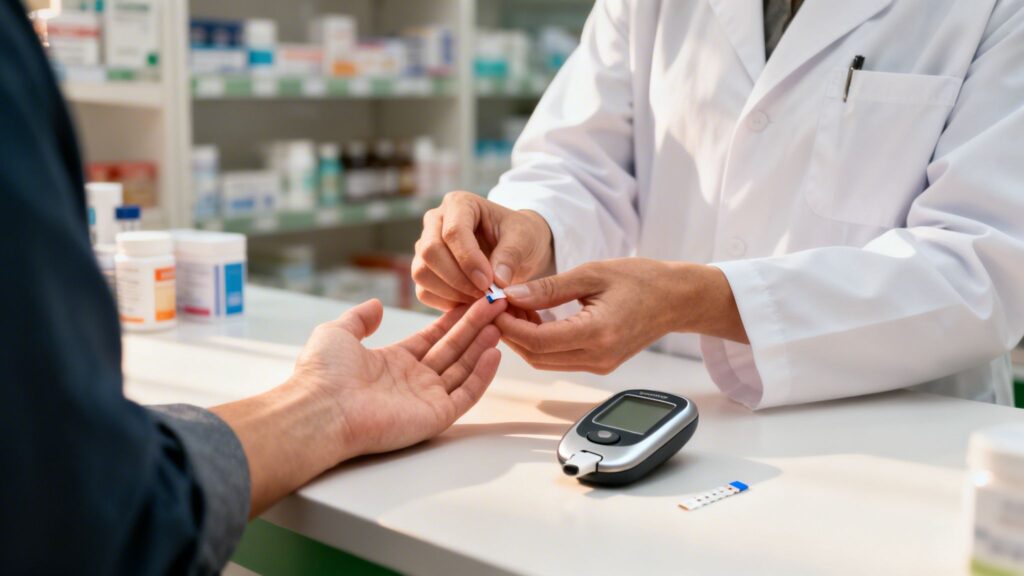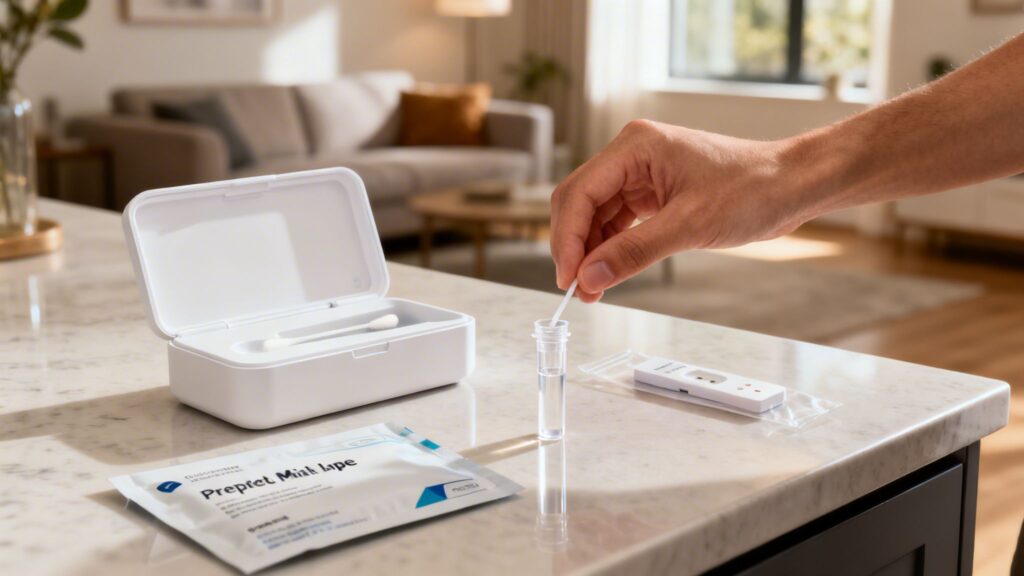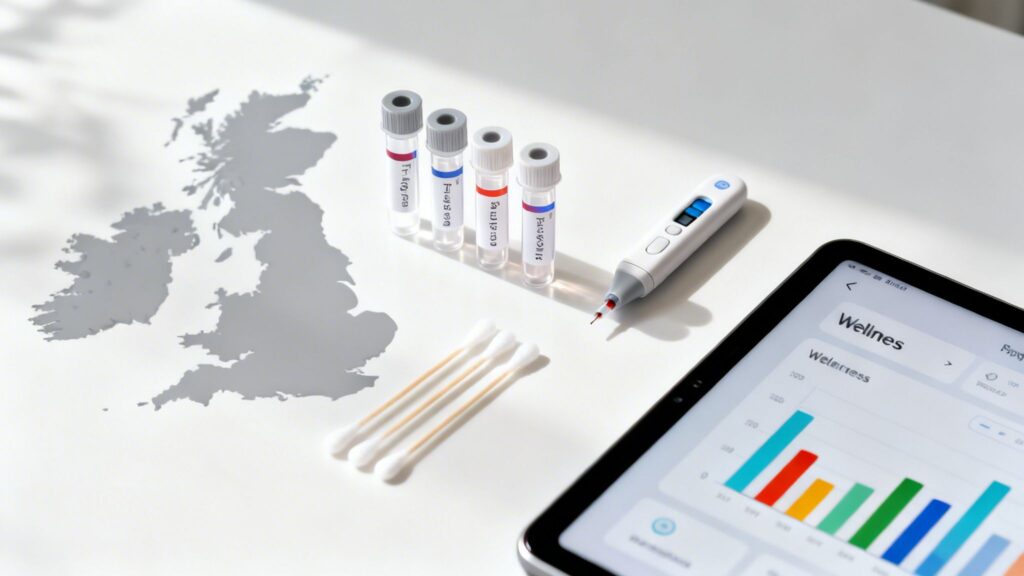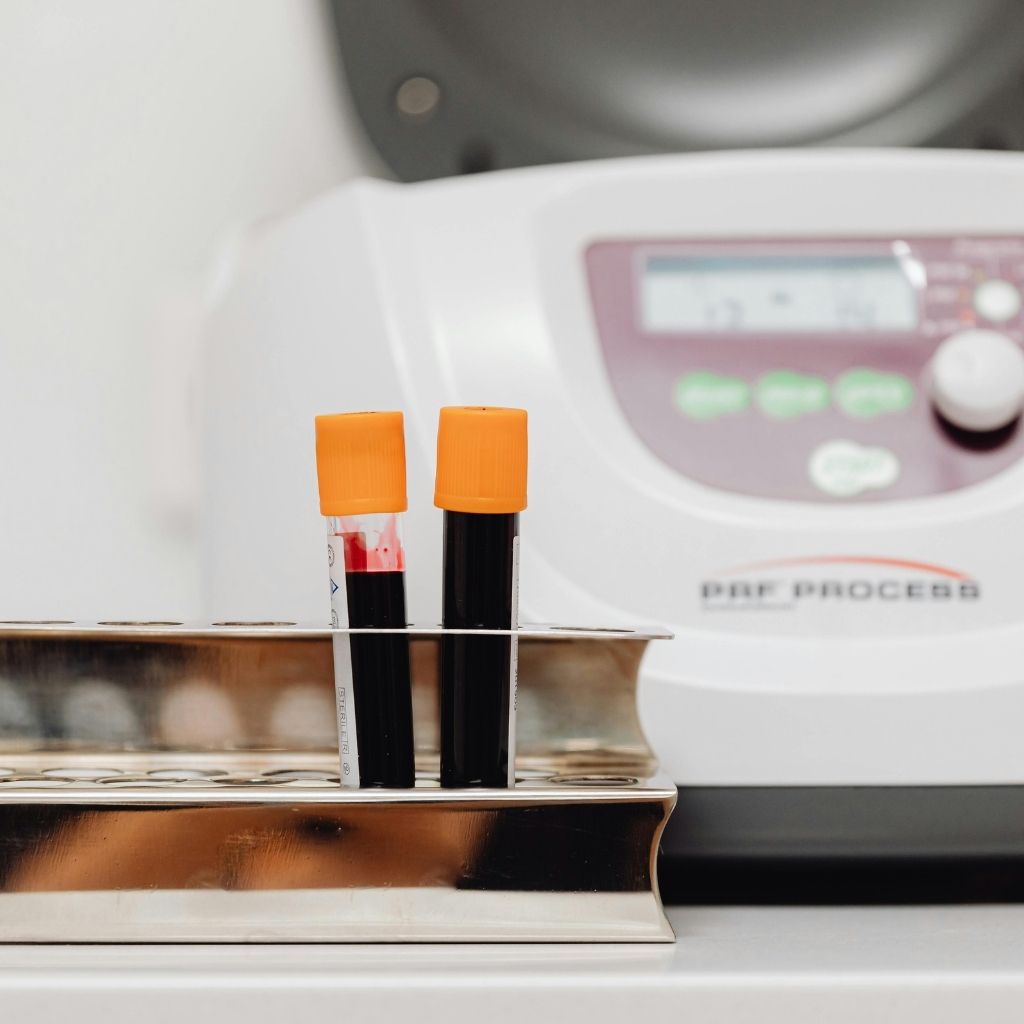
An iron levels test is a blood test that checks several key markers to see how your body is storing and using iron. It's an incredibly useful first step for anyone battling persistent fatigue, as it can flag up problems like iron deficiency long before it develops into full-blown anaemia.
That constant feeling of being drained and exhausted isn’t always a normal part of a busy life. If you're tired of feeling tired, it could be your body's way of telling you that your iron levels are off. Iron is a crucial mineral that helps carry oxygen around your body, fuelling your cells and giving you energy. When your levels drop, everything starts to slow down.
An iron levels test is the best way to understand what's really going on beneath the surface. It’s not just about a single number; a proper iron panel looks at several different markers that, when put together, tell the complete story of your iron health. Think of it as a detailed audit of your body's most important energy resource.
Getting on top of your iron health is more important than you might think. Iron deficiency is surprisingly common and can have a significant impact on both individuals and the healthcare system.
In the UK, iron deficiency anaemia places a substantial burden on the National Health Service, leading to over 257,000 hospital admissions in one year, at a cost exceeding £90.6 million. This highlights the critical need for accessible and proactive screening. You can explore more on these findings about iron deficiency prevalence.
We all know that getting a GP appointment isn't always quick or easy, and waiting can be a real barrier to getting answers. The good news is, you no longer have to wait to start investigating your symptoms.
With an at-home Repose Healthcare Iron Levels Test, you can get the insights you need privately and conveniently, right from your own home. This approach gives you actionable insights by letting you:
Practical Example: If you’re a busy parent juggling work and family, finding time for a clinic visit is tough. An at-home test means you can take your sample on a Sunday morning and have clear, actionable data to discuss with your GP by the end of the week, turning weeks of waiting into days.
Getting a report full of medical data after an iron levels test can feel a bit daunting. But once you get to know the key players, it's surprisingly straightforward.
A great way to think about it is to picture your body as a busy factory that needs iron to produce energy. Our Repose Healthcare Iron Levels Test panel looks at different parts of this factory to give you a complete picture of how things are running.
Let’s break down what each marker means using this factory analogy. It'll help you see not just the numbers, but the actionable story they tell about your body's energy production line.
This concept map helps visualise how that tired feeling can be connected to iron deficiency, and why an at-home test is a practical first step.

The infographic shows that persistent fatigue is a major symptom of low iron, making a convenient home test an effective way to investigate the root cause.
To give you a quick overview, here’s a table summarising the key markers we’ll be exploring.
| Test Marker | What It Measures | Analogy (The Body's Iron Factory) | Low Levels May Suggest | High Levels May Suggest |
|---|---|---|---|---|
| Ferritin | Your body's total iron reserves. | The warehouse where iron is stored. | Iron deficiency (empty warehouse). | Iron overload, or inflammation. |
| Serum Iron | Iron actively circulating in your blood. | Iron currently on the conveyor belt. | Can fluctuate, but may point to deficiency. | Can fluctuate, but may point to overload. |
| Transferrin/TIBC | The capacity to transport iron. | The number of forklifts available to move iron. | Iron overload (fewer forklifts needed). | Iron deficiency (more forklifts are made). |
| Transferrin Saturation | The percentage of transporters carrying iron. | How many of your forklifts are busy. | Iron deficiency (empty forklifts). | Iron overload (overloaded forklifts). |
| Haemoglobin | The amount of iron-rich protein in red blood cells. | The quality of your finished product. | Anaemia (poor production). | Dehydration, lung disease, or other conditions. |
Now, let's dive into what each of these means for you, starting with the most important one.
Ferritin is one of the most crucial markers on your iron panel. It's a protein that stores iron, making it the single best indicator of your body's total iron reserves.
Because it so accurately reflects your body's iron stores, ferritin is considered the best single marker for identifying iron deficiency. Our ferritin blood test in the UK specifically measures this vital marker, giving you a clear and actionable insight into your iron reserves.
While ferritin shows your stored iron, serum iron measures the amount of iron actively circulating in your blood right at the moment of the test. It provides a snapshot of the iron that’s immediately available for use.
Your body needs a way to transport iron from the warehouse (your ferritin stores) to the production line. This is where transferrin, a special protein, comes into play. Total Iron Binding Capacity (TIBC) is a measure that reflects how many of these transporters are available.
This measurement tells you how much of your iron-transporting capacity is actually being used. It's worked out by comparing your serum iron (the iron on the conveyor belt) to your TIBC (the number of available forklifts).
Finally, an iron panel often includes key markers from a Full Blood Count, like haemoglobin and haematocrit. These tell you about the end product of your factory: the red blood cells themselves.
Understanding each part of your iron levels test gives you actionable insights into your health. To dive deeper specifically into how your storage levels are measured, you might find our guide on the ferritin blood test in the UK helpful.
Your body is pretty good at sending out warning flares when something isn't right, but it's all too easy to brush them off as just part of a busy, modern life. That nagging fatigue you can't shake, or getting unusually breathless just climbing the stairs? It might be more than stress. These could be your body’s way of saying it’s running low on iron, making an iron levels test a crucial first step.
The signs of low iron can start subtly but often grow more persistent over time. They're a direct result of your body's cells being starved of the oxygen that iron is responsible for carrying around.
Do any of these feel a bit too familiar? Spotting them is the first move towards getting answers.
Keeping an eye on your general health can give you early clues that something is off. For example, using the best smartwatch for health tracking might help you notice trends in your sleep or activity levels that suggest a deeper issue, prompting you to investigate further with an iron test.
While anyone can become low in iron, some groups are much more likely to be affected because of their physiology, diet, or lifestyle. If you fit into one of these categories, being proactive about testing is a really smart idea.
Official UK surveys clearly show who's most at risk for not getting enough iron, singling out toddlers and women of reproductive age (11-49 years). Research from the Scientific Advisory Committee on Nutrition highlights an interesting gap: while low dietary intake is common, diagnosed anaemia is less so. This suggests many people could be living with low iron without a formal diagnosis, which is exactly where testing can help.
Key groups at higher risk include:
Practical Example: Let's say you're a vegan marathon runner. You've noticed your training times are slipping, you feel cold all the time, and you're just more tired than usual. These aren't just signs of overtraining; they are classic red flags for a potential iron deficiency, making an iron levels test the most logical next step.
If you're in any of these groups, there's no need to wait for symptoms to become severe. A straightforward at-home test from Repose Healthcare offers a convenient and private way to check your iron status. It helps you shift from worrying about symptoms to getting clear, actionable information. Finding out if your problem is low iron or something else is vital, and you can learn more by looking at our guide on the different home tests for anaemia.
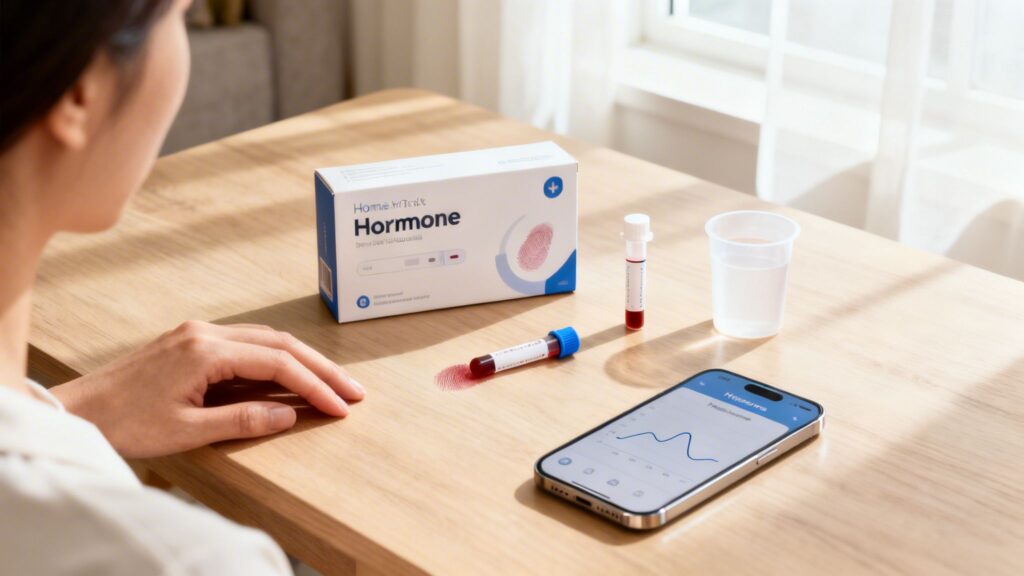
Getting your iron levels checked shouldn't be a hassle. With the Repose Healthcare Iron Levels Test kit, you can get a clear picture of your iron status from the comfort of your own home. We've designed the whole process to be simple and straightforward, so let's walk through exactly how it works.

From opening the box to posting your sample, every step is designed to be quick and easy.
A little bit of prep work can make collecting your sample go much more smoothly. The single most important thing is to make sure you’re well-hydrated.
Try to drink a couple of extra glasses of water in the hours before your test. This simple step boosts your blood volume and gets your circulation flowing, which makes the finger-prick collection a whole lot easier.
Actionable Tip: Warming your hands just before you start can make a huge difference. Run them under warm water for a minute or just rub them together briskly. This brings blood to your fingertips and helps you get a good sample on the first try, ensuring your test is successful.
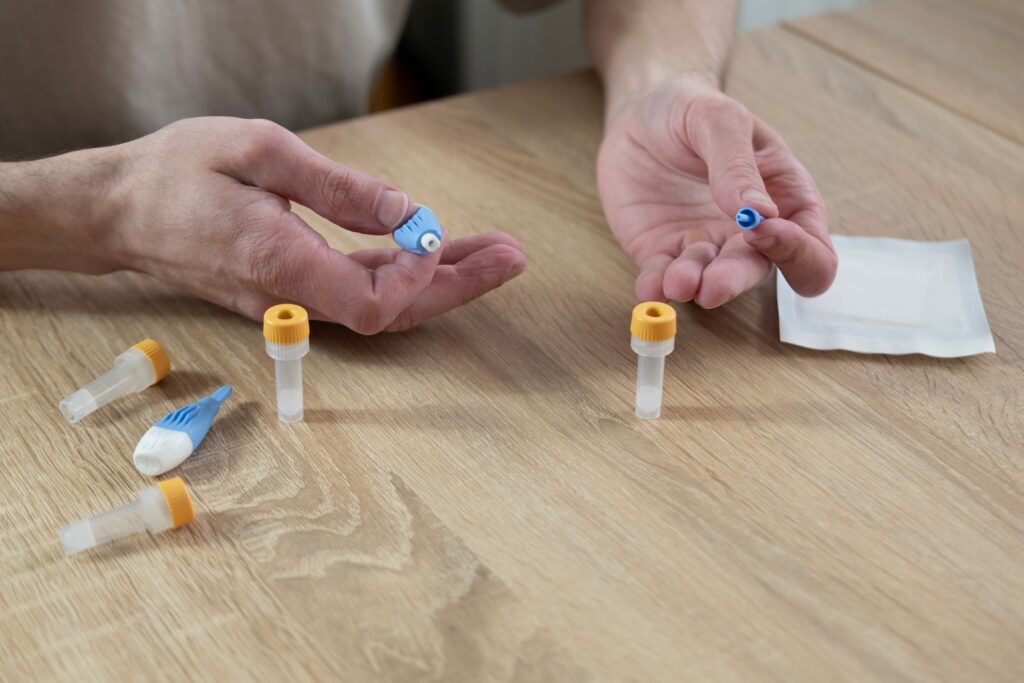
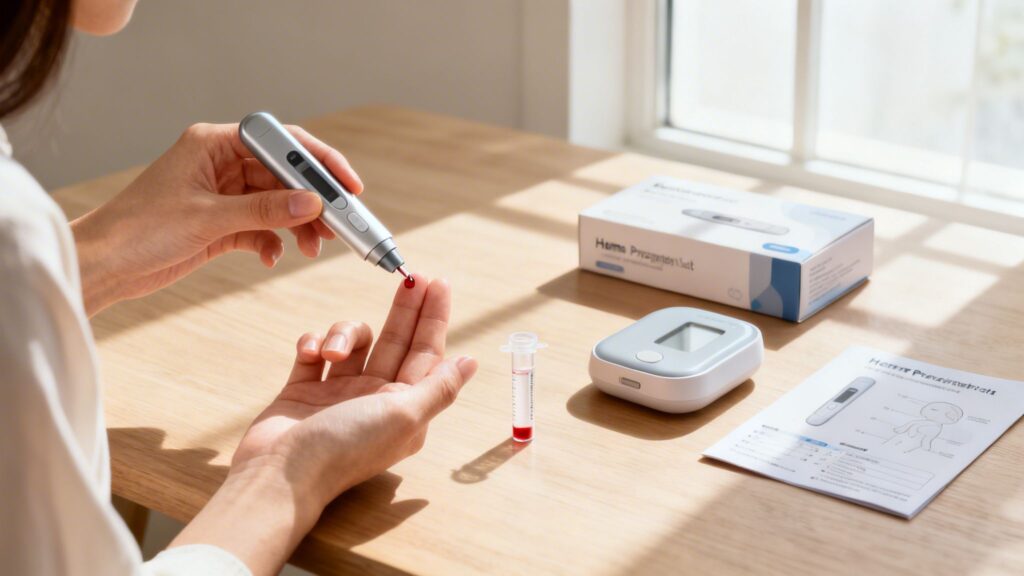
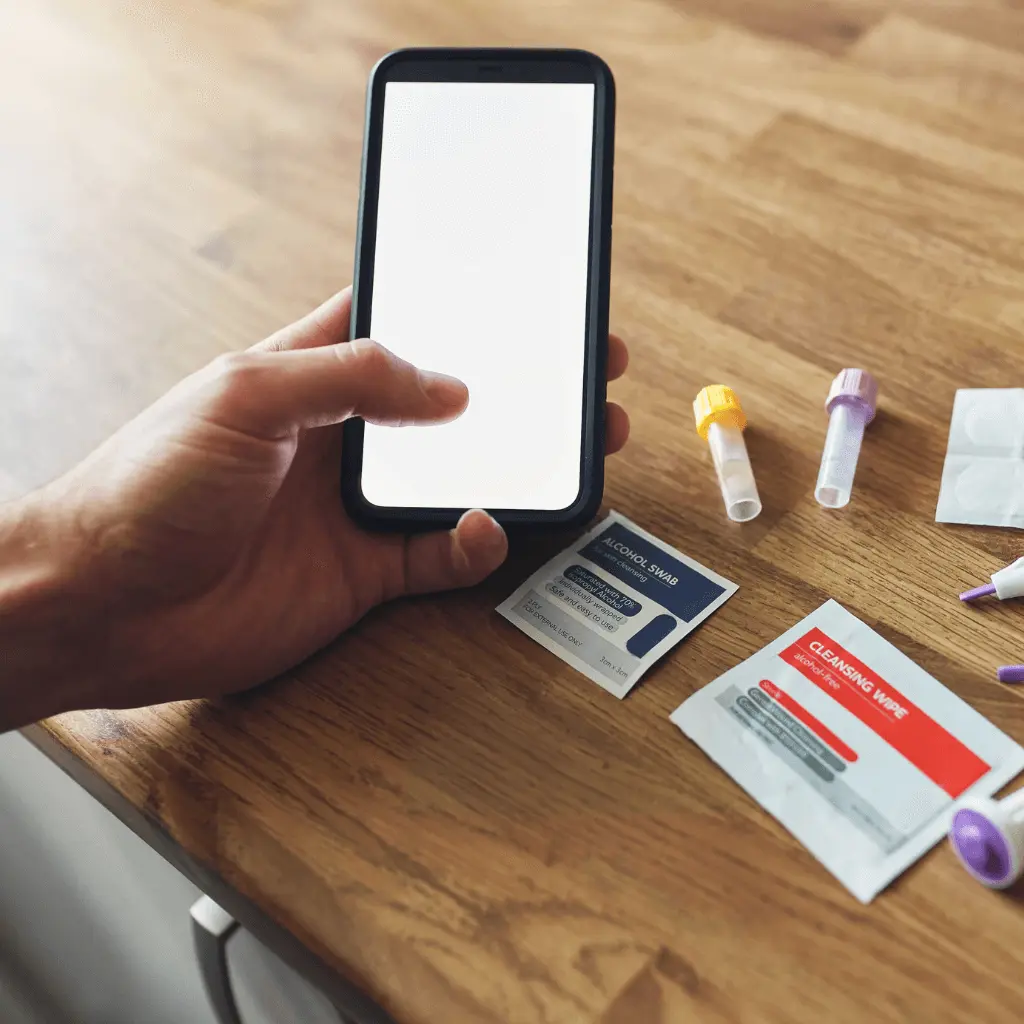
Your kit comes with everything you’ll need, plus clear, easy-to-follow instructions. Here’s a quick rundown of the process:
The last step is just as simple. Place your labelled sample tube into the protective packaging that was included in your kit.
Pop it all into the prepaid mailing bag and drop it in any Royal Mail postbox. Your sample goes directly to our partner laboratories, which are UKAS-accredited. This means your sample is analysed to the exact same high standards as one you’d give in a GP clinic or hospital.
As soon as your results are ready, you’ll get an email. Just log in to your secure Repose Healthcare dashboard to see your report, which will clearly lay out your levels for each iron marker. The entire process, from doing the iron levels test at home to getting your results, is built around your privacy and convenience. For more practical advice, have a look at our detailed article on testing for iron deficiency at home.
The email has landed – your results are ready. This is where the numbers start to tell a story about your health. When you log in to your secure Repose Healthcare dashboard, you won't just see a list of figures. We present your results visually, showing exactly where your levels sit against the optimal ranges for each marker, making it easy to see what’s going on at a glance.

The real value comes from understanding what your specific combination of results means for you. Let's walk through a common, real-world scenario.
Imagine your report comes back showing low ferritin, but your haemoglobin is still comfortably within the normal range. This might seem a bit confusing at first, but it’s actually a brilliant outcome.
What this result means is you’ve caught an iron deficiency in its earliest stage, well before it had a chance to progress into full-blown iron deficiency anaemia. Think back to our factory analogy: your iron ‘warehouse’ (ferritin) is running low on stock, but the factory’s ‘production line’ (haemoglobin) hasn't ground to a halt yet. This is the perfect time to step in.
Actionable Insight: This specific result gives you a powerful head-start. You can take this clear data to your GP to discuss proactive strategies like increasing your intake of iron-rich foods or starting a low-dose supplement, potentially reversing the deficiency before it impacts your daily life.
Your at-home iron levels test is a powerful informational tool. It provides the crucial first step of identifying a potential issue. The next, most important step is to share these insights with a healthcare professional to get a formal diagnosis and a personalised treatment plan.
With your report in hand, you’re in a great position to have a really productive conversation with your doctor. Think of us as your partner in this; we provide the initial data so you can get the right support quickly.
Here’s a simple, actionable plan to follow once you have your results:
Catching iron deficiency early isn’t just about feeling better sooner; it’s about preventing more serious complications down the line. UK hospital data shows just how widespread this issue is. One study found that 81% of anaemic patients in a general hospital had low serum iron, and low ferritin was found in 52% of those investigated.
Proactive testing helps you catch these deficiencies before they escalate to a point where you might need more intensive treatment, or even hospital admission. You can read the full research on iron deficiency in hospital settings to understand the wider context.
By using an iron levels test from Repose Healthcare, you’re taking a significant, proactive step. You’re moving beyond just guessing about your symptoms and are instead gathering the data you need to build a proper health strategy with your doctor.
Once you start looking into iron testing, it’s normal for a few questions to pop up. It’s a complex area, and it’s easy to feel a bit lost.
Let’s walk through some of the most common queries we see. We’ll break them down with clear, straightforward answers so you feel confident about what your next steps should be.
This is a great question, but there’s no single answer that fits everyone. How often you should test really comes down to your personal health, your symptoms, and any risk factors you might have.
Actionable Insight: If you’re in a high-risk group (like a vegan athlete or a woman with heavy periods), an annual or bi-annual check with a Repose Healthcare Iron Levels Test is a smart, proactive strategy. If you’re experiencing persistent symptoms like fatigue, it’s always better to test sooner rather than later. Your GP can then advise on a future testing schedule based on your results.
An iron-rich diet is absolutely the cornerstone of good iron health, but whether it’s enough to fix a deficiency depends entirely on how low your levels have dropped. Food is always your first line of defence and essential for long-term maintenance.
Practical Example: If your test shows your ferritin is slightly low but all other markers are normal, adding more spinach, lentils, and fortified breakfast cereals to your diet might be enough. Always eat these with a source of vitamin C (like bell peppers or citrus fruit) to maximise absorption.
The Critical Point: For a significant deficiency, diet alone often isn't enough to get you back on track. An iron levels test is the only way to know where you stand. It gives you the concrete data needed to understand if you need supplements, prescribed by a doctor, to rebuild your iron stores safely.
We get this question all the time, and it’s an important one. People rightly want to know if the convenience of an at-home finger-prick test means sacrificing accuracy. The short answer is no, as long as the sample is processed correctly in an accredited lab.
Our Repose Healthcare at-home test kits use the exact same gold-standard analysis methods as the samples taken at a GP surgery or hospital. The blood from your fingertip is a capillary sample, and while that’s a different collection method from a venous draw from your arm, the laboratory process that follows is identical.
Your sample is sent to our UKAS-accredited laboratories, which operate at the highest clinical standards. They use sophisticated equipment to analyse your blood, ensuring your results are reliable, robust, and accurate enough for you and your doctor to trust.
It's really common for these terms to be used interchangeably, but they actually describe two distinct stages of the same problem. Getting your head around the difference shows you just how valuable early testing can be.
A simple car analogy helps make it clear:
Iron Deficiency: Think of this as your car’s fuel tank running low. Your body’s iron reserves (ferritin) are depleted. The car can keep going for a little while on the fuel left in the lines, but you have no backup. You might start noticing signs of trouble, like fatigue and weakness.
Iron Deficiency Anaemia: This is what happens when the tank runs completely dry. The lack of iron has become so critical that your body can’t make enough healthy red blood cells (your haemoglobin level drops). The factory has effectively shut down, and symptoms become much more severe and debilitating.
Actionable Insight: The purpose of our Repose Healthcare Iron Levels Test is to help you spot iron deficiency before it becomes anaemia. Catching it at the "low fuel tank" stage means the solution is often much quicker and simpler, helping you get your energy back before you 'run out of road'.
Ready to stop guessing and get clear answers about your energy levels? The Repose Healthcare Iron Levels Test provides a convenient, confidential, and clinically robust way to understand your iron status from home. Order your test today and take the first step towards feeling your best. Learn more at https://reposehealthcare.co.uk.