If you're feeling bloated, sluggish, or just not quite yourself, you’re not the only one. The good news is that a happier gut is often closer than you think. It comes down to focusing on three key areas: what you eat, your daily habits, and understanding what's actually going on inside.
When you’re dealing with digestive discomfort, it’s easy to get lost in a sea of conflicting advice. From the latest fad diets to pricey supplements, just figuring out where to start can be a challenge in itself. But here's the truth: improving your gut health doesn't mean you have to turn your life upside down overnight. It’s all about making small, sensible changes that add up over time.
This journey really boils down to three core principles: fuelling your body with the right foods, tweaking your lifestyle, and keeping an eye on your progress to see what’s working for you.
Digestive issues are incredibly common across the country. A recent survey revealed a huge national concern, showing that a staggering 58% of UK residents experience gut health problems. For many, these aren't just a passing nuisance—45% of those affected suffer from chronic issues that have lasted for over three months.
This isn't just a minor inconvenience; it's a widespread problem that gets in the way of daily life. For a lot of people, this shows up as:
These numbers make one thing clear: if you're struggling, you are definitely not alone. But the great thing is, you have the power to change your story.
A structured approach makes the whole process much simpler. Think of it as a clear roadmap with three main routes to travel on your journey to feeling better. For some practical tips on diet, fermented foods, and other lifestyle tweaks, you can find a lot of useful information on how to improve gut health.
Your gut is a complex ecosystem. Just like any ecosystem, it thrives on balance. Your daily choices in diet, lifestyle, and self-awareness are the tools you use to maintain that balance and foster a healthy internal environment.
This simple infographic breaks down the foundational steps perfectly. It shows how to start by focusing on your diet, then incorporating lifestyle changes, and finally, monitoring your body’s unique responses.

The key takeaway here is that these elements are all connected. What you eat impacts your energy for exercise, and tracking your symptoms helps you make smarter food choices.
To help you get started, here's a quick summary of the pillars and your first steps.
| Pillar of Gut Health | Why It Matters | Your First Actionable Step |
|---|---|---|
| Nourishing Diet | Your gut microbes need fibre and diverse nutrients to thrive, which supports digestion and reduces inflammation. | Add one new high-fibre vegetable or fruit to your daily meals. For example, add lentils to your soup, a handful of berries to your porridge, or a side of broccoli to your dinner. |
| Healthy Lifestyle | Stress, poor sleep, and a lack of exercise directly impact gut function, motility, and microbial balance. | Aim for a 20-minute walk on your lunch break and set a phone reminder to get to bed 15 minutes earlier than usual. |
| Smart Monitoring | Your gut is unique. Tracking symptoms and using tests helps you move beyond guesswork to a targeted plan. | Keep a simple food and symptom diary on your phone for one week. Note what you ate for dinner and how bloated you felt before bed to spot any obvious patterns. |
This table provides a simple, actionable framework, but it's just the beginning of your journey towards a healthier, happier gut.
The most effective way to start is by figuring out your baseline. Before you make any drastic changes, it really helps to understand what’s actually happening inside your body. Just guessing can lead to frustration, and it's often why people give up.
This is where knowledge becomes your biggest asset. Instead of blindly trying different diets, a more targeted approach will save you time, effort, and a lot of second-guessing. For instance, knowing which microbes are dominant in your gut can point you towards the foods that will benefit you the most.
That's why our simple Repose Healthcare Gut Microbiome Test can be such a valuable first move. By analysing your personal gut microbiome, you can shift from guesswork to a data-driven plan. This isn't about just learning to live with discomfort; it’s about giving you the power to take decisive, informed action right from day one.
When it comes to your gut, your diet is by far the most powerful tool you have. Forget complicated rules or restrictive eating plans; improving your gut health is all about strategically adding the right foods to your plate. It's a much more positive approach, focusing on what you can eat, not what you can't.

Here, we'll give you practical strategies that you can easily use in any UK kitchen. We'll get into the key differences between prebiotics and probiotics, show you how to introduce these powerhouse foods without causing discomfort, and explain how to personalise your diet for the best results.
Think of prebiotics as fertiliser for your internal garden. They aren't living bacteria themselves but are actually specific types of fibre that your body can't digest. Instead, they make their way to your large intestine, where they become a five-star meal for your friendly gut microbes.
When your good bacteria feast on these prebiotic fibres, they produce incredibly useful compounds, like short-chain fatty acids (SCFAs). These compounds are brilliant for strengthening your gut lining, calming inflammation, and supporting your overall health. The actionable insight here is simple: feed your friendly microbes so they can multiply and thrive.
A diet rich in fibre is the best way to get plenty of prebiotics. This is something UK shoppers are really waking up to. Recent supermarket data showed sales of fibre-based foods soared by 14.1% in just 26 weeks, showing a real shift towards prioritising gut health.
Despite this, it’s not all good news. Experts warn that low bean consumption alone contributes to 9,000 premature deaths in the UK each year, as two-thirds of adults are eating less than one portion a week. You can find out more about these trends in this detailed 2026 market analysis.
Your gut microbes absolutely love variety. A fantastic goal is to eat 30 different plant-based foods each week. This includes vegetables, fruits, nuts, seeds, legumes, and whole grains, and it’s one of the best ways to support a diverse and resilient microbiome.
To make informed choices, it helps to have some go-to options. Exploring resources on choosing healthy snacks with fiber that improve gut health can give you some great ideas.
So, if prebiotics are the food, probiotics are the living microorganisms themselves. When you eat probiotic-rich foods, you're essentially sending in reinforcements for your gut's army. These "good" bacteria help maintain a healthy balance in your microbiome, crowding out the potentially harmful microbes.
You can find probiotics in fermented foods, where bacteria or yeast have been used to transform the food's original state. This ancient preservation method creates wonderfully tangy flavours and foods that are teeming with beneficial microbes.
Here are some excellent probiotic-rich foods you can easily add to your diet:
A quick tip: when you start introducing these foods, go slow. A tablespoon of sauerkraut with your dinner or a small glass of kefir in the morning is plenty to begin with. This gives your gut time to adjust without feeling overwhelmed.
Knowing about prebiotics and probiotics is one thing, but actually getting them into your daily meals is another. Here’s a simple table to get you started on your next weekly shop.
Here’s a practical list of some of the best prebiotic and probiotic foods, along with their benefits and a few simple ideas for how to use them.
| Food Type | Examples | Actionable Ideas |
|---|---|---|
| Prebiotic | Lentils, chickpeas, beans, onions, garlic, leeks, asparagus, bananas (especially greener ones), oats | Bulk out a bolognese with lentils, add a can of chickpeas to a salad, snack on an apple with nut butter, or make overnight oats for an easy breakfast. These high-fibre foods act as fuel, nourishing your good gut bacteria. |
| Probiotic | Live yoghurt, kefir, sauerkraut, kimchi, kombucha, miso | Add a spoonful of kimchi to fried rice, use kefir as the base for a smoothie, add sauerkraut to a sandwich, or drink a small glass of kombucha instead of a sugary fizzy drink. These foods introduce new beneficial bacteria directly into your gut. |
These foods are a brilliant way to build a gut-friendly plate. You might notice that many prebiotic foods are also great sources of vitamins. For instance, you can learn more about which foods are the best natural sources of B12 in our dedicated guide on what foods contain vitamin b12.
A diverse, fibre-rich diet is a fantastic starting point for everyone, but our bodies are all unique. What works wonders for one person might cause discomfort for another.
If you’re struggling with persistent bloating, pain, or other digestive issues despite making healthy changes, it might be a sign that you need to look a bit deeper. This is where understanding your specific, individual needs becomes so important. For example, some people have intolerances to certain foods that can trigger inflammation and gut symptoms. Hidden allergies or even nutrient deficiencies could also be holding you back from feeling your best.
This is where a Repose Healthcare Nutrition and Allergy Test can help you move beyond the guesswork. These simple at-home tests can help you:
Armed with this information, you can fine-tune your diet with real confidence, ensuring the food choices you make are genuinely working for you. This targeted approach unlocks your diet's full potential, putting you on the fast track to a happier, healthier gut.
While what’s on your plate is a great place to start, figuring out how to improve gut health means looking at your whole lifestyle. The food you eat is just one piece of the puzzle. The invisible forces of stress, the quality of your sleep, and how you move your body all have a profound and direct impact on your digestive system.
Think of it as a constant conversation between your brain and your gut, a connection often called the gut-brain axis. This link is so powerful that what happens in your head can quickly show up as physical symptoms in your stomach.
Ever felt "butterflies" in your stomach when you’re nervous, or had to rush to the loo before a big presentation? That’s the gut-brain axis in action. When you’re dealing with chronic stress, your body pumps out hormones like cortisol, which can completely throw your digestive system out of balance.
This hormonal shift can trigger a few key problems:
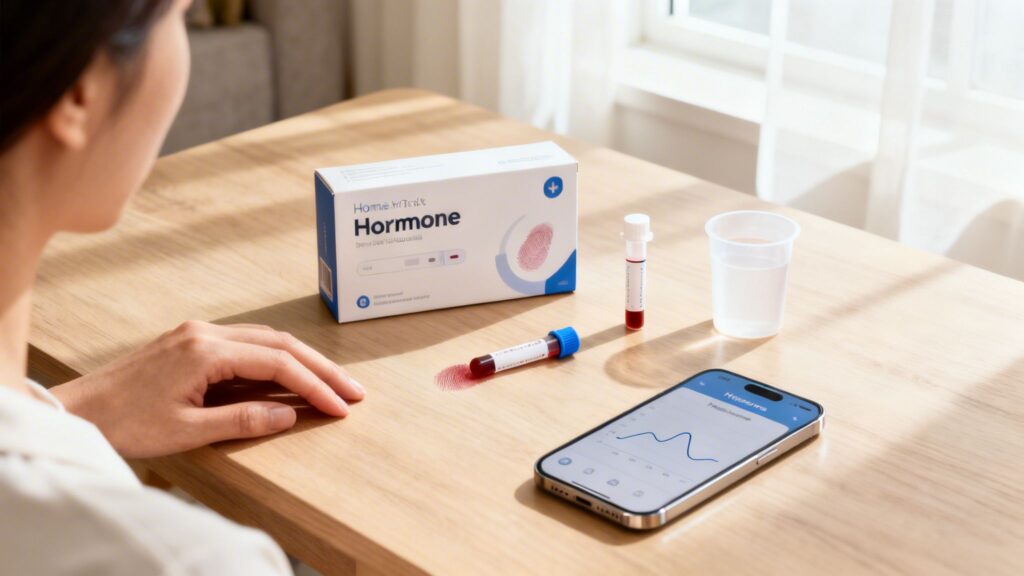
The link between stress and your body's hormonal balance is undeniable. If you’re keen to understand this relationship better, our practical guide on at-home hormone testing offers deeper insights.
Actionable Insight: Managing stress isn't just about feeling calmer mentally; it’s a non-negotiable part of caring for your physical gut health. Even small, consistent efforts to lower your stress can bring about huge improvements in digestive comfort.
So, how can you actually manage this? You don't need a complete life overhaul. Simple, practical techniques can make a world of difference. For instance, try a "box breathing" exercise right at your desk: inhale for four seconds, hold for four, exhale for four, and hold for four. Repeating this for just a couple of minutes can calm your nervous system and, in turn, your gut.
A bad night's sleep does more than just leave you feeling groggy and irritable; it also wreaks havoc on your gut microbiome. Research shows that even just a couple of nights of poor sleep can alter your gut flora, reducing the number of beneficial bacterial species.
This creates a frustrating cycle:
Improving your sleep hygiene is the key to breaking this pattern. An actionable insight is to aim for a consistent bedtime and wake-up time, even on weekends. Ditch the screens for at least an hour before bed—the blue light can interfere with melatonin, the hormone that tells your body it's time to sleep.
Exercise is another brilliant tool for boosting gut health, but it’s all about finding the right balance. You don't need to be running marathons or spending hours in the gym. In fact, overly intense workouts can sometimes put more stress on the body and the gut.
Moderate, consistent activity is the sweet spot. A brisk 30-minute walk, a gentle jog, cycling, or a yoga class a few times a week is perfect. This level of activity has been shown to:
The key here is consistency. A short walk every day is far more beneficial for your gut than one gruelling workout a week. An actionable insight is to find a form of movement you genuinely enjoy—that’s the real secret to sticking with it. These lifestyle factors are crucial, as they can directly influence the results you'll see in our Repose Healthcare tests, making them a cornerstone of long-term gut wellness.
So, you’ve been dutifully adding more fibre to your diet, you're exercising regularly, but you're still left asking: "Why do I still feel so bloated?" If you've made positive changes but aren't seeing the results you want, you’re not alone. This is often the point where guesswork stops being helpful, and you need a more precise approach.

Think of at-home testing as your personal health navigator. It provides the hard data you need to move from guessing to knowing. Instead of just wondering if you have an imbalance or a specific food intolerance, you can get clear, evidence-based answers from the comfort of your own home.
Figuring out how to improve gut health often means looking beneath the surface. While a good diet and a healthy lifestyle are absolutely foundational, they don’t tell the whole story. Your unique microbial balance, potential food sensitivities, and even your genetics play a huge role in your digestive wellbeing.
At-home tests help demystify this complex picture. They're designed to give you specific insights into your body's inner workings, helping you finally connect the dots between your symptoms and their underlying causes. This is what empowers you to create a health plan that’s truly personalised.
This is particularly relevant in the UK, where our environment can surprisingly influence our internal biology. A recent groundbreaking study found that UK residents in areas of higher social deprivation have significantly less diverse gut bacteria, which correlates with poorer mental health. This highlights just how much our surroundings can impact our gut, and at-home kits offer a discreet and accessible way to assess these influences.
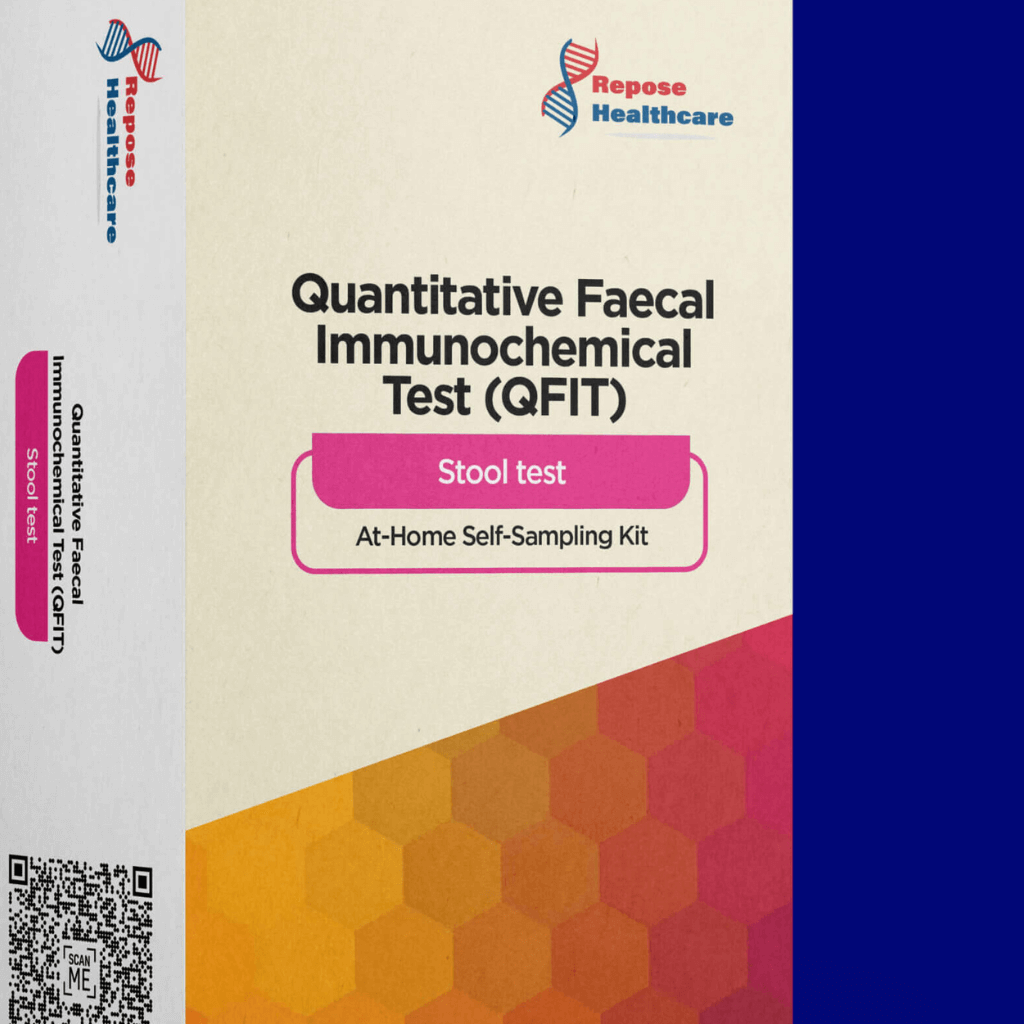
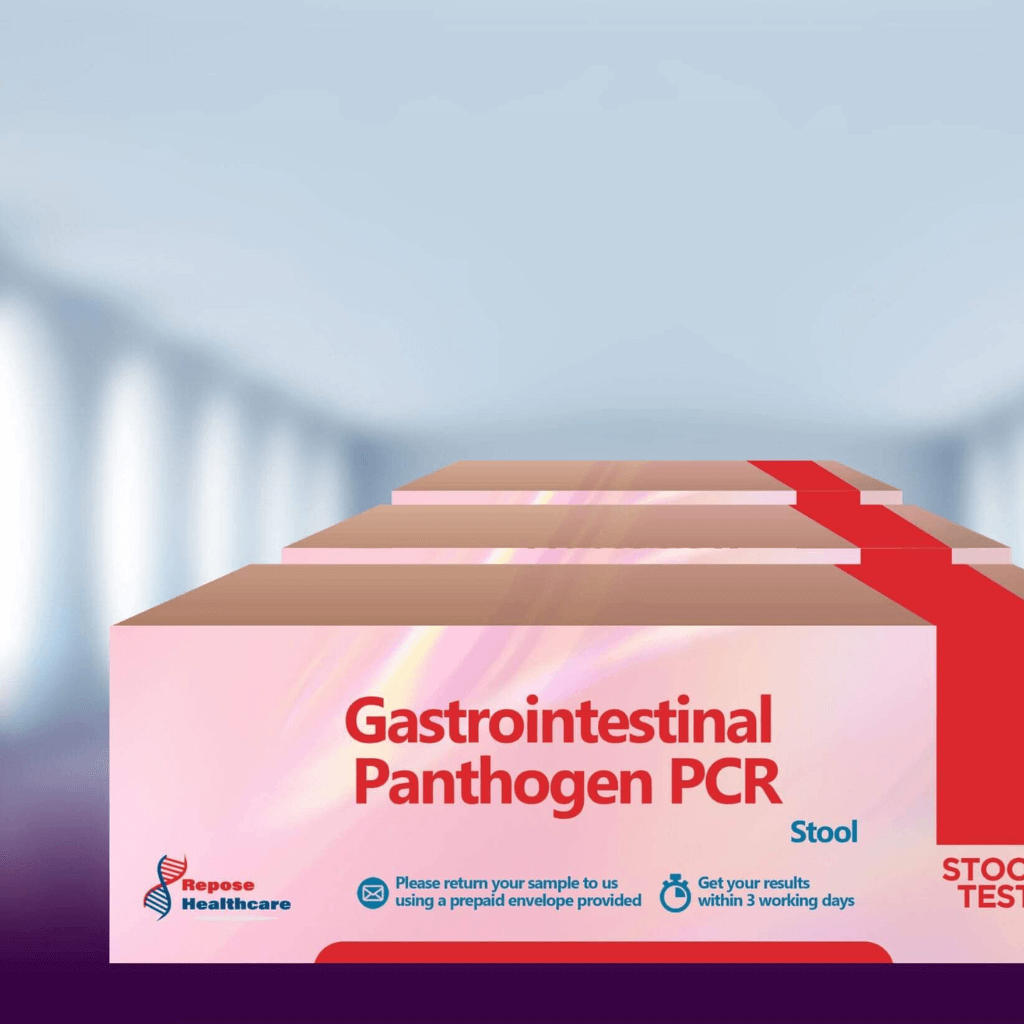
The real key to effective testing is choosing the right tool for the job. Instead of a one-size-fits-all approach, you can select tests that investigate your specific concerns. Repose Healthcare offers a range of simple, clinically accurate at-home tests to give you that much-needed clarity.
Here are a few of our key tests and what they can reveal:
Gut Microbiome Test: This is the ultimate deep dive into your gut’s ecosystem. It analyses a stool sample to identify the types and amounts of bacteria living in your gut. It can reveal whether you have a healthy, diverse community or an imbalance (dysbiosis) that could be behind issues like bloating, gas, or irregular bowel movements. This actionable insight helps you target specific foods to support beneficial microbes.
Coeliac Disease Test: If you suspect gluten might be the enemy, our Coeliac Disease Test can provide a definitive answer. It checks your blood for specific antibodies that are present in people with coeliac disease, an autoimmune condition triggered by gluten. This provides a clear 'yes' or 'no' so you can take appropriate action.
Inflammation (CRP) Test: Chronic, low-grade inflammation is a major culprit behind many gut problems. Our simple finger-prick Inflammation (CRP) Test measures C-reactive protein (CRP), a key marker of inflammation in the body. Elevated levels are an actionable sign that your gut is in a persistent state of irritation, prompting you to focus on anti-inflammatory foods and lifestyle changes.
Understanding what these different tests do is crucial for making an informed choice. To explore this topic in more detail, have a look at our guide on what a gut microbiome test is and how it works.
The whole process is designed to be as convenient as possible without compromising on clinical accuracy. You no longer need to schedule appointments or travel to a clinic to get these kinds of powerful insights.
At-home testing puts the power of a diagnostic lab directly in your hands. It provides objective data that transforms your health journey from a trial-and-error process into a targeted, effective strategy.
Once you’ve found the right test for your symptoms, the steps are very straightforward.
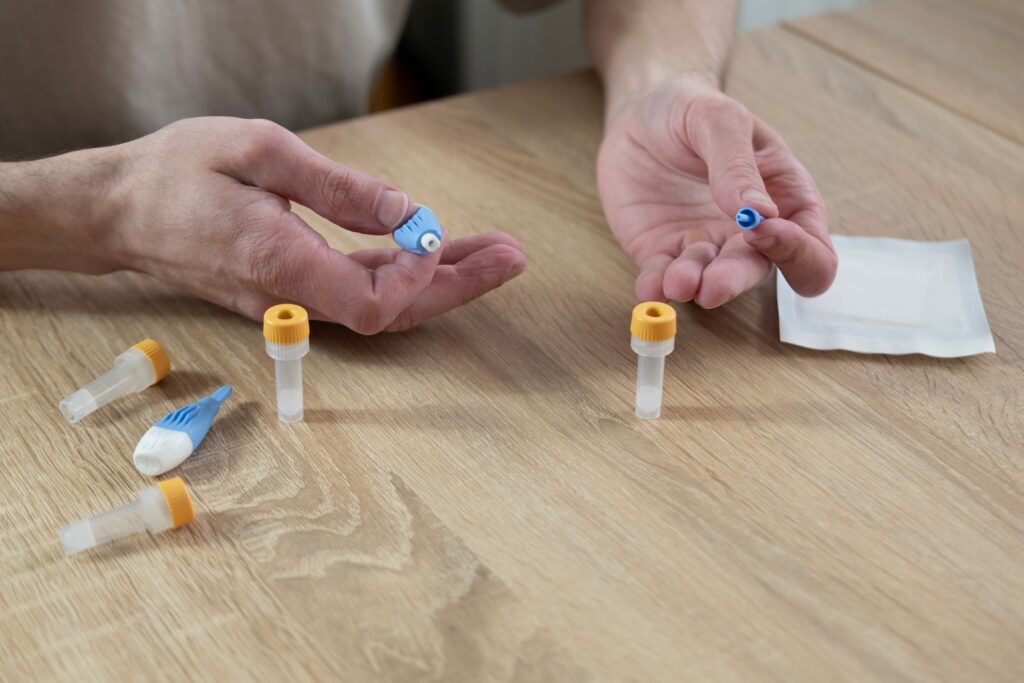
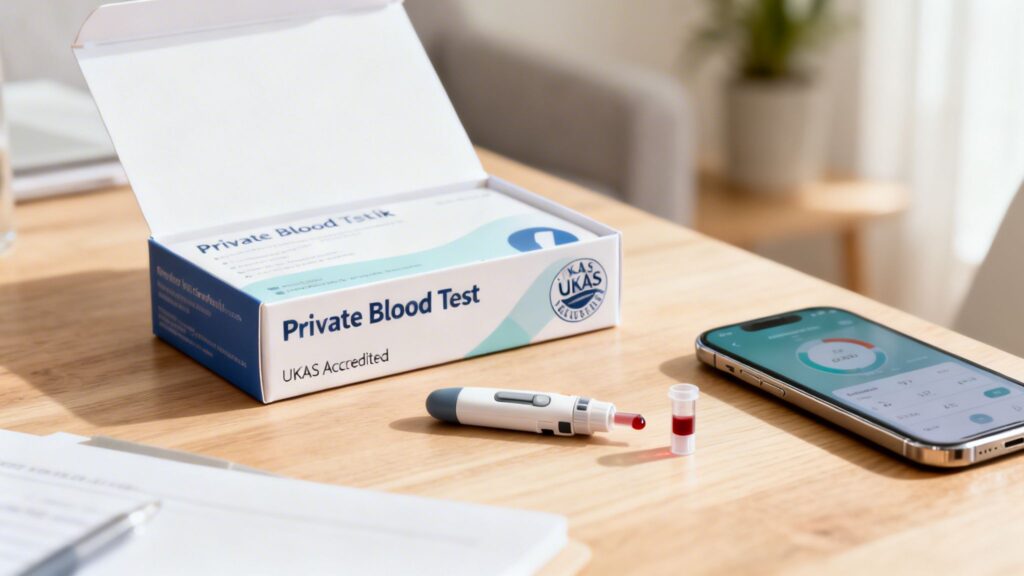
First, you order your chosen test kit online, and it’s delivered discreetly to your door. Each kit comes with simple, clear instructions for collecting your sample, whether that’s a stool sample or a quick finger-prick blood test.
You then pop the sample into the prepaid, tracked packaging included in your kit and send it off to our UK-accredited laboratory.
Within just a few working days, you’ll get a notification that your expert-reviewed results are ready to view on your secure online dashboard. This streamlined service removes the usual barriers to getting valuable health information. With clear data, you can finally understand the "why" behind your symptoms and start taking confident, targeted action.
You've learned the 'what' and the 'why'—now it's time to put it all together. A truly successful gut health journey isn't about a fleeting diet or a quick fix. It's about building a sustainable, long-term plan that actually fits into your real life. This is where you create a personal framework to track what's working, measure your improvements, and know exactly when you might need a bit more help.
The goal is to feel confident and in control, armed with practical tools. Let’s move from theory to consistent, real-world practice.
One of the most powerful—and simplest—tools at your disposal is a symptom diary. This doesn't need to be anything fancy; a simple notebook or a note-taking app on your phone works perfectly. This is a highly actionable insight, turning you into a detective for your own body.
For a week or two, try jotting down:
After a while, you’ll start to see patterns emerge. You might realise, for instance, that bloating always seems to show up a few hours after you eat a certain food, or that your digestion feels much smoother on days you get in a morning walk.
A symptom diary gives you subjective feedback on how you feel, but getting objective data is where you can truly see the impact your efforts are having. After you’ve been implementing changes for a few months—like diversifying your diet or managing your stress levels—re-testing is a fantastic way to measure your progress on the inside. It’s a key step in understanding how to improve gut health in a way you can actually measure.
Consider revisiting a test you took at the beginning of your journey. For example, you could:
Seeing your hard work reflected in clinical data is incredibly motivating. It takes you from feeling better to knowing you're healthier on a biological level, which helps cement those positive new habits.
This kind of objective feedback also helps you fine-tune your approach. If your microbial diversity hasn't improved as much as you'd hoped, it might be an actionable sign that you need to be even more adventurous with the variety of plants in your diet.
While this guide offers a solid foundation for improving your general gut health, it's absolutely crucial to recognise when symptoms need proper medical attention. Self-management is brilliant for overall wellness, but some signs should never, ever be ignored.
Please book an appointment with your GP immediately if you experience any of these "red flag" symptoms:
These symptoms could point towards a more serious condition that needs a different kind of management. Your GP is the right person to investigate these issues thoroughly and make sure you get the appropriate care. Think of your gut health journey as a partnership between you and healthcare professionals—knowing when to escalate your concerns is a vital part of that.
When you're trying to get to the bottom of gut issues, it’s natural to have a lot of questions. Let's tackle some of the most common queries I hear, cutting through the noise to give you clear, practical answers.
This is the big question, and the honest answer is: it varies. But you can see some changes surprisingly fast.
Minor shifts in your gut microbiome can happen within just a few days of making simple dietary changes, like adding more high-fibre foods or bringing in some fermented options. However, for more deep-rooted, lasting improvements—like calming chronic inflammation or truly diversifying your gut ecosystem—you need to play the long game. A realistic timeframe to notice substantial, meaningful benefits is usually around three to six months of consistent effort. Patience is key.
Yes, you absolutely can, and in my experience, it’s a brilliant strategy. This combination is often called symbiotic therapy.
Think of it like this: you're not just sending in reinforcements (the probiotics, or good bacteria), you're also packing them a lunchbox (the prebiotics, which are the food that helps them thrive). A practical example is having a bowl of live yoghurt (probiotic) topped with some sliced banana and a sprinkle of oats (prebiotics). This combined approach is usually more effective than taking either one on its own because it helps the beneficial bacteria get established in your gut.
For the vast majority of people, the answer is a firm no. Gluten, a protein in wheat, barley, and rye, is perfectly fine for most of us. The idea that everyone should go gluten-free for gut health is one of the biggest myths out there.
Of course, there are important exceptions for people with specific medical conditions:
If you think gluten might be a problem for you, it's vital not to self-diagnose. Our Repose Healthcare Coeliac Disease Test can give you clarity on whether you have the condition before you start making any major dietary changes.
While I don't like to label any food as "bad" in isolation, some things are definitely more challenging for your gut if you eat them regularly. The main culprits tend to be highly processed foods, which now make up a huge part of the modern diet.
An actionable insight is that ultra-processed foods, excessive sugar, and alcohol can disrupt the delicate balance of your gut microbiome, feeding less helpful microbes and promoting inflammation.
A diet high in sugary snacks, processed meats, and refined carbs essentially starves your good gut bacteria of the fibre they need to survive. And while you might hear about the polyphenols in red wine, it's worth remembering that excessive alcohol is known to be damaging to the gut lining. The simplest and most effective strategy is always to focus on whole, unprocessed foods.
Feeling unsure about your symptoms? A targeted test from Repose Healthcare can provide the clarity you need to take the next step. Explore our range of at-home digestive and nutrition tests at https://reposehealthcare.co.uk.