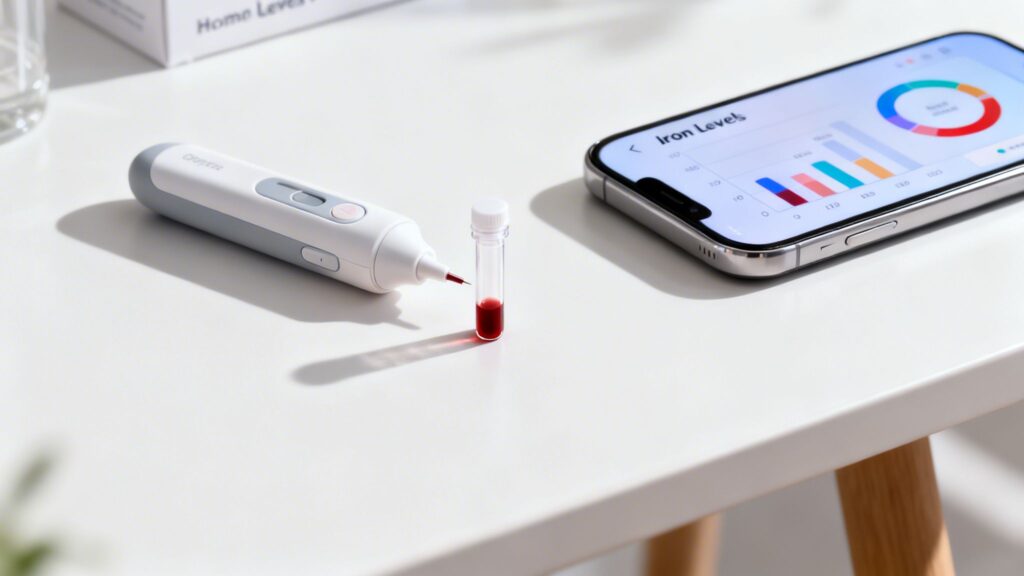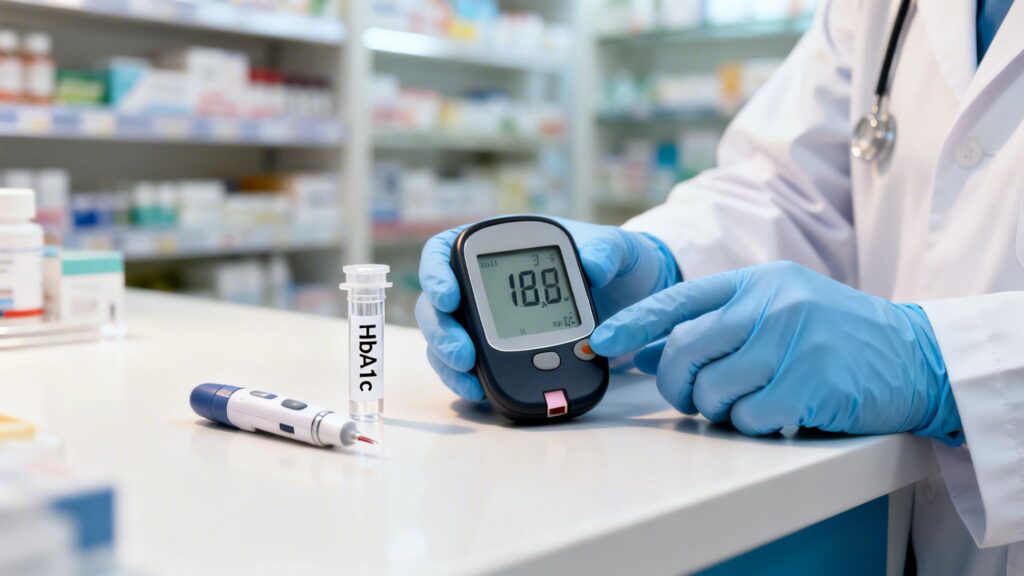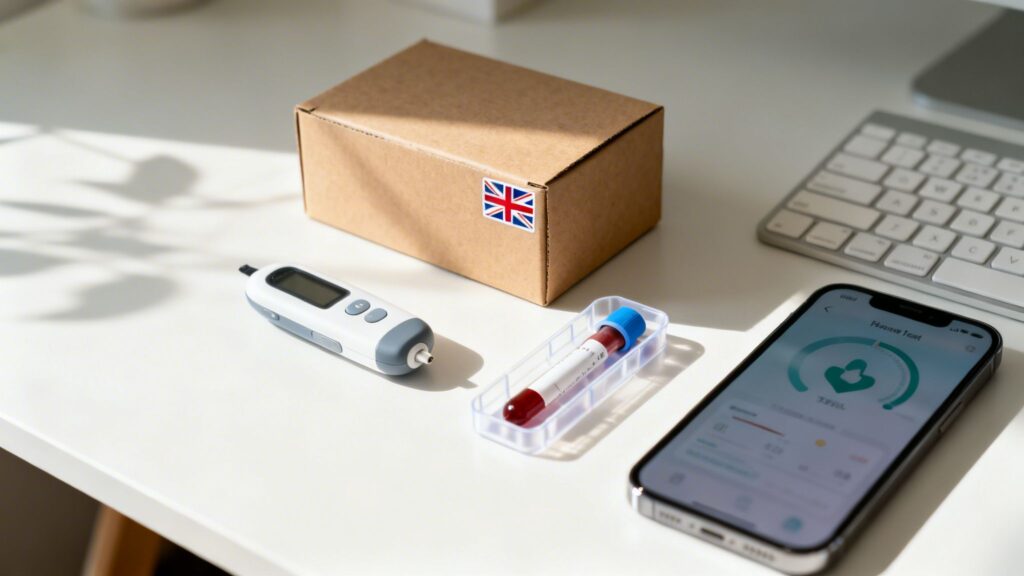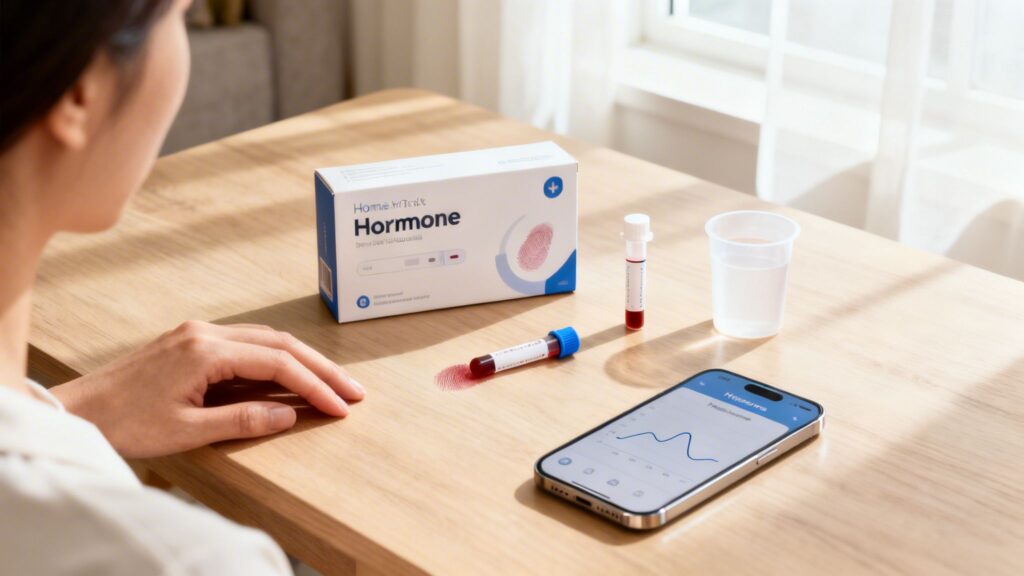
Yes, you can now check your kidney function at home. This is possible through a mix of being aware of your body's signals, doing some simple daily checks, and using advanced, lab-accurate home testing kits. The most direct way to get a clear picture is with a comprehensive test, like our Kidney Function Test from Repose Healthcare, which checks key kidney health markers from a small finger-prick blood sample.

The biggest problem with chronic kidney disease (CKD) is that it's a silent condition in its early stages. Symptoms often don't appear until a huge amount of kidney function—sometimes over 50%—has already been lost. This guide is here to help you take a more hands-on role in your health by showing you exactly how to check your kidney function from home.
We're seeing a real shift in healthcare, putting more power into the hands of individuals, and kidney care is a perfect example. Being able to monitor your health at home makes spotting problems early much more achievable.
The move towards testing at home isn't just a passing trend; it's becoming a key part of public health strategy. In late 2023, NHS England even launched a £30 million fund to provide home testing for CKD to 30,000 high-risk patients. This single initiative is expected to find thousands of undiagnosed cases and prevent serious health problems down the line.
Taking control of your health data is one of the most powerful steps you can take. An at-home kidney test provides the information you need to have a productive, data-driven conversation with your GP, turning vague concerns into actionable insights.
This modern approach puts you in the driver's seat. Instead of waiting for symptoms to become severe, you can gather crucial data yourself. This is especially important if you have known risk factors like diabetes or high blood pressure. For example, knowing your eGFR number from a home test allows you to track its trend over time, giving you a powerful metric to discuss with your doctor.
To give you a better idea of the different methods available, this table provides a quick summary of what you can do at home.
| Monitoring Method | What It Checks | What You Need | Best For |
|---|---|---|---|
| Symptom & Risk Monitoring | General well-being, fluid retention, urine changes | A notebook or app | Daily awareness and tracking changes over time |
| At-Home Tools | Urine protein, blood pressure, fluid status | Urine dipsticks, BP monitor, weighing scales | Regular, low-cost monitoring of key risk factors |
| Private Lab Tests | eGFR, creatinine, ACR (urine) | A finger-prick blood test or urine sample kit | Getting lab-accurate data on your actual kidney function |
This overview shows how each method plays a different but important role in building a complete picture of your kidney health.
Proactive monitoring is about more than just tests; it’s about understanding your health in a bigger context and knowing what support is out there. For some, this might also mean looking into wider health support networks, such as the various care at home services available for long-term well-being.
By combining your own monitoring with professional medical advice, you create a strong safety net for your health.

When it comes to your kidneys, big problems often start with the quietest of whispers. Unlike a sudden injury, kidney issues rarely shout for attention. Instead, the signs are frustratingly subtle and all too easy to brush off as just part of a busy life or getting a bit older.
Take a look at your ankles at the end of the day. Do your socks leave deep indents that stick around? That puffiness, known clinically as oedema, is a classic sign your kidneys might be struggling to get rid of excess fluid. A practical action is to gently press a finger into your ankle for a few seconds. If an indent remains after you lift it, it's worth noting down.
Changes in your toilet habits are another major clue. Are you finding yourself getting up multiple times a night to urinate (a condition called nocturia)? Or have you noticed your urine looks unusually bubbly or foamy? That can signal protein is leaking through, suggesting your kidney’s delicate filtering system might be under strain.
These clues are your body’s early warning system. Learning to listen is the first real step in taking control of your kidney health. Beyond swelling and urine changes, other sneaky symptoms include:
One or two of these symptoms on their own don’t automatically mean you have kidney disease. But they are important signals, especially if you know you have other risk factors.
A critical mindset shift is realising that constant tiredness or swollen ankles aren't just 'normal for you'. Think of them as potential data points about your health—information you can act on.
Beyond just listening to your body, it's vital to know your personal risk profile. Some health conditions dramatically increase your chances of developing kidney problems. For people in these groups, home monitoring isn't just a good idea; it's an essential part of staying healthy.
The biggest risk factors are:
If any of these apply to you, paying closer attention to symptoms is non-negotiable. The most powerful approach is to combine that self-awareness with hard data. For instance, if you have high blood pressure, an at-home kidney test provides the missing piece of the puzzle, showing you exactly how that pressure might be impacting your kidney function.
A simple finger-prick test, like the Kidney Function Test from Repose Healthcare, measures the key markers a clinician would look at. It cuts through the guesswork and gives you the clear answers you need to protect your health.

You don’t always need advanced lab tests for the first clues about your kidney health. By using a few simple tools you might already have at home, you can gather incredibly valuable daily data. Think of it as creating your own personal health dashboard.
This routine helps you build a picture over time, turning vague feelings of being 'off' into concrete information. It empowers you to spot trends and changes long before they might become bigger issues, giving you a solid foundation for understanding your kidney health.
If you're serious about monitoring your kidney health, a home blood pressure monitor is non-negotiable. High blood pressure is a leading cause of kidney damage, and the tricky part is it often has no symptoms. Regularly checking your numbers at home gives you a powerful insight into the strain your kidneys might be under.
Here's an actionable routine to get accurate readings:
Consistently high readings—anything over 140/90 mmHg, or 130/80 mmHg if you have diabetes—are a major red flag. This constant pressure damages the delicate blood vessels in the kidneys, impairing their ability to filter waste. Tracking your blood pressure is a direct way to see how lifestyle changes or medications are impacting one of your kidney’s biggest risks.
A single high reading isn’t a cause for panic, but a pattern of high readings is crucial information. It’s a clear signal to share with your GP, as controlling blood pressure is one of the most effective ways to protect your kidneys.
Another simple but surprisingly effective tool is your bathroom scale. One of the kidney's core jobs is to balance the fluid levels in your body. When they aren't working properly, that fluid can build up, leading to a sudden and noticeable increase in weight.
Get into the habit of weighing yourself at the same time every morning, ideally after using the toilet but before eating or drinking. A sudden weight gain of 1–2kg (2–4 pounds) in just a day or two can be a sign of fluid retention and is something you should definitely note down. This gives you a quantifiable measure of the oedema (swelling) we discussed earlier.
Basic urine dipstick tests, which you can get from most pharmacies, can offer some initial hints about what’s happening in your urine. While they are no substitute for a proper lab test, they give you a quick check for things like proteinuria (protein in the urine).
The process is straightforward: you dip the test strip into a fresh urine sample and compare the colour change to a chart on the packet. A positive result for protein suggests that your kidneys’ filters might be letting protein leak through—a key sign of kidney damage.
While helpful for a first look, these dipsticks have their limits. For a far more accurate and sensitive measurement, you really need to check your albumin-to-creatinine ratio (ACR). For lab-grade accuracy on your urine health, the logical next step is a professional Urine Chemistry and Microscopy test from Repose Healthcare. These simple daily checks give you a baseline, but the definitive answers will always come from an accredited lab analysis.
If you've been monitoring your symptoms and risk factors, the next logical step is to get some concrete data. The most direct and reliable way to check your kidney function from home is with a proper lab-grade test.
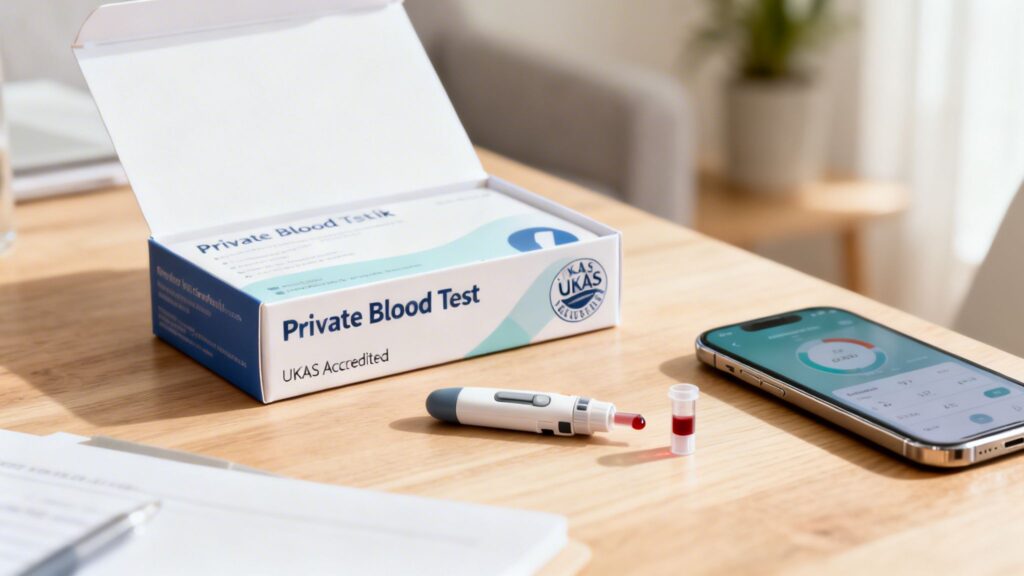
Services like Repose Healthcare have made this surprisingly simple, bringing the precision of an accredited lab right to your front door. It’s a practical way to get clear answers without needing to schedule a clinic visit.
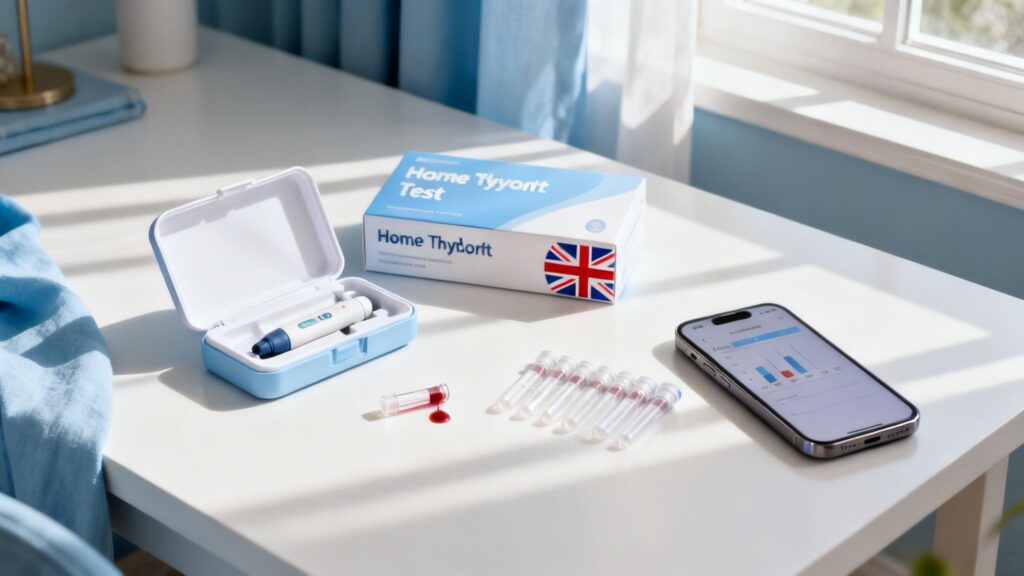
Let's say you're concerned about your kidney health—maybe because of a family history or high blood pressure—and you want a clear picture of what's going on. You can go online and order a Kidney Function Test. A small, discreet kit will arrive at your home, often as soon as the next day.
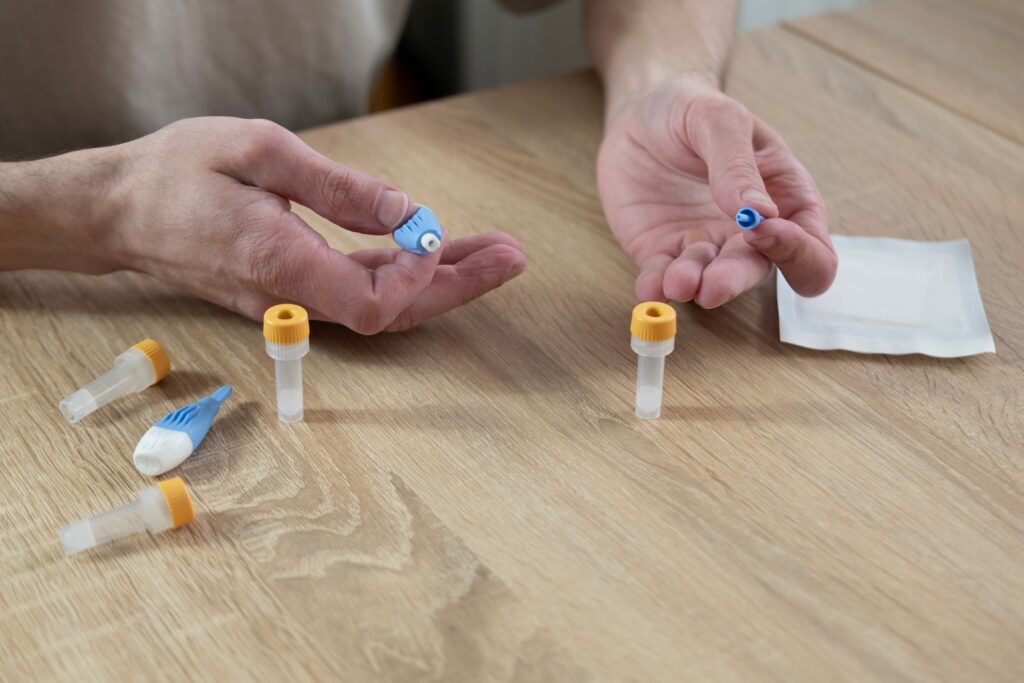
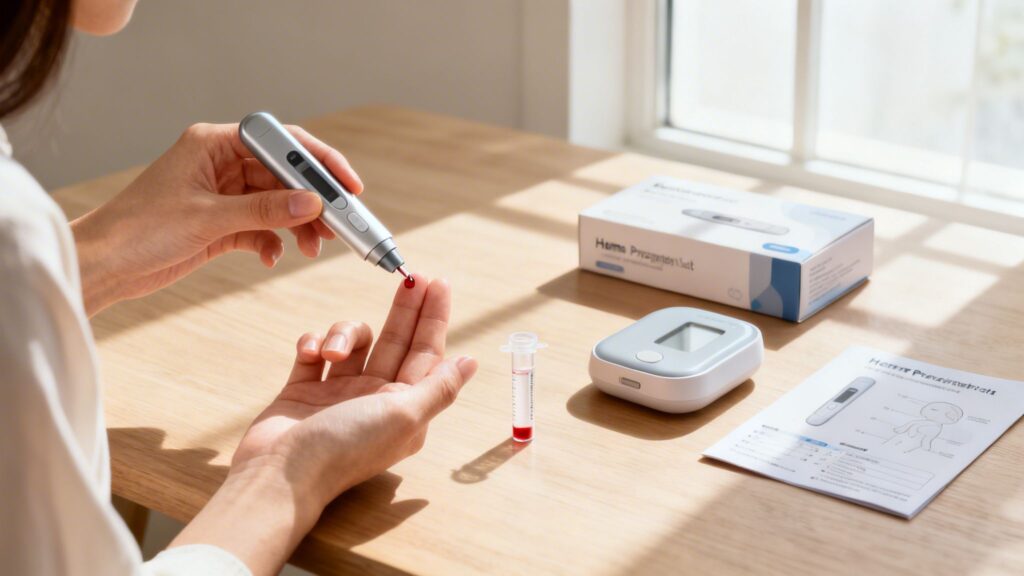
There's no need for a GP referral or a trip to a clinic for a blood draw. The kit comes with everything you need to collect a simple finger-prick blood sample yourself.
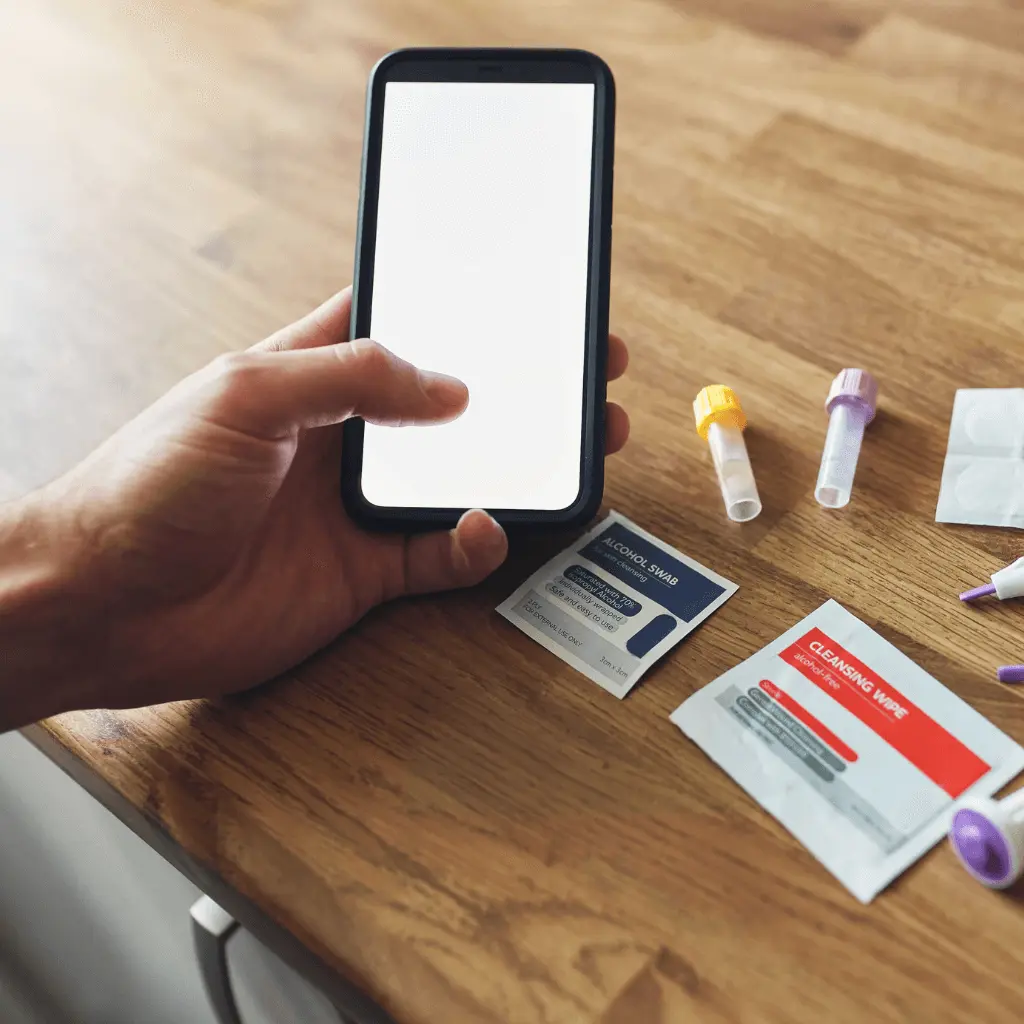
The whole process is designed to be as straightforward as possible. Inside the kit, you’ll find clear instructions, alcohol wipes to sterilise the area, and tiny, single-use lancets. These are made for a quick and virtually painless prick on the side of your fingertip.
You then collect just a few drops of blood into the provided micro-sample tube. It’s amazing, but this tiny amount is all a modern, accredited lab needs to analyse the key markers that tell the story of your kidney health.
These markers include:
The convenience of at-home testing is a game-changer for proactive health monitoring. It removes common barriers like scheduling appointments and travel, making it easier for individuals to get the data they need, when they need it.
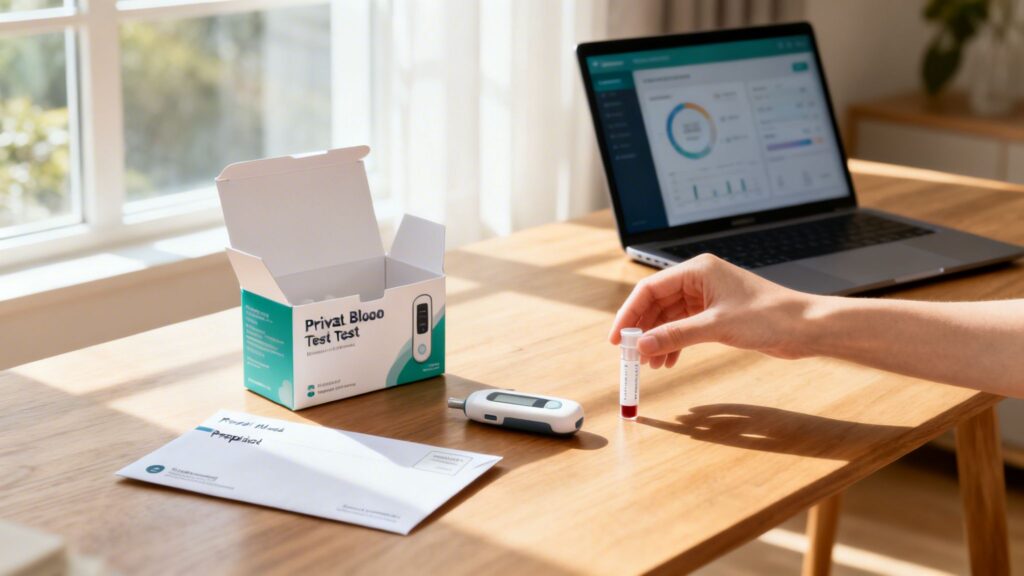
Once your sample is collected, you pop it into the protective packaging provided, place it in the prepaid return envelope, and post it back to the lab. The whole thing takes just a few minutes.
Your sample is analysed in a fully accredited UK laboratory—the exact same type the NHS and private clinics use. This guarantees your results are clinically valid, not just a rough estimate. Within a couple of business days, you'll get a notification that your results are ready.
You can then log in to a secure online dashboard to see your report. It will clearly display your levels for each marker and show where they fall within the normal reference ranges. This digital format makes it easy to save, print, and, crucially, share with your GP.
For an even more comprehensive view, you can pair our Kidney Function Test from Repose Healthcare with our Urine Chemistry and Microscopy test from Repose Healthcare. This combination gives a powerful, dual-marker picture of your kidney health by checking both blood and urine.
The tragedy of late detection is a huge problem in kidney care. Shockingly, the UK Renal Registry's 2023 data showed that many patients start kidney replacement therapy at a critically late stage, with an average eGFR of just 6.9 mL/min/1.73m²—a tiny fraction of the healthy 90+ threshold. You can see the full report on late-stage diagnosis from the UK Kidney Association.
Convenient home testing helps to bridge this gap, empowering you to keep an eye on your eGFR long before it ever reaches a crisis point. You can learn more about how a private blood test at home works and see the full range of options available.
So, you’ve got your at-home kidney test results. Holding those numbers in your hand is a great starting point, but it's crucial to understand they are just one piece of a much larger health puzzle. This isn't about self-diagnosing; it's about arming yourself with the right information for a meaningful chat with your GP.
Think of it this way: an at-home test lets you move from a vague worry to a specific, informed conversation. Instead of just saying, "I've been feeling off," you can say, "My eGFR came back at 85, and I’d like to understand what this means for my long-term kidney health." It changes the entire dynamic of the appointment.
When you check your kidney function at home, a couple of key markers will pop up. Generally, a normal eGFR (estimated Glomerular Filtration Rate) is considered to be 90 or higher, and a low ACR (Albumin-to-Creatinine Ratio) is what you want to see.
But remember, a single test result is just a snapshot in time. Your GP is the only one who can interpret these figures properly, taking into account your age, medical history, and any other risk factors.
Let's walk through a few common scenarios and the sensible next steps for each.
What if my eGFR is slightly below 90? An eGFR between 60 and 89 might be perfectly normal for you, particularly as you get older. The key here is that you've now established a baseline. Your actionable insight is to book a non-urgent appointment with your GP to go over the result and see if any follow-up is needed.
What if my ACR result is flagged as high? A high ACR can be an early sign that your kidneys are leaking a small amount of protein into your urine, which can point towards early kidney damage. This is a significant finding and your next action should be to discuss it with your doctor.
What if my creatinine is at the high end of the normal range? Even if it’s technically within the "normal" bracket, a result that’s creeping towards the upper limit is worth keeping an eye on. Make sure to share this with your GP so it can be tracked over time.
This flowchart shows the simple, proactive path from identifying risk factors to discussing your results with a professional.

Ultimately, you can see that testing is just one part of a clear process that should always end with seeking professional medical advice.
No matter what your results show, the next step is always the same: share them with your GP. An at-home test gives you a solid foundation for that conversation, helping you and your doctor work together as a team to protect your kidney health for years to come.
Thinking about checking your kidney function from home is a great step towards being proactive with your health, but it's completely normal to have a few questions before you start. Let's walk through some of the common things people ask.
This is probably the most important question people ask, and the answer is simple: they are very accurate. The at-home tests from accredited providers like Repose Healthcare use the exact same UKAS-accredited laboratories that your GP and private clinics rely on.
Whether you're providing a finger-prick blood sample for our Kidney Function Test from Repose Healthcare or a urine sample for our Urine Chemistry and Microscopy test from Repose Healthcare, the collection kit is designed to ensure it's a clinically valid sample for analysis. This means the results you get for crucial markers like eGFR, creatinine, and ACR are just as reliable as those from a clinic visit.
You can think of it this way: the lab technicians analysing your sample have no idea if it was taken in a GP surgery or your own kitchen. They just process every sample to the same high, accredited standard, which means you can trust the data.
The ideal testing frequency really comes down to your individual situation and risk factors.
If you have no known risks and are just keen to keep an eye on your general health, an annual check with our Kidney Function Test from Repose Healthcare is a great, proactive step.
However, if you have risk factors like high blood pressure, diabetes, or a family history of kidney disease, your GP might recommend more frequent checks—perhaps every 6 to 12 months. Using an at-home test is a fantastic way to establish a baseline that you and your doctor can then track over time, making it much easier to spot any subtle changes early on.
No, and it's really important to be clear about this. At-home tests are powerful tools for screening and monitoring your health, but they are not for self-diagnosis.
A formal diagnosis of chronic kidney disease (CKD) can only be made by a qualified doctor or specialist. Your test results provide the vital information needed to start a productive conversation with your GP. They’ll look at the numbers in the context of your complete medical history and overall health to give you an accurate picture and, if needed, create a management plan.
Absolutely. Thanks to modern laboratory technology, a highly accurate analysis of key kidney markers like creatinine can be performed using just a small amount of capillary blood. This is the type of blood you get from a simple, quick finger-prick.
This micro-sampling method is far less invasive than having a full vial of blood drawn from your arm, which is what makes at-home testing so convenient, accessible, and virtually pain-free. It removes one of the biggest barriers that can stop people from keeping up with regular health checks.
Take the first step towards understanding your kidney health today. With Repose Healthcare, you can order a confidential, lab-accurate kidney function test directly to your door. Get the clear data you need to have informed conversations with your GP and manage your health proactively. Explore our full range of at-home health tests at reposehealthcare.co.uk.