Feeling constantly drained, weak, or out of breath is more than just a bad week—it could be a sign of anaemia. A simple home test for anaemia can give you the first crucial answers by measuring key markers in your blood, like haemoglobin. It’s a convenient, private way to investigate those nagging symptoms and get actionable insights from the comfort of your own home.

That deep, persistent exhaustion that a good night's sleep just can't seem to touch is a frustratingly common feeling. While plenty of things can cause fatigue, one of the most frequent culprits is anaemia, a condition where your body doesn’t have enough healthy red blood cells.
Think of your red blood cells as a fleet of tiny oxygen delivery vans. Their job is to pick up oxygen from your lungs and drop it off to every cell in your body, from your brain down to your toes. When you have anaemia, you have fewer "vans" on the road, which means less oxygen gets where it needs to go. The result? You feel perpetually tired, weak, and mentally foggy.
Anaemia isn’t just about feeling a bit sleepy; its symptoms can get in the way of your daily life in very noticeable ways. Being tired all the time is often the main clue, and it can sometimes stem from nutrient deficiencies like a B12 deficiency.
Beyond that general fatigue, you might also notice:
It’s all too easy to brush these symptoms off as just stress or the effects of a busy lifestyle. But they are your body’s way of signalling that something isn’t quite right. Left unchecked, anaemia can take a real toll on your work, your relationships, and your overall quality of life.
Anaemia is one of the most common nutritional deficiencies in the world, yet its symptoms are often mistaken for the normal stresses of modern life. Recognising the signs is the first step toward reclaiming your energy and well-being.
The good news is that you don't have to live with the uncertainty. A home test for anaemia from Repose Healthcare offers a clear, straightforward way to investigate these symptoms. Instead of waiting for a GP appointment, you can take the first step towards understanding your health on your own terms, putting you on a clear path to finding effective solutions.
Anyone can develop anaemia, but certain lifestyles, life stages, and health conditions definitely ramp up the risk. Think of it like a balancing act: your body's demand for iron can sometimes outpace your supply, and certain situations make this imbalance much more likely. Pinpointing if you fall into one of these groups is the first step toward taking proactive control of your health.
If you often feel completely run down but can't put your finger on why, understanding these risk factors can be a lightbulb moment. A simple home test for anaemia is a powerful tool here, giving you solid data that can help connect your symptoms to a potential root cause.
For women, the monthly cycle is a major factor. Heavy menstrual periods mean a regular loss of blood—and with it, a loss of iron. Month after month, this can slowly but surely drain your body's iron reserves, making it incredibly difficult to keep up.
This isn't just a minor inconvenience; it's a significant public health issue. A recent UK study of over 33,000 people found that nearly one in ten women (9.9%) had confirmed anaemia. Even more telling, the study revealed that 31.6% of women showed absolute iron deficiency. That means almost one in three women of reproductive age in the UK are running on empty when it comes to their iron stores. You can dig into the full study on iron deficiency in UK women to learn more.
Practical Example: If you need to change your tampon or pad every one to two hours or pass clots larger than a 10p coin, your periods are considered heavy, putting you at a much higher risk for iron deficiency.
Your diet is your main source of iron, but not all iron is created equal. If you follow a vegetarian or vegan diet, you’re relying on plant-based (non-haem) iron. The catch? It's much harder for the body to absorb than the haem iron found in meat and fish.
This doesn't mean a plant-based diet is unhealthy—far from it. It just means you need to be more mindful to make sure you're getting enough iron and pairing it with foods that boost its absorption.
Actionable Insight: Always try to pair iron-rich plant foods like lentils, spinach, and tofu with a source of vitamin C, like a glass of orange juice or a squeeze of lemon. This can increase iron absorption by up to six times.
Certain long-term health conditions can mess with how your body absorbs or uses nutrients, and iron is no exception. This is especially true for digestive disorders that affect the gut.
Practical Example: Someone with Coeliac Disease might be eating plenty of iron-rich foods, but the damage to their small intestine prevents the iron from being absorbed properly, leading to deficiency despite a good diet. The same applies to those with Crohn's Disease or Ulcerative Colitis, where inflammation and bleeding can lead to direct blood loss.
Even chronic kidney disease can play a role, as the kidneys produce a hormone vital for making new red blood cells. If you're managing a chronic condition and struggling with fatigue and weakness, it’s well worth investigating your iron status.
Taking action isn't about waiting for symptoms to become unbearable. It's about recognising your personal risk factors and making an informed choice to check in with your health.
If any of these situations ring a bell, a home test for anaemia from a provider like Repose Healthcare can give you the clarity you need. It’s a convenient and private way to assess your levels and figure out the next best step toward feeling like yourself again.
Trying to understand your blood test results shouldn't feel like you need a medical degree. When you use a home test for anaemia, you’re essentially getting a snapshot of your body's health by looking at specific markers, known as biomarkers. Each one tells a different part of the story about your iron levels and red blood cells. Looking at them together gives a much clearer picture than just focusing on one.
Think of it like being a detective investigating why a factory (your body) is underperforming. You wouldn't just check if the delivery trucks are leaving the gate; you’d also check the warehouse inventory and the availability of raw materials. A comprehensive blood test does exactly that, looking beyond a single number to understand the entire supply chain of oxygen delivery in your body.
A basic test might only check one thing, but a thorough analysis, like a Full Blood Count (FBC), examines multiple factors to give you a detailed view. This is crucial because anaemia can have many different causes, and a single low number doesn't reveal the whole story.
For instance, your red blood cell count might look perfectly normal, but your iron stores could be almost empty, meaning you're on the brink of developing anaemia. Only a complete panel of tests can catch these early warning signs, empowering you to act before symptoms get worse.
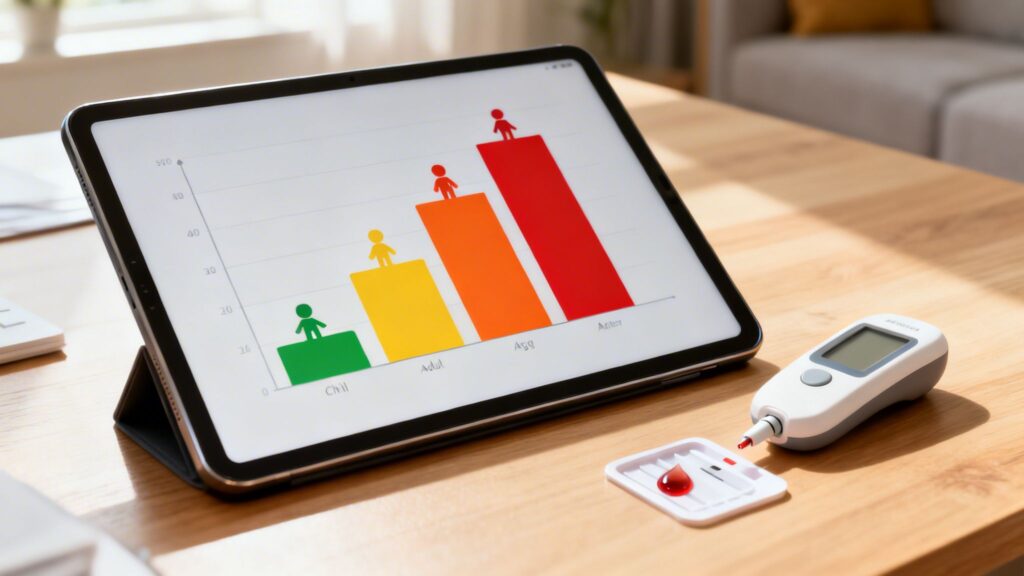
Certain groups are particularly susceptible to these imbalances, as the infographic below highlights.
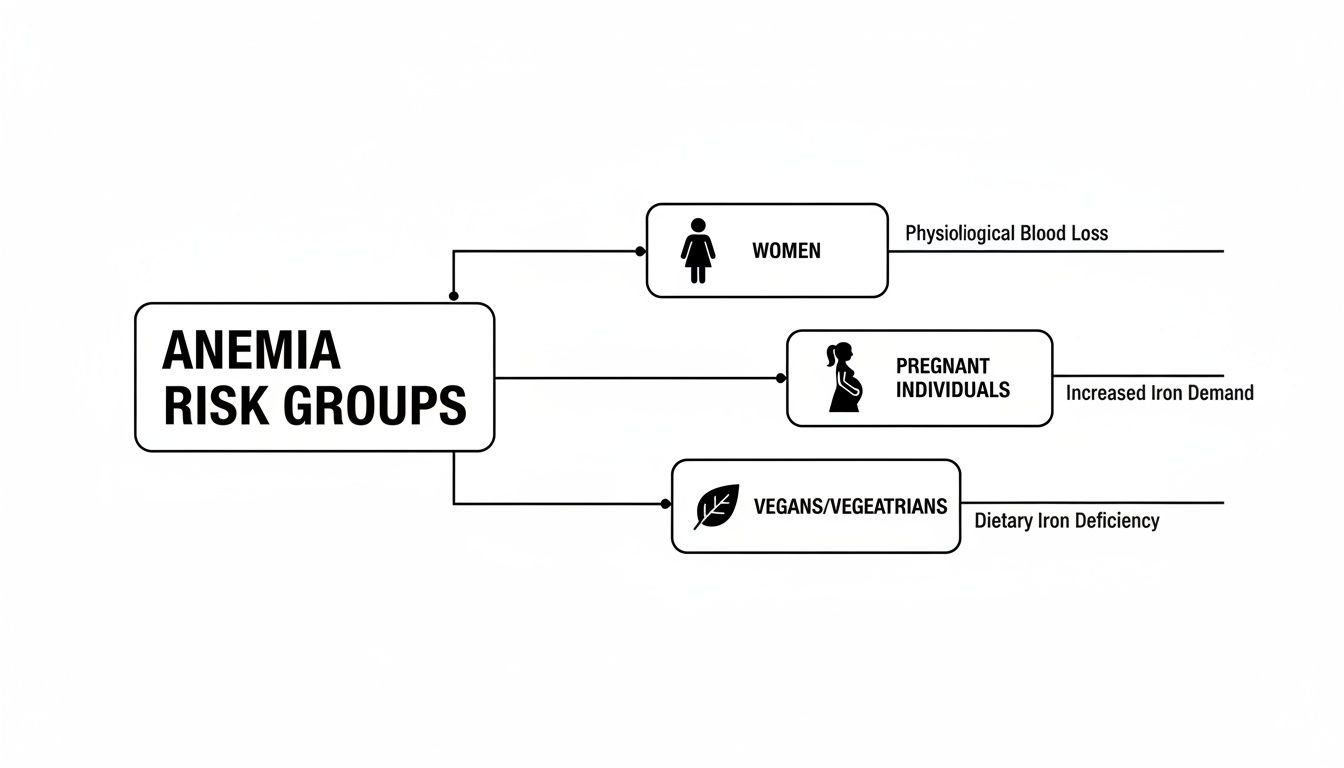
This makes it clear why women, pregnant individuals, and those on plant-based diets should be particularly mindful of their iron status.
So, what are these tests actually looking for? Here's a straightforward guide to the key markers in a comprehensive anaemia test and what they reveal about your health.
To make sense of your results, let's break down the most important ones using some simple analogies.
| Biomarker | What It Measures | Why It's Important for Anaemia |
|---|---|---|
| Haemoglobin (Hb) | The protein in red blood cells that carries oxygen. | The Oxygen Delivery Trucks. Low Hb is the classic sign of anaemia. It means fewer "trucks" are on the road, so less oxygen is reaching your tissues, leading to fatigue and breathlessness. |
| Ferritin | A protein that stores iron inside your cells. | The Iron Reserve Warehouse. Low ferritin is one of the earliest signs of iron deficiency. Your body may still have enough "trucks" (Hb), but the factory is running out of raw materials. |
| Transferrin Saturation | The amount of iron being actively transported in your blood. | The Transport Availability. This shows how much iron is available for making new red blood cells. Low saturation means there isn't enough iron being moved from the "warehouse" to the "factory." |
Let's dive a little deeper into what each of these means for you.
Haemoglobin is the protein in your red blood cells that physically carries oxygen from your lungs to the rest of your body. Low haemoglobin is the classic sign of anaemia, meaning less oxygen is reaching your tissues. This is why you feel tired and breathless.
Ferritin is a protein that stores iron inside your cells, keeping it ready for when your body needs to make new red blood cells. It's a direct reflection of your body's iron reserves.
Think of it as your iron warehouse. A high level means the warehouse is well-stocked, while a low level means your reserves are dangerously depleted. Low ferritin is one of the earliest signs of iron deficiency, often appearing long before haemoglobin levels drop. To get a precise measurement of this crucial marker, our Ferritin Blood Test provides a focused and actionable insight into your body's iron stores.
Your ferritin level is a direct indicator of your body's iron stores. Low ferritin is often the first sign of iron deficiency, appearing long before haemoglobin levels drop and full-blown anaemia develops.
Transferrin is the protein that transports iron through your blood. Transferrin saturation simply measures how much of this protein is actively carrying iron. If transferrin proteins are the vehicles moving iron from the warehouse to the factory, saturation tells you how full those vehicles are.
Low transferrin saturation shows there isn't enough iron available to be transported for red blood cell production, even if you have enough transport vehicles.
By looking at these markers together, you get a complete narrative of your iron status—from your long-term storage to your immediate production capacity. This detailed insight is what makes a comprehensive home anaemia test such a powerful tool for taking control of your health.
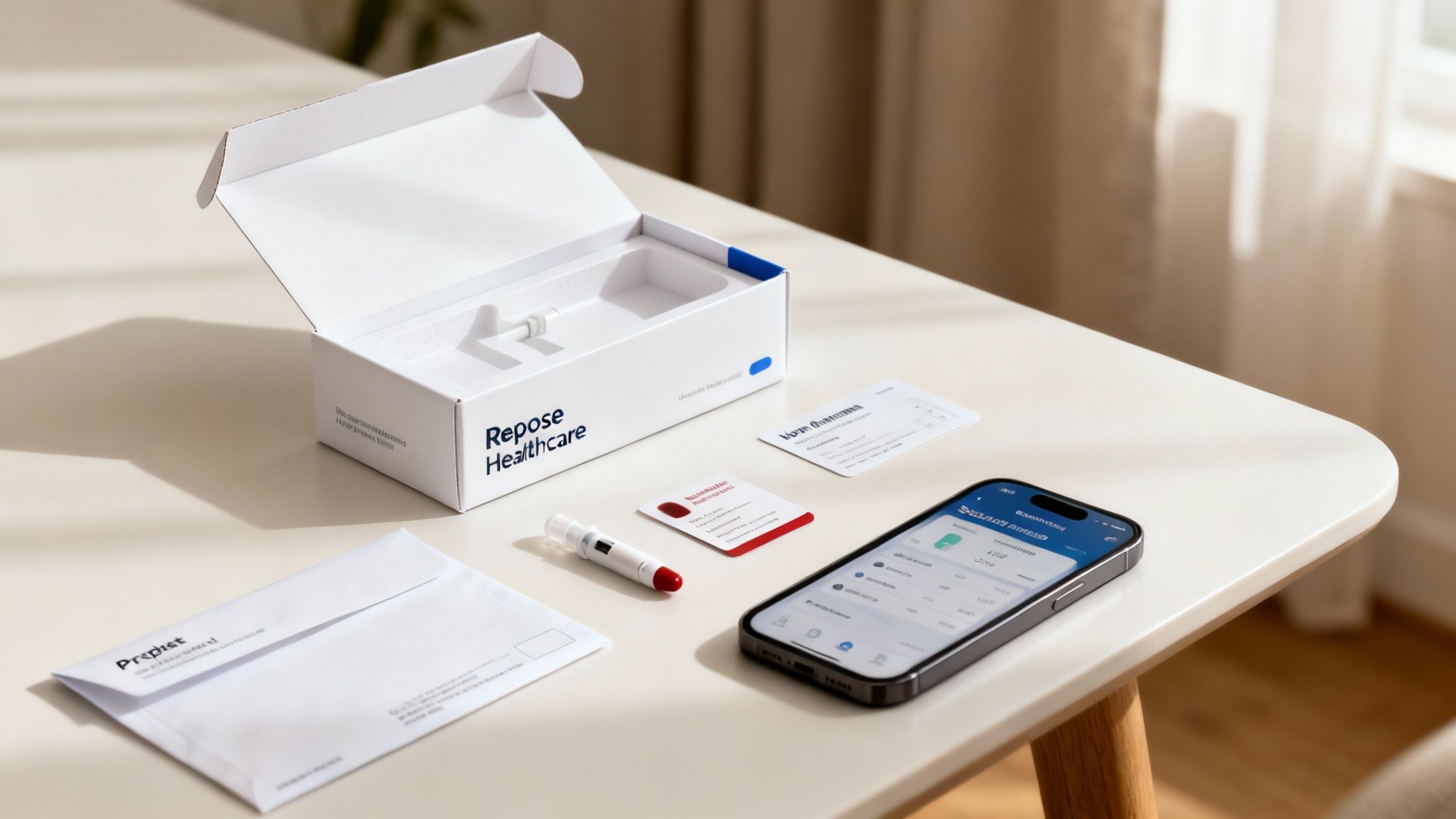
We believe getting answers about your health should be simple and stress-free. That’s why we’ve designed our home tests for anaemia to be as straightforward, private, and efficient as possible. The entire journey—from that first worry about symptoms to receiving clear, actionable insights—is built around you.
There are no clinic visits to schedule, no waiting rooms, and absolutely no complicated procedures. Just a clear, step-by-step process that puts you in control, delivering accurate, lab-analysed results directly and securely to your screen.
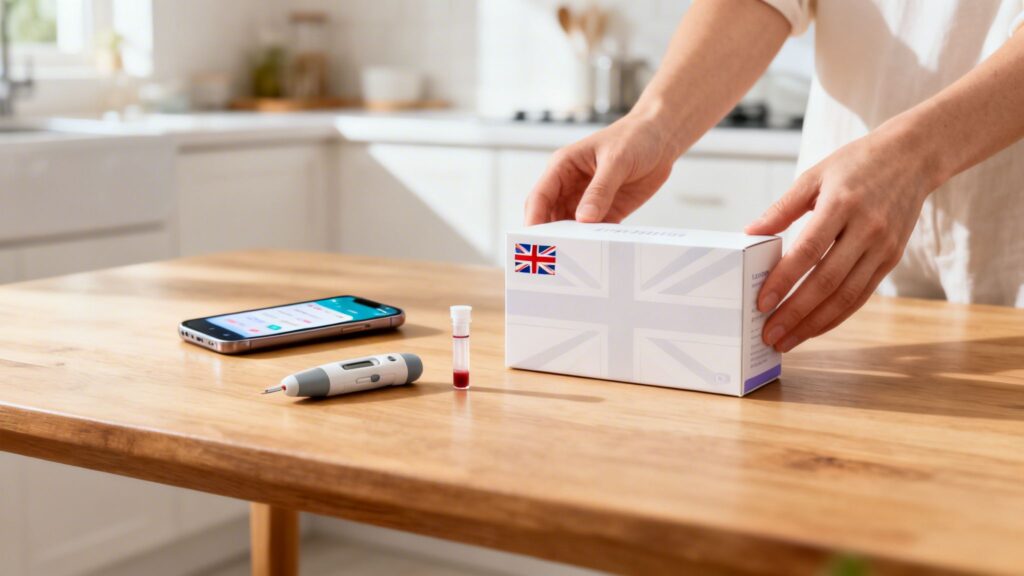
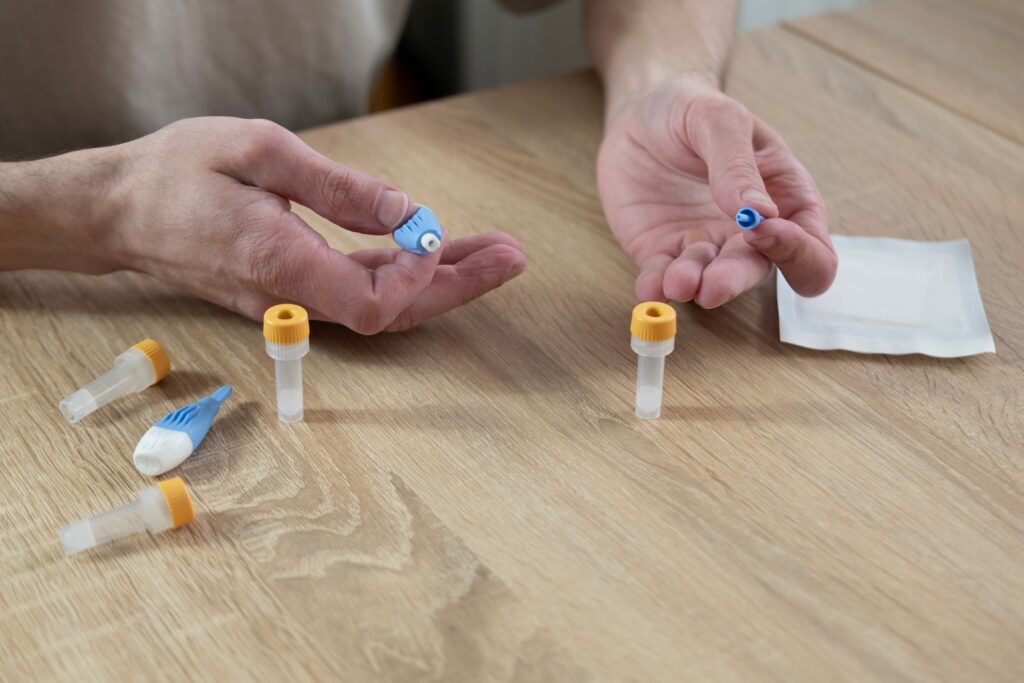
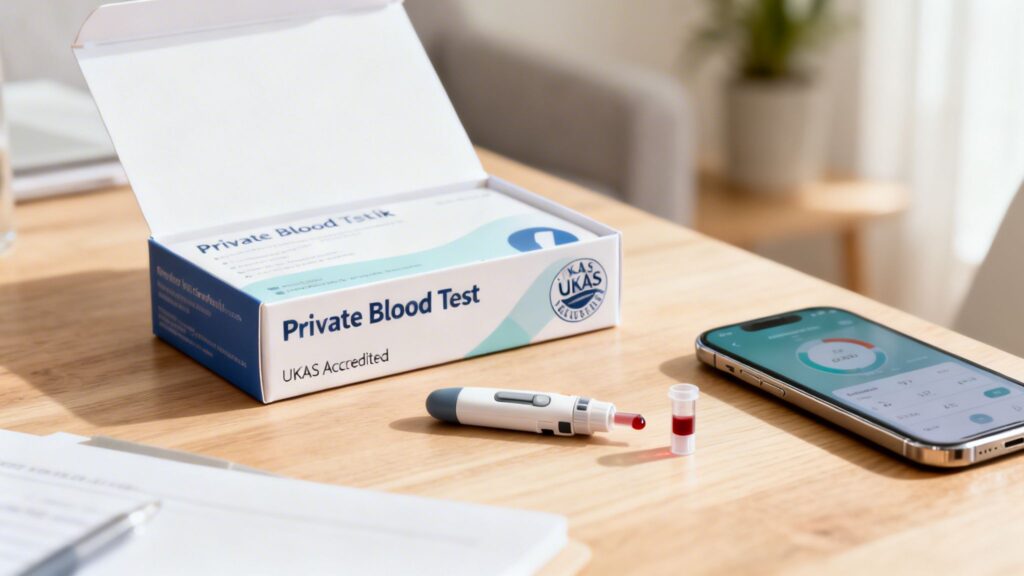
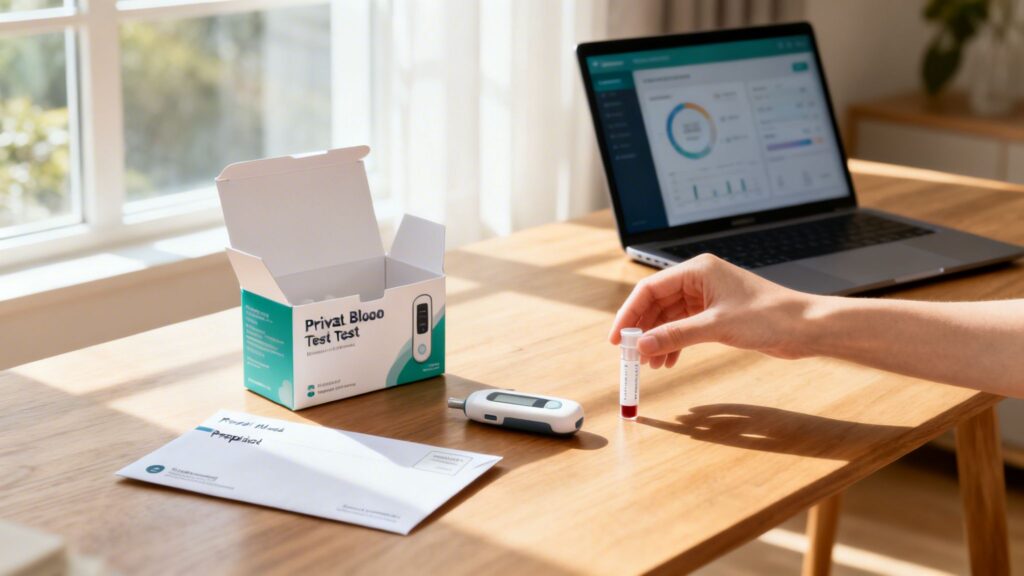
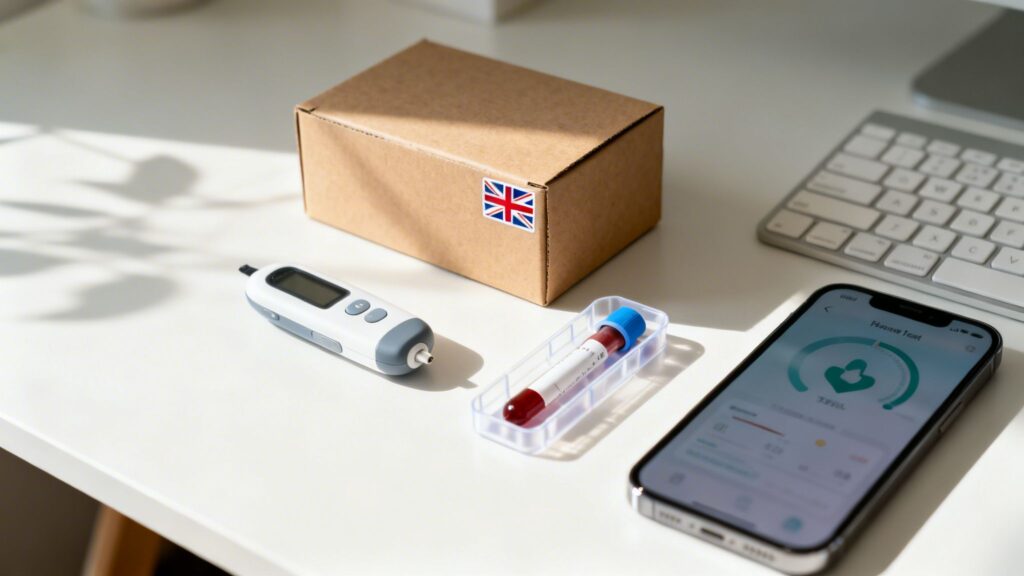
Getting started is easy. Just order your chosen anaemia test directly from the Repose Healthcare website. We'll send your kit out promptly in discreet packaging, and it will arrive at your door with everything you need to collect a successful sample.
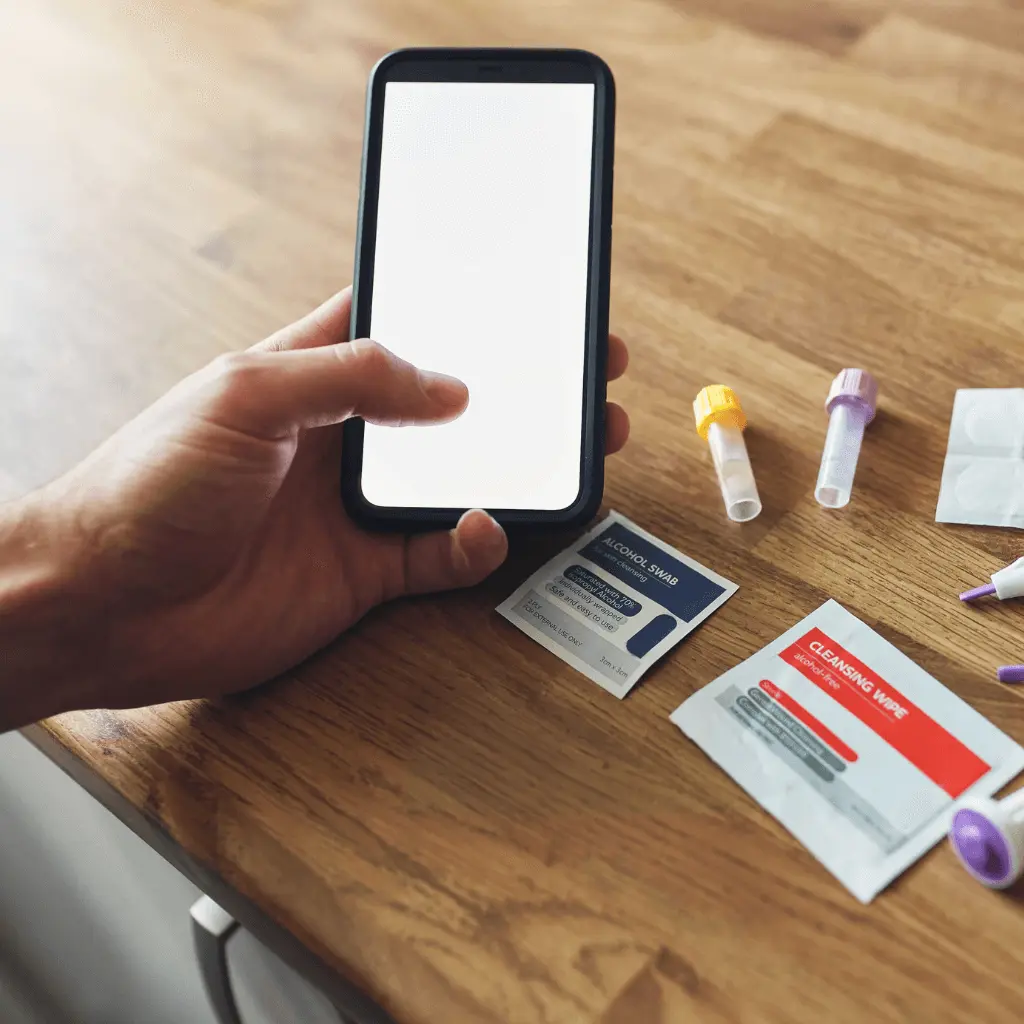
Inside the box, you’ll find:
You’ll also find a set of clear, easy-to-follow instructions that guide you through every single step, making sure you feel confident from start to finish. We’ve taken out all the guesswork.
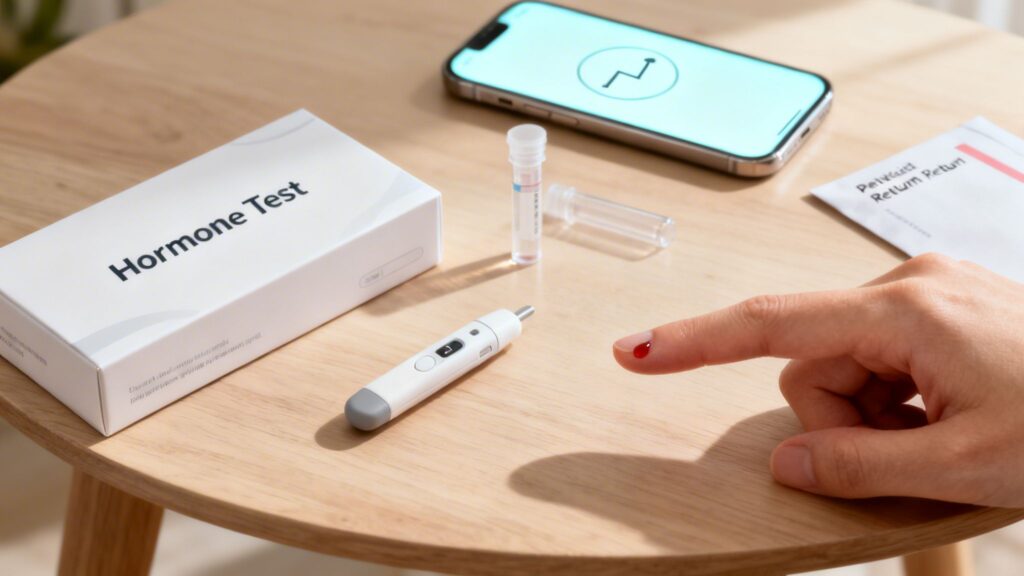
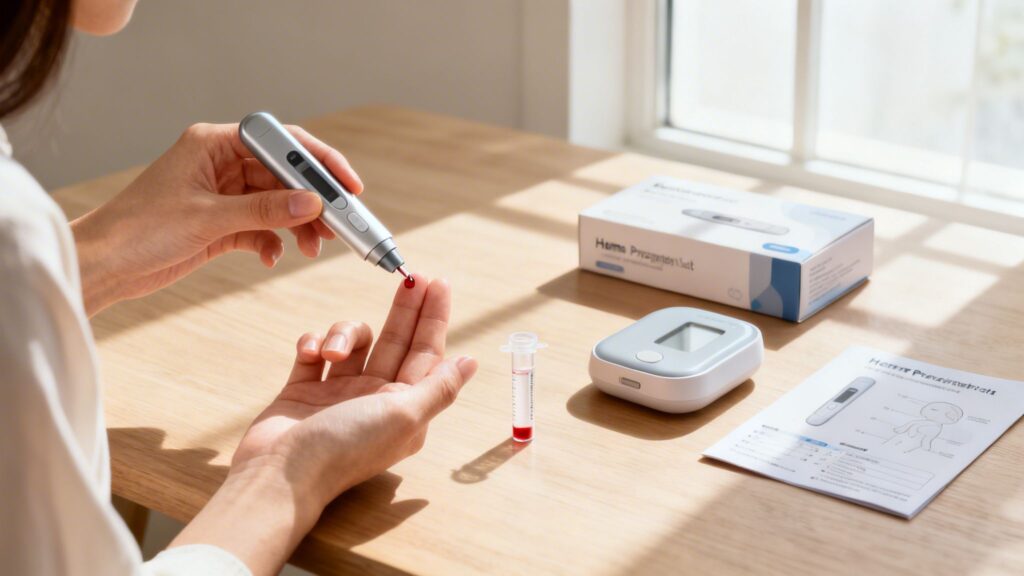
Collecting your sample only takes a few minutes. For the most accurate results, we recommend doing it in the morning before you’ve had anything to eat or drink (apart from water).
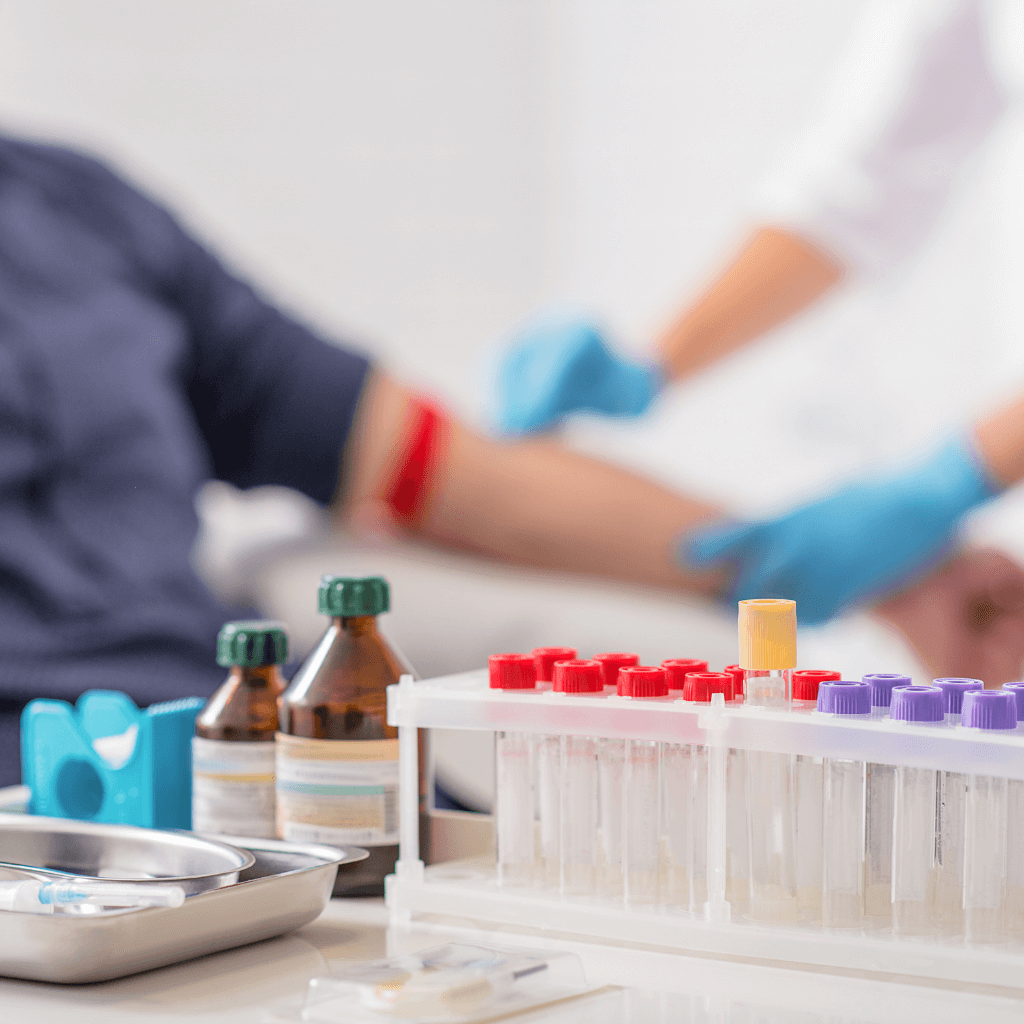
Actionable Insight: To make collection easier, do some light activity for a few minutes beforehand, like walking around the room or swinging your arms. This gets the blood flowing to your fingertips. Then, wash your hands in warm water. After cleaning the area with an alcohol wipe, you’ll use one of the lancets to make a tiny prick on the side of your fingertip. Gently massage your finger to help collect a few drops of blood into the collection tube.
Once you have enough, just seal the tube as instructed, pop it into the protective packaging, and then into the prepaid return envelope. It’s a clean and simple process that anyone can do. You can learn more about the specifics in our detailed guide to finger-prick blood tests at home.
Our home testing process uses the same UK-accredited laboratories that are trusted by the NHS. This ensures your sample is analysed with the highest degree of accuracy, giving you lab-grade results from the comfort of your own home.
After you post your sample using the prepaid envelope, it goes straight to our certified laboratory partners. These are the same labs that process tests for GPs and hospitals across the UK, so you can be completely confident in the quality of the analysis.
Once our lab has your sample, your results are usually processed and ready within 1 to 3 working days. We’ll send you an email notification the moment they are available.
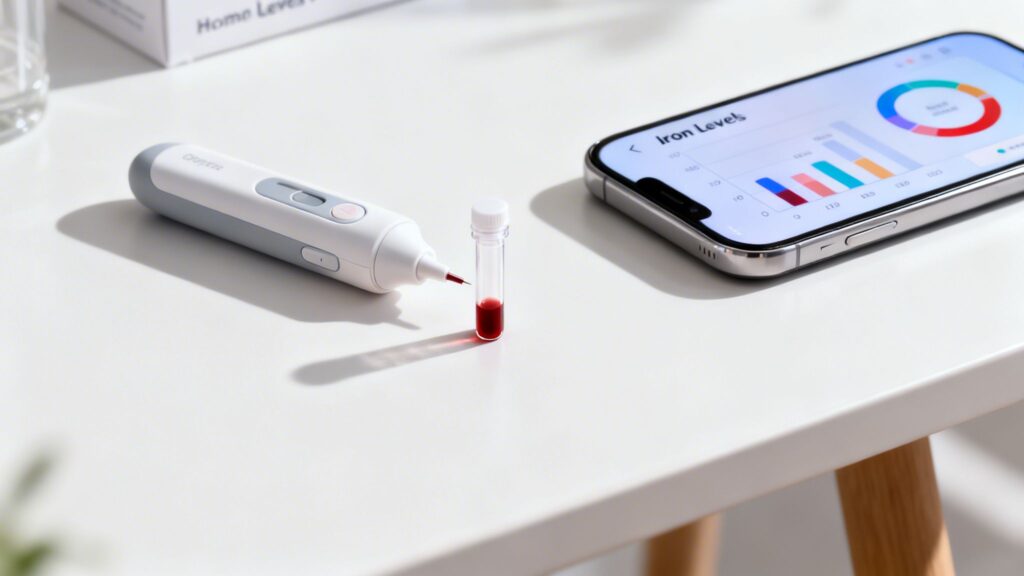
Your results are then uploaded to your private, secure online dashboard. We present the information in a clear, easy-to-understand format, showing your levels for key markers like ferritin and haemoglobin against established normal ranges. Every report is reviewed by a qualified physician, giving you reliable data to help you decide on the next steps for your health. This smooth process transforms uncertainty into clarity, quickly and confidentially.

Getting your test results back is a big moment, but the real power is in knowing what those numbers mean for your health. Your Repose Healthcare report is designed to be as clear as possible, showing your biomarker levels right next to the established normal ranges. This gives you an immediate sense of where you stand.
But interpreting these results is about more than just checking if a number is high or low. It’s about listening to the story your body is telling. A home test for anaemia gives you powerful data, but it’s crucial to remember that it’s a screening tool, not a final diagnosis. Think of it as providing the key clues that you and your GP can use to solve the puzzle of your symptoms.
Our core message is this: these tests are a responsible first step. They give you the information you need to have a proper conversation with a healthcare professional, turning vague feelings of fatigue into a data-driven plan to feel better.
One of the most important ideas to get your head around is the difference between a 'normal' range and an 'optimal' one. A normal range is just a broad average based on the general population. Being within this range is a good sign, but it doesn’t always mean your levels are perfect for you and your individual needs.
Practical Example: Your haemoglobin (Hb) might just scrape into the normal range, meaning you don't technically have anaemia. At the same time, your ferritin level—which reflects your body's iron stores—could be at the very bottom of its range. While technically 'normal,' this is a clear warning sign.
A low ferritin level with normal haemoglobin is a classic early warning sign. It’s like discovering your iron "warehouse" is nearly empty, even though your body is still managing to send out enough oxygen "delivery trucks" for now. This is early-stage iron deficiency.
Catching this pattern early is a game-changer. It means you can start making dietary changes or talking to your GP about supplements before your haemoglobin drops and the full-blown symptoms of anaemia take hold. This is where the real value of regular monitoring with a home test for anaemia lies.
Your results paint a picture of what’s happening with your iron. Let's walk through a few real-world examples of what you might see on your report and what it could mean.
These examples show exactly why a comprehensive test is so important. Looking at several markers at once gives you a much clearer picture of what’s really happening inside your body.
Once you have your results from Repose Healthcare, the next step is simple but vital: share them with your GP. Your doctor can interpret your results in the full context of your personal health history, symptoms, and lifestyle.
They are the only ones who can provide a formal diagnosis and create a personalised treatment plan, which might include:
Using a Repose Healthcare home test makes you an active partner in your own health. It gives you the clear, reliable data needed to start a meaningful conversation with your doctor and get on the fastest track to feeling like yourself again.
That feeling of being constantly drained might feel like a personal battle, but anaemia is much bigger than an individual health complaint. It’s a major, often silent, public health challenge right here in the UK. The relentless exhaustion, brain fog, and breathlessness that millions of us put up with have a real, measurable impact on our communities, workplaces, and the NHS.
The true scale of the problem is wider than most people think. A huge study looking at 14 million people in English primary care found that the overall prevalence of anaemia was 4.1%. While that’s already a big number, it hides some crucial details. Women are hit harder, with a prevalence of 5.1% compared to just 3.1% in men. You can dig into the specifics of these UK anaemia prevalence findings here.
The data is clear: anaemia doesn’t affect everyone equally. The risk shoots up for certain groups, creating pockets of chronic ill-health all over the country.
This isn’t just about numbers on a page; it’s about real people whose quality of life is being quietly eroded. If you’re struggling with the symptoms, it can be validating to know you are far from alone and that this is a recognised national health issue.
The consequences of widespread, untreated anaemia ripple outwards, touching far more than just your physical energy levels. This is where the hidden costs really start to add up.
At work, for instance, chronic fatigue can tank your productivity, make it tough to concentrate on complex tasks, and lead to more sick days. That cognitive “brain fog” isn’t just a feeling; it’s a direct result of your brain not getting the oxygen it needs to work at its best.
It's also a serious concern for pregnant women, where iron-deficiency anaemia is linked to increased risks for both mum and baby, including premature birth and low birth weight. It turns a personal health condition into a generational one.
Addressing anaemia isn't just about restoring one person's energy. It's about boosting the health and productivity of our entire society, one individual at a time.
This is exactly why accessible home tests for anaemia are so vital. By offering a convenient and private way to investigate your symptoms, services like Repose Healthcare put the power back in your hands. Getting a clear picture of your iron status is the critical first step—not just for your own well-being, but for tackling this widespread national health issue head-on.
Still have a few questions? That's completely normal. To clear up any lingering doubts, we've put together straightforward answers to the questions we hear most often from people considering an at-home anaemia test.
We've based this on real customer feedback, so you can feel confident you have all the facts you need.
Our at-home tests are extremely accurate. That's because your sample is analysed in the very same UK-accredited laboratories that the NHS uses for its testing. The finger-prick collection method itself is clinically validated to provide reliable results for all the key anaemia markers.
This setup gives you the best of both worlds: lab-grade quality with the convenience of testing from home. If you're curious about the science behind it, our guide explains in more detail why at-home blood tests are accurate and trustworthy.
Most people describe it as a quick, mild pinch that’s over in a second. The test uses a sterile, single-use lancet designed for a swift prick on your fingertip. Our kits come with detailed, easy-to-follow instructions to help you collect your sample with as little discomfort as possible.
The goal of a home test for anaemia is to provide clear insights with minimal stress. The collection process is designed to be quick, simple, and as comfortable as possible.
Your results are laid out in a clear, easy-to-understand format on your secure online dashboard. If any of your markers fall outside the normal range, we strongly recommend you download the report and book an appointment to discuss it with your GP.
They are the best person to provide a formal diagnosis and map out the right treatment plan for you.
Once your sample arrives at our lab, your results are typically ready on your secure online dashboard within 1 to 3 working days. We’ll send you an email notification the moment they are available, so you're not left waiting.
Ready to swap uncertainty for clarity? Taking the first step towards understanding your energy levels is easier than you think. The Repose Healthcare home tests for anaemia provide the reliable, physician-reviewed insights you need to take control of your health, all from the comfort of your own home.