Even though the 'Harmony' brand itself is no longer around, its name pretty much became the go-to term for Non-Invasive Prenatal Testing (NIPT) in the UK. The typical £400-£500 price point it established is still what many people expect to pay. But that cost covers a lot more than just a blood test; it's a full service designed to give you peace of mind.

When you see a price for a private NIPT, it's natural to wonder what's actually included. It helps to think of it less like buying an item off a shelf and more like investing in a complete care package. The price reflects not just the high-tech lab work but also the expert support system that comes with it.
For many expectant parents, the main reason for getting the test is for reassurance. Knowing exactly what you’re paying for helps you see the real value in this decision. So, let’s break down what's typically inside an NIPT package, using the old Harmony test model as our guide.
A standard private NIPT package, which you'll often see advertised around the £400 mark, usually bundles a few key services together. These essentials are there to make sure you have a smooth and supported experience from beginning to end.
The core parts of the package almost always include:
Actionable Insight: When comparing providers, check if the advertised price is all-inclusive. Does it cover the blood draw, lab fees, and follow-up support? A cheaper headline price might have hidden costs.
This basic structure means that even the most standard packages offer a lot of value. For a more detailed look at how prices are structured across the UK, you can read our complete guide on NIPT test costs.
Keep in mind that some clinics offer more comprehensive packages that can push the price closer to the £500 mark. These often bundle in valuable extras like an early pregnancy ultrasound scan.

To really get your head around the NIPT market today, including the current Harmony test cost benchmarks, it helps to look at where it all started. The Harmony test wasn't just another screening option; it completely changed the conversation around prenatal testing here in the UK. It effectively created the blueprint for private Non-Invasive Prenatal Testing.
Before Harmony came along, the choices for expectant parents were tough. You could either stick with the standard screening, knowing its accuracy was lower, or you could opt for an invasive procedure like amniocentesis. While more accurate, these tests came with a small but very real risk of miscarriage. Harmony gave parents a third, much-needed option: a simple and safe blood test that delivered incredibly reliable results.
The Harmony test quickly became the name everyone knew and trusted—the gold standard. It was the first NIPT to be widely available privately in the UK and offered a level of precision that you simply couldn't get through the NHS at the time. This pioneering role built a huge amount of trust with both clinicians and parents-to-be.
The service was straightforward and comprehensive. For a clear price of £500, you got a blood test processed by The Doctors Laboratory (TDL) in London, with results back in about 12-14 days. More importantly, studies showed Harmony’s incredible accuracy, with over 99% sensitivity for Down's syndrome. That completely overshadowed the 79% detection rate of the traditional first-trimester screening. This new tech also dramatically cut the false positive rate from 1 in 20 to less than 1 in 1,600, which went a long way in reducing parental anxiety. You can read more about these early statistics and the impact of Harmony testing on prenatal care.
This wasn't just about better data; it was about genuine emotional relief. The test even came with a free redraw policy if the first blood sample didn't work, which really helped cement its reputation as a service that put parents first.
The way the Harmony test was structured set a lasting benchmark for what a premium prenatal screening service should offer. Its price point, turnaround time, and all-inclusive service model became the standard that all later NIPTs were measured against.
The legacy of the Harmony test is one of empowerment. It showed that parents were willing to invest in early, accurate information to gain peace of mind and take control of their pregnancy journey.
This history is why private testing is still such a popular choice today. Even though the Harmony brand itself is no longer available, its influence is still felt. Modern providers, including at-home services like Repose Healthcare, are carrying that legacy forward. We’re committed to offering advanced, accessible, and transparently priced NIPT options that provide that same level of reassurance and empowerment, but with even more convenience.
When you start looking into NIPT, you'll probably notice the prices can vary quite a bit. The Harmony test cost and other modern NIPTs don't have one single price tag, and that’s not random. It reflects a few key things that give you more choice over your screening experience.
Understanding what goes into the price helps you decide what’s truly essential for your own peace of mind. It’s a bit like choosing a new car – you’ve got the standard model that’s perfectly safe and does the job, and then there are optional extras for more features or a premium feel. NIPT pricing works in a similar way, letting you choose what matters most to you.
One of the biggest factors in the final cost is simply where you have your blood sample taken.
In-Clinic Visit: Going to a private clinic is the traditional route. This usually comes with a higher price because you're covering the clinic's running costs, staff time, and the face-to-face consultation. For example, a clinic in central London might charge over £500 for a package that includes a scan.
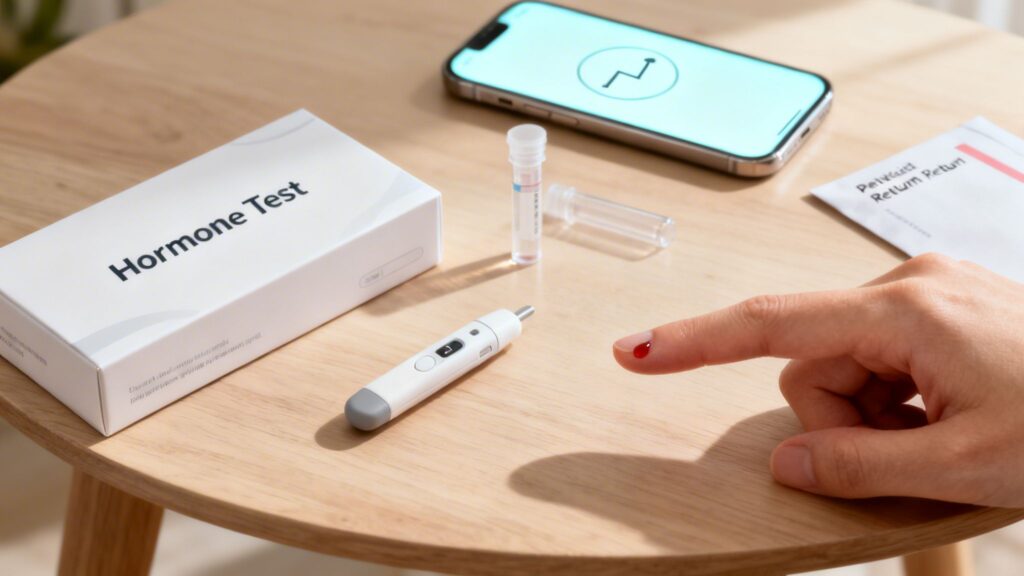
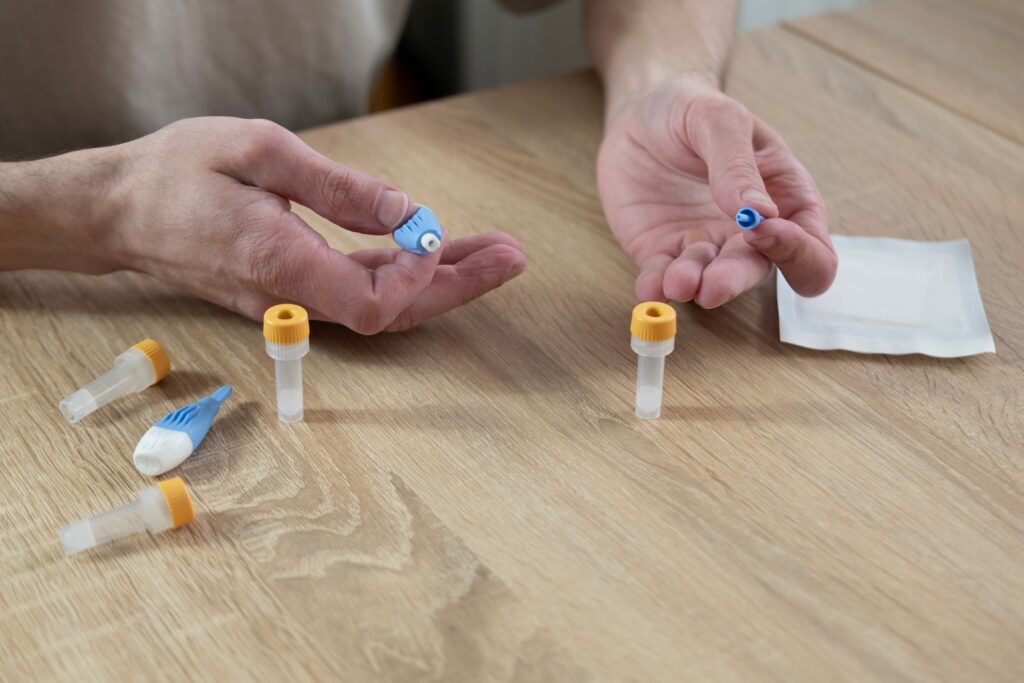
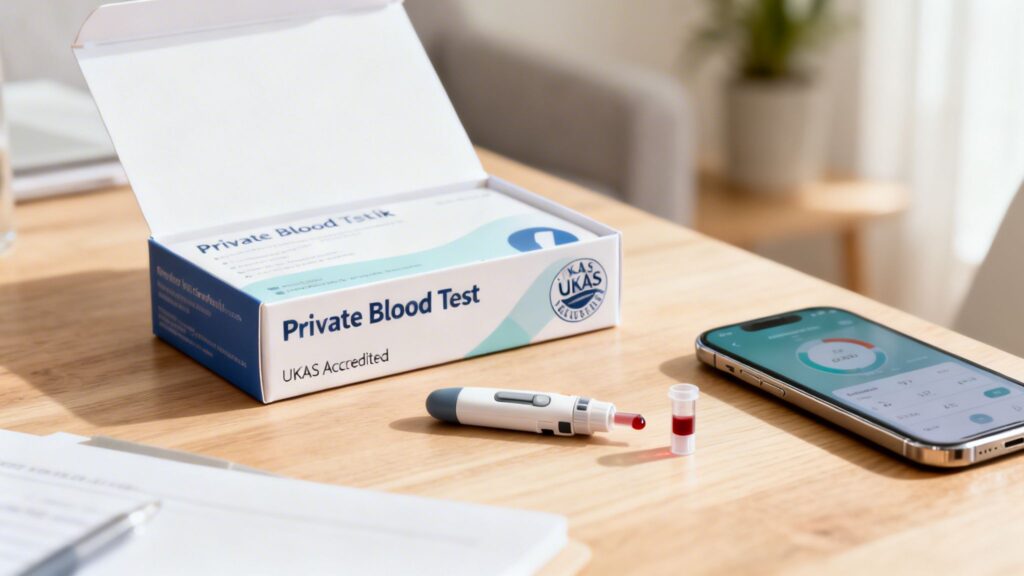
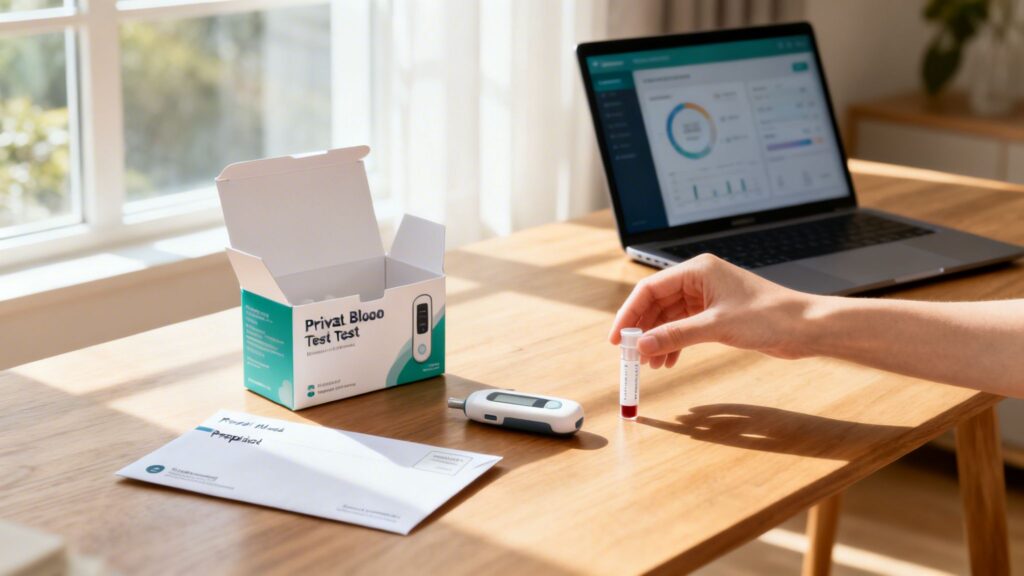
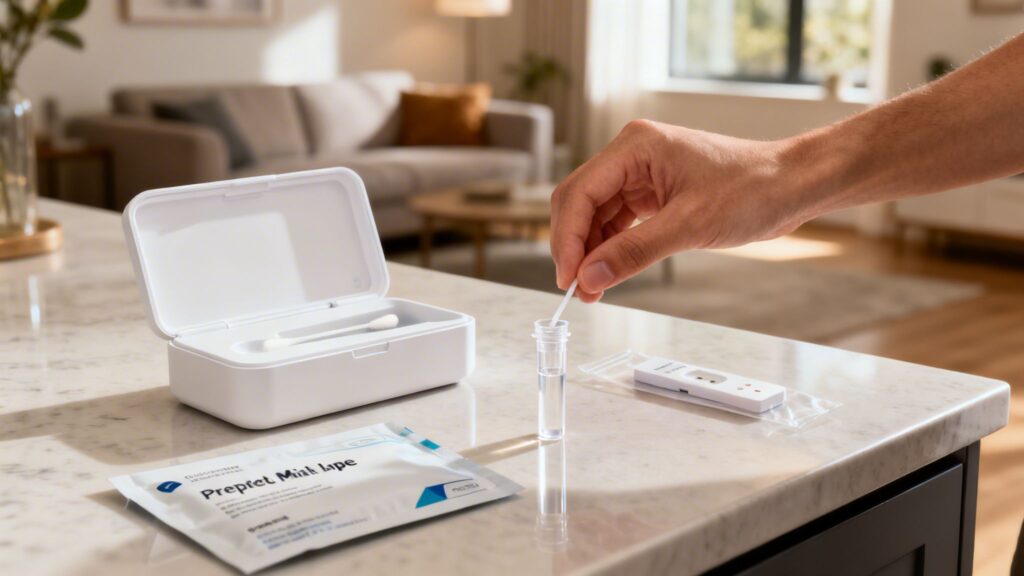
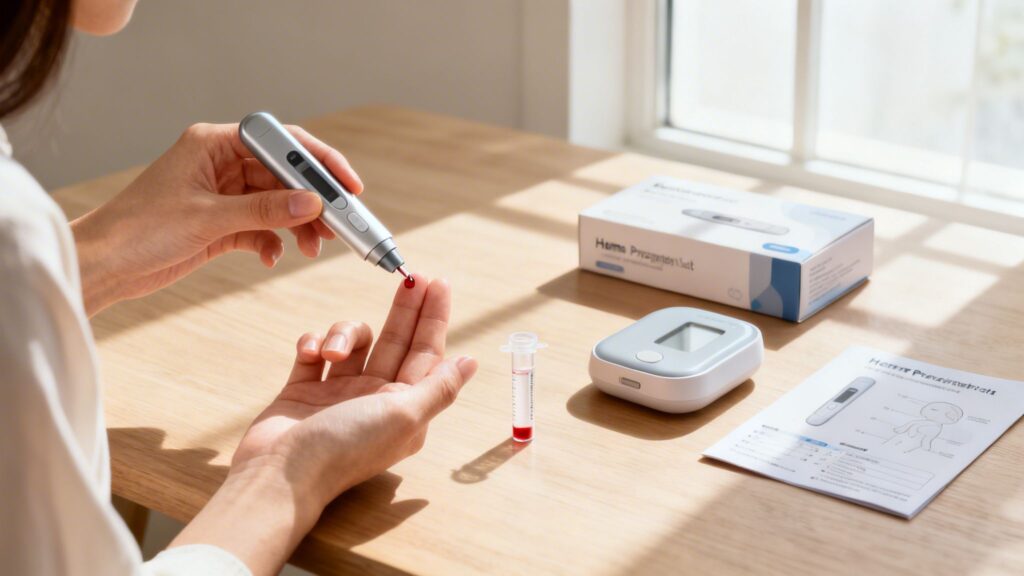
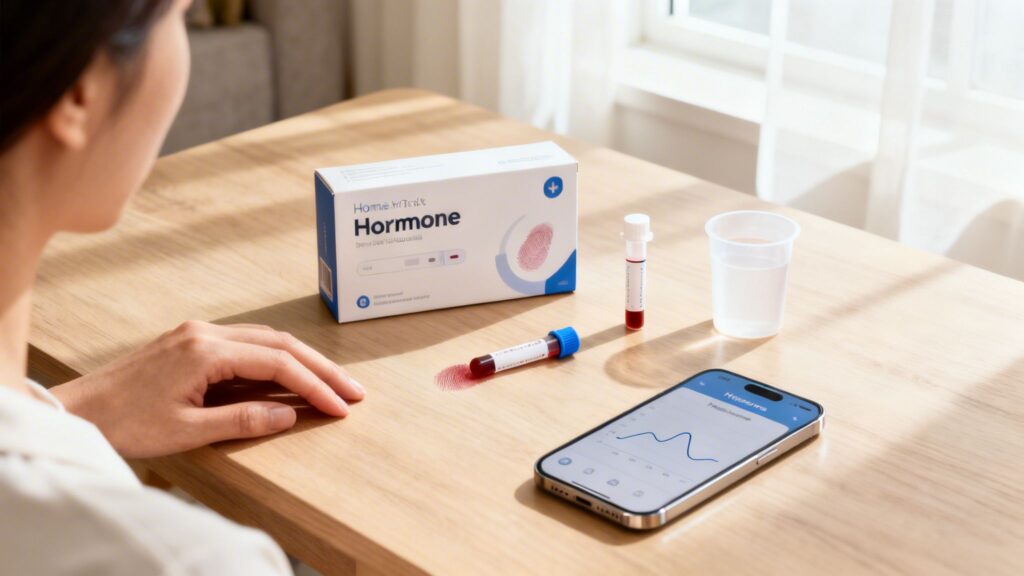
At-Home Service: The more modern approach is an at-home kit, which is often more affordable. This lets you collect a simple finger-prick blood sample from the comfort of your own home, cutting out the time and expense of travel and clinic fees.
Our Repose Healthcare at-home NIPT kits, for example, provide a clinically robust and straightforward experience without the added cost of a clinic visit. This makes advanced screening much more accessible for more people.
Just as different car models come with different features, NIPTs can screen for a different number of conditions. The breadth of the panel has a direct impact on the price.
A 'standard' NIPT will screen for the three most common trisomies: Down's syndrome (Trisomy 21), Edwards' syndrome (Trisomy 18), and Patau's syndrome (Trisomy 13). This is the core screening offered and is almost always the most affordable option.
However, you can opt for more extensive panels. These can add screening for:
These broader panels need more complex analysis in the lab, which naturally increases the overall harmony test cost.
Actionable Insight: If your primary goal is reassurance about the most common conditions, a standard NIPT panel offers excellent value. Consider an extended panel only if you have specific concerns or want the most data possible. A 'standard' test gives excellent reassurance, while extended panels offer a deeper look.
When you're expecting, the journey is filled with a mix of incredible excitement and, let's be honest, a fair bit of worry. One of the first big decisions you'll face is about prenatal screening. In the UK, you generally have two main paths: the standard NHS screening or opting for a private NIPT. Understanding the real-world differences between them is key to deciding what feels right for you and your family.
The NHS offers what's called a 'combined test' around the 12-week mark. This involves a blood test and a specific ultrasound measurement (the nuchal translucency). It's a fantastic, free service, but it's important to know its limitations. The test has about an 85% detection rate for Down's syndrome and a false positive rate of roughly 5%. For some parents, this means getting a 'higher-risk' result that triggers huge anxiety, only to find out later through further testing that everything is perfectly fine.
Let's imagine two expectant mothers, Sarah and Emily, to see how this plays out.
Sarah goes down the standard NHS route. Her 12-week screening comes back with a 'borderline' result. It's not high-risk enough to automatically qualify for an NHS NIPT, but it's not low-risk enough to offer complete reassurance. Sarah now faces weeks of limbo, waiting anxiously for her 20-week anatomy scan. That cloud of uncertainty can be emotionally draining, casting a shadow over what should be a happy time.
Emily, on the other hand, decides she wants more clarity, sooner. At 10 weeks, she orders a private Repose Healthcare at-home NIPT. Within about a week, she receives a 'low-risk' result with over 99% accuracy. What she's really paid for is peace of mind. She can now relax and enjoy her pregnancy without that nagging 'what if'. This is the fundamental value you're investing in when you consider the harmony test cost or any other NIPT—early reassurance and a sense of control.
This decision tree helps visualise the different choices you might face when thinking about private NIPT, from clinic visits to at-home kits.

As the chart shows, factors like whether you visit a clinic or use a home-based service can affect both the cost and your overall experience.
The NHS pathway currently reserves NIPT for pregnancies that are flagged as 'higher-risk' from the initial combined test—this usually means the result shows a chance of 1 in 150 or greater.
In contrast, many parents choose to go private right from the start, purely for the superior accuracy. The >99% detection rate for Down's syndrome is a powerful draw compared to the NHS combined test's performance. It empowers you with much clearer information, often well before your 12-week scan even takes place. In a country where around 1 in 700 babies are born with Down's syndrome each year, this level of precision has also dramatically cut down on the number of people needing invasive follow-up tests like amniocentesis.
Actionable Insight: If your NHS screening is still weeks away and you feel anxious, a private NIPT can provide an answer much sooner. You don't have to wait. This empowers you to regain control over your timeline and reduce weeks of worry.
Getting to grips with the world of private NIPT means looking at what different clinics offer. It can be helpful to read up on private NIPT options and potential discounts from providers like Window To The Womb to build a complete picture. At Repose Healthcare, we believe in giving you clear, straightforward choices. That’s why we provide transparent information on all our private health screening services in the UK.
Let’s be honest, a £400 test is a significant expense. When you see the Harmony test cost, or the price for any modern NIPT, it's easy to get stuck on that number. But what are you really getting for your money?
The return on this investment isn’t just a piece of paper from a lab. It's about peace of mind, dialling down the anxiety, and feeling empowered to make informed choices for your pregnancy.
When you shift your focus from cost to value, the decision becomes much clearer. Think about the hidden ‘cost’ of not testing – the emotional rollercoaster of uncertainty. Waiting weeks for NHS screening results, or facing the stress of a borderline outcome, can cast a long shadow over what should be a happy time. The real value of NIPT is its power to lift that weight, right from the early weeks.
For so many expectant parents, the true product they’re buying is reassurance. A private NIPT can deliver a clear, highly accurate answer from as early as 10 weeks, letting you move forward with confidence.
This is where the convenience of at-home testing from providers like Repose Healthcare offers a very real, tangible benefit. By choosing an at-home kit, you're investing in your own comfort and time. You skip the clinic appointments, the travel, and the need to take time off work. This convenience is a valuable part of the whole package, making advanced screening more accessible than ever.
Practical Example: An at-home test means you can take your sample on a Sunday evening in your living room, rather than using a day of annual leave to travel to a city clinic for a 15-minute appointment. The real value isn't just in pounds, but in the weeks of anxiety it prevents.
The huge growth in the private NIPT market shows just how many parents agree this value is well worth the price. This demand is largely driven by parents who want to bypass the NHS 'high-risk only' policy for NIPT.
Even after the original Harmony test was discontinued in September 2023, the market for its replacements is booming. It's projected to grow from USD 241 million in 2023 to nearly USD 490 million by 2030. This proves that despite the cost, parents see immense value in the early, accurate information that NIPT provides. You can learn more about the NIPT market and its future.
Deciding to get a private NIPT is a big step, but arranging it is actually much more straightforward than you might imagine. Let's walk through what the process looks like, from picking a provider to making sense of your results, so you feel informed and prepared.
Your first decision is where and how you'd like to be tested. You can go the traditional route with an in-clinic appointment, or you can choose the convenience of a simple at-home test. At-home kits, like our Repose Healthcare NIPT, offer the exact same clinical-grade accuracy but without the hassle of travelling to a clinic, making this advanced screening far more accessible.
We’ve designed the at-home process to be as simple and stress-free as possible.
Once the lab has finished its analysis, we'll send you an email to let you know your results are ready. You can then view them through our secure online portal. If you’re curious about the science that makes this possible, you can read our guide on how genetic testing works.
Your report will give you a very clear outcome, which is typically described as either 'low risk' or 'high risk'.
Actionable Insight: A 'high-risk' result is a prompt for a conversation, not a final diagnosis. It means you have the information needed to discuss next steps, like diagnostic testing, with your healthcare provider. A 'low-risk' result provides over 99% accurate reassurance.
On the other hand, a 'low-risk' result offers powerful reassurance, with an accuracy of over 99%. It means the chance of your baby having one of the screened-for conditions is extremely small. This clarity can give you invaluable peace of mind as you continue on your pregnancy journey.
When you're looking into Non-Invasive Prenatal Testing (NIPT), a lot of practical questions pop up, mostly around cost and how you can actually get one. Let’s clear up some of the most common queries we hear, so you can feel confident about your next steps.
No, you can't. The Harmony test brand was officially discontinued in late 2023. It became so well-known that many people still use its name as a shorthand for NIPT, a bit like how we often say ‘Hoover’ when we mean any vacuum cleaner.
The good news is that there are plenty of other NIPT options available that are just as reliable—and in many cases, more advanced. Providers like Repose Healthcare use the very same core cell-free DNA technology to deliver highly accurate screening for key chromosomal conditions, all at a similar price.
So, while the specific 'Harmony' brand is gone, the type of test and the reassurance it offers are absolutely still available. You can explore modern, convenient alternatives like our at-home NIPT kit.
NIPT is available on the NHS, but only in very specific situations. It is not offered as a routine, first-choice screening test for all pregnancies across the UK.
Here’s how the NHS pathway usually works:
This is why many expectant parents decide to book a private NIPT. It gives them direct access to this highly accurate screening early on, without needing to receive a high-risk result first.
Actionable Insight: If you want the reassurance of a >99% accurate test without waiting for an NHS 'high-risk' flag, going private is your most direct route. It puts you in control of your screening journey from as early as 10 weeks.
It's highly unlikely. The vast majority of private health insurance policies in the UK do not cover routine pregnancy screening tests like NIPT. In almost all cases, it's a self-funded expense.
While it’s always worth double-checking the small print of your specific policy, it's wise to budget for the harmony test cost as something you’ll need to pay for out-of-pocket.
At Repose Healthcare, we believe in making advanced screening accessible. Our at-home NIPT kits provide clinically robust results with the convenience and privacy of testing from home. Take control of your health journey today by exploring our NIPT options at https://reposehealthcare.co.uk.