A fit to fly covid test is a certificate that proves you’ve tested negative for COVID-19 and are cleared for travel. While global restrictions have eased, these certificates are still a mandatory requirement for many destinations, cruise lines, and tour operators.
Assuming the rules are the same everywhere is a quick way to derail your trip. An actionable, practical plan for getting a reliable test should be a key part of your pre-travel checklist.

It’s a huge mistake to think that the need for a fit to fly covid test has completely disappeared. Many borders have reopened without health checks, but the reality is a patchwork of different rules. On top of that, many travel companies enforce their own health and safety protocols.
Actionable Insight: Imagine you’re planning a Caribbean cruise. You might find out too late that the cruise line insists on a negative PCR test taken within 48 hours of boarding, even if the destination countries don't. Without that certificate, your holiday is over before it starts. The key takeaway is to always check your carrier's rules, not just the country's.
As travel rules shift, keeping an eye on the broader impact of vaccine mandate changes can help you anticipate requirements. This is why knowing the difference between the main test types is an essential skill for any modern traveller.
Not all COVID-19 tests are the same, and picking the wrong one is a simple and costly mistake. The two main types you'll encounter are PCR and Antigen tests, and your travel provider will be specific about which one they’ll accept.
Actionable Insight: For total peace of mind, a lab-verified PCR test is nearly always the safest bet. If your trip is high-stakes—like a honeymoon or a critical business meeting—choosing our COVID-19 PCR Test Kit eliminates the risk of being turned away for having the wrong type of test.
Scrambling to find a last-minute clinic appointment adds unnecessary stress to your travel prep. That's why at-home testing has become the go-to option for travellers needing a fit to fly certificate.
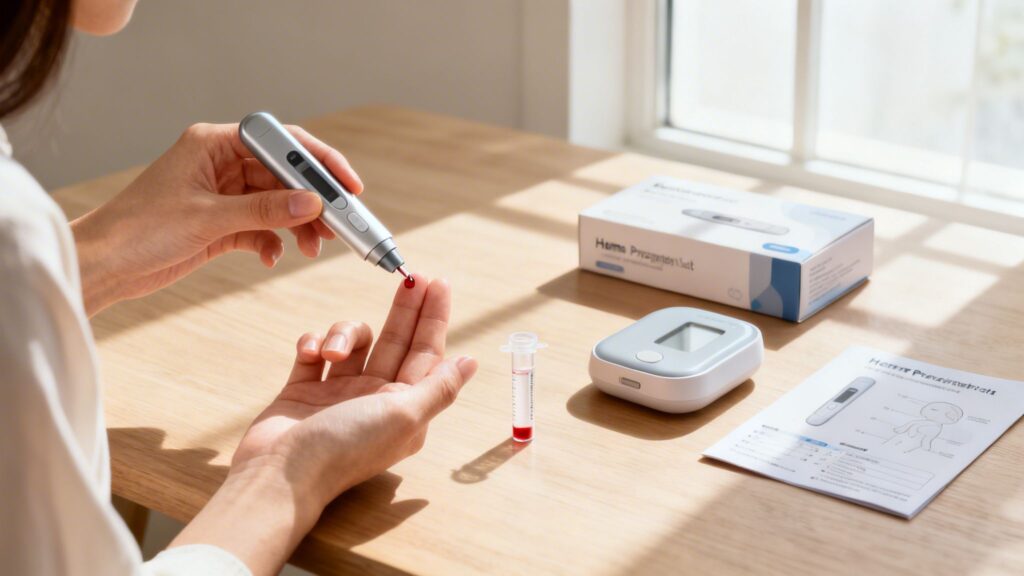
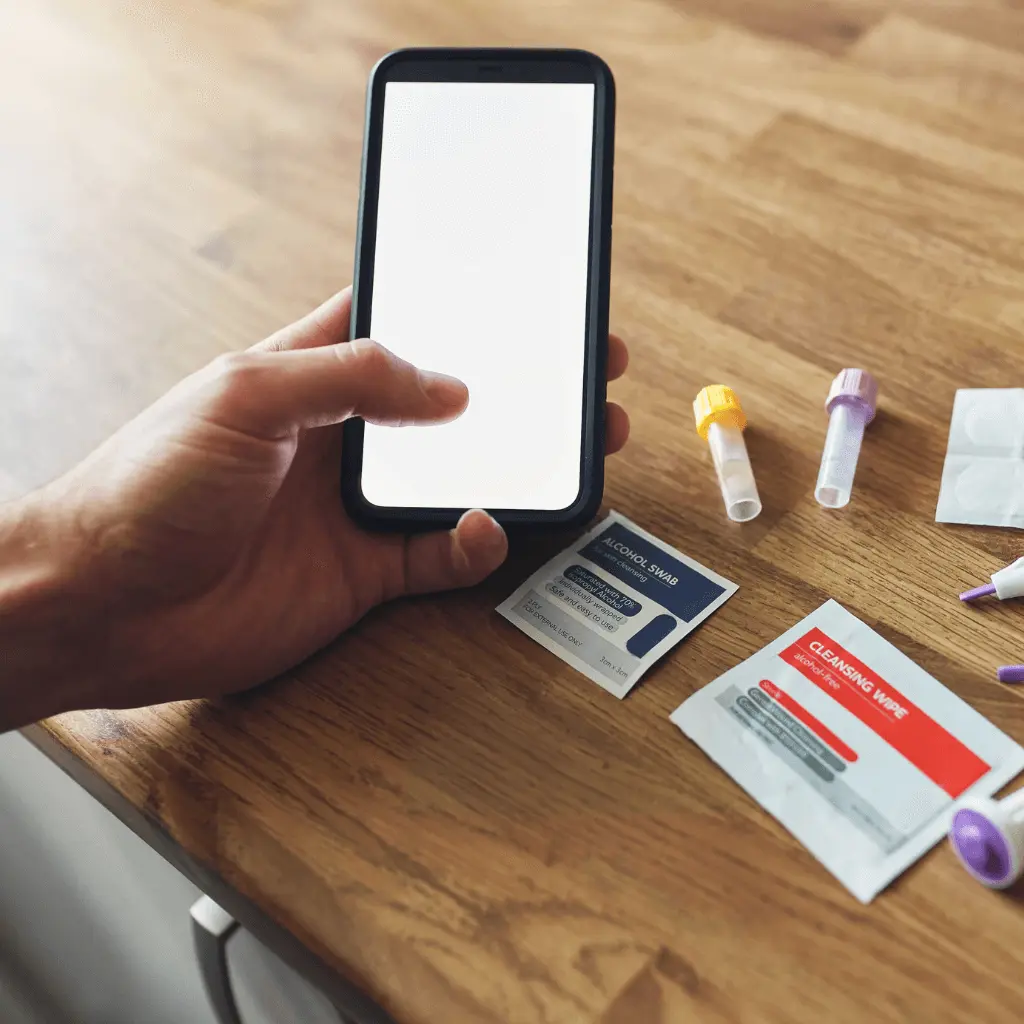
With a provider like Repose Healthcare, you handle the entire process from home. You order the test online, collect your sample with clear instructions, and return it to our certified lab using the prepaid packaging.
This gives you control over your schedule, helping you meet tight testing windows without the hassle of appointments. Whether you need a highly accurate COVID-19 PCR Test Kit for a long-haul flight or a certified Antigen Test for a quick European break, ordering the right kit is your first step to a hassle-free trip.

Picking the correct fit to fly covid test can feel confusing, but a simple, methodical approach is all you need to get it right every time.
Your first step should always be the official government advice. The UK’s Foreign, Commonwealth & Development Office (FCDO) website offers up-to-date entry requirements.
But don't stop there. You must also check your airline's specific policy, usually found in their "travel requirements" section online. Airlines sometimes have stricter rules than the destination country to ensure a smooth journey.
Let's imagine a business traveller, David, flying from London to Tokyo for a conference on a Friday evening.
The accuracy of your test is paramount for official travel documents. The UK Government put stringent standards in place as travel rules changed. PCR swab tests demonstrated 99.9% accuracy with correct sampling, while approved Lateral Flow Tests achieved 99.5% accuracy, ensuring both methods were reliable for their approved uses.
Once you know what's required, choosing your test is straightforward. It's crucial to select the kit that matches the requirements you've just verified.
The Polymerase Chain Reaction (PCR) test is the most widely accepted and accurate option for international travel. It’s the go-to choice for countries with the strictest entry rules.
Choose our COVID-19 PCR Test Kit if:
For our business traveller, David, this is the only option that meets Japan’s requirements. Ordering this kit provides complete peace of mind.
An Antigen test, often called a Lateral Flow Test, gives a faster result by detecting viral proteins. It is accepted by some countries, particularly for shorter journeys.
Our COVID-19 Antigen Test Kit is a suitable choice when:
Actionable Insight: If you have any doubt at all, the PCR test remains the safest choice for your fit to fly covid test certificate. The small extra cost is worth it to avoid being denied boarding.
Getting the sample collection right is the single most important part of the at-home testing process. A poor sample is the number one reason for an inconclusive result—the last thing you want when a flight is just around the corner.
This guide provides actionable steps to ensure your fit to fly covid test goes off without a hitch.
The moment your Repose Healthcare kit arrives, your first job is to get online and activate it.
This is a non-negotiable step. Activation links the unique barcode on your sample tube to your personal details. If you skip this, the lab receives an anonymous sample and cannot process it.
Actionable Insight: To avoid this critical error, find the activation instructions and complete the online registration before you even open the swab. This ensures your final fit to fly certificate has the correct, verified information that airlines demand.
The quality of your sample directly impacts the accuracy of your result. A common mistake is being too timid with the swab, which leads to an insufficient sample and an ‘inconclusive’ result.
Follow the instructions in your kit to the letter.
A practical guide to the correct technique:
This combined approach collects the best possible sample, giving the lab everything it needs for a clear result. To see this in action, learn more about how our at-home testing works.
Once the sample is collected, place the swab tip-down into the collection tube and snap the end off at the marked breakpoint. Screw the lid on tightly to prevent leaks. Place the sealed tube into the provided biohazard bag and seal it. Finally, put this bag into the prepaid postage box.
Actionable Insight: Before sealing the box, do one last check—did you definitely activate your kit online? This is your final chance to make sure that barcode is linked to your details. Forgetting to activate is a surefire way to cause a delay.
When you post your sample is just as important as how you collect it. To avoid delays, you need to be strategic.
Royal Mail priority postboxes have specific collection times, often earlier on weekends. Posting your sample five minutes after collection means it sits there for an extra 24 hours.
Actionable Insight: For the fastest turnaround, take and post your sample on a weekday morning. Check the collection times on your local priority postbox beforehand. By lining up your drop-off with Royal Mail's schedule, you can easily shave a full day off the transit time, giving the lab more time to process your sample and get your fit to fly covid test certificate back to you without any last-minute panic.
When you need a fit to fly COVID test, timing is everything. Get it wrong by a few hours, and you could be denied boarding. Nailing the process, from ordering your kit to getting your digital certificate, is the secret to a calm departure.
You must factor in Royal Mail's delivery times to get the sample back to our lab, plus our lab's processing window. This whole sequence has to fit inside the time limit set by your travel provider.
Let's use a real-world example. Imagine you're flying on a Saturday at 4 PM, and your destination requires a negative PCR test from a sample taken within 72 hours of departure.
This means the earliest you can take your sample is Wednesday at 4 PM. To ensure a smooth process, here’s a schedule that builds in a sensible buffer.
| Day | Action to Take | Reasoning |
|---|---|---|
| Monday Morning | Order your COVID-19 PCR Test Kit. | This gives the kit plenty of time to arrive without stress. |
| Wednesday Morning | Take your swab sample first thing. | This is well inside the 72-hour window and lines up with Royal Mail's morning collections. |
| Wednesday (before noon) | Post your sample in a Royal Mail priority postbox. | Posting before the final collection ensures it starts its journey to the lab that same day. |
| Thursday/Friday | Your sample arrives at our UKAS-accredited lab for processing. | Lab processing typically takes 1-3 working days from when the sample is received. |
| Friday/Saturday Morning | Receive an email that your result is ready. | You can now log into our secure portal to download your official Fit to Fly certificate. |
Actionable Insight: Building in this buffer is the single best thing you can do to lower your pre-travel anxiety. It accounts for potential postal delays and gives the lab a comfortable amount of time to process your sample.
The at-home test journey is designed to be straightforward.

This process puts you in full control of your own testing schedule.
The moment our lab finalises your result, you'll receive an email directing you to our secure online portal to download your official certificate.
This Repose Healthcare Fit to Fly certificate is a formal travel document. It clearly lays out all the details airline staff and border officials need to see:
Actionable Insight: Always download the certificate to your phone and print a physical copy. A paper backup can be a lifesaver if your phone battery dies or you can't get an internet connection at the airport.
While your COVID test is a critical part of a smooth trip, don't forget other requirements, like navigating Schengen Visa Rules Planning. A well-prepared traveller covers all their bases.
By following this timeline, you can walk up to that check-in desk with confidence, knowing your fit to fly COVID test is one less thing to worry about.
Even with the best plans, hiccups can happen. A delayed kit or an unclear result can feel stressful, but there’s almost always a straightforward fix. This is your contingency plan, designed to give you clear, practical steps for tackling common issues with your fit to fly covid test.
You’ve ordered your kit in good time, but it hasn’t arrived. While uncommon, postal delays happen. The moment you think your kit is late, it’s time to act.
Actionable Steps:
An ‘inconclusive’ result doesn’t mean you have COVID-19. It simply means the lab couldn’t get a clear reading, often due to a poor swab technique where not enough cellular material was collected.
If this happens, you will need to do another test.
Our Commitment to You: If your result is inconclusive, please contact our support team straight away. We will work with you to resolve it, which may include sending a new COVID-19 PCR Test Kit so you can provide a fresh sample.
Actionable Insight: To avoid this, be thorough when swabbing your throat and both nostrils. A good quality sample is the foundation of a clear result.
It’s easy to make a small mistake. Maybe you accidentally touched the swab tip on a table or dropped it. If you think the swab is compromised in any way, do not use it. A contaminated sample will almost certainly lead to an invalid result, wasting precious time.
Actionable Steps:
The UK's testing infrastructure has become incredibly resilient. For instance, in a single week in November 2020, national testing capacity hit nearly 4.5 million tests, helping build the reliable lab networks we use today. You can read more about this impressive expansion and how it created a robust system. This means that even when things go wrong, there are procedures to fix them.
It's normal to have questions when sorting out your fit to fly covid test. Here are clear, straight-to-the-point answers to the most common queries we receive.
Think of it as precision versus speed. A PCR test is a highly sensitive lab analysis that detects the virus's genetic material, which is why countries with strict rules insist on one. An Antigen (Lateral Flow) test is faster but looks for viral proteins and is generally less sensitive.
Actionable Insight: Your destination's rules are all that matter. If they accept either, our certified Antigen Test is a quick, affordable option. If they demand the highest accuracy, or if you want to eliminate any risk of rejection, our COVID-19 PCR Test Kit is the correct choice.
The testing window—say, 72 hours—is almost always counted backwards from your flight's scheduled departure time.
Practical Example: If you have a 6 PM flight on a Friday with a 72-hour rule, your sample must be taken no earlier than 6 PM on the Tuesday before.
Actionable Insight: For a Friday flight, our advice is to take and post your sample on Monday or Tuesday. This builds in a comfortable buffer for postal and lab processing times, preventing any last-minute panic.
A positive result means you are not 'fit to fly' and must cancel your travel plans. Your first priority is to follow current public health advice on self-isolation.
Actionable Steps:
Yes, absolutely—as long as you use a reputable, accredited provider. Certificates issued by Repose Healthcare come from a UKAS-accredited laboratory and are designed to meet international travel standards.
Every certificate clearly shows:
This ensures your document is valid and recognised. For more answers, explore our full frequently asked questions page.
Ready to travel with confidence? Repose Healthcare provides the reliable, at-home fit to fly covid test kits you need to meet your travel requirements with ease. Order your UKAS-accredited PCR or certified Antigen test today and get the official certificate you need for a stress-free journey.