With Type 2 diabetes and pre-diabetes becoming more common, popping into a chemist for a diabetes check is a fast, convenient first step toward understanding your health. Think of it as a quick 'health MOT' for your blood sugar, giving you a snapshot of your risk without the long wait for a GP appointment. This guide will give you actionable insights on what to expect, what your results mean, and what to do next.

Navigating the healthcare system can sometimes feel sluggish, especially when you’ve got a nagging concern about your health. Long waits for GP appointments can delay getting crucial answers, but your local chemist offers a genuinely accessible alternative for an initial screening.
Going down this route puts you in the driver's seat. A quick pharmacy test gives you immediate insight, helping you spot potential issues early on. For example, if you've been feeling unusually tired and thirsty for weeks, a quick check can give you an immediate indicator, prompting you to see your GP sooner. While it’s not a substitute for a formal diagnosis, it’s an essential first step in taking control of your health.
The sheer scale of diabetes in the UK makes accessible screening more vital than ever. Projections show that by 2025, over 20 million people in the UK will either have Type 2 diabetes or be at high risk of developing it. This breaks down to around 5.9 million diagnosed cases and a staggering 14.5 million with pre-diabetes—affecting 1 in 3 adults in England alone.
Worryingly, a critical gap persists: an estimated 30% of Type 2 diabetes cases in adults went undiagnosed between 2013 and 2019. This is where a simple check can make a real difference.
Actionable Insight: A simple diabetes check at a chemist bridges this gap, providing a fast and reliable way to assess your risk. The result empowers you to either relax or take the next concrete step: booking a GP appointment for confirmation.
Beyond the local pharmacy, modern solutions are offering even more convenience and privacy. For those who want lab-grade accuracy without leaving home, alternatives like at-home test kits are changing the game. These kits provide another powerful tool for keeping tabs on your health.
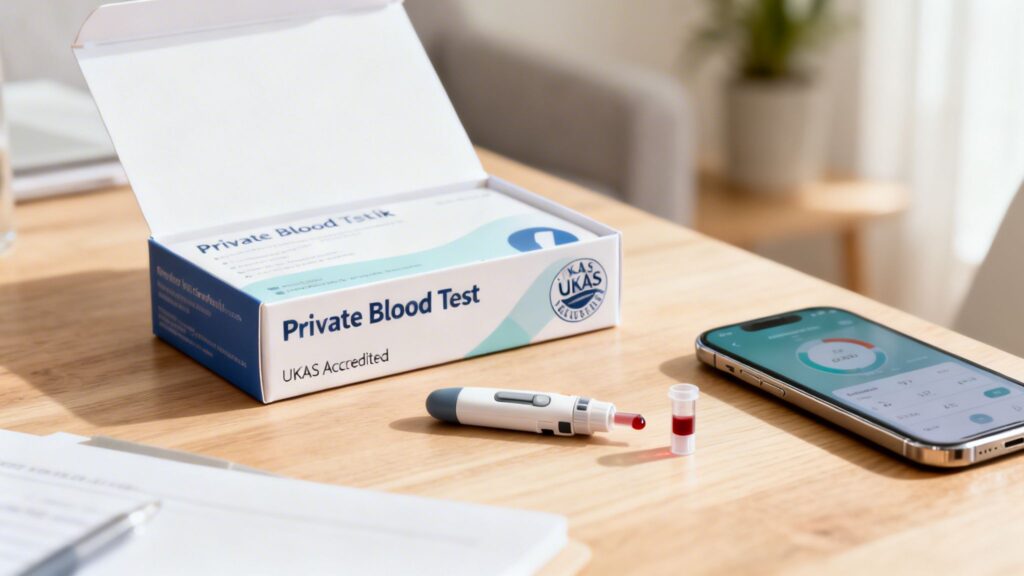
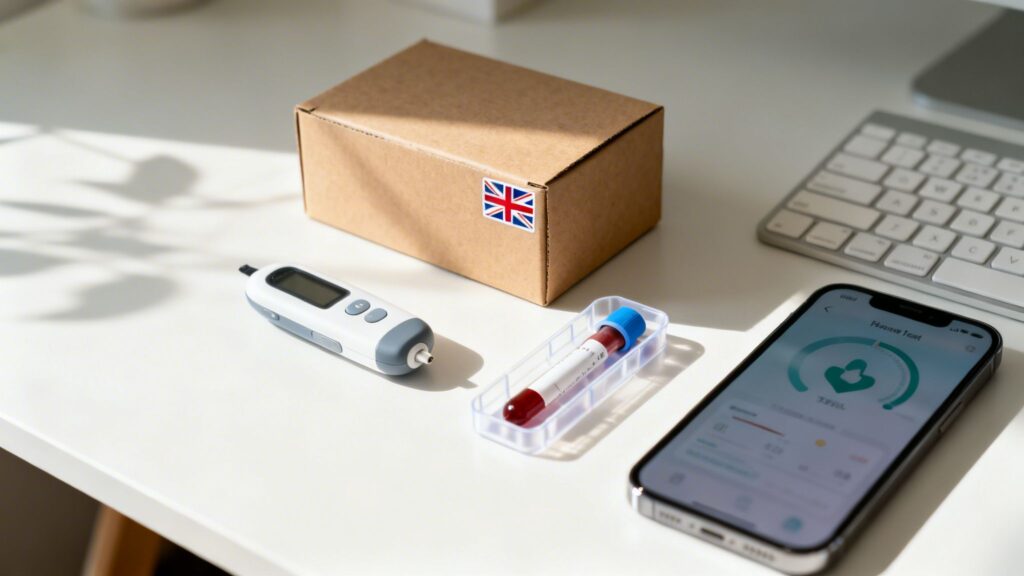
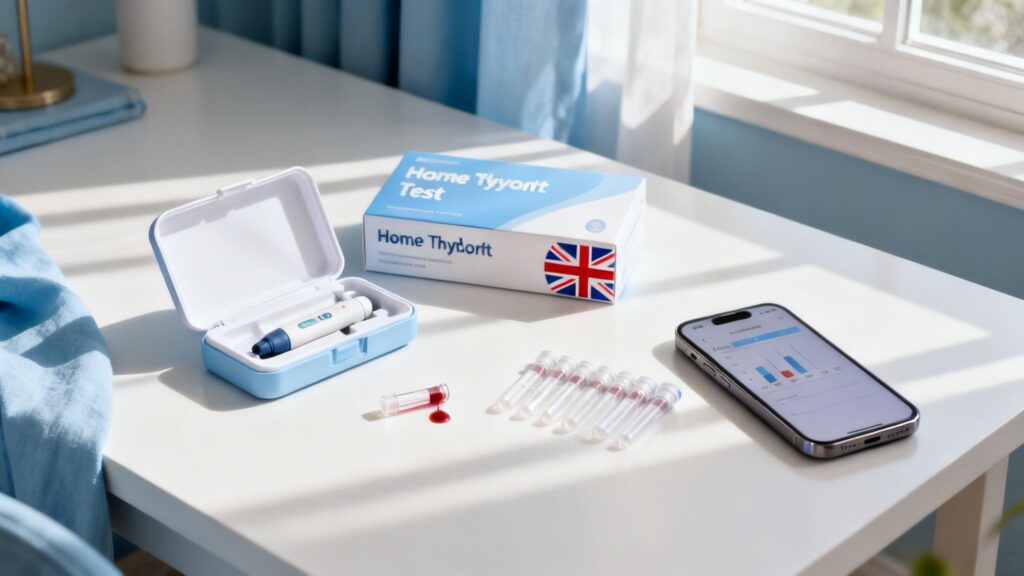
Exploring options for private health screening in the UK can give you a much more complete picture of your well-being. For instance, the at-home HbA1c test from Repose Healthcare puts you in full control of your health monitoring journey, delivering lab-certified results directly to you.
Thinking about getting a diabetes check at a chemist? It's a surprisingly simple and private process. Most pharmacies ask that you book an appointment, which you can usually do online or over the phone. This ensures you get a dedicated time slot for a private chat, away from the busy main counter.
This confidential consultation starts with the pharmacist asking a few practical questions about your lifestyle (e.g., "How active are you during the week?"), any family history of diabetes, and symptoms you might be having (e.g., "Have you noticed you're thirstier than usual?"). This quick chat helps them get a sense of your personal risk and recommend the most suitable test.
Your pharmacy will generally offer two main types of diabetes checks. Each one gives you a different window into your blood sugar health.
For instance, a simple blood glucose test taken right after a slice of cake would naturally show a temporary spike. An HbA1c test, on the other hand, smooths out these daily ups and downs to reveal your typical blood sugar behaviour over a longer period. That's why it's such a powerful screening tool for an accurate overview.
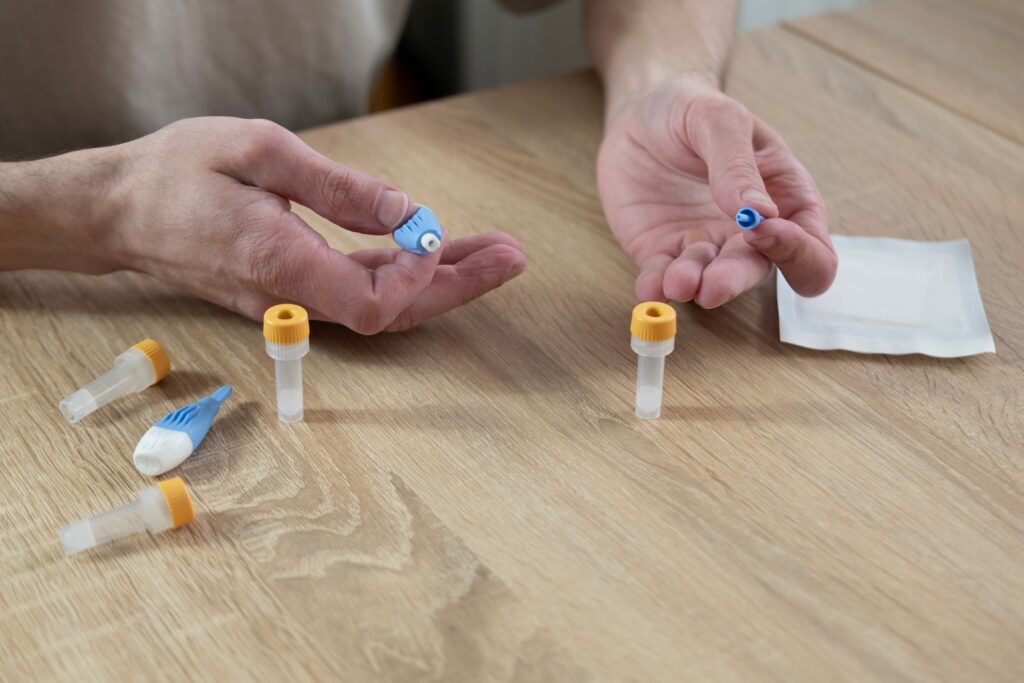
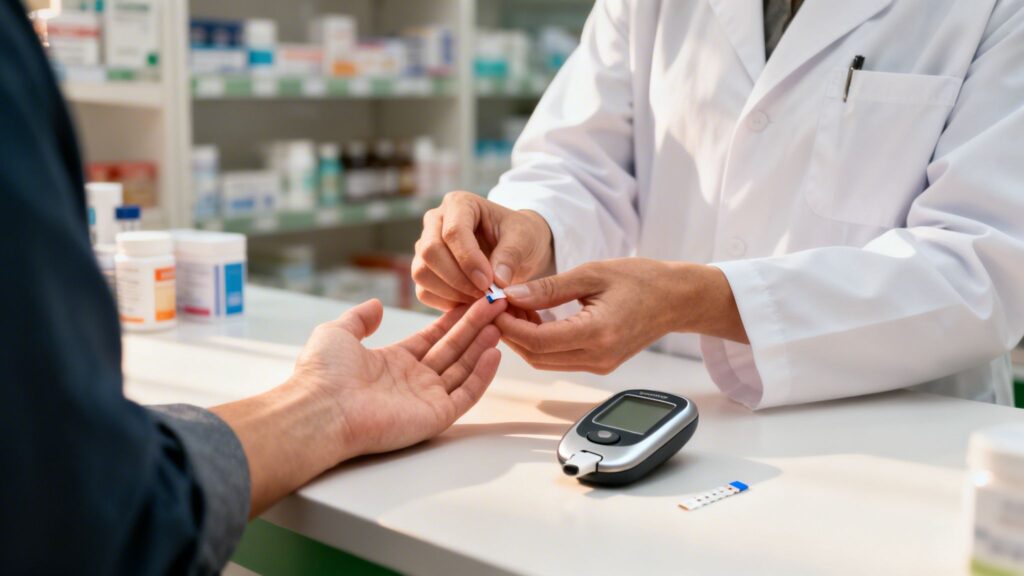
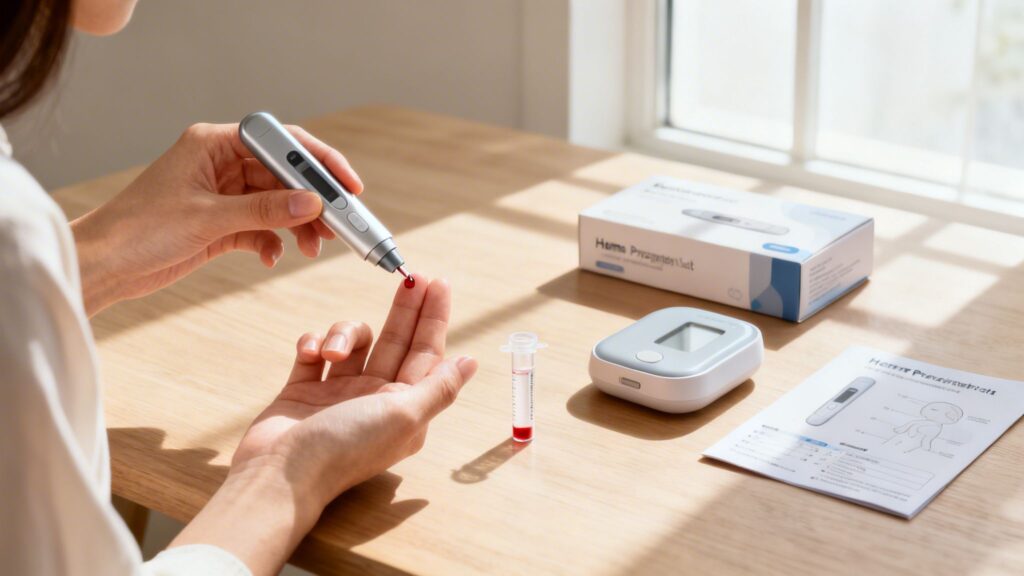
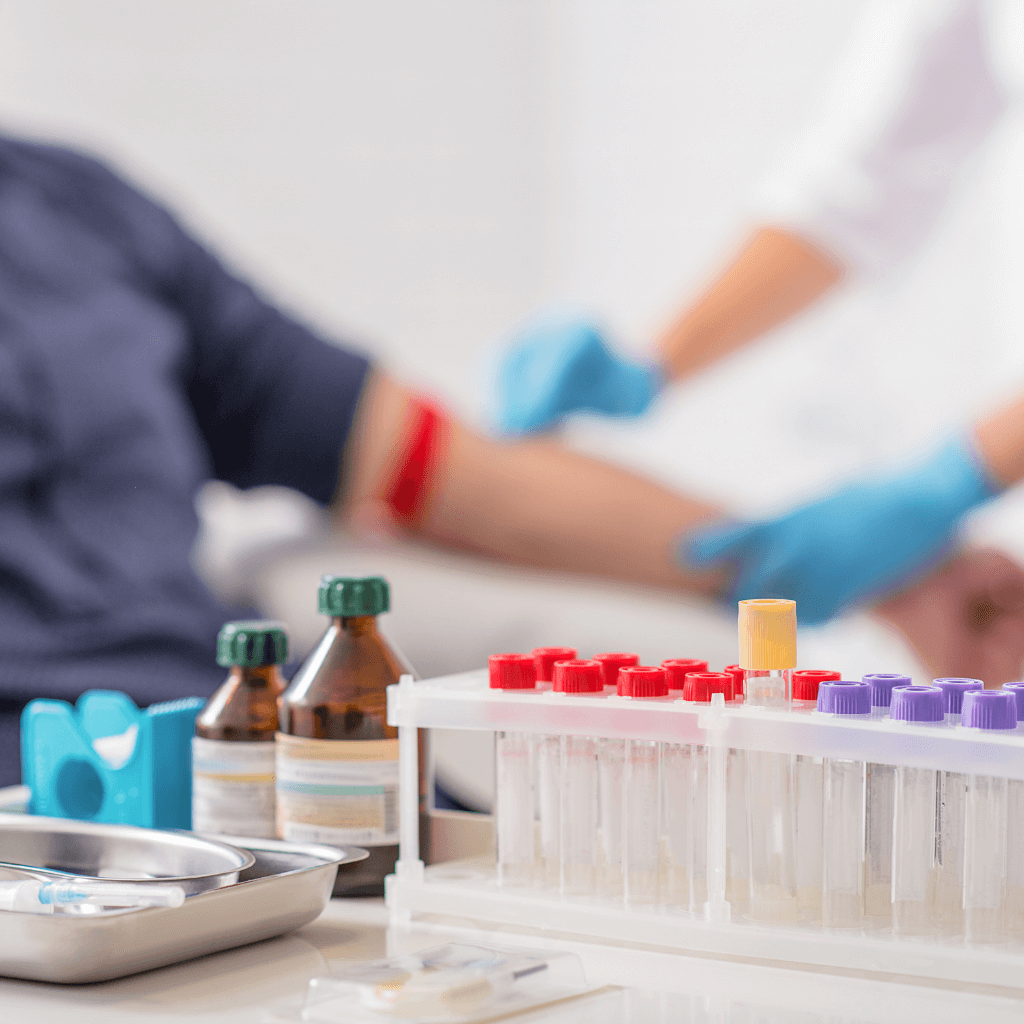
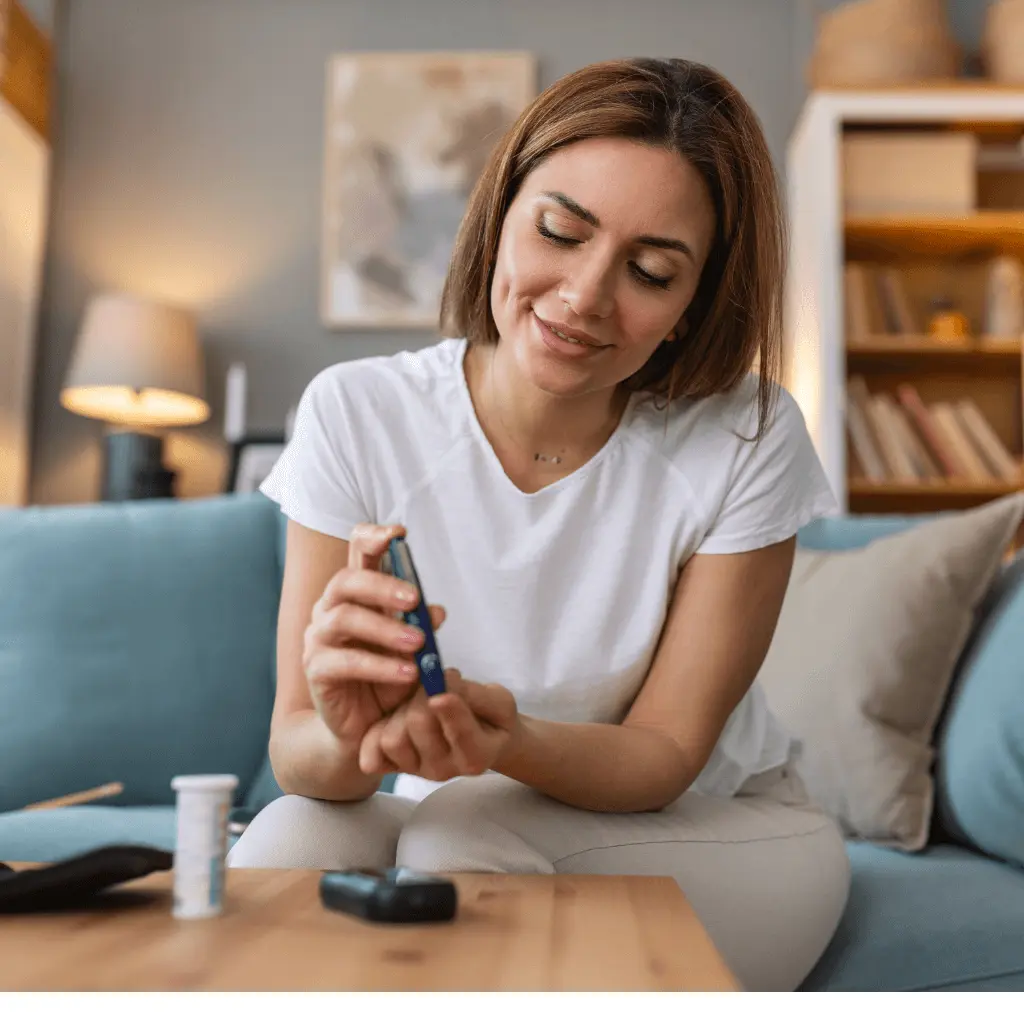
Once you and the pharmacist have settled on a test, the process itself is over in a flash. They’ll use a tiny, sterile lancet to prick the side of your fingertip and collect a single drop of blood. It’s a very minor sting, a bit like a pinprick, and it’s done in a second.
Actionable Insight: The whole experience, from the first questions to seeing your results, is designed to be quick and reassuring. A finger-prick glucose test gives you an answer in seconds, while a point-of-care HbA1c test typically delivers a result within just a few minutes.
The pharmacist will then immediately explain what your numbers mean. This instant feedback is one of the biggest advantages of getting a check at your local chemist, as it gives you clear, actionable information about your health on the spot. If you’re looking for a deeper, lab-certified analysis without having to leave your home, you might consider an at-home HbA1c test from Repose Healthcare, which offers the same long-term view with clinical precision.
Getting a number from your diabetes check at the chemist is one thing, but knowing what it means for your health is what truly matters. Your results will fall into a few key categories, giving you a clear idea of what to do next. The two main tests you might have—a blood glucose snapshot and a longer-term HbA1c average—each have their own specific ranges.
It's really important to see a pharmacy test as a powerful screening tool, not a final diagnosis. Think of it as an early warning signal. An elevated reading is a crucial prompt to see your GP for a formal, lab-confirmed diagnosis; it isn't the final word on its own.
The infographic below offers a simple way to visualise the difference between the immediate 'snapshot' of a glucose test and the '3-month movie' view an HbA1c test provides.

As you can see, the HbA1c test gives a much more stable picture of your overall blood sugar control by smoothing out the daily peaks and troughs.
So, you've got your results. What do the numbers actually mean? This table breaks down the ranges for both HbA1c and a simple finger-prick glucose test, so you can see where your numbers fit and what your next step should be.
| Test Type | Normal Range | Pre-diabetes Range | Potential Diabetes Range | Actionable Insight |
|---|---|---|---|---|
| HbA1c (3-month average) | Below 42 mmol/mol (6.0%) | 42–47 mmol/mol (6.0%–6.4%) | 48 mmol/mol (6.5%) or higher | A result in the pre-diabetes or diabetes range is a clear signal to book a GP appointment for confirmation. |
| Finger-Prick Glucose (snapshot) | Below 7.8 mmol/L (non-fasting) | 7.8–11.0 mmol/L (non-fasting) | 11.1 mmol/L or higher (non-fasting) | A single high reading requires a follow-up. Your action is to book a GP visit or take a more stable HbA1c test. |
Remember, these numbers are a guide. They give you the information needed to have a productive conversation with your doctor about your health.
If your pharmacy test results point towards elevated blood sugar, learning about how to balance blood sugar levels naturally can be a really helpful starting point while you wait to see your GP.
Actionable Insight: Receiving a result in the at-risk or high range isn't a reason to panic. Instead, see it as a clear signal to take action. For example, if your HbA1c is 45 mmol/mol, your immediate action is to call your GP and say, "I've had a pharmacy check showing I'm in the pre-diabetes range and I need to book a follow-up blood test."
For those who prefer the gold-standard accuracy of a laboratory test without leaving home, an at-home HbA1c test from Repose Healthcare uses a fully accredited laboratory. This gives you a clear and highly reliable picture of your long-term blood sugar health from the comfort of your own home.
A diabetes check at your local chemist is a brilliant first step, but it’s vital to understand what it is—and what it isn't. Think of it as a smoke alarm: it’s designed to alert you to a potential problem. Your GP is the firefighter who needs to come in, confirm what's happening, and map out a proper plan.
If your test shows elevated blood sugar or HbA1c levels, your next move is simple and non-negotiable: book an appointment with your GP. An at-risk or high reading is your cue to get a formal, lab-based blood test to confirm the result and get a definitive diagnosis.
What if your result is normal? You should still see your GP if you have several risk factors for diabetes or you're experiencing those classic symptoms—like persistent thirst, unexplained fatigue, or needing to wee more often. Your GP can look at your overall health picture and decide what to do next.
Actionable Insight: Only a GP can provide a definitive diagnosis and unlock the full spectrum of NHS care. This includes referrals to lifestyle programmes and prescriptions for necessary medication. Think of the pharmacy check as the key that unlocks the door to your GP's office.
This visit with your doctor is your entry point to a structured care pathway. If your chemist's check flags a potential issue, your GP will talk you through different management strategies. This might start with lifestyle changes, or it could involve medication. For some, the conversation might even progress to advanced diabetes management options.
Following up with your GP after a screening is a crucial step for your long-term health. The National Diabetes Audit makes it clear that receiving all recommended care processes—which start with checks like HbA1c—is critical for preventing serious complications. Unfortunately, there are still significant gaps in care, which makes your follow-up appointment more important than ever. You can learn more about this and the importance of structured care in the latest statistical commentary on diabetes profiles.

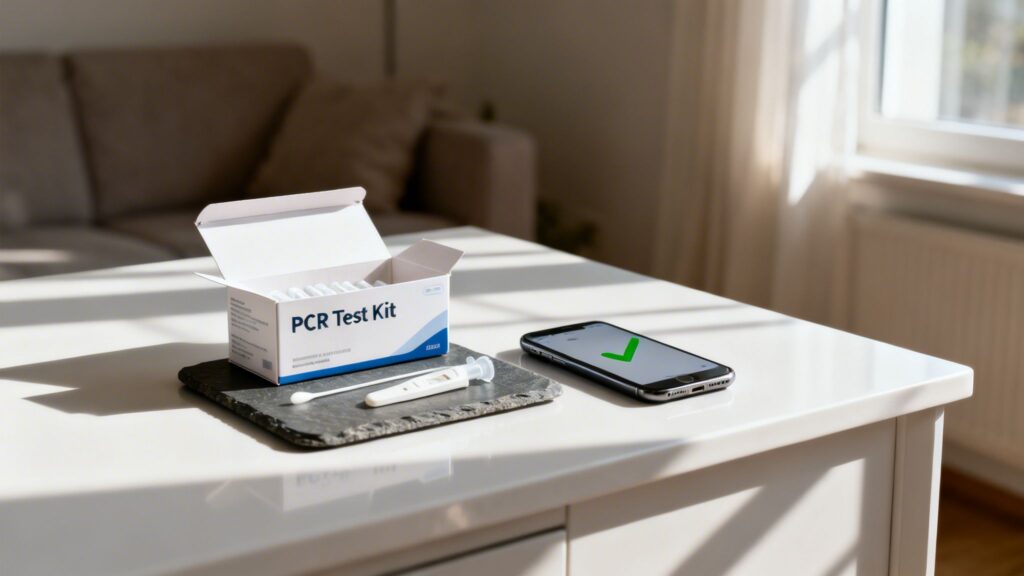
While a diabetes check at a chemist offers fantastic convenience, what if you want the gold-standard accuracy of a laboratory without having to leave home? For those with busy schedules, a desire for total privacy, or the need for precise, trackable results, at-home testing presents a powerful alternative.
This is where services like Repose Healthcare step in, bridging the gap between a quick pharmacy screening and a full GP visit. The Repose Healthcare At-Home HbA1c Test delivers the same level of analytical rigour used by the NHS, all from the comfort of your living room. It’s an empowering way to take a proactive role in managing your metabolic health on your own terms.
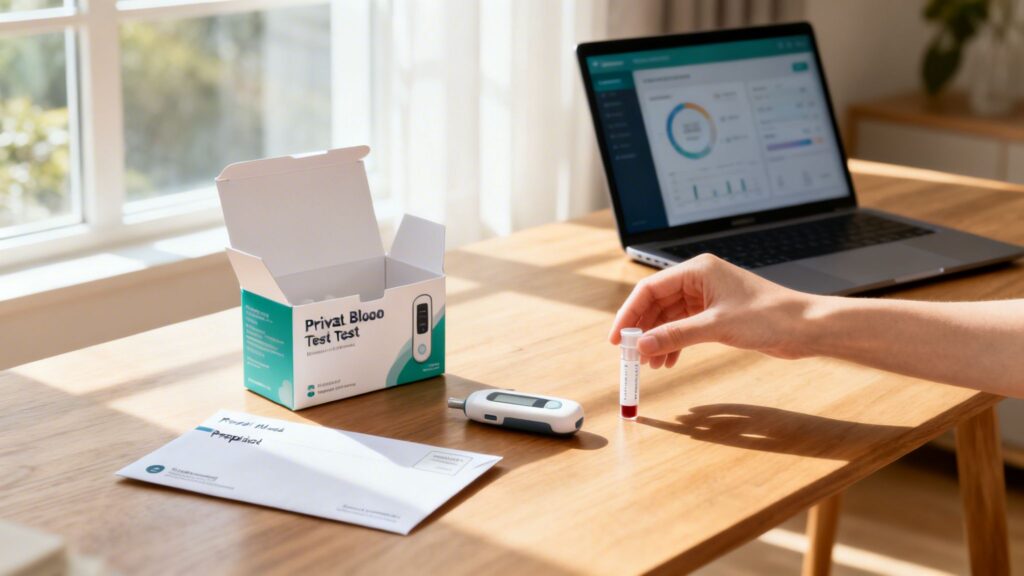
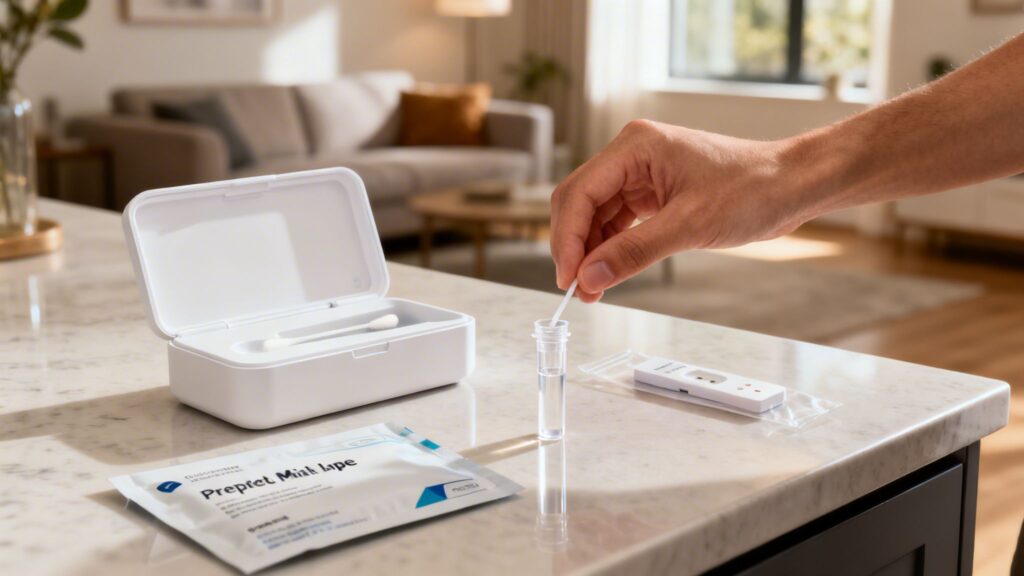
The whole process is designed to be as straightforward as possible, putting you in complete control. There’s no need to book an appointment or travel to a clinic.
Once your sample arrives, it’s analysed in a fully UK-accredited laboratory—the same standard of facility your GP would use. This ensures your results are not just a screening but a clinically robust measurement.
Actionable Insight: This approach combines the convenience of a pharmacy visit with the precision of a professional laboratory. For example, you can take the test on a Sunday evening and have a lab-certified result by Wednesday, ready to discuss with your GP, without ever leaving home.
Your results are delivered securely to a personal online dashboard, usually within just a few working days. This digital access lets you see your exact HbA1c levels and track how they change over time, giving you a clear picture of your long-term health.
If you're ready to take this next step, you can order the Repose Healthcare At-Home HbA1c Test today and see how easy it is to get started. It’s a reliable and modern way to monitor your well-being with confidence.
To wrap things up, let's tackle some of the most common questions people have about getting a diabetes check at a local chemist. We'll get into the practical side of things to make sure you feel clued-up and ready to take the next step for your health.
In 2026, you can generally expect to pay somewhere between £15 and £45 for a diabetes check at a pharmacy. The final price tag really depends on which test you go for. A straightforward, on-the-spot finger-prick glucose test will usually be on the cheaper end of that scale.
If you opt for the more comprehensive point-of-care HbA1c test, which gives a snapshot of your average blood sugar over the last three months, you’ll be looking at the higher end. It’s always a good idea to ring your local pharmacy first to ask about their specific prices, as these services aren't typically covered by the NHS when done in a chemist.
Pharmacy tests are a brilliant and highly reliable way to screen for potential issues. Think of them as a crucial early warning system. However, the 'gold standard' for a definitive diagnosis is still a laboratory-based blood test arranged through your GP.
Essentially, the pharmacy check is the initial alert that tells you it’s time for a more thorough investigation.
Actionable Insight: If a pharmacy test flags a concern, your GP will always use a lab test to confirm the results. At-home kits, like the at-home HbA1c test from Repose Healthcare, bridge this gap by using the very same UK-accredited labs as the NHS, giving you gold-standard accuracy from a convenient finger-prick sample.
Getting a check is a really smart move for anyone with known risk factors for Type 2 diabetes. You should seriously think about it if you:
It's also highly recommended if you're experiencing any of the classic symptoms—like being unusually tired, constantly thirsty, or needing to wee more often. And of course, it’s a great option for anyone who simply wants to be proactive about their health. Your action? If you tick one or more of these boxes, book a check today.
For a convenient, lab-accurate, and private way to monitor your long-term blood sugar levels from home, consider the Repose Healthcare At-Home HbA1c Test. Take control of your health journey by visiting https://reposehealthcare.co.uk.