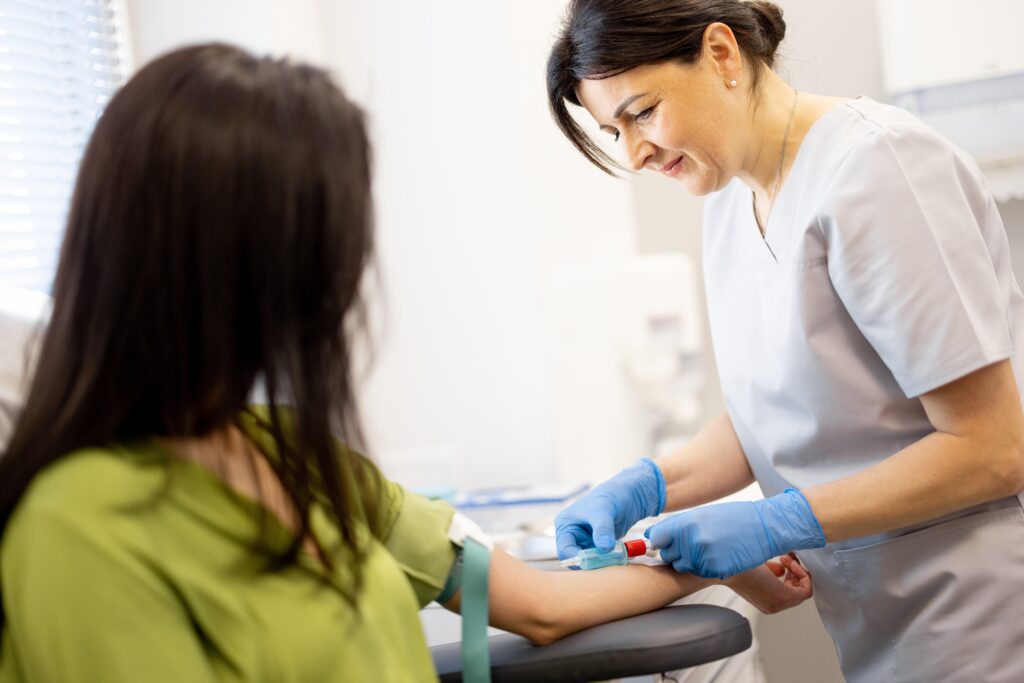
A blood test for ovulation is the only way to get definitive proof that your body has actually released an egg, making it an essential tool for understanding your fertility. While other methods predict when ovulation might happen, a progesterone blood test confirms it. This confirmation is the clear, biological evidence you need to properly assess your cycle and take actionable next steps.
Trying to confirm ovulation can feel like trying to solve a complicated puzzle. You might be using tracking apps, taking your temperature every morning, or peering at urine strips, but these methods only ever give you clues about what might be happening. A blood test, on the other hand, gives you a straight answer.
Think of your monthly cycle as a hormonal orchestra. Oestradiol rises to build the uterine lining, Luteinising Hormone (LH) surges to trigger the egg's release, and progesterone rises after the event to get everything ready for a potential pregnancy. While other tracking methods can hear the orchestra warming up, a progesterone blood test confirms the main performance actually took place.
Most popular ovulation tracking methods are predictive. For instance, ovulation predictor kits (OPKs) work by detecting the LH surge that happens 24-36 hours before ovulation is supposed to occur. This is great for timing intercourse, but an LH surge doesn't always guarantee an egg will be released. A blood test for ovulation cuts right through that uncertainty.
Actionable Insight: By measuring the level of progesterone in your blood about seven days after you think you ovulated, you get direct evidence. A significant rise in progesterone is the biological signal that ovulation has occurred. This is your actionable proof—if your progesterone is high, you know your body is ovulating. If it's low, you have a clear starting point for a conversation with your GP.
This kind of test is particularly valuable in a few key situations:
Ultimately, understanding this process is a key step in taking charge of your reproductive health. Our at-home Progesterone Blood Test is designed to give you that clear answer, conveniently and accurately. You can learn more about how at-home testing works by reading our guide on the accuracy of at-home blood tests.
To figure out if you've actually ovulated, a blood test is the most direct way to get answers. It works by measuring specific chemical messengers, known as hormones, that drive your menstrual cycle. Think of them as the lead actors in your monthly fertility story.
While several hormones are involved, a few key players take centre stage when it comes to confirming ovulation. Getting a handle on what these hormones do and when they appear is crucial for making sense of your results. A blood test gives you precise, biological data—a clear snapshot of exactly where you are in your cycle, which is far more reliable than just predicting.
Progesterone is the undeniable star of the show for confirming ovulation. After an egg is released, the ovarian follicle transforms into a structure called the corpus luteum, which then starts pumping out progesterone. Its main job? To prepare the lining of your uterus for a potential pregnancy.
A significant rise in progesterone is the biological proof that ovulation has happened. Your levels are very low before ovulation, so if they shoot up about a week after you think you ovulated, it’s a clear sign an egg was successfully released.
Actionable Insight: The post-ovulation surge is precisely what a blood test for ovulation is designed to catch. If your results from our Progesterone Test show a high level, you have confirmed ovulation. If the level is low, you now have a specific data point to discuss with your doctor, such as "My progesterone was X nmol/L on day 23 of my cycle."
Luteinising Hormone, or LH, is the hormone that acts as the direct trigger for ovulation. For the first half of your cycle, its levels are pretty low and stable. Then, in a dramatic event known as the 'LH surge', its concentration in your blood skyrockets.
This surge is the signal that tells the mature follicle in your ovary to rupture and release an egg, which typically happens 24 to 36 hours later. While urine-based ovulation predictor kits (OPKs) are designed to detect this surge, a blood test provides a more precise, quantitative measurement of the LH peak. This can be especially helpful if you have irregular cycles.
Oestradiol, a type of oestrogen, is the hormone that sets the stage for ovulation. As an egg follicle matures in your ovary, it produces more and more oestradiol. This hormone has two primary jobs:
By measuring oestradiol alongside LH, you get a much more detailed picture of your follicular development and how well your body is gearing up for ovulation.
For a comprehensive overview of all these key hormones, it's worth taking a look at a broader panel. This table summarises the main players involved.
| Hormone | Role in the Menstrual Cycle | When It Peaks | What High Levels Indicate |
|---|---|---|---|
| Progesterone | Prepares the uterine lining for pregnancy. | Mid-luteal phase (approx. 7 days post-ovulation). | Confirms that ovulation has occurred. |
| Luteinising Hormone (LH) | Triggers the release of an egg from the ovary. | Just before ovulation (the "LH surge"). | Predicts that ovulation is about to happen within 24-36 hours. |
| Oestradiol (E2) | Matures the egg follicle and thickens the uterine lining. | Just before the LH surge. | Shows a follicle is mature and the body is preparing for ovulation. |
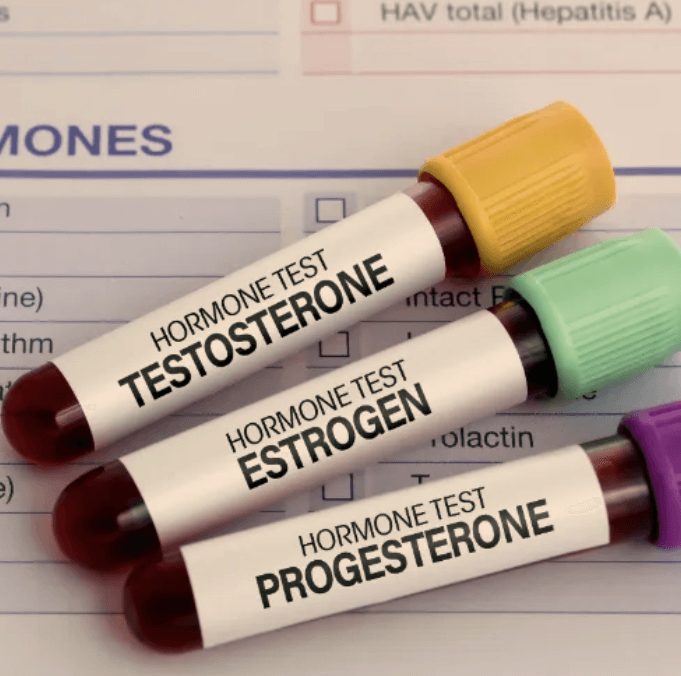
Understanding how these hormones interact gives you the full story of your cycle. Our Female Hormone Test measures progesterone, LH, and oestradiol, giving you that complete picture.
Knowing you need a blood test for ovulation is one thing; knowing exactly when to take it is the real secret to getting a meaningful result. It’s not like timing intercourse around your fertile window. To confirm ovulation with a progesterone test, you need a far more specific approach.
It all comes down to what’s happening in the second half of your cycle, a period known as the luteal phase.
The luteal phase kicks off the day after you ovulate and runs right up until your next period. During this time, the hormone progesterone rises, hits its peak, and then starts to fall. Your mission is to catch this hormone right at its summit, as this gives the clearest possible proof that an egg was released.
For most women, this peak happens around seven days after ovulation.
This is where the classic "day 21" test advice comes from, but it’s based on a textbook 28-day cycle where ovulation lands perfectly on day 14. Let’s be honest, very few people have a cycle that neat and tidy, which is why just testing on day 21 can be completely misleading.
The most accurate way to pin down your test day is to count seven days from when you think you ovulated. You can get a good idea of your ovulation day by using ovulation predictor kits (OPKs), tracking changes in your cervical mucus, or using a cycle-tracking app.
Let's break it down with a few practical examples for different cycle lengths:
Actionable Insight: The golden rule is simple: figure out your likely ovulation day, then add seven days. This simple calculation makes sure you’re testing during the mid-luteal phase when progesterone should be at its absolute highest, giving you the most reliable answer from your Progesterone Blood Test.
This timeline shows you the typical rise and fall of oestradiol, LH, and progesterone across the cycle.
As you can see, progesterone only starts its significant climb after the LH surge and ovulation have occurred. This really drives home why the test absolutely must be timed for the week following these events.
This is where an at-home test kit is a massive advantage. Instead of wrestling with a clinic’s schedule to get an appointment on one specific day, a kit like our Progesterone Blood Test lets you collect your sample on the exact right day for your unique cycle, all from home. It completely removes the stress and logistical headache, ensuring your timing is spot-on for a result you can trust.
Getting your blood test for ovulation results is a big moment, but looking at a report full of numbers and medical terms can feel a bit like trying to read another language. The trick is knowing what to look for, and when it comes to confirming ovulation, progesterone is the star of the show.
Once your sample has been analysed, you'll find your results waiting for you on our secure online dashboard. We don't just throw raw numbers at you; we give you the context you need to see the bigger picture. Your serum progesterone level will be the main focus, which in the UK is measured in nanomoles per litre (nmol/L).
Here’s a straightforward breakdown of what the different levels usually mean, assuming your test was timed correctly (around seven days after you think you ovulated). This is how you turn a number into an actionable insight.
Just remember, these numbers are a guide. The context of your own unique cycle is what really brings them to life. A single result is just a snapshot, and looking at it alongside your cycle history gives you the most complete picture of your fertility.
Our goal is to make sure you feel empowered, not overwhelmed. That’s why every result from our Progesterone Blood Test comes with expert-reviewed comments on your Repose Healthcare dashboard. These notes help translate the clinical data into practical insights you can actually use, explaining what your specific levels mean for you and suggesting what your next steps could be.
For a more detailed walkthrough, you can explore our guide on how to read your results, which explains the common reference ranges for all key hormones. Check out our detailed article to learn more about understanding your female hormone blood test results. This will give you even more confidence as you continue on your fertility journey.
Trying to track ovulation can feel a bit like navigating a maze. With so many options out there, it’s crucial to understand what each tool is actually measuring. While popular methods like ovulation predictor kits (OPKs) have their place, a blood test for ovulation gives you a completely different—and far more definitive—piece of the puzzle.
Many people start their journey with urine-based OPKs, which you can find in any chemist. Their popularity is undeniable; in 2023, the UK ovulation testing kits market was valued at £265 million and is projected to hit £426 million by 2030. This boom shows just how many of us are actively looking for ways to get to grips with our fertility. You can explore more about this growing market on Grand View Research.
This is the single most important difference to grasp: does the test predict ovulation, or does it confirm it? Think of it as a weather forecast versus a report on yesterday's weather. One gives you a heads-up, the other tells you what actually happened.
Ovulation Predictor Kits (OPKs): These handy urine tests detect the surge in Luteinising Hormone (LH) that happens roughly 24-36 hours before your body attempts to release an egg. They are fantastic for timing intercourse, but they can't tell you if ovulation was successful. For example, you could get a positive OPK but not ovulate, which can be misleading if you have PCOS.
Basal Body Temperature (BBT) Charting: This method involves the daily ritual of taking your temperature first thing in the morning. A sustained rise in temperature is a sign that progesterone levels have gone up, which happens after you’ve ovulated. While it does confirm the event, the temperature shift is often tiny and can easily be thrown off by a bad night's sleep or a cold, making it unreliable.
Progesterone Blood Test: This is the gold standard for confirmation. It directly measures the amount of progesterone in your bloodstream. A significant spike in progesterone is the undeniable biological proof that an egg was released. It won't help you predict your fertile window, but it gives you a clear, quantitative "yes" or "no" answer.
So, how do you choose the right method? It really comes down to your personal goals, how regular your cycle is, and whether you need a ballpark estimate or concrete proof. Let's break down the main options side-by-side.
| Method | What It Measures | Pros | Cons | Best For |
|---|---|---|---|---|
| Blood Test | Progesterone Levels: Directly confirms that ovulation has occurred. | Unmatched accuracy for confirmation; provides quantitative data; ideal for irregular cycles. | Requires a blood sample; timed for after ovulation, so not for predicting the fertile window. | Actionable Insight: Confirming ovulation, investigating fertility issues, and getting definitive answers with our Progesterone Blood Test. |
| OPKs | LH Surge: Predicts that ovulation is likely to happen in 24-36 hours. | Convenient and easy to use; excellent for timing intercourse. | Can give false positives (especially with PCOS); doesn't confirm ovulation actually happened. | Actionable Insight: Predicting the fertile window for timing intercourse in regular cycles. |
| BBT Charting | Temperature Shift: Identifies ovulation after it has already occurred due to progesterone's effect. | Very low cost; non-invasive. | Inaccurate if sleep is disturbed; shift can be subtle and hard to interpret; confirms ovulation late. | Actionable Insight: Observing cycle patterns over time on a tight budget. |
Each method has its strengths, but they serve different purposes. It's not about one being "better" than another, but about using the right tool for the job.
Actionable Insight: Use OPKs to predict when you might ovulate and time intercourse. Then, seven days later, use our Progesterone Blood Test to confirm ovulation actually happened. This two-step process gives you the complete picture.
For anyone who needs that certainty, an at-home diagnostic like our Progesterone Blood Test from Repose Healthcare is the perfect solution, bringing clinical accuracy right to your doorstep.
Taking control of your fertility journey should feel straightforward and empowering, not intimidating. That’s exactly why we’ve designed our at-home blood test for ovulation to be a simple, seamless process from start to finish, cutting out the hassle of traditional clinic visits.
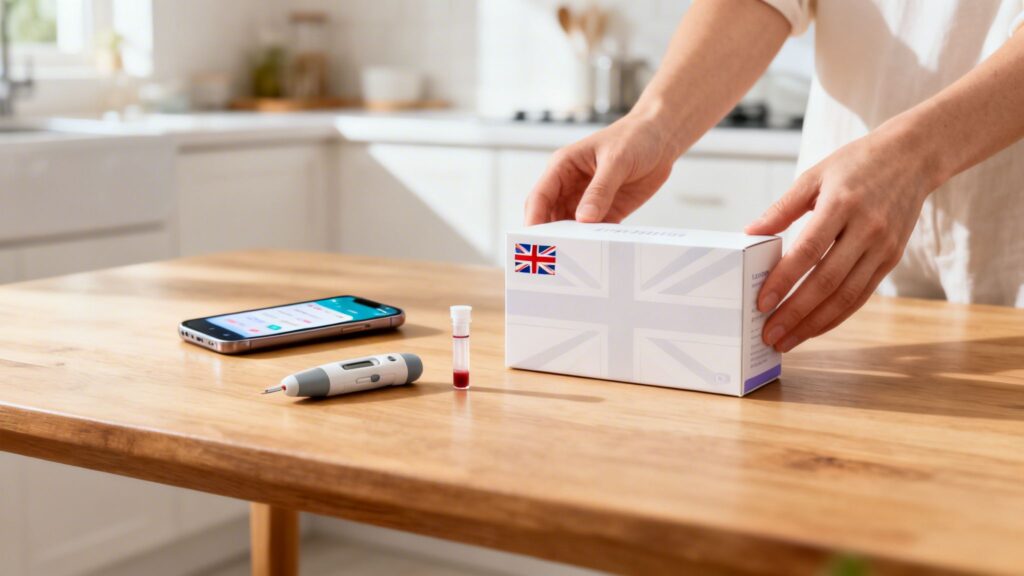
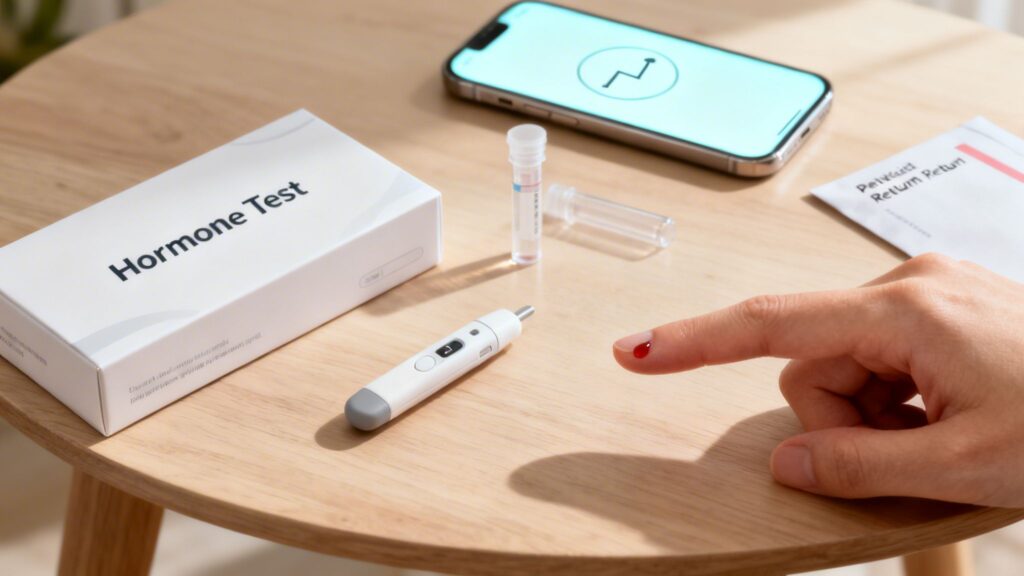
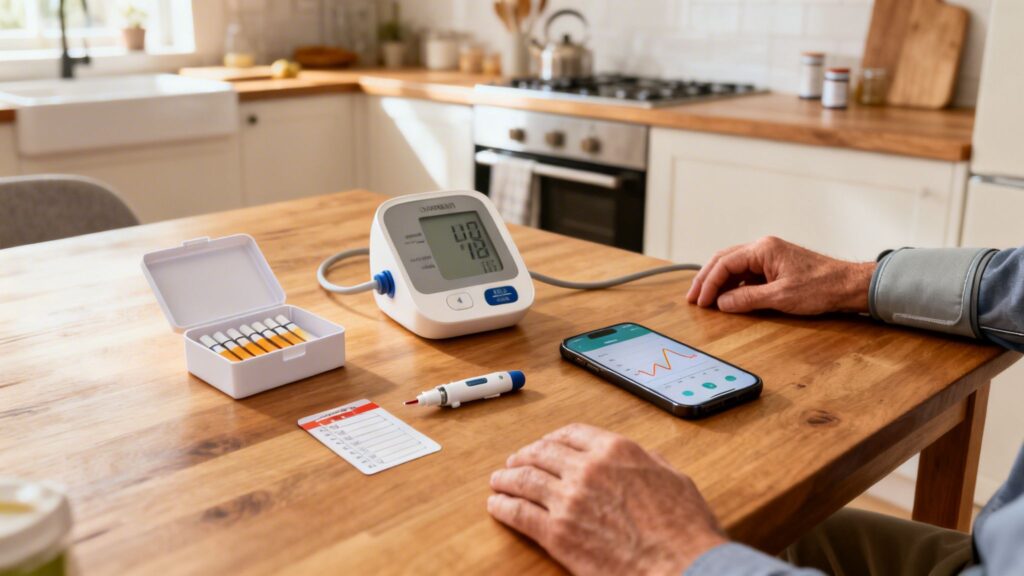
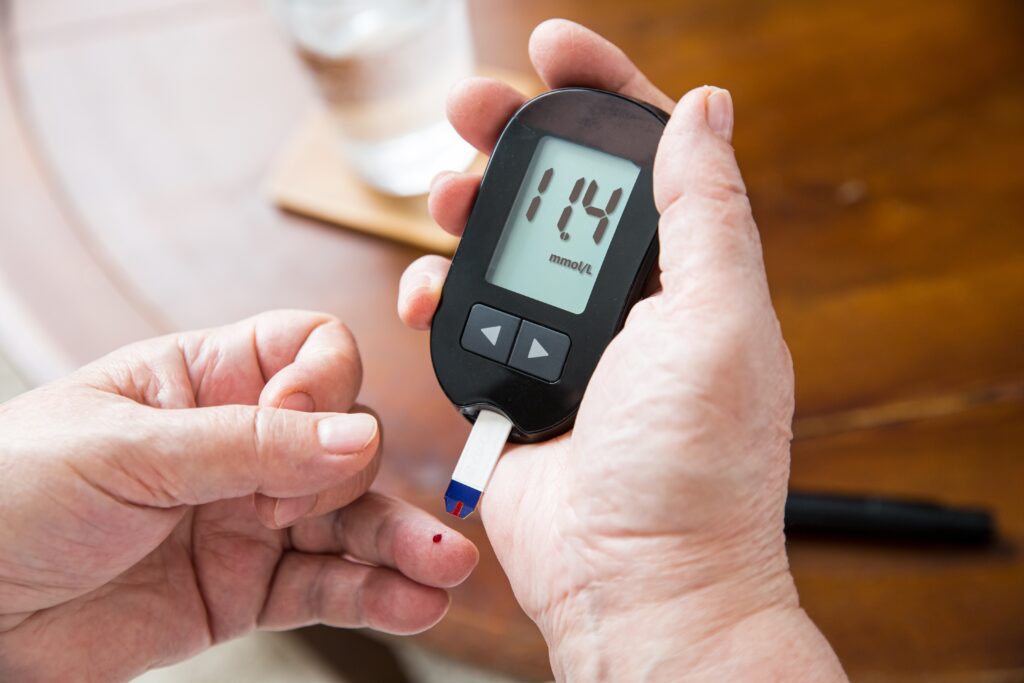
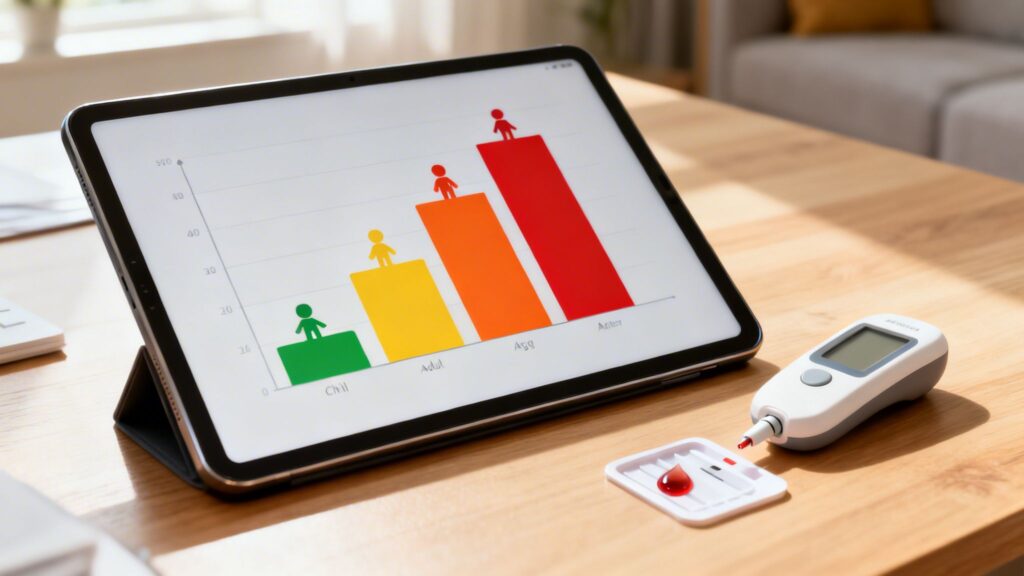
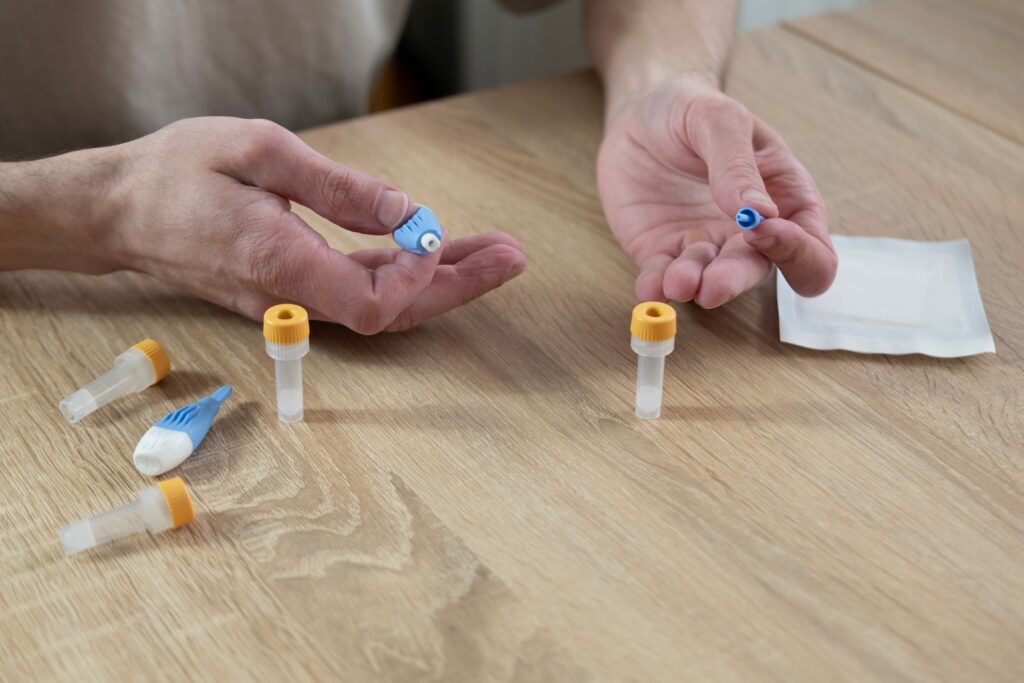
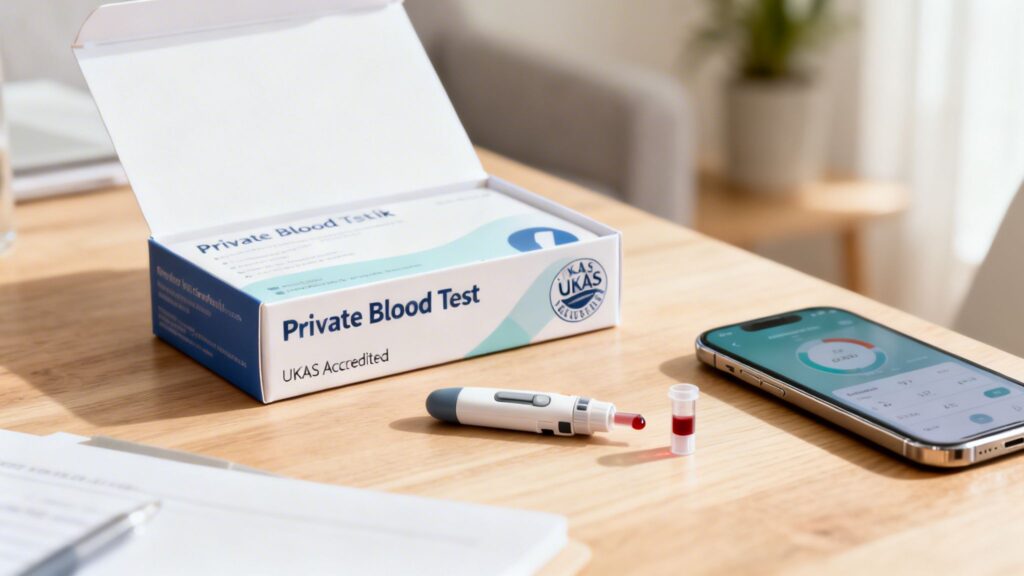
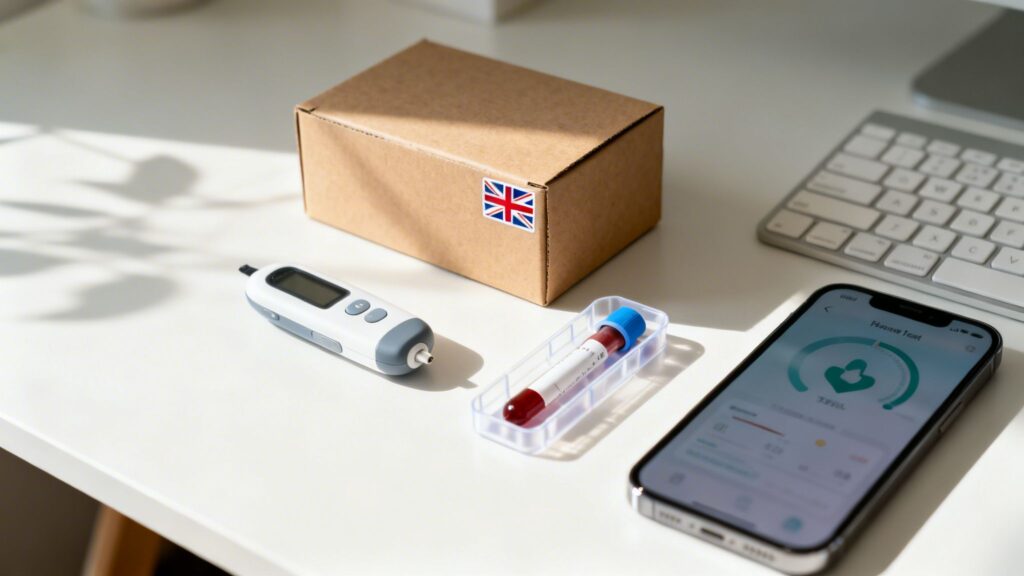
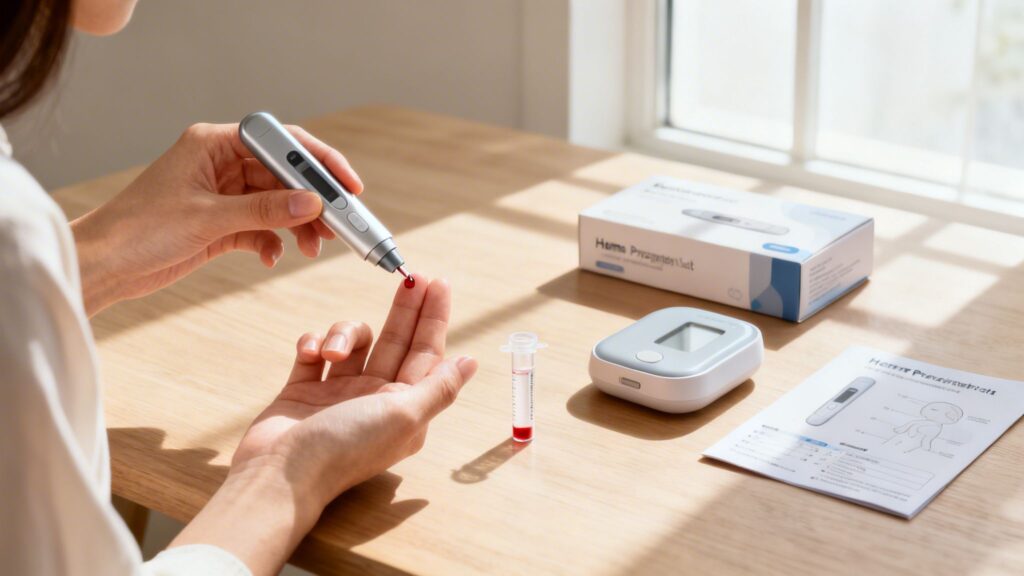
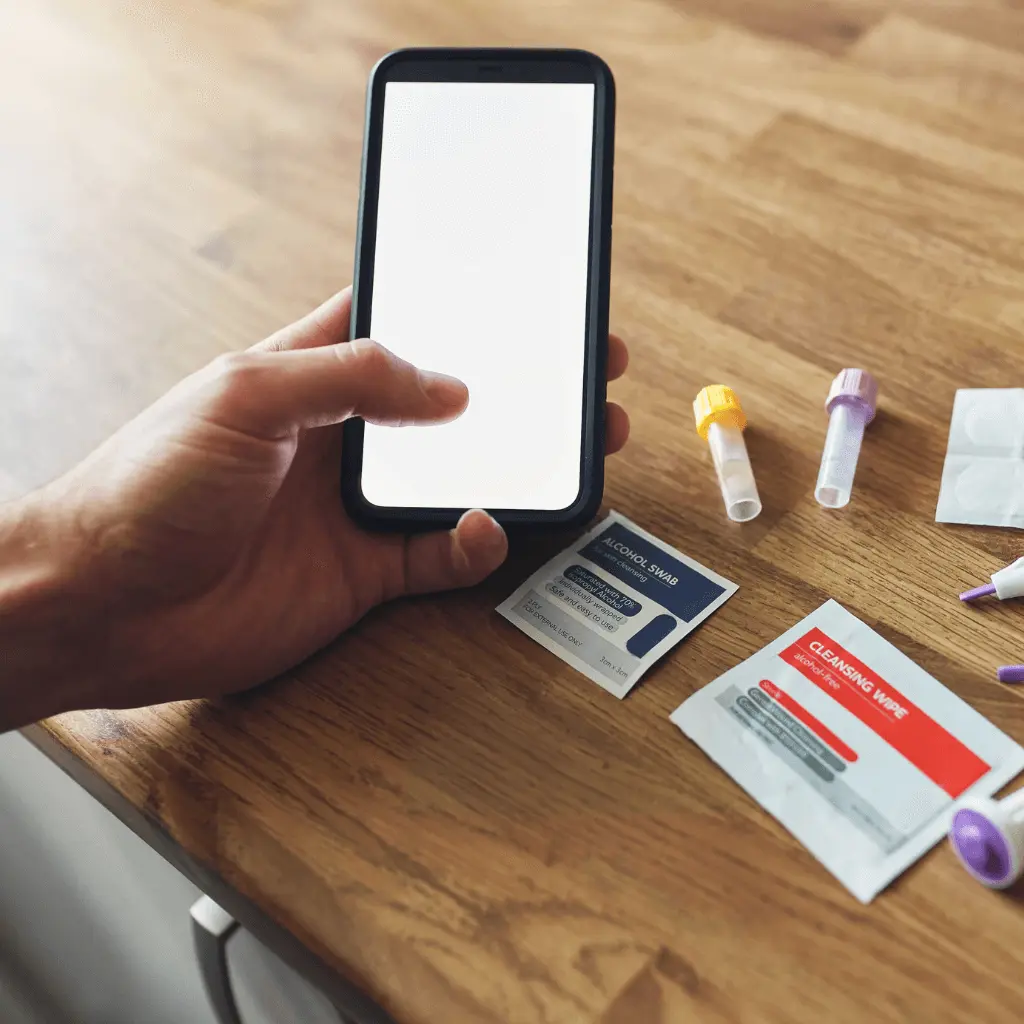
It all starts with a discreet online order of your Progesterone Blood Test. Your testing kit will arrive at your door with everything you need: lancets for a tiny finger-prick, a collection tube, wipes, and clear, step-by-step instructions. We've made sure there are no complicated steps or confusing medical jargon to worry about.
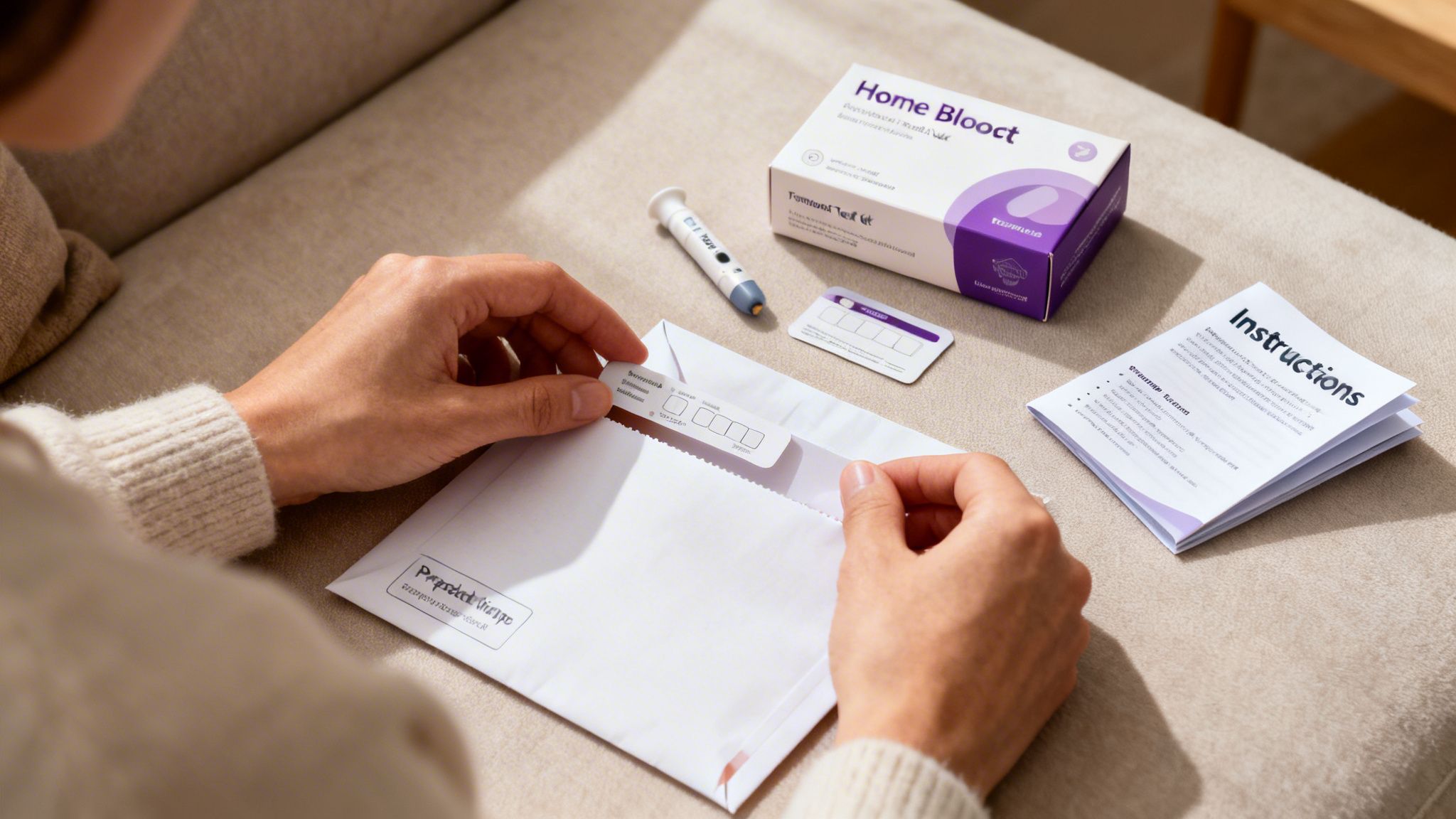
The entire experience is built around your comfort and privacy. You can collect your small blood sample from the comfort of your own home, on the exact day that’s perfectly timed for your unique cycle. No appointments, no waiting rooms.
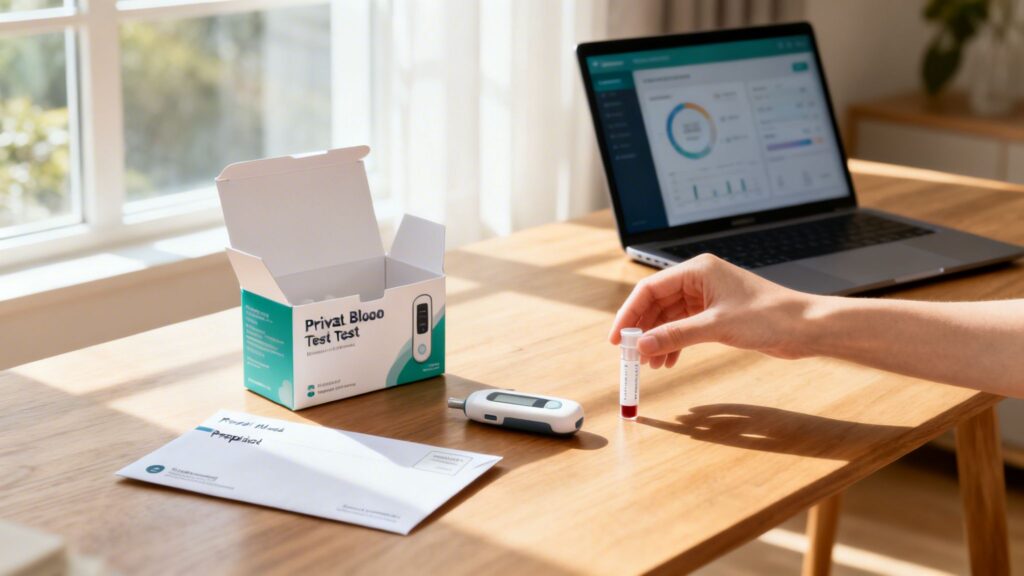
Once you’ve collected the sample, you just pop it into the prepaid, pre-addressed envelope and post it back to our accredited UK laboratory. From there, we handle everything with the utmost speed and confidentiality. You can learn more about the specifics in our guide to using finger-prick blood tests at home.
Your actionable step: Your privacy is our priority. Results are delivered directly to your secure online dashboard in just a few days. You can then download these results as a PDF to easily share with your doctor, turning your at-home test into a productive medical conversation.
This straightforward approach reflects a growing trend. The UK's ovulation testing market is projected to be worth approximately £125 million by 2026, a clear sign that at-home diagnostics are becoming a core part of modern reproductive health. This growth shows a real demand for accessible, reliable tools that provide clear answers without the fuss.
Our goal is to give you the information you need, minus the stress. We want to build your confidence and show you how easy it can be to gain valuable insights into your fertility. The process is simple, secure, and puts you firmly in control.
Dipping your toes into the world of fertility testing can feel a bit overwhelming, with all sorts of new terms and processes to get your head around. To help you feel more confident and prepared, let's walk through some of the most common questions people have about using a blood test for ovulation.
In most cases, yes. A single, well-timed progesterone test is a very strong indicator that you’ve ovulated in that cycle. For example, if your test comes back at 45 nmol/L seven days after you detected an LH surge, that's powerful evidence of successful ovulation. You can then easily share your Repose Healthcare results with your GP to discuss what they mean for you.
Absolutely. In fact, our Progesterone Blood Test is one of the most useful tools for anyone with irregular cycles or PCOS. When ovulation doesn't follow a textbook schedule, a progesterone test is the only way to know for sure if it happened at all.
Actionable Insight: Stop thinking about a fixed "day 21." If your cycle is 40 days long and you get a positive OPK on day 25, you would take the blood test on day 32 (7 days later). This flexible timing is the key to getting a clear yes-or-no answer when other methods just leave you guessing.
Getting a result that shows you didn't ovulate (an anovulatory cycle) isn't a dead end—it's actually really valuable information. The first actionable step is to share your results with your GP or a fertility specialist.
This result gives them a clinically valid starting point to investigate what might be going on, whether it's a simple hormonal imbalance or something like a thyroid issue. Having this data—for example, "my progesterone was 5 nmol/L on my calculated test day"—makes that first conversation much more productive and gets you on the right path to support. While you're on this path, you might also find it helpful to look into resources on overall women's health and wellness to support your journey.
Ready to get some real clarity on your fertility? Repose Healthcare offers a simple, accurate at-home Progesterone Blood Test to give you the definitive answers you’ve been looking for. Order your test today and take the first step from the comfort of your own home.