Getting a page full of medical jargon and numbers back from a lab can be baffling, but learning how to read your blood iron test results unlocks a massive amount of information about your health. Think of it as your body's personal energy report, showing you in plain English whether you have enough of this vital mineral to feel and function at your best.
If you’ve been battling constant tiredness or noticing your skin is paler than usual, it could be your body's way of telling you it’s time to check your iron levels. For example, if you're finding it harder to get through your afternoon at work without feeling foggy, an iron test can provide a clear, actionable answer.
That persistent, dragging feeling of fatigue? Shortness of breath when you take the stairs? These are classic signs that often point straight to your iron status. An iron blood test is one of the most direct ways to find out what's really going on, offering a clear window into how well your body can transport oxygen and generate energy. Understanding what the numbers on your lab report actually mean is the first step toward taking back control of your health.
This guide will walk you through exactly what your results mean, one step at a time. We'll explore why iron deficiency is a surprisingly common problem right here in the UK and, crucially, how to interpret the patterns across different markers in your results. You might assume low iron only affects certain groups, but it's far more widespread than most people realise.
Here in the UK, iron deficiency anaemia is a frequent diagnosis, even among people who lead healthy lifestyles. A major study by Randox Health, which looked at over 33,000 private health check samples, found an overall anaemia prevalence of 6.0%. For women, that figure shot up to 10%, which is right in line with estimates from the World Health Organisation.
These numbers really drive home just how common low iron can be, making it all the more important to keep an eye on your levels. You can dig into the full study and its findings on UK anaemia prevalence to learn more.
Understanding your iron status isn't just about spotting a full-blown deficiency; it's about being proactive with your health. It gives you the power to tackle those subtle symptoms like fatigue or brain fog before they snowball into bigger problems.
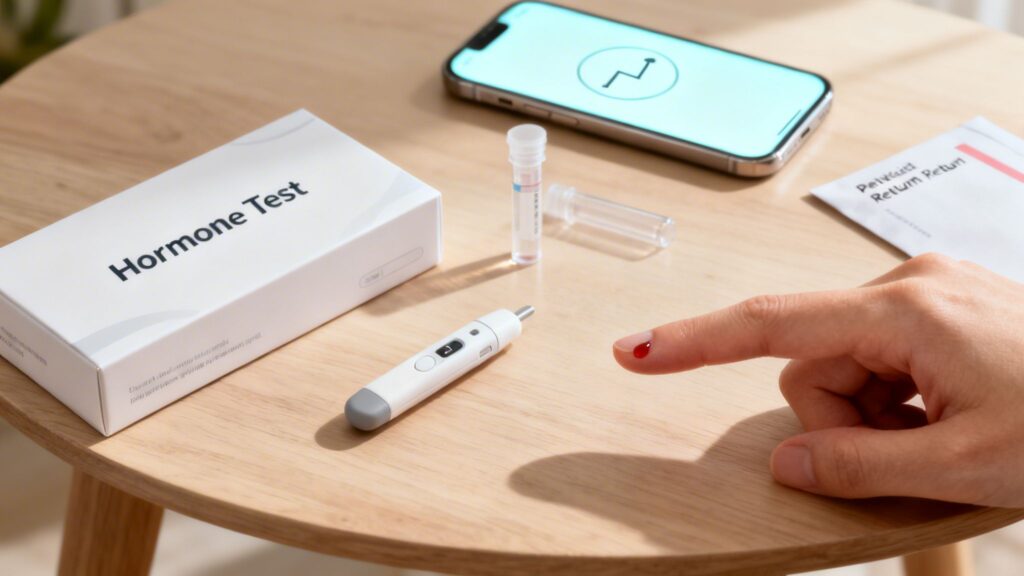
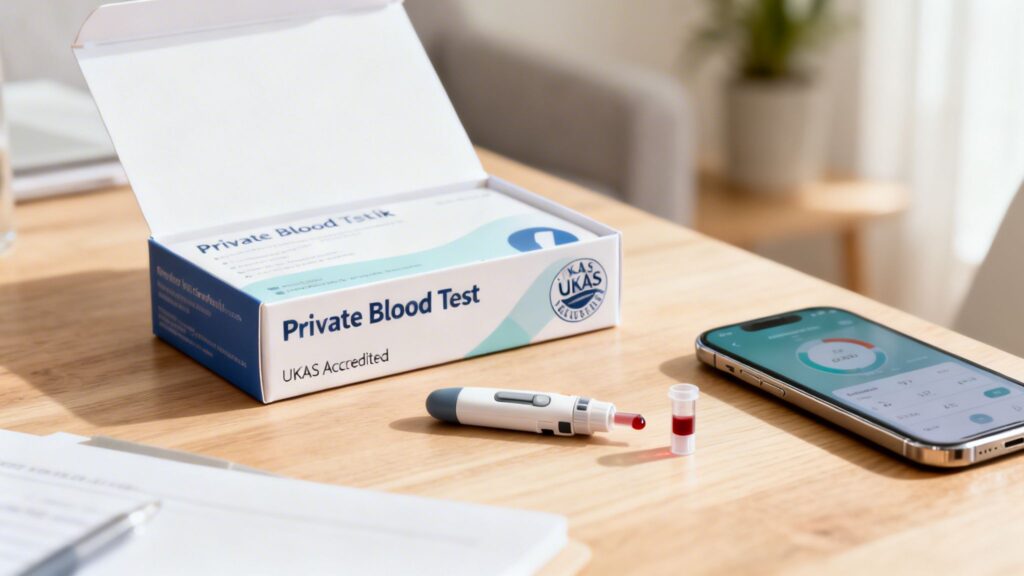
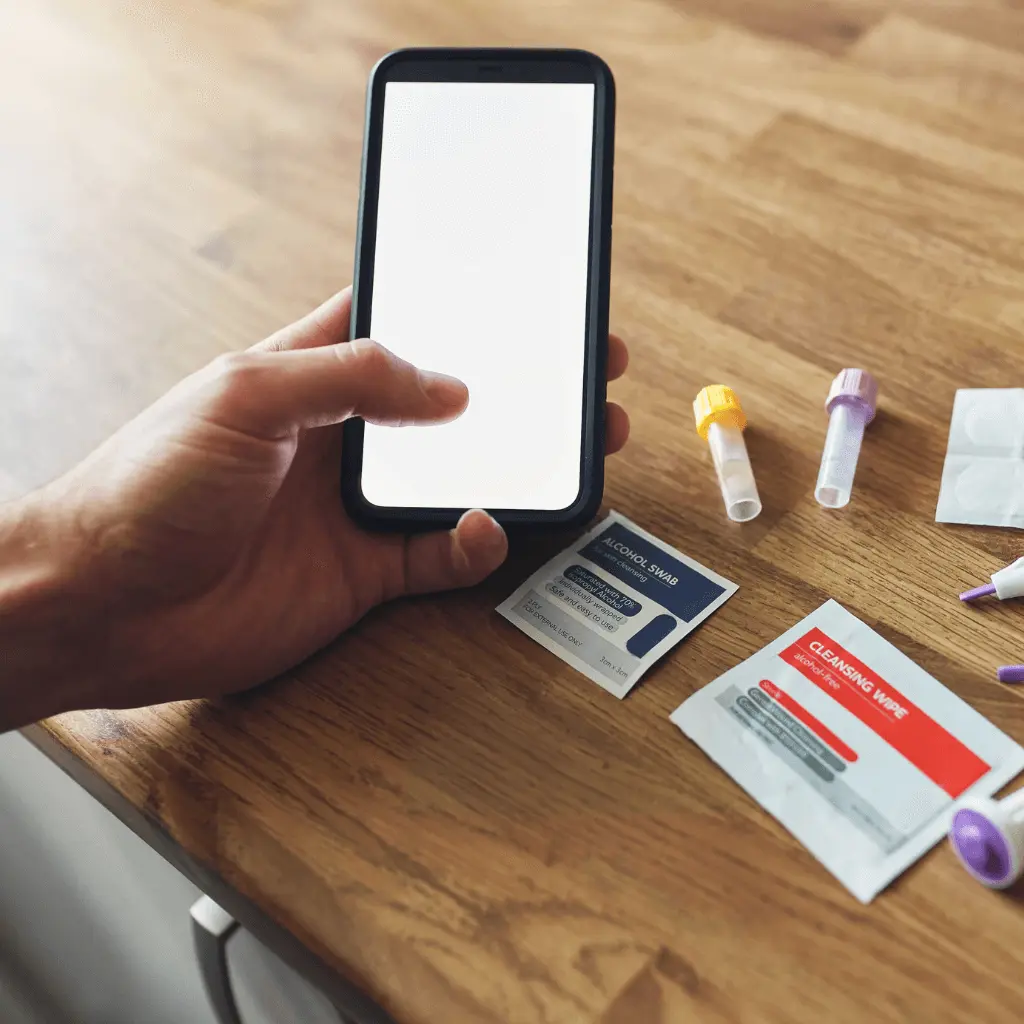
With at-home tests now widely available, you can get clear, quick answers without needing to book a GP appointment first. This puts you in the driver's seat, ready to make informed choices about your diet and lifestyle.

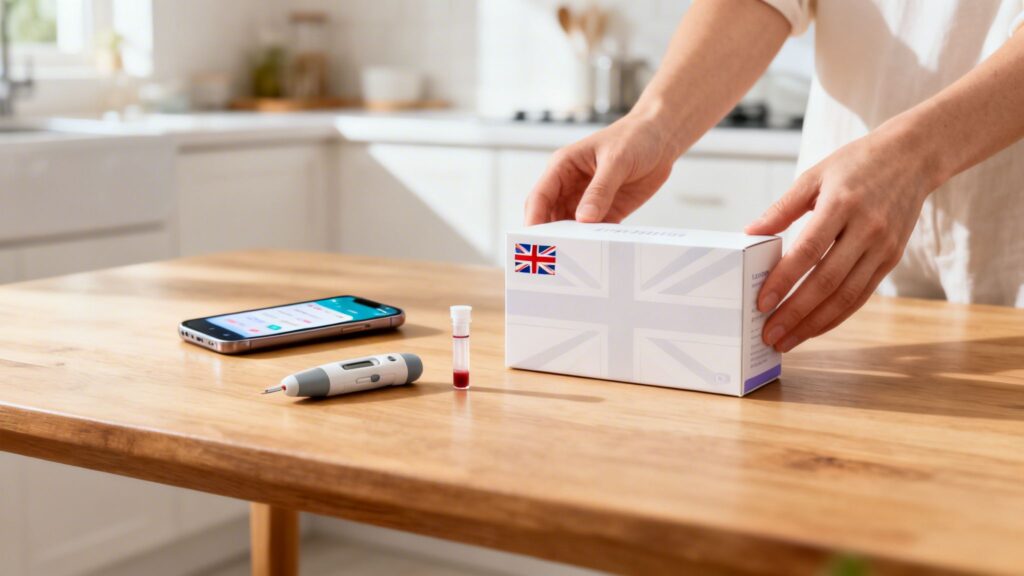
The Repose Healthcare Iron Blood Test is a straightforward way to check all the key iron markers from the comfort of your home. Your results are delivered directly to a secure online dashboard, making it easier than ever to monitor your health on your own terms. For instance, you can take a test, see your levels are borderline, implement dietary changes, and then re-test in a few months to see measurable proof that your efforts are paying off.
Getting your blood test results back can feel like you've been handed a secret code. You scan a list of terms like 'ferritin' and 'TIBC' next to a jumble of numbers and ranges, and it’s not always obvious what it all means. But to really get a grip on your iron health, you need to understand what each of these markers represents and, crucially, how they all fit together.
A brilliant way to get your head around this is to picture your body's iron management system as a busy warehouse and delivery service. Iron is the essential product, and your body has a sophisticated setup for storing it, packing it up, and shipping it exactly where it’s needed to make energy and healthy red blood cells.

This simple analogy helps to demystify the technical terms on your report. Let’s break down the four key players in your body's iron logistics network.
To make sense of your results at a glance, this table breaks down what each part of your iron panel actually measures, using our warehouse analogy to make it stick.
| Marker | What It Measures | Analogy | Typical UK Reference Range |
|---|---|---|---|
| Ferritin | The total amount of iron stored in your body's cells for future use. | The Warehouse – how much stock you have in reserve. | 15–300 µg/L (men) 15–150 µg/L (women) |
| Serum Iron | The amount of iron currently circulating freely in your bloodstream. | The Goods in Transit – packages on the delivery trucks right now. | 10–30 µmol/L |
| TIBC | Your blood's total capacity to bind and transport iron using a protein called transferrin. | The Delivery Fleet – the total number of available trucks (full or empty). | 45–80 µmol/L |
| Transferrin Saturation | The percentage of your iron-transporting proteins that are actually carrying iron. | The Fleet's Efficiency – how full your delivery trucks are. | 20–50% |
Note: Reference ranges can vary slightly between UK laboratories. Always check the specific range provided on your report.
Let's dive a little deeper into what each of these means for your health.
Ferritin is a protein that locks away iron inside your cells. In our analogy, ferritin is the warehouse itself—it’s a direct reflection of all the iron your body has saved up in reserve. It is the single most reliable marker for your body's total iron stores.
When your body needs more iron, maybe to make new red blood cells, it simply draws from this warehouse. A low ferritin level is often the very first sign of iron deficiency, showing that your reserves are getting low even if other markers still look okay. For example, a runner might feel their performance dipping, and a test could reveal a low ferritin of 20 µg/L. This is an early warning that allows them to adjust their diet before it impacts their health more seriously.
For women in the UK, a ferritin level below 15 µg/L is a strong indicator of iron deficiency, while for men, the healthy range typically starts a bit higher. Understanding the benchmarks for normal iron levels is the first step in decoding where you stand.
Next up is serum iron, which measures the amount of iron currently travelling around in your blood, separate from what’s locked away in storage. Think of this as the packages on the delivery trucks right now, on their way to different parts of your body.
This number can swing up and down quite a bit during the day, especially after meals. If you've just had a steak, your serum iron might be temporarily higher. Because it's so variable, it isn’t very useful on its own, but it becomes incredibly insightful when you look at it alongside the other markers.
Total Iron-Binding Capacity (TIBC) is a clever one. It measures how many special transport proteins, called transferrin, are available in your blood to grab onto and carry iron. In our analogy, TIBC represents the total number of delivery trucks in your fleet, including both the empty ones and the ones already carrying a load.
When your iron stores are low (low ferritin), your body smartly tries to compensate by making more transferrin to catch any iron it can find. This means a high TIBC often points straight to iron deficiency—your body is sending out a whole fleet of empty trucks, desperate to find a shipment.
A high TIBC is like your body's logistics manager sending out an urgent call: "We need more iron! Send out every available truck to find some!" This response is a clear sign that your internal reserves are getting low.
Finally, Transferrin Saturation tells you what percentage of your transport proteins (your trucks) are actually carrying iron. It’s a simple calculation using your serum iron and TIBC results, but it’s a vital piece of the puzzle. It tells you how full your delivery trucks are.
A low transferrin saturation (for example, below 20%) means most of your delivery trucks are driving around empty, which is another powerful sign of iron deficiency. On the flip side, a very high saturation could suggest iron overload, where there’s just too much iron for the system to handle safely.
To get the full story, you need to look at all these markers together. That’s why our popular at-home Iron Test (TIBC included) gives you the complete panel, ensuring you have every piece of information needed to understand your body's iron status properly. It provides the actionable data you need to make informed decisions.
By looking at the warehouse stock, the packages in transit, the size of your truck fleet, and how full those trucks are, you get a crystal-clear picture of your iron health. This detailed view is the key to truly understanding your blood iron test results and taking the right steps forward.
When you get your iron test results back, the most common story they tell is one of low iron. It’s an incredibly frequent scenario, but figuring out what that really means requires looking beyond a single "low" number. It’s all about spotting the difference between an early warning sign and a more advanced problem.
Think back to our warehouse analogy. You can have a situation where the shelves in your warehouse are starting to look a bit bare, but your delivery service is still just about managing to get orders out on time. This is the crucial difference between simple iron deficiency and the more serious iron deficiency anaemia.
It’s vital to get your head around the distinction between these two. They’re related, for sure, but they represent different stages of the same underlying issue.
A practical example: a dedicated runner whose performance has been mysteriously dropping. Her results might show low ferritin but normal haemoglobin. This is a classic early warning of iron deficiency—her body is running on fumes, even if it hasn't tipped over into full-blown anaemia yet. The actionable insight here is to increase iron intake now to prevent her health and performance from declining further.
If your results are pointing towards low iron, the next logical question is "why?". Several common factors can drain your body's iron stores, and sometimes, more than one is at play.
Dietary Factors
A diet lacking in iron-rich foods is a primary culprit. This is particularly relevant for people following vegetarian or vegan diets, as non-haeme iron (from plants) isn't as easily absorbed as haeme iron (from animal products).
Increased Bodily Demands
Certain life stages and conditions dramatically increase your body's need for iron, making it much harder to keep up.
Absorption Issues
Sometimes, the problem isn’t what you're eating, but what your body is actually absorbing. Conditions affecting the gut can severely impair your ability to take in iron from food.
Data from primary care in England shows just how widespread this issue is. A 2019 analysis showed an anaemia prevalence of 4.1% across 14 million patients, with women affected more at 5.1%. Guidelines often state that if ferritin dips below 30 µg/L, it's a clear signal of low iron stores that needs attention. You can explore more about UK anaemia prevalence and treatment guidelines in this detailed study.
Seeing low iron on your report is your cue to take action. The good news is that for many people, simple, practical changes can make a huge difference.
For a clear and accurate picture of what's going on, a test that measures your iron stores is essential. If you want to keep an eye on your storage levels, you can start with a standalone ferritin test. This gives you the key information you need to track your body's iron reserves and take effective next steps.
While we hear a lot about low iron, the other side of the coin—iron overload—is a serious health issue that needs careful attention. Although it's less common, having too much iron can be just as damaging as not having enough. Usually, a conversation about high iron leads to a discussion about a specific genetic condition.
That condition is haemochromatosis, a disorder where your body absorbs far more iron from your diet than it needs. Think of your body’s iron regulation system like a tap that should turn off once you have enough. With haemochromatosis, that tap is faulty and keeps dripping, causing iron to slowly and silently build up in your organs.
Over many years, this gradual accumulation can reach toxic levels, leading to significant damage to vital organs like the liver, heart, and pancreas. The first step towards catching this early is knowing what to look for in your blood iron test results.
When you look at your results dashboard, a classic iron overload profile shows two very clear red flags. When these markers are high at the same time, they create a distinct pattern that strongly suggests your body is holding onto too much iron.
The key indicators are:
If both of these markers are significantly above the normal range, it’s a clear signal that something isn't right. It's important to know, however, that haemochromatosis isn't the only potential cause. Other conditions, like receiving frequent blood transfusions or certain liver diseases, can also lead to elevated iron. That's why a proper medical diagnosis is essential.
Seeing high iron numbers on your results can be alarming, but it's crucial to resist the urge to jump to conclusions or self-diagnose. While an at-home test is an excellent way to flag potential issues, interpreting these specific results requires clinical expertise.
A high ferritin and high transferrin saturation result is not a diagnosis in itself. Instead, think of it as a powerful and clear signal to book an appointment with your GP. They can arrange the necessary follow-up investigations, which often include genetic testing to confirm haemochromatosis.
If your Repose Healthcare Iron Status Profile shows a pattern of high iron, your next move is straightforward and non-negotiable.
Your Action Plan for High Iron Results
Understanding what your blood iron test results are telling you is the first step in taking control of your health. Spotting the signs of iron overload early allows you to seek timely medical advice, which can prevent long-term complications and protect your health for years to come.
Getting your iron blood test results explained properly means looking beyond individual numbers. A single marker, like ferritin, only tells part of the story. The real insights come from seeing how all the markers – your ferritin, serum iron, transferrin saturation, and so on – relate to each other.
Think of it like being a detective. One clue might be interesting, but you need to connect several pieces of evidence to solve the case. By analysing the patterns, you can build a much clearer and more accurate picture of what’s happening inside your body. Let's walk through a few practical examples to see how this works.
Before diving into specific case studies, it helps to understand the typical patterns that can show up in your results. Each combination points towards a different situation happening in your body.
This table breaks down some of the most common patterns you might see on your results dashboard.
| Scenario | Ferritin | Serum Iron | TIBC | Transferrin Saturation | Likely Indication & Actionable Insight |
|---|---|---|---|---|---|
| Early Iron Deficiency | Low | Normal | High | Normal/Low | Your iron stores are running low. Action: Increase iron-rich foods now to prevent anaemia. |
| Iron Deficiency Anaemia | Very Low | Low | High | Low | Your iron stores are empty, affecting red blood cell production. Action: Consult a GP for guidance on supplementation. |
| Iron Overload | High | High | Normal/Low | High | Your body is storing too much iron. Action: Urgent medical follow-up is essential. |
| Inflammation | Normal/High | Low | Low | Normal/Low | An underlying condition may be disrupting iron use. Action: Discuss these complex results with a doctor. |
These patterns provide a starting point for understanding your results. Now, let's see how they play out in real-life examples.
Meet Sarah, a university student who has been feeling constantly drained and unable to concentrate. Her diet isn't the best, often relying on quick, easy meals between lectures. She decides to take an at-home iron test.
Sarah's Results:
Actionable Insight
Sarah's low ferritin is the key red flag, indicating her iron "warehouse" is almost empty. This pattern strongly suggests early-stage iron deficiency. Her body's iron stores are depleted, but she hasn't yet developed full-blown anaemia. This is a crucial window to act. The practical next step is for Sarah to consciously add iron-rich foods like lentils, beans, and fortified cereals to her diet to prevent her symptoms from worsening.
Next is Mark, a dedicated long-distance runner who follows a strict vegan diet. He’s noticed his performance has plateaued and he's struggling with recovery. His results show a more advanced pattern.
Mark's Results:
Actionable Insight
Mark’s results show a classic progression of iron deficiency. His ferritin is extremely low, and his other markers have dropped. This is a clear sign he is on the verge of, or has already developed, iron deficiency anaemia. His plant-based diet and intense training have created a high demand for iron that just isn't being met. His actionable step is to consult his GP to discuss a structured supplementation plan, as diet alone may not be enough to restore his levels quickly.
Finally, we have David, a man in his 50s experiencing persistent joint pain and fatigue. He assumed it was just part of getting older, but his blood test reveals a completely different story—one of iron overload.
This flowchart shows the typical clinical pathway for investigating high iron results. When high ferritin is combined with high transferrin saturation, an urgent GP consultation is the essential next step.
David's Results:
Actionable Insight
This pattern is an immediate signal to seek medical advice. The combination of very high ferritin and high transferrin saturation is a strong indicator of iron overload, which could be caused by a condition like haemochromatosis. The urgent and non-negotiable next step for David is to share these results with his GP for further investigation. Early action is key to preventing long-term organ damage.
By looking at these case studies, you can see how connecting the dots on your own Repose Healthcare results dashboard provides a much richer, more meaningful understanding than looking at a single value in isolation.
Getting your iron test results is the starting point, not the finish line. Think of them as the first step—clear data that helps you make smart, proactive decisions about your health, so you can move forward with confidence.
If your results are all within the normal range, that’s great news. The goal now is simply maintenance. Focus on a balanced diet rich in iron—think leafy greens, lentils, and lean red meat. To keep your levels topped up, try to consistently pair iron-rich foods with sources of Vitamin C, like citrus fruits or bell peppers, which really helps your body absorb the iron.
If any of your results are borderline or outside the normal range, the next logical step is a chat with your GP. Make sure to take a printout or have your digital results ready to share. This data gives you a solid foundation for a much more productive discussion about what might be going on and what further investigations are needed.
Your test results are like the key that unlocks a more meaningful conversation with your doctor. Instead of just describing vague symptoms like fatigue, you can present them with clear evidence. This helps them pinpoint the problem and recommend the right course of action much more quickly.
For results that point towards lower than optimal levels, bringing in more highly bioavailable nutrients can make a real difference. This includes foods rich in heme iron, which is the type found in animal products and is much more efficiently absorbed by the body than the non-heme iron from plants.
Managing your iron levels isn't a one-and-done deal. It's an ongoing process, especially if you're navigating pregnancy, managing a chronic condition, or making significant changes to your diet. An iron test shouldn't be a one-off event, but a regular part of your long-term health toolkit.
Checking your levels from time to time provides invaluable feedback on how your dietary and lifestyle tweaks are actually working. With a simple at-home kit like the Repose Healthcare Iron Status Profile, you can easily track your progress and stay on top of your health journey without the hassle.
Got a few questions about your iron test results? You're not the only one. Here are some clear, straightforward answers to the questions we hear most often.
There’s no one-size-fits-all answer here. If you're managing a condition like iron deficiency anaemia, are pregnant, or you're a serious endurance athlete, your GP might suggest testing every few months to keep a close eye on things.
For most people just wanting to monitor their general health, an annual check is usually enough to catch any changes before they become a bigger issue.
Yes, absolutely. It's just worth knowing that your iron levels might dip temporarily because of blood loss, especially if your periods are on the heavier side.
For the most consistent, year-on-year tracking, testing mid-cycle can be a good idea. That said, testing during your period can also give you a really valuable snapshot of what your iron status looks like at that point in your cycle.
This is a great question, as they’re often done together. Think of it like this: an iron test (or iron panel) specifically looks at your body's iron supply chain – how much iron is stored (ferritin) and how it's being transported (transferrin saturation).
A Full Blood Count (FBC), on the other hand, checks the health of your actual blood cells, measuring things like haemoglobin and haematocrit. They answer different questions but are the perfect team. The iron test helps explain why there might be a problem, while the FBC shows how that problem is affecting your red blood cells.
There's no need to fast for our at-home iron tests. While a big, iron-rich meal right before you take your sample could nudge your serum iron level up slightly, it won’t have a meaningful impact on the most important marker for your long-term iron status—ferritin.
Ready to get a clear picture of your iron levels and take control of your health? The Repose Healthcare at-home Iron Status Profile gives you the complete story, delivered straight to your secure online dashboard.