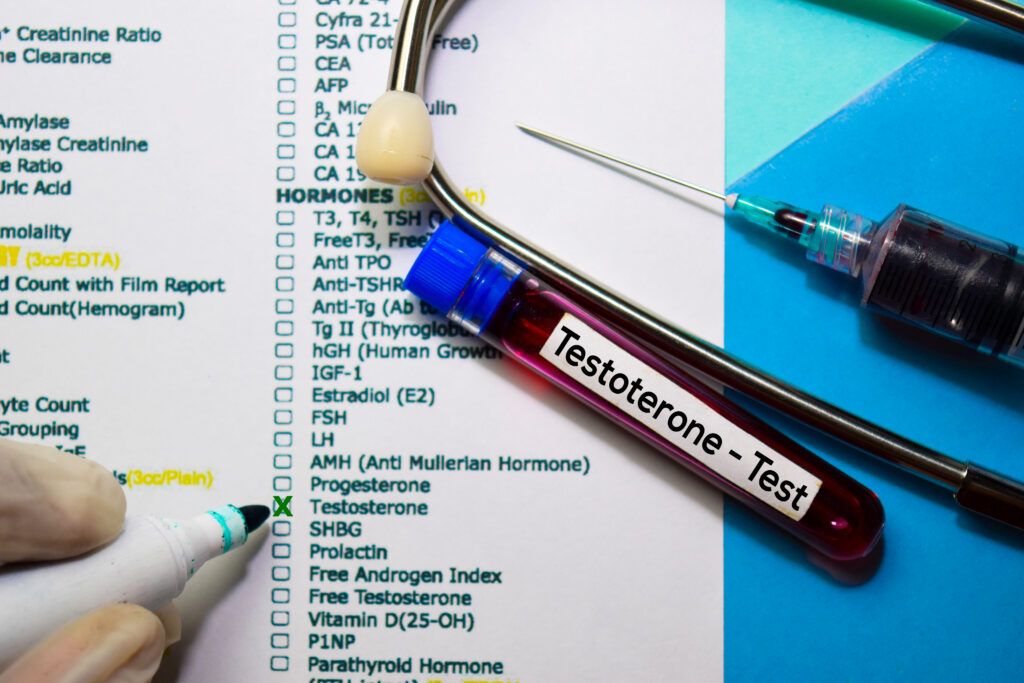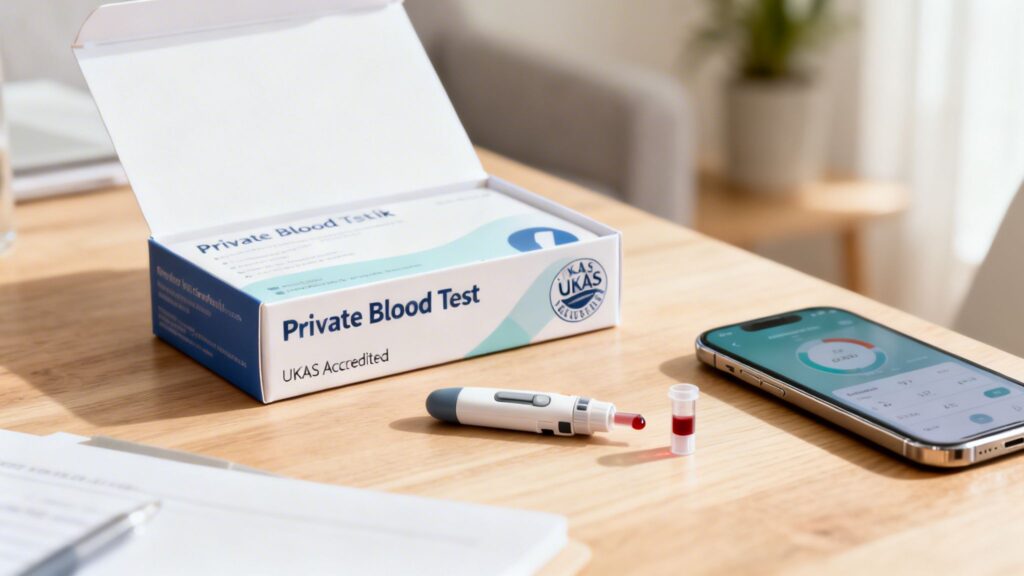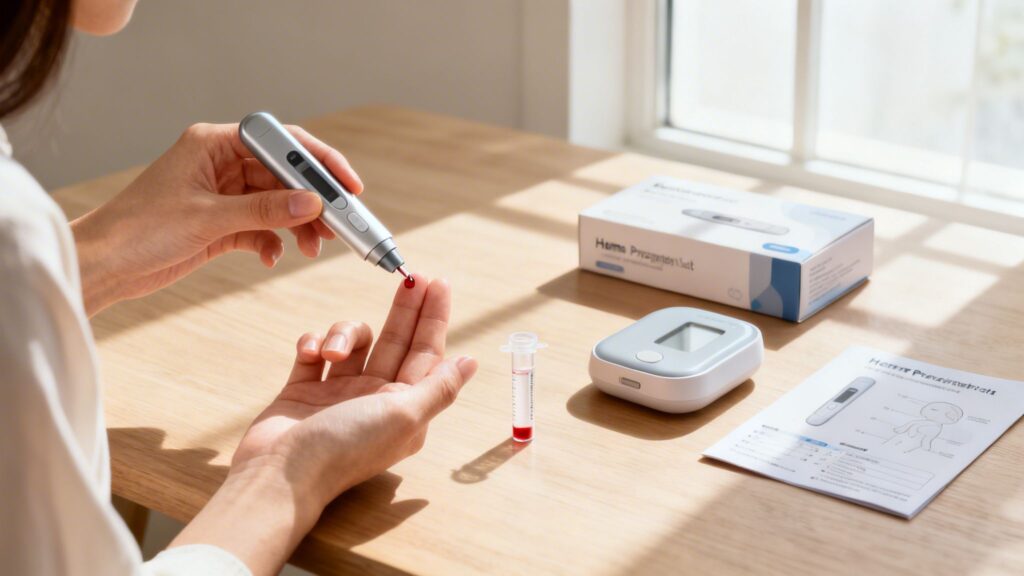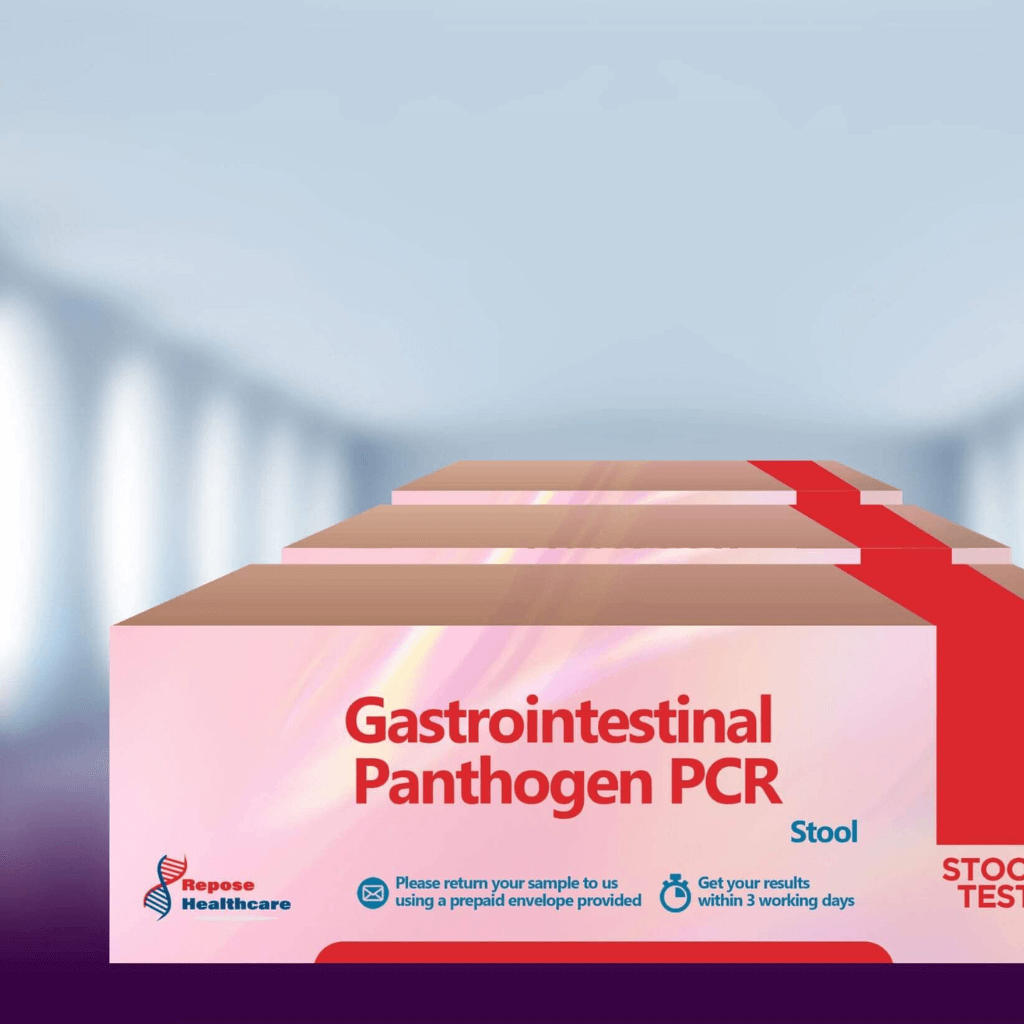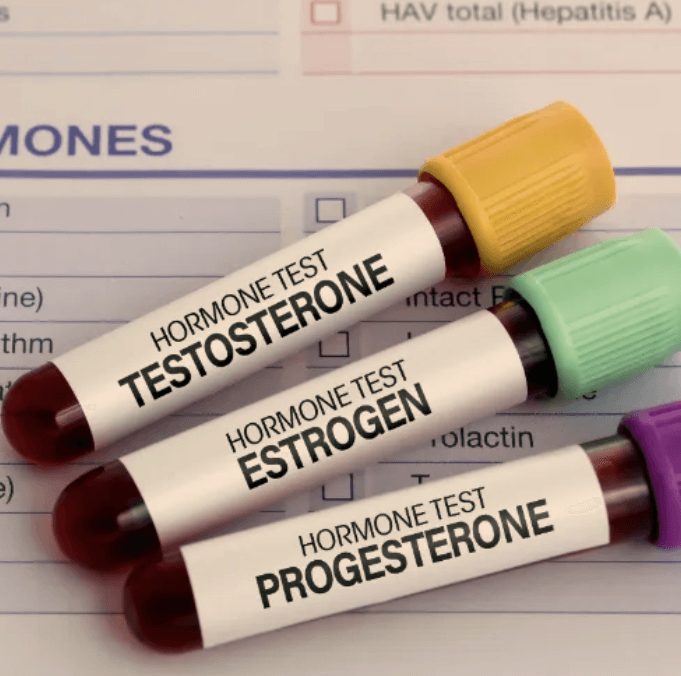
An at home fertility test in the UK is a simple and private blood test that checks your key reproductive hormones, offering you a clear window into your fertility status without ever needing to step inside a clinic. You can think of it as a personal health MOT—a smart, proactive first step in understanding your body and planning for the future.

The decision to start a family is one of life’s biggest, but for so many, it’s a path filled with questions and uncertainty. If you’re thinking about your fertility or have already started trying to conceive, you’re far from alone. The journey can feel isolating, particularly when faced with what feels like an endless wait for professional advice.
This guide is here to be your straightforward and supportive starting point. We'll walk through how an at-home fertility test in the UK can give you vital, timely information about your reproductive health, all from the comfort of your own home.
Waiting for answers about your health can be incredibly stressful, and when it comes to fertility, time often feels precious. Unfortunately, recent figures paint a challenging picture for many hopeful parents in the UK.
It's now estimated that over 1 in 6 couples—that's more than 3.5 million people—experience fertility challenges. With NHS wait times for initial diagnostic tests stretching anywhere from 12 to 18 months, taking the first step yourself can feel empowering.
This is exactly why a proactive approach matters. An at-home test isn’t meant to replace your doctor; it’s about giving you the knowledge you need to get ahead. It allows you to sidestep frustrating delays and walk into a future appointment with your GP armed with real data. For example, instead of saying, "I'm worried about my fertility," you can say, "I took a test that showed my FSH levels were high, and I'd like to discuss what this means."
Providers like Repose Healthcare give you a direct route to this crucial information. We aim to provide a clear snapshot of your hormonal health, giving you the insights needed to make informed choices. By understanding your key fertility markers early, you can either gain valuable peace of mind or pinpoint specific areas to discuss with a doctor much sooner.
An at-home test helps demystify parts of your reproductive health that can often feel like a complete mystery. The process itself is simple, but the information you get back is powerful.
Here’s a quick look at what you stand to gain:
For couples, it's also helpful to understand the complete picture. Learning how to check sperm count at home can be a valuable starting point for male partners. You can also explore our full range of online lab tests in the UK to see what other health insights you can gain from home.
An at-home fertility test isn’t a simple 'yes' or 'no' answer like a pregnancy test. Think of it more like a detailed MOT for your reproductive health, giving you a look under the bonnet by measuring the key hormones that run the show. These hormones are the chemical messengers that orchestrate your entire reproductive cycle.
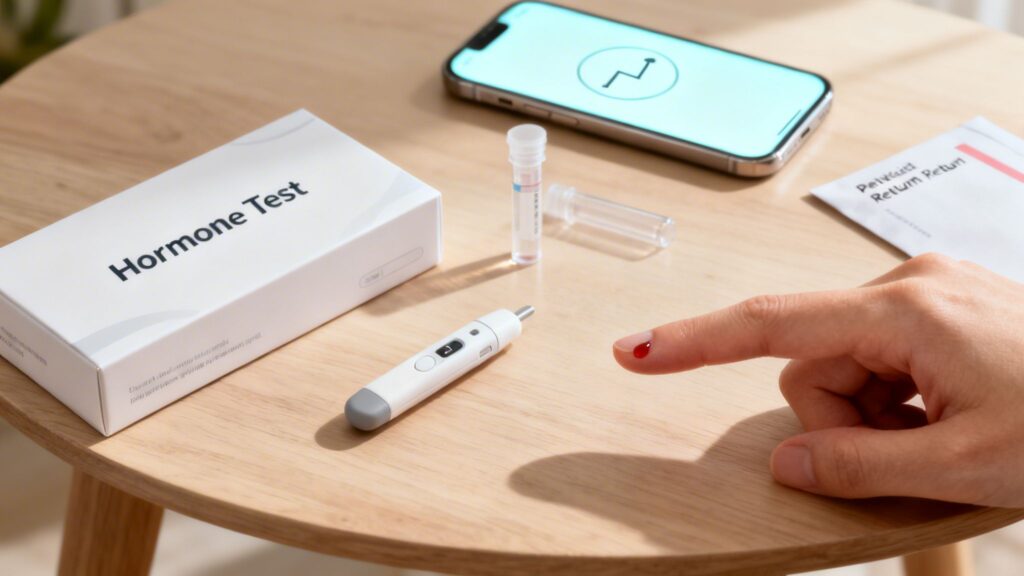
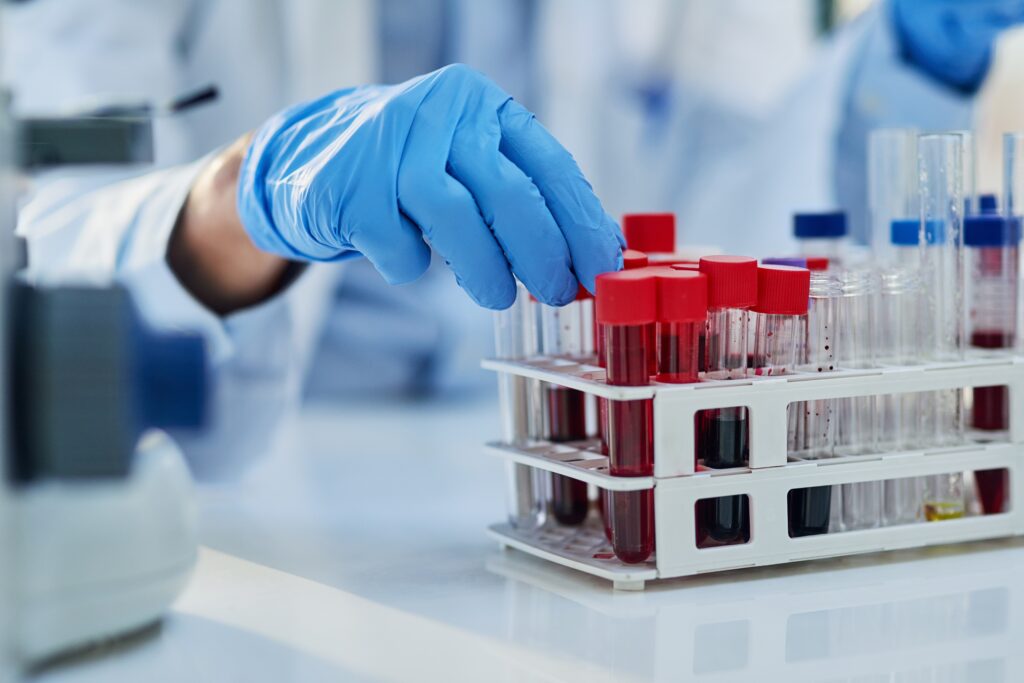
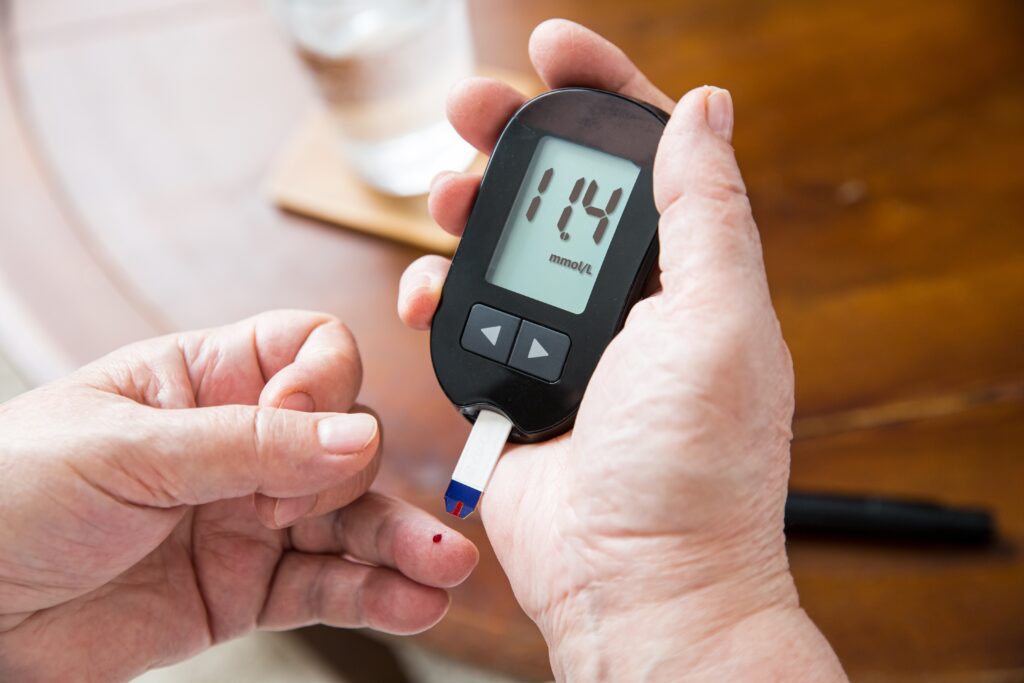
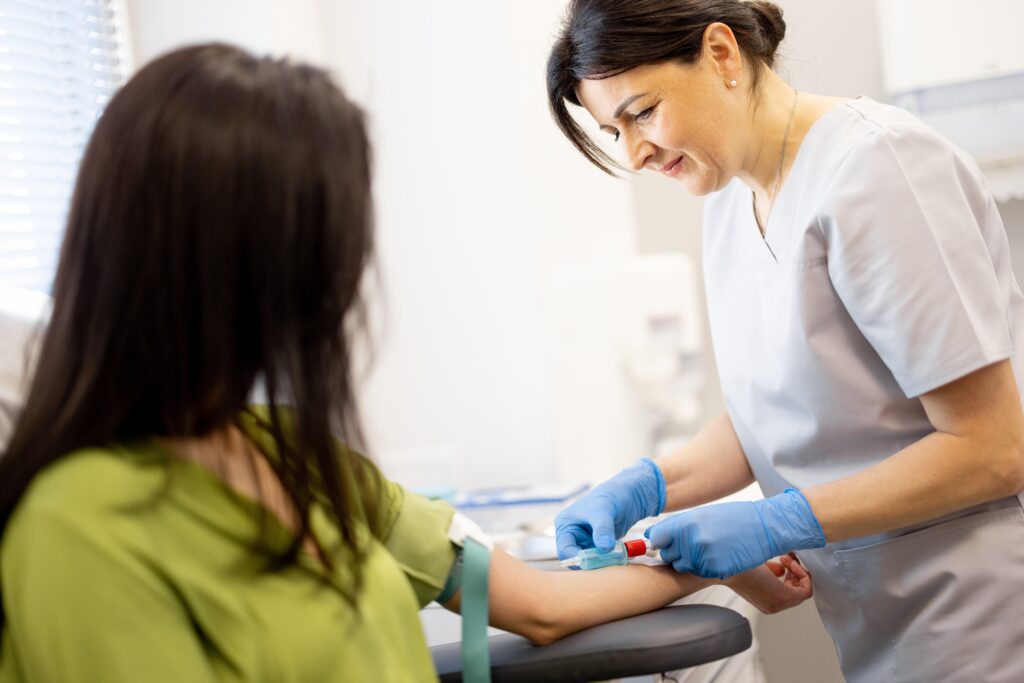
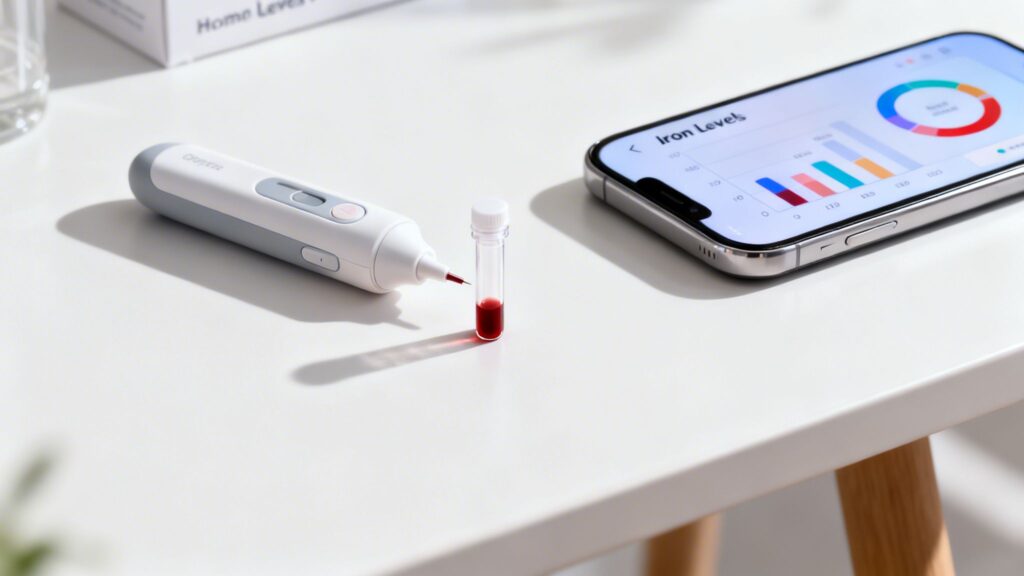
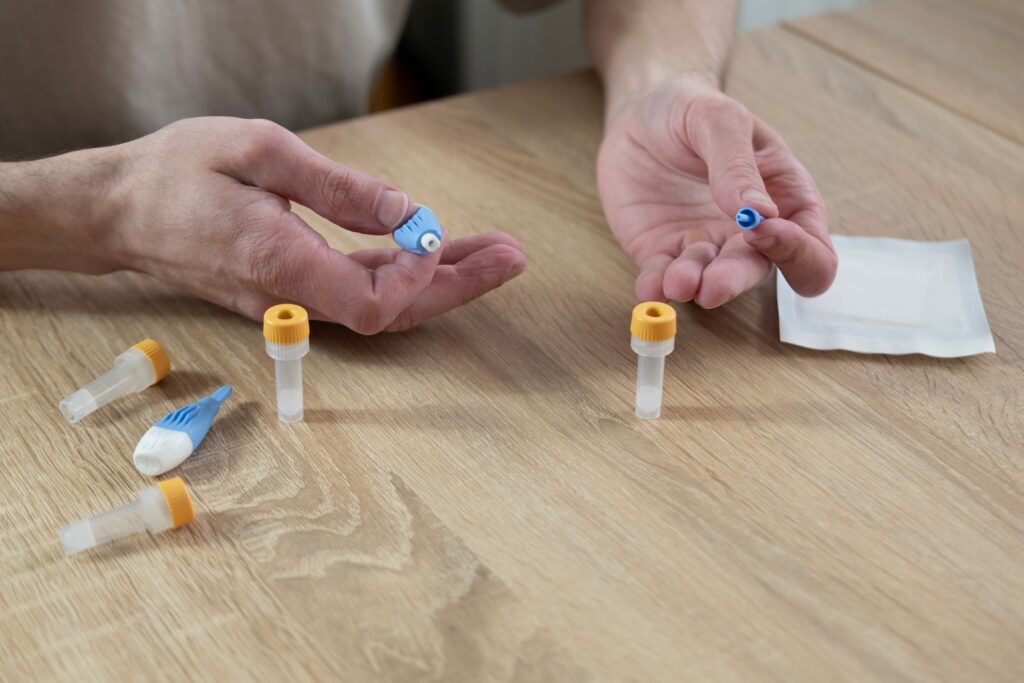
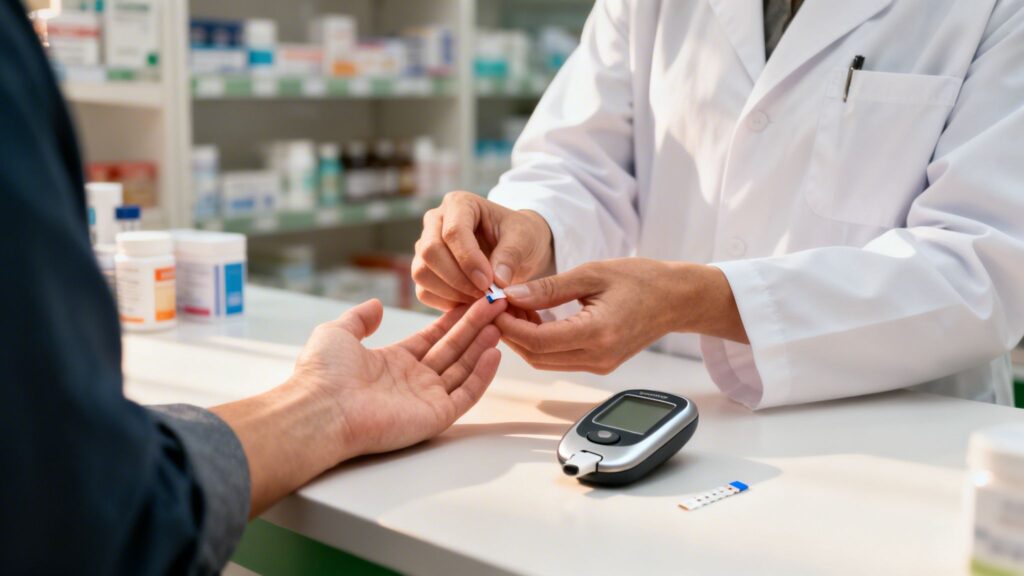
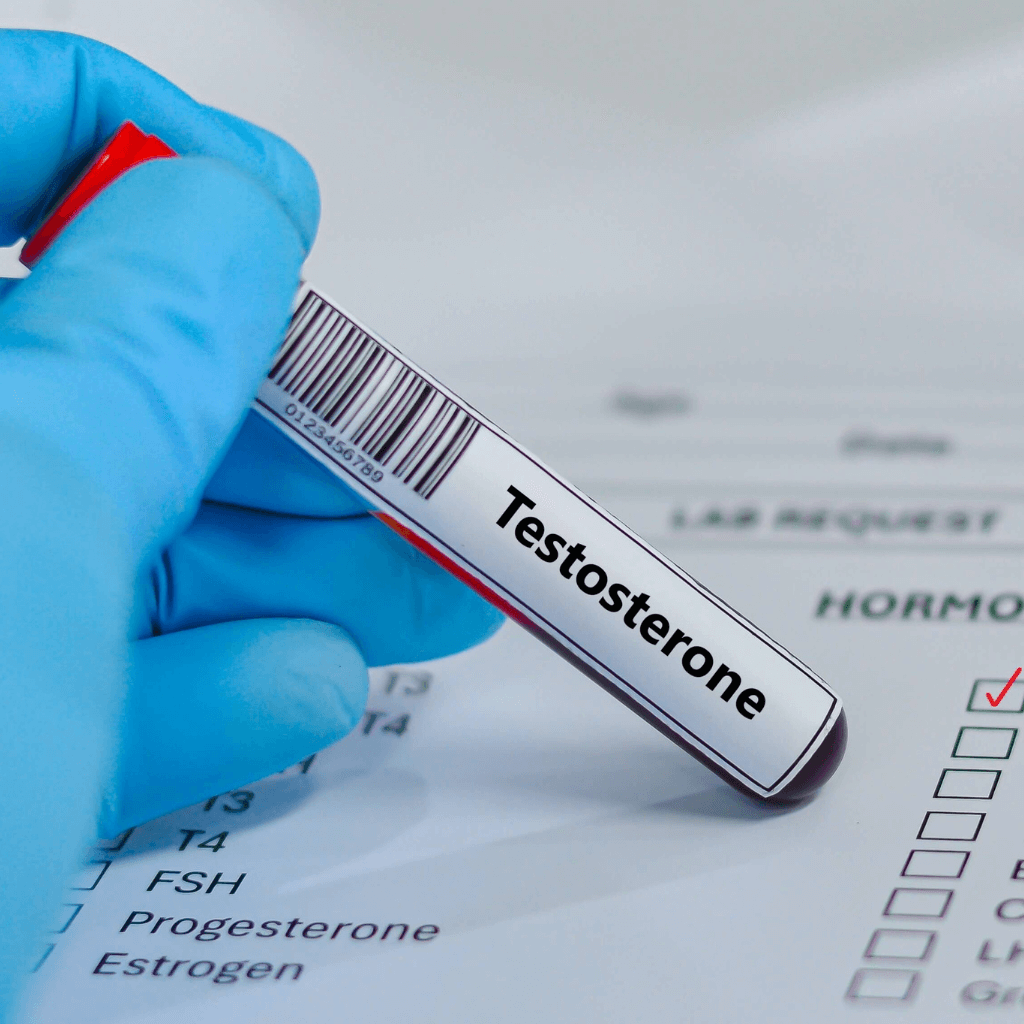
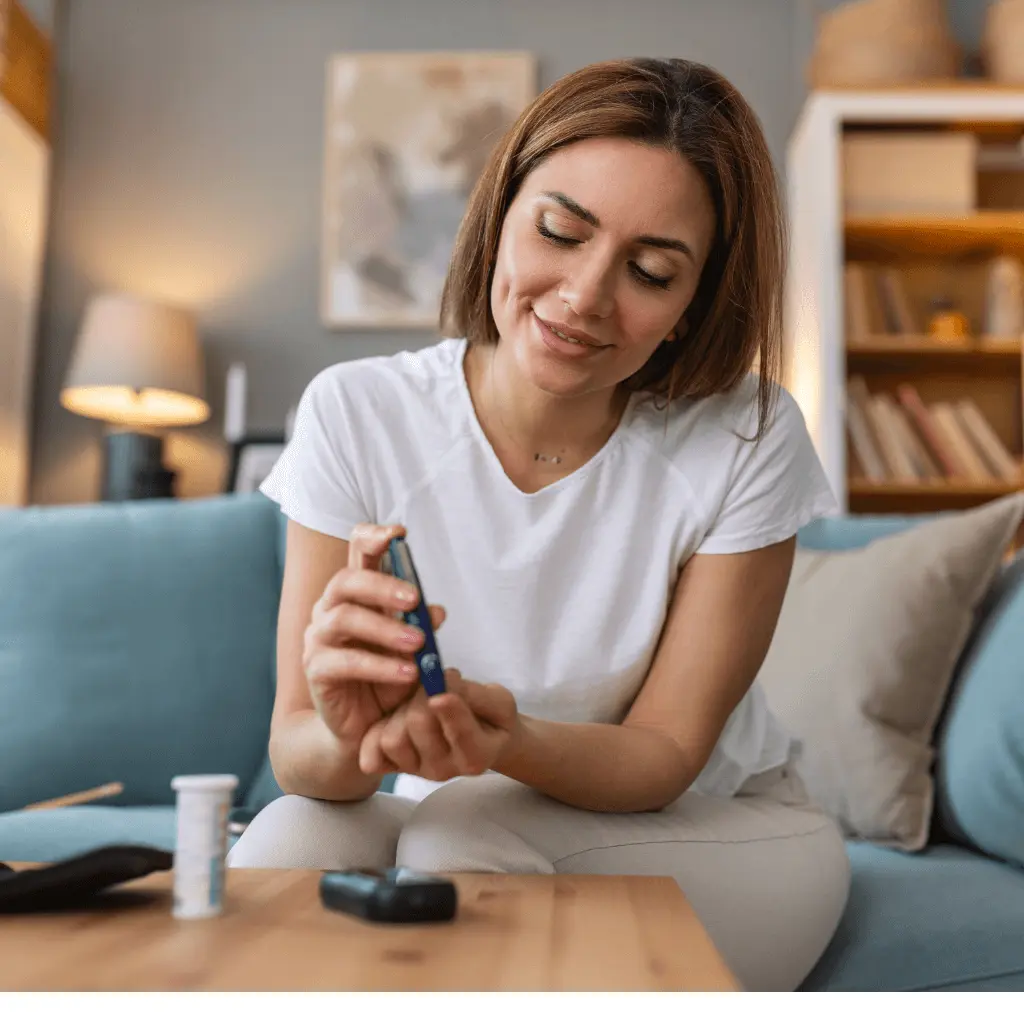
Getting started is as simple as a small finger-prick blood sample. This sample is then sent off to a certified lab where it's analysed for specific biomarkers—the scientific term for molecules that give us vital clues about your body's processes. By understanding these biomarkers, you can start building a much clearer picture of your fertility potential.
For women, fertility is a complex dance of hormones that need to rise and fall at just the right moments. A good fertility test looks at the main players in this process, giving you insight into different parts of your reproductive system.
Here are the crucial hormones we typically measure:
Think of these hormones as a dedicated team. FSH is the talent scout finding promising candidates (the follicles), LH is the event manager triggering the main event (ovulation), AMH is the stock controller keeping an eye on supplies (egg count), and Progesterone is the groundskeeper preparing the perfect environment. A test shows you how well each team member is performing their role.
Your results for these hormones don't exist in a vacuum; they work together to tell a story. For example, knowing your AMH level helps you understand your egg count, but looking at it alongside your FSH level adds much deeper context. If AMH is low and FSH is high, it sends a stronger signal about your ovarian reserve.
It’s crucial to remember that these tests provide powerful insights, not a final diagnosis. They're designed to empower you with information. Actionable insight: if your Progesterone Test suggests you might not be ovulating regularly, that’s a specific, actionable insight you can take straight to your GP. You won't be starting from square one; you’ll have hard data to guide the conversation.
If you’re ready to get a clearer picture of your own reproductive health, you can find out more about Repose Healthcare's at-home hormone testing and how it can support you.
Fertility is very much a team effort, and male factors contribute to around half of all cases where couples struggle to conceive. At-home fertility tests can also measure key hormones for men, providing vital information about sperm production and overall reproductive health.
The main hormones analysed for men include:
Any imbalances in these hormones can point to underlying issues that might be affecting sperm count, quality, or motility. This gives men a proactive way to investigate their own fertility status and contribute to the shared journey.
Deciding to look into your fertility is a big step, but figuring out which at-home fertility test to choose can feel overwhelming. With so many different tests looking at different hormones, how do you know where to start? We’ll walk you through the options from Repose Healthcare, so you can make a choice that feels right for you.
Think of it like getting the right tool for a job. You wouldn't use a sledgehammer to hang a picture frame. In the same way, fertility tests can give you either a broad overview or a very specific answer, depending on what you need to know.
If you’re just starting to think about your fertility or want the most complete picture possible, a wide-ranging test is the best place to begin. This is for anyone who wants to check their ovarian reserve, see if they are ovulating, and get a general sense of their hormonal health all in one go.
Our flagship Female Hormone Test is designed for exactly this. It gives you a solid baseline by measuring key fertility hormones like FSH, LH, Oestradiol, and Prolactin. The detailed report you receive can either provide peace of mind or highlight specific areas to chat about with your GP.
This test is ideal if you:
Sometimes you have a much more focused question. Maybe you’re tracking your cycles and just want to be sure you're actually ovulating, or perhaps your main concern is your egg count. For these situations, a more targeted test is the quickest and most cost-effective way to get answers.
Here’s how to pick a test based on your specific goal:
Taking control of your health in this way is becoming much more common. The UK market for fertility testing devices is growing fast, expected to be worth USD 185.5 million in 2025 and projected to climb to USD 314.6 million by 2033. This surge is partly because people want accessible, private options, especially when facing long NHS waits. You can read more about these trends in this Fortune Business Insights report.
Fertility is a journey for two, and it’s a huge misconception that it’s all down to the female partner. In fact, male factors play a role in around half of all cases where a couple has trouble conceiving. Getting a clear view of the male side of the picture is just as vital.
For men who want to be proactive, our Male Hormone Test offers crucial insights. It looks at the key hormones that are essential for healthy sperm production and overall reproductive well-being.
This test measures:
An imbalance in any of these hormones can point to potential issues that could be affecting fertility. Taking this test gives men their own data, empowering them to have informed conversations and contribute to the complete picture.
The thought of taking your own blood sample at home can feel a little intimidating, we get it. That’s exactly why we’ve designed our kits to be as simple, hygienic, and stress-free as they possibly can be.
This guide will walk you through the entire process, from the moment your Repose Healthcare kit lands on your doormat to the day you securely view your results. Let’s show you just how straightforward it is.

As you can see, it really boils down to three simple actions: ordering your test, collecting the sample at home, and getting your confidential results back from our lab.
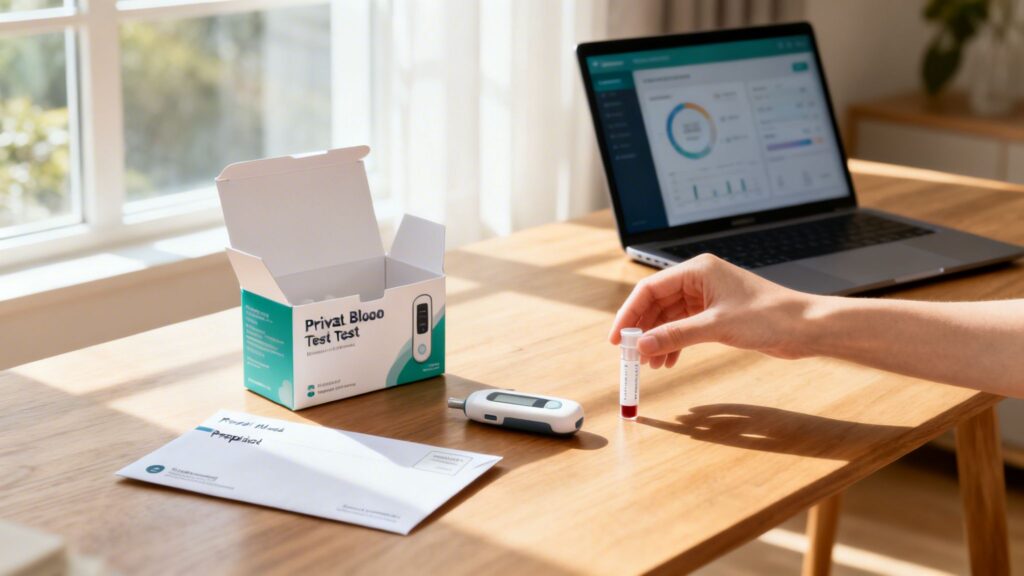
Before you do anything else, the very first thing is to activate your kit. Find the unique activation code inside your Repose Healthcare box, head to our website, and pop in the code along with a few basic details.
This is a crucial step. It’s what connects your physical sample to your private, secure online dashboard where your results will appear. It’s how we guarantee complete confidentiality, making sure your results are delivered only to you. Actionable insight: Do not skip this step—our lab cannot process a sample from an unactivated kit, which would delay you getting the answers you need.
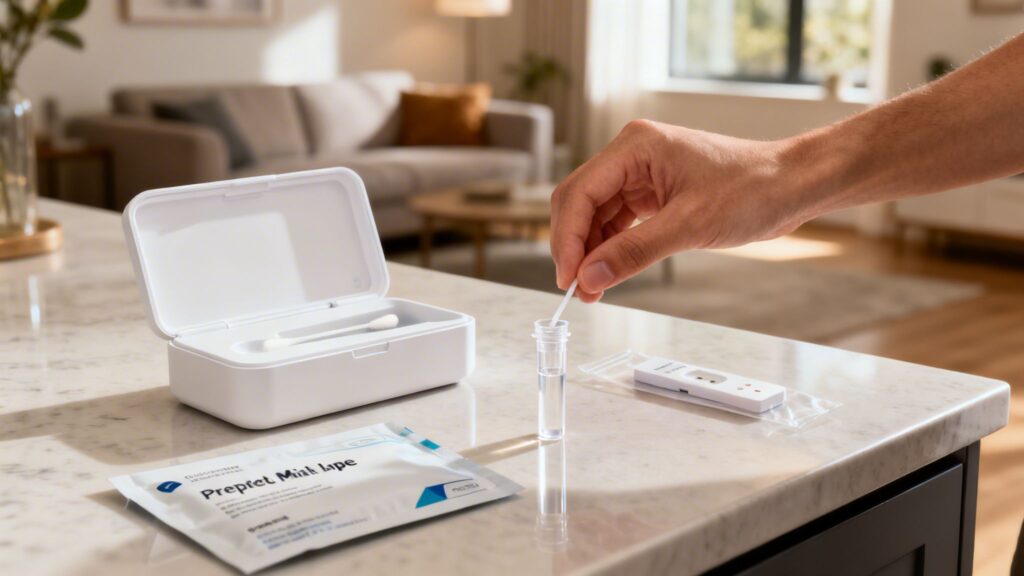
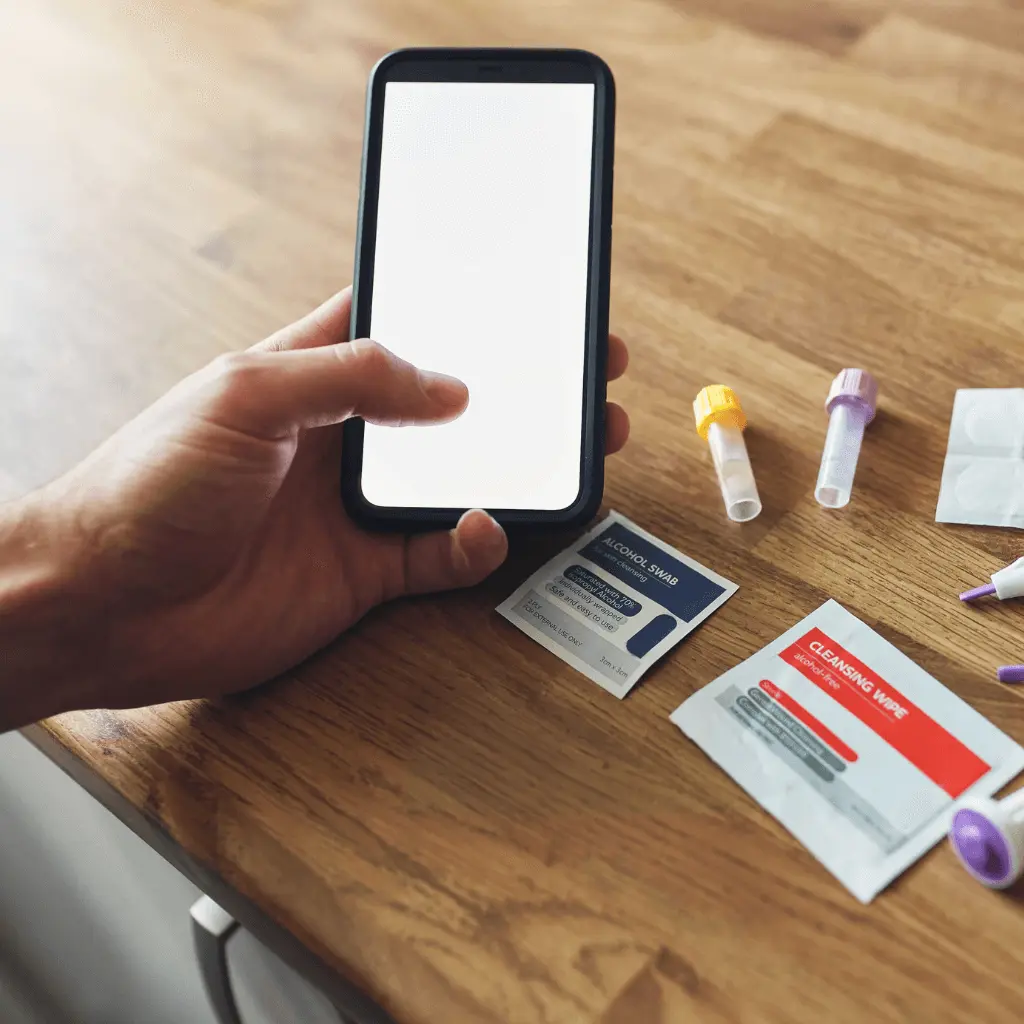
Now for the main event: collecting your sample. Your kit contains everything you need for a quick and virtually painless finger-prick test.
Practical example: It’s a common worry, but the lancet is designed to be over in a second with minimal discomfort. Most people just describe it as a tiny pinch. Prepping your hands with warm water really is the secret to getting the sample you need without any fuss.
Once the vial is securely sealed, you’re ready to send it on its way.
And that’s it! Your sample is now heading directly to our UKAS-accredited laboratory—the same standard of facility trusted by the NHS. Our expert technicians get to work analysing your hormone levels, and within 1-3 business days, you’ll get an email letting you know your results are ready on your secure Repose Healthcare dashboard.

Getting your test results is the moment the real work begins. Your confidential report will appear in your secure Repose Healthcare dashboard, showing your specific hormone levels next to the established "normal" reference ranges. This is where the numbers start to tell a story.
Think of your report as a personal health snapshot. It isn't just a list of figures; it's a detailed picture of what your hormones were doing at that specific moment in time. Our job is to help you make sense of that picture and figure out what to do next with confidence.
When you open your dashboard, you’ll find your levels for each hormone clearly laid out. Next to each of your results, you will see a reference range, which represents the typical values found in a healthy population.
Your result will generally fall into one of three categories:
It’s crucial to remember that a result outside the 'normal' range is not a diagnosis. Hormones can fluctuate for all sorts of reasons, including the day of your cycle, stress, or even your diet. Instead, think of these results as useful signposts, highlighting areas that might need a closer look.
The real value of an at home fertility test in the UK comes from what you do with the information. Your results give you the power to take focused, effective action.
Practical example: let's say your Female Hormone Test shows a high Follicle-Stimulating Hormone (FSH) level and a low Anti-Müllerian Hormone (AMH) level. This combination might point towards a diminishing ovarian reserve. Your next step is clear: download your Repose report and book an appointment with your GP to go over these specific findings. This can often speed up a referral to a fertility specialist.
On the other hand, if a progesterone test shows a low level seven days after you think you ovulated, it’s a strong clue that ovulation might not be happening as it should. You can learn more about this by reading our article on using a blood test for ovulation to track your cycle. This kind of specific knowledge lets you have a much more productive conversation with a healthcare professional.
Actionable insight: Your report is a key that unlocks a more informed conversation. Instead of telling your GP "I'm worried about my fertility," you can say, "My test results show my FSH is elevated to X and my progesterone is low at Y. Can we investigate this further?"
Making that shift from a general worry to a data-backed question can seriously fast-track your journey to getting the right support. It’s clear people want this kind of private, rapid health insight. While UK data for at-home fertility tests is still emerging, the related market for home pregnancy test kits was valued at USD 281.26 million in 2023 and is projected to reach USD 394.98 million by 2029, a trend driven by a desire for privacy and speed.
Your hormone levels can also be influenced by your lifestyle. Depending on what your results show, you might want to consider making some targeted adjustments.
Your Repose Healthcare report is your first concrete step. Use it to find peace of mind, make targeted lifestyle changes, or have a more effective discussion with your doctor. You're now in the driver's seat.
Choosing an at home fertility test in the UK is a big decision. You’re not just buying a kit; you’re putting your trust in a service to handle some of your most personal health information and deliver results you can rely on. With so many options out there, it’s only natural to wonder who you can truly trust.
At Repose Healthcare, we get it. We know these results are far more than just numbers on a screen—they’re the starting point of a deeply personal journey. That’s why we’ve built our service around three things that matter most: clinical precision, total privacy, and real support when you need it.
The accuracy of your fertility test results is everything. It’s the foundation for any conversations or decisions that come next. That's why we make a simple but vital promise: your sample will be processed in the very same type of laboratory used and trusted by the NHS and private clinics all over the country.
Every single sample we process is analysed in a UKAS-accredited laboratory. This is the highest standard of accreditation in the United Kingdom, ensuring the equipment, methods, and quality controls meet rigorous clinical benchmarks.
This means whether you take one of our Female Hormone Tests or a specific Progesterone Test, you can feel confident that the result is just as reliable as one you’d get through a hospital visit. We don’t believe in compromising on quality just because you’re testing from home. And with a rapid turnaround of 1-3 business days, you get those precise results without the anxious wait.
Your health information is exactly that—yours. We’ve designed our entire system from the ground up to keep your data secure, confidential, and completely under your control.
We believe getting vital health insights shouldn’t be a confusing or complicated process. From the moment you land on our site to the day you get your results, we’re here to make things as clear and straightforward as possible.
Our pricing is completely transparent, with no hidden fees to worry about. Every kit also includes prepaid postage, so returning your sample is simple and free. If you have a question at any point—from figuring out the right test for you to making sense of your results—our dedicated customer support team is on hand to give you clear, helpful guidance.
This combination of reliability, privacy, and support is why you can confidently start your fertility journey with Repose Healthcare.
It’s completely normal to have a lot of questions when you’re looking into fertility testing. To help you feel clear and confident about taking this step, we’ve put together some straight-talking answers to the queries we hear most often about using an at home fertility test in the UK.
This is a big one, and rightly so. The short answer is yes, a finger-prick sample is highly accurate for checking your hormones, as long as you follow the simple instructions in your kit. Actionable insight: one of the best tips is to warm your hands up first to get the blood flowing well, making collection easier and ensuring a viable sample.
Our UKAS-accredited partner labs use the exact same advanced technology to analyse these samples as they do for blood taken from a vein in a clinic. This means you can trust the results for your key fertility hormones to be clinically robust, giving you a proper insight into your health.
Absolutely. We know just how sensitive this information is, and protecting your privacy is our top priority. Everything we do is fully GDPR-compliant, and we stick to the strictest data protection rules.
Your results are sent to a private, password-protected online dashboard that only you can get into. We will never share any of your identifiable health data without your direct permission. This puts you in complete control, so you can download your report and show it to your GP or a fertility specialist if and when you decide to.
Getting a result that falls outside the ‘normal’ range can feel unsettling, but it’s vital to see it as a powerful piece of information, not a final verdict. Our expert-reviewed reports are designed to give you clear context and help you make sense of what your hormone levels might mean.
The most crucial action is to use this information proactively. We strongly recommend downloading your detailed report to discuss with your GP. An abnormal result from an at home fertility test can be the catalyst that accelerates your path towards getting a formal diagnosis or a specialist referral.
Practical example: if your results from a Progesterone Test show low progesterone, it can kick-start a focused conversation with your doctor about ovulation, helping them investigate much more efficiently.
Hormonal contraception—like the pill, patch, or injection—works by actively managing your body's hormones. Because of this, taking a fertility test while you're on them won't give an accurate picture of your body's natural baseline levels.
For the most useful results, it's usually best to have been off hormonal contraception for a while before testing. However, everyone's situation is different. We always advise having a chat with your GP to work out a timeline that’s right for you.
Ready to take the first proactive step on your fertility journey? The team at Repose Healthcare is here to provide you with accurate, private, and rapid health insights.
Explore our full range of clinically-backed at-home tests and order yours today at https://reposehealthcare.co.uk.