 Skip to content
Your Guide to Hepatitis Vaccination Cost in 2026
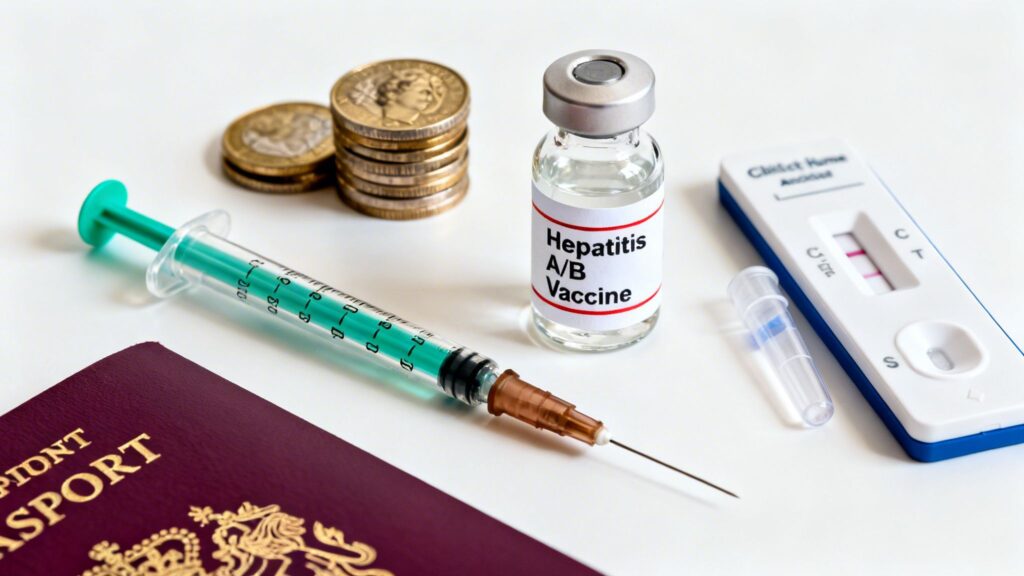
Let’s get straight to the point: your hepatitis vaccination cost can range from being completely free on the NHS to over £200 for a full private course. The final price tag really comes down to which vaccine you need (Hepatitis A, B, or combined), whether you’re eligible for a free jab on the NHS, and which clinic you go to. Getting your head around these differences is the first step to making a smart, actionable choice for your health and your wallet.
Navigating Hepatitis Vaccination Costs in 2026

Planning for a hepatitis jab isn’t just about booking an appointment; it’s about understanding the total investment in your long-term health. The price you see advertised is often just for a single dose. Some vaccines, like Hepatitis B, need a multi-dose course to give you full, lasting protection.
This means you need to multiply that initial hepatitis vaccination cost by the number of shots required. For example, a standard three-dose Hepatitis B course at £50 per dose means your total outlay will be £150, paid over several months. This is a crucial detail for budgeting effectively.
At-a-Glance Hepatitis Vaccination Costs in the UK & Ireland
To make things clearer, this table breaks down the typical costs you can expect from different providers. It’s a quick way to compare your options and see where you might get the best value.
| Vaccine Type | NHS (If Eligible) | Private GP / Pharmacy | Specialist Travel Clinic |
|---|---|---|---|
| Hepatitis A | Free | £50 – £75 per dose | £60 – £90 per dose |
| Hepatitis B | Free | £40 – £60 per dose | £50 – £80 per dose |
| Combined A & B | Free | £65 – £90 per dose | £75 – £110 per dose |
As you can see, the price differences can be quite stark, especially when you multiply the per-dose cost for a full course of Hepatitis B or the combined vaccine.
Factors That Shape Your Final Bill
Several key things will determine how much you end up paying. Thinking about these factors ahead of time helps you budget properly and find the most cost-effective path for your situation.
The main cost drivers include:
- Vaccine Type: A single Hepatitis A jab is almost always cheaper than a full course of Hepatitis B. A combined A/B vaccine might offer better value if you need protection against both.
- Provider Choice: You’ll find that prices can vary quite a bit between a high-street pharmacy, your private GP, and a specialist travel clinic. It pays to shop around.
- NHS Eligibility: Certain people, like those in high-risk jobs or travelling to specific countries, can get their vaccines for free. This is the biggest game-changer.
Actionable Insight: The most significant factor influencing your cost is whether you qualify for NHS provision. Your first practical step should always be to check your eligibility with your GP before seeking private options. This single action can be the difference between paying nothing and spending several hundred pounds.
For a bit more perspective on how vaccine prices are set and what makes them change from year to year, you can look at guides like the real DHPP vaccine cost in 2026. While it’s about pet health, it gives a useful parallel on how different factors add up to a final vaccination expense.
Ultimately, the most practical way to manage costs is to find out if you even need the vaccine in the first place. Before booking anything, it’s worth checking if you already have immunity from a previous vaccination or infection. A simple first step is using an at-home antibody test like our Hepatitis B Immunity (IgG) Test to check your protection level, which could save you from paying for jabs you don’t need.
Choosing Between NHS and Private Vaccinations

Figuring out whether to get your jab on the NHS or go private is the first hurdle in managing your hepatitis vaccination cost. The path you end up taking almost always boils down to why you need the vaccine in the first place.
The NHS does provide hepatitis vaccinations for free, but it’s not for everyone. It’s strictly for specific groups of people who are considered to be at high risk.
For instance, the Hepatitis A vaccine is often given at no charge if you’re travelling to parts of the world where the virus is common, like sub-Saharan Africa, swathes of Asia, or South America. Similarly, Hepatitis B is part of the routine childhood immunisation schedule. For adults, however, it’s usually only free for occupational health reasons – think healthcare workers, lab staff, or prison officers who face a much higher risk of exposure on the job.
This creates a pretty clear divide. A student nurse about to start clinical placements might get a full Hepatitis B course for free through their university or NHS trust. But a backpacker planning a gap year in Southeast Asia will almost certainly need to pay for the exact same vaccine at a private clinic.
When to Consider a Private Clinic
Even if you might be eligible for a vaccine on the NHS, opting for a private clinic often comes down to three things: convenience, speed, and availability. NHS appointments can be hard to come by, and you could face a long wait, which is far from ideal if you’ve got a tight travel deadline looming.
Private clinics offer a straightforward, pay-as-you-go service with a few key advantages:
- Wider Availability: You can often book appointments at short notice, and many clinics offer evening and weekend slots.
- Convenience: Lots of high-street pharmacies and specialist travel clinics provide walk-in services.
- Guaranteed Stock: Private providers are generally less likely to run into the stock shortages that can sometimes affect NHS services.
Practical Example: Imagine you land a new job that starts in two weeks and requires proof of Hepatitis B immunity. An NHS appointment might have a three-week wait. In this scenario, paying for a private appointment is a practical decision to meet your deadline, making the extra cost a worthwhile trade-off for securing your employment.
It’s also useful to understand the costs involved behind the scenes. Even within the NHS, administering a vaccine isn’t free. A 2019 study of English GP practices found that the mean cost for an adult vaccination appointment was £14.05. This figure was mostly driven by staff time (75%) and the overheads of running the facility (24%).
Ultimately, your decision should be a balance between your budget, your personal needs, and your timeline. If you’re unsure about your specific requirements or just want to compare local options, taking a look at a detailed guide on general travel vaccination costs can give you some valuable context. This will help you make a well-informed choice that aligns with both your health needs and your financial planning.
Breaking Down Vaccine Prices and Schedules
Figuring out the total cost of hepatitis vaccinations isn’t as simple as looking at a single price tag. To really get a handle on your budget, you need to understand the full dosing schedule, as the commitment in both time and money can vary quite a bit. It all depends on whether you need protection against Hepatitis A, Hepatitis B, or both.
The Hepatitis A vaccine is the most direct. Protection usually comes from one or two doses. A single jab gives you a good level of initial immunity, which is why it’s a go-to for many last-minute travellers. For long-term peace of mind, a second dose is given 6-12 months later, providing protection that often lasts for at least 25 years.
Understanding Hepatitis B Dosing and Costs
The Hepatitis B vaccine, on the other hand, requires a bit more of a long-term plan. Full immunity is built up over three separate injections, and this directly affects the total cost you’ll pay.
- Dose 1: Given on your chosen start date.
- Dose 2: Administered one month after the first injection.
- Dose 3: Given six months after that first dose.
This schedule means that if a single dose is priced at £50, your total outlay for the vaccine itself will be £150. It’s crucial to finish the entire course to make sure your body develops the strong, long-term protection it needs. Some clinics might offer an accelerated course if you’re travelling sooner, but this can sometimes cost more.
Actionable Insight: The price you see advertised is almost always per dose. For a multi-shot vaccine like Hepatitis B, you must multiply that price by three to budget for the real cost of being fully immunised. Always ask for the "full course cost" to avoid surprises.
The Combined Vaccine Option
If you need cover for both viruses, the combined Hepatitis A and B vaccine is a very convenient and often more cost-effective route. Just like the standalone Hep B vaccine, it follows a three-dose schedule spread over six months.
While the cost per dose will be higher than for a single Hep A or B shot, it almost always works out cheaper than paying for both vaccine courses separately.
For instance, you might see some UK travel health services lay out their pricing clearly. A Hepatitis B course could cost £25 per dose for an adult, making the full course £75. At the same time, Hepatitis A might be available for free under certain NHS travel guidelines. You can get a better idea of these regional differences by looking into the fee schedules of providers like NHS Forth Valley. To get a wider view of current vaccine costs and to help break down vaccine prices, you might want to look at more detailed pricing information.
What’s Not Included in the Sticker Price?
When you see a price advertised for a hepatitis vaccine, it’s easy to assume that’s the final figure you’ll pay. Unfortunately, that initial hepatitis vaccination cost is often just the starting point. Several extra fees can pop up and inflate your total bill, so knowing what to look out for is the best way to budget properly and avoid any nasty surprises.
One of the most common add-ons is a consultation fee. While some clinics roll this into the vaccine price, many charge it separately. This could mean paying £20-£50 just for the appointment itself, before the jab is even administered. It’s always worth asking if the price you’ve been quoted is all-inclusive or if a consultation fee will be tacked on at the end.
Accelerated Schedules and Extra Doses
Your travel plans can also push the price up. If you’re heading off soon and need immunity in a hurry, you might be offered an accelerated dosing schedule for Hepatitis B. This gets you protected much faster than the standard six-month course, but clinics often charge a premium for the convenience.
On the flip side, if you need protection against both viruses, opting for a combined Hepatitis A/B vaccine is usually the more wallet-friendly choice. The price per dose is higher than a single vaccine, but it’s almost always cheaper than paying for two separate courses from scratch. For example, a full course of three combined jabs might cost around £210, whereas buying separate Hep A (one or two doses) and Hep B (three doses) courses could easily add up to more. It’s always a good idea to ask the clinic for a full cost breakdown so you can see which option gives you better value for your situation.
This timeline gives you a clearer picture of how the different dosing schedules compare.
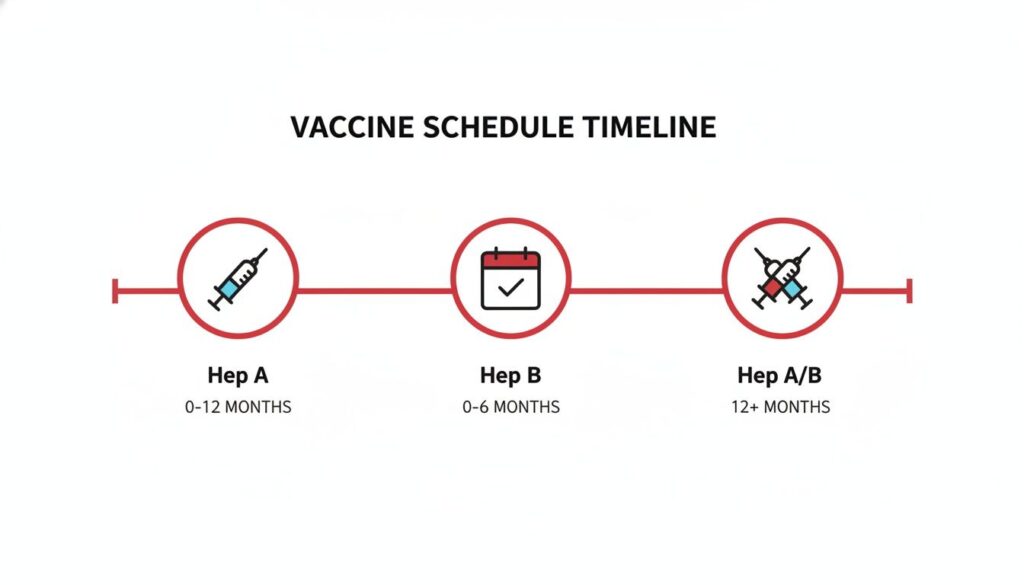
As you can see, vaccines like Hepatitis B involve a longer-term commitment with multiple doses, which is important to factor into your planning.
Actionable Insight: The total hepatitis vaccination cost is a sum of its parts: the vaccine itself, any consultation fees, and potential surcharges for accelerated schedules. To get the true final price, ask the clinic for an itemised quote that includes all potential charges before you commit.
Finally, don’t forget that location plays a big part in pricing. A high-street pharmacy in a big city will have different overheads and pricing structures compared to a specialist travel clinic in a smaller town. It really does pay to shop around and get a few quotes from different providers in your area. For more ways to take control of your health planning, you might find our guide on private health screening options in the UK useful.
Test Your Immunity Before You Vaccinate

Before you book and pay for a full course of jabs, it’s worth asking a simple question: do you actually need them? Paying for vaccines you might already be protected against is an easy way to drive up your total hepatitis vaccination cost. A much smarter first move is to check your existing immunity.
Lots of people already have lasting protection against hepatitis. This might be from a full course of vaccinations you had years ago, or even from a past infection that you recovered from without ever knowing you had it. If you have that protection, getting vaccinated all over again is often completely unnecessary.
Test Before You Invest
Let’s look at a common situation. You need to prove you’re immune to Hepatitis B for a new healthcare job, but you can’t for the life of you find your university vaccination records. You’re pretty sure you had the jabs, but without the paperwork, you’re looking at paying for a full three-dose course all over again.
This is exactly where an antibody test, sometimes called a serology test, becomes so incredibly useful. It’s a simple blood test that looks for the specific antibodies—the proteins your immune system makes to fight off a particular virus. If those antibodies are present, it confirms you’re already protected.
Actionable Insight: Think of it like checking if you already own a key before paying a locksmith to change the locks. Our Hepatitis B Immunity (IgG) Test reveals if you already have the "key" to immunity, potentially saving you both the time and the significant expense of a full vaccination series.
Discover Your Status from Home
Instead of the hassle of booking a clinic appointment just to find out your status, you can now take control right from your own home. This approach puts you firmly in the driver’s seat when it comes to your health.
An at-home test gives you clear, confidential answers in a few simple steps:
- Order your kit: The test is delivered discreetly straight to your door.
- Collect a small sample: Just follow the straightforward instructions to collect a small finger-prick blood sample.
- Get your results: Pop the sample in the prepaid envelope, send it back, and you’ll get your confidential results online in just a few days.
This simple process provides a clear "yes" or "no" on your immunity. If you’re at all unsure about your vaccination history, you can learn more about our convenient at-home Hepatitis B Immunity (IgG) Test to see if it’s the right first step for you.
By testing first, you can move forward with confidence. If the test shows you’re immune, you’ve just saved yourself from unnecessary jabs and cost. If it shows you aren’t protected, you can then book your vaccination appointment knowing it’s a necessary and worthwhile investment in your health.
Your Action Plan for Hepatitis Protection
Alright, you’ve got the facts on hepatitis A and B vaccines, from costs to schedules. Now it’s time to put that knowledge into practice.
Think of the next steps as a simple, practical checklist. It’s designed to walk you through the process, helping you make smart, cost-effective decisions without the guesswork. This is your personal roadmap to getting protected.
Your Step-by-Step Checklist
Here’s a straightforward, five-step plan to get you from A to B.
-
Figure Out Your Personal Risk: First things first, think about why you need the vaccine. Is it for an upcoming trip to a high-risk country? A new job in healthcare? Or perhaps it’s related to your lifestyle? Knowing your specific risk factors is the key to choosing the right vaccine.
-
Dig Out Your Vaccination Records: Before you do anything else, try to find your vaccination history. It might be with your GP, a previous employer, or even your old university health service. A few phone calls here could save you a good chunk of money on the hepatitis vaccination cost.
-
Confirm Your Immunity with a Test: Can’t find your records? Or maybe you had the jabs years ago and aren’t sure if your immunity is still holding up. This is where an antibody test comes in. It’s the most logical next step, giving you a clear ‘yes’ or ‘no’ on whether you need a new vaccine or just a booster. For Hepatitis B, our Hepatitis B Immunity (IgG) Test is the perfect tool for this.
-
Talk to a Professional: Now, book an appointment with your GP or a travel clinic. Go in armed with your risk assessment and test results (if you have them). This allows them to give you a professional recommendation that’s actually tailored to you.
-
Compare and Book Your Jabs: With a clear plan from your clinician, you can start shopping around. Compare the prices at your local pharmacies and specialist travel clinics. Once you find an option that fits your budget and schedule, get your first appointment booked and you’re on your way.
Actionable Insight: Don’t leave this to the last minute. It’s especially crucial for multi-dose vaccines like Hepatitis B, which need a full six-month schedule to complete. Starting early means you’ll be fully protected in time for your travels or new job, and it helps spread the cost out, too.
Following this simple action plan puts you firmly in control of your health. And if you’re looking to stay on top of your wellness journey, you can explore Repose Healthcare’s full range of at-home wellness and infectious disease tests to keep you informed and empowered.
Frequently Asked Questions
It’s completely normal to have questions when you’re looking into hepatitis vaccinations. To help you feel confident about protecting your health, we’ve answered some of the most common queries below.
How Long Does Hepatitis B Vaccine Immunity Last?
For most healthy people, once you’ve completed the full course of Hepatitis B shots, your immunity is considered lifelong. That means you likely won’t need routine booster jabs.
However, it’s a different story for people in high-risk roles, like healthcare workers, or anyone with a weakened immune system. For them, protection can fade over time. In these situations, a single booster dose or regular antibody checks—like our Hepatitis B Immunity (IgG) Test—might be recommended to make sure you’re still protected. This just confirms your immune system is still ready to fight off the virus if it needs to.
Can I Get a Hepatitis Vaccine if I Am Pregnant?
Yes, the Hepatitis A and B vaccines are generally thought to be safe during pregnancy. This is because they are inactivated vaccines, meaning they don’t contain any live virus. They’re often recommended if you have a high risk of getting infected.
The most important thing is to chat with your GP or midwife about your personal situation, especially if you have travel plans or a job that could expose you to the virus. They’ll help you weigh up the risks and benefits, making sure any decision is the right one for you and your baby.
Actionable Insight: Your doctor’s advice is paramount. They can assess your personal risk and provide guidance tailored to your pregnancy, ensuring any vaccination decision prioritises your well-being. Always consult them before making a decision.
What Is the Difference Between Hepatitis A and B Vaccines?
Although they both have "hepatitis" in the name, these vaccines protect you from two completely different viruses that spread in very different ways. They are not interchangeable.
- Hepatitis A: This jab is for the virus that typically spreads through contaminated food or water. It’s a common recommendation if you’re travelling to parts of the world with lower sanitation standards.
- Hepatitis B: This vaccine protects against the virus that spreads through contact with infected blood or other bodily fluids.
There is a handy combined Hepatitis A/B vaccine available. This is often a more convenient and affordable way to get full protection against both viruses, helping to lower the total hepatitis vaccination cost.
If you’re not sure whether you’re already immune from a previous jab or infection, getting an antibody test is the smartest first move. Before you spend money on vaccinations you might not need, Repose Healthcare offers a simple and discreet way to check your immunity from home. Discover your protection level with our at-home wellness and infectious disease tests.

You Might Also Like
STI Test Kit at Home: How It Works and What to Expect
You've had condomless sex with a new partner, feel completely well, and are now deciding [...]
Fertility Blood Test Day 3: What to Expect
You've booked your first fertility appointment, but one phrase on the instructions keeps bothering you: [...]
Home Liver Function Test: What Results Mean
You've opened the results from a home liver function test and found a mildly raised [...]
Glucose Tolerance Test at Home: What You Need to Know
A true diagnostic oral glucose tolerance test in the UK is usually a supervised clinic [...]
At Home PSA Test: Accuracy, Process, and UK Guidelines
You notice that you're urinating more often, your stream seems weaker, or you want a [...]
A1C Blood Test UK: What It Measures and How to Get One
You've just opened a private or at-home A1C blood test UK result and found two [...]
STI Screening for Men: What to Test and When
You've recently ended a relationship, ordered an STI test kit online, and now you're staring [...]
Fertility Testing Before Trying to Get Pregnant: Key Info
You and your partner may have chosen a rough timeline, checked your finances and started [...]
Nutrition Testing Kit: What It Measures and Why It Matters
You're doing the sensible thing, eating reasonably, trying to sleep, and still feeling flat. That's [...]
Private Coeliac Testing UK: A Practical Patient Guide
You've been bloated after pasta for months. You've searched “coeliac symptoms”, noticed the fatigue and [...]
STI Test Kit Price Guide for UK Home Testing
Private STI test kits in the UK usually start at about £29 to £30 for [...]
Sexual Health Screening: Your Guide to 2026
You're often here for a very ordinary reason that suddenly feels loaded. A new partner. [...]
Pregnancy Screening Tests Private: Your UK Guide
You've had a positive pregnancy test, the NHS booking appointment is still ahead, and your [...]
What Is Glucose Tolerance Test and How It Works
A glucose tolerance test is a two-hour challenge test: after an overnight fast, your fasting [...]
Blood Test for Night Sweats What to Check and When
You wake in the early hours with damp nightwear, wet sheets and a racing mind. [...]
The 2026 Cost of Hepatitis Vaccination in the UK
You're usually looking up the cost of hepatitis vaccination for a practical reason. A trip [...]
Hormone Blood Test London: Find Your Perfect Test
Some London health questions start subtly. Your cycle changes a little. You feel wired at [...]
Peanut Allergy Test Kit: A Practical UK User’s Guide
A peanut reaction often starts with uncertainty, not clarity. You eat a biscuit, satay sauce, [...]
NIPT Test Edinburgh: Your 2026 Guide
If you're searching nipt test edinburgh, you're probably already in that familiar stage of pregnancy [...]
Peripheral Artery Disease UK: Peripheral Artery Disease UK:
You might be reading this because walking has started to feel different. Perhaps your calf [...]
NIPT Test Cardiff: Clinic, Home & NHS Pathways 2026
If you're in Cardiff, newly pregnant, and staring at screening options that all seem to [...]
Gender Scan Difference UK: Accuracy, Timing & Cost Compared
You've probably already done the same search most parents do. One tab shows the NHS [...]
NIPT Test Cambridge: Guide to Options & Booking 2026
You're in Cambridge, you've had the first rush of finding out you're pregnant, and then [...]
Home COVID Test Results: A Practical UK & Ireland Guide
You've done the swab, mixed the sample, added the drops, and now you're staring at [...]
DVT Test Squeeze Calf: Homan’s Sign & Beyond
You notice one calf is sore, a little swollen, and not behaving like an ordinary [...]
Your Guide to Every Travel Clinic Leicester Offers in 2026
Flights are booked. The hotel is sorted. Your passport is still in date. Then one [...]
13 Week Gender Scan: Accuracy, NIPT & What to Expect
By the time you reach 13 weeks, pregnancy often starts to feel more real in [...]
Your Pregnancy Scan London: Guide to Options & Costs
A positive test can make London feel suddenly very small and very complicated. You might [...]
Your Nuchal Dating Scan Explained: A 2026 UK Guide
That appointment message has landed in your phone or come through the post, and suddenly [...]
Normal Cortisol Levels UK: Get Clarity
Some people search for normal cortisol levels uk after weeks of feeling unlike themselves. They’re [...]